
 By Nana Muazin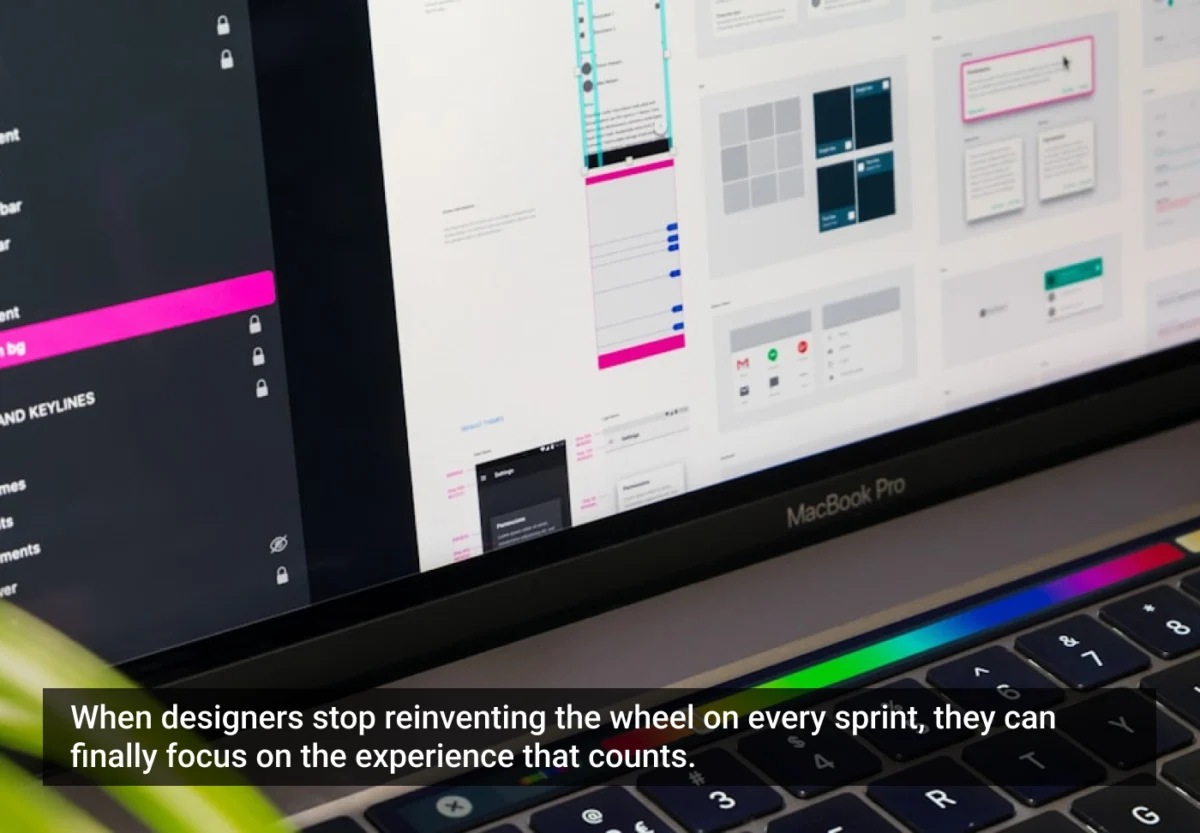
By Industry Analysis Desk
Published in UX & Product Strategy Review
For decades, the marriage of Agile software development and User Experience (UX) design has been a rocky partnership. While the Agile methodology—built on rapid sprints, continuous delivery, and cross-functional collaboration—revolutionized how software is engineered, it introduced a relentless, high-pressure cadence that often leaves designers feeling perpetually underwater.
In fast-paced agile environments, the prevailing sentiment among creatives is one of chronic exhaustion. There is always another feature to blueprint, another sprint kicking off before the previous one has even been properly post-mortemed, and another Jira ticket sitting in the backlog demanding immediate input. Worse yet, the traditional milestone of "shipping" a feature no longer signals a moment to breathe. Under modern product development frameworks, shipping is merely the starting gun for performance observation, qualitative feedback gathering, and perpetual iteration.
The cycle, quite simply, never ends.
However, recent industry studies into how elite designers successfully navigate high-velocity agile environments have highlighted a surprising, counter-intuitive antidote to this fatigue: design systems. At first glance, injecting formal design systems into the chaotic, fast-moving world of agile development feels like an oxymoron—a bureaucratic slowdown that runs counter to the "move fast and break things" ethos. Yet, as product leaders and industry experts increasingly attest, design systems may be the single most effective tool for saving agile designers from burnout and elevating the quality of digital products.
Main Facts: The Structural Crisis of Agile UX
To understand why design systems have become a vital lifeline, one must examine the fundamental friction point between traditional UX methodologies and Agile frameworks.
- The Velocity Mismatch: Agile engineering operates on tight, two-to-three-week development cycles. UX design, by its very nature, requires divergent thinking, user research, wireframing, testing, and refinement—a process that rarely fits neatly into a synchronized sprint without cutting corners.
- The Visual Design Tax: Designers waste a disproportionate amount of precious sprint time wrestling with micro-visual details—deciding how drop-down menus should behave, ensuring grid alignments match across components, choosing border radiuses, and defining typography hierarchy for every new screen.
- The Resurrection of the Handoff: Because designers are forced to produce polished mockups at breakneck speeds to keep up with developers, teams frequently slide back into the toxic "water-scrum-fall" or rigid design-handoff model. Designers prepare high-fidelity screens in isolation; engineers implement them blindly, destroying cross-functional collaboration.
- Incremental Drift: Without a unifying framework, building products piece-by-piece over months or years inevitably leads to fragmented user interfaces. Buttons diverge in style, iconography loses its meaning, and trust in the product erodes.
Design systems—centralized libraries of reusable UI components, tokens, and code guidelines—directly attack these systemic failures by shifting the designer’s primary focus from how a product looks to how a product works.
Chronology: The Evolution of Agile UX and the Rise of Design Systems
To trace how the industry arrived at this crossroads, it is helpful to look back at the historical evolution of software development and design management over the last twenty years.
Phase 1: The Waterfall Era and the Birth of Big Design (Early 2000s)
In the early days of enterprise software, products were built using Waterfall methodologies. Designers had months—sometimes years—to craft comprehensive, exhaustive style guides and upfront specifications before a single line of code was written. While this yielded high visual consistency, it was agonizingly slow and disconnected from changing market realities.
Phase 2: The Agile Revolution and the Marginalization of UX (2010–2015)
As the tech industry embraced the Agile Manifesto, speed and iterative delivery became paramount. However, early Agile frameworks largely ignored UX. Designers were treated as service providers who had to "stay one sprint ahead" of the engineering team. This era birthed the infamous anxiety of the agile designer: a perpetual treadmill of rushed wireframes, ignored user research, and technical debt disguised as design debt.
Phase 3: The Component Library Movement (2015–2020)
Recognizing that building every button and form field from scratch was inefficient, forward-thinking tech companies (such as Salesforce, Google, and Shopify) began investing heavily in internal component libraries. Initially treated as engineering efficiency tools, these libraries quickly evolved into holistic design systems bridging the gap between Figma and production code.
Phase 4: The Modern Synthesis (Present Day)
Today, design systems are no longer viewed merely as visual libraries, but as strategic operational infrastructure. Leading agile teams utilize mature design systems to compress product lifecycles, eliminate design handoff bottlenecks, and free up cognitive space for UX professionals to tackle complex architectural and behavioral problems.
Supporting Data & Industry Insights
The operational friction experienced by agile designers is deeply backed by industry observations. According to product design leadership data, when teams lack standardized design frameworks, up to 60% of a designer’s time is consumed by repetitive visual production tasks rather than strategic problem-solving.
| Product Development Metric | Without a Design System | With a Mature Design System |
|---|---|---|
| Time Spent on Visual Components | High (Custom-built per screen) | Low (Standardized component use) |
| Design-to-Dev Handoff Speed | Slow (Pixel-by-pixel translation) | Rapid (Token-based implementation) |
| UI Consistency Across Sprints | Low (Prone to incremental drift) | High (Guaranteed by shared library) |
| User Research & Edge-Case Focus | Minimized due to time constraints | Maximized (Freed-up sprint capacity) |
Product experts like design leader Laura Klein have increasingly emphasized that surviving agile is less about working faster and more about building smarter infrastructure. When a design system is firmly embedded in an agile workflow, the nature of the deliverables changes dramatically.
Rather than generating sprawling, pixel-perfect mockups for every conceivable user state, designers operating within mature ecosystems frequently streamline their deliverables. They can bypass heavy visual documentation entirely, writing concise design instructions directly into a Jira ticket and referencing standardized components from the design system. This operational shift returns hours of valuable time to the designer, allowing them to focus on complex user scenarios, robust error states, accessibility requirements, and usability edge cases that are routinely neglected when visual production dominates the sprint.
Official Responses and Expert Perspectives
Industry leaders and practitioners have increasingly spoken out about the necessity of decoupling visual grunt work from core product strategy through design systems.
"Design is not just what it looks like and feels like. Design is how it works."
— Steve Jobs (A foundational philosophy that modern design systems operationalize)
Reflecting on the psychological and operational relief design systems bring to fast-moving teams, product design veterans note that the psychological safety of a shared system cannot be overstated.
"When you are on an agile team, you constantly feel like you are failing because the finish line keeps moving," notes one enterprise product designer. "You finish a high-fidelity mockup, hand it off, and immediately realize you didn’t have time to think through what happens when an input field fails validation or a user loses internet connection. A design system takes the burden of reinventing the wheel off your shoulders. It gives you permission to care about the actual experience again."
Engineering leaders have similarly embraced the framework. Front-end developers report a dramatic reduction in "CSS bloat" and UI discrepancies when designers and engineers pull from the exact same library of atomic components. Collaboration moves left in the timeline: instead of waiting for finished mockups, engineers and designers sit down during sprint planning to assemble rough feature prototypes using pre-existing components. These rapid assemblies are often robust enough to put directly in front of users for early validation.
Implications: The Future of Agile UX
The widespread adoption of design systems signals a profound maturation of the UX profession within agile environments. As products scale and tech markets demand even faster iteration cycles, the old model of bespoke, screen-by-screen design is no longer viable.
1. The Death of Pixel-Pushing as a Primary Skill
As automated tokens, AI-assisted UI generation, and robust design systems mature, the value of a designer will no longer be measured by their ability to draw smooth buttons or align drop-shadows. The industry is rapidly shifting toward value-driven design: problem definition, qualitative empathy, data analysis, and systems thinking.
2. True Cross-Functional Convergence
Design systems act as a shared dialect between product managers, UX designers, and software engineers. By establishing a single source of truth for user interfaces, the historical friction of the "handoff" dissolves. Teams can move from debate to execution with unprecedented speed.
3. Scaling Without Chaos
For growing organizations, maintaining brand integrity and UX consistency across multiple cross-functional agile teams is an immense challenge. Design systems provide the structural guardrails necessary to scale product offerings incrementally without degrading into a patchwork quilt of mismatched interfaces.
Conclusion
For designers trapped in the relentless grind of the infinite agile sprint, salvation does not lie in working longer hours or adopting yet another productivity hack. It lies in building and leveraging systemic infrastructure. By shifting the focus away from repetitive visual execution and toward shared, reusable components, design systems finally allow agile teams to fulfill their ultimate promise: learning faster than they build, and delivering exceptional experiences that genuinely work for the user.
 Ammar Sabilarrohman
  Neng Nana
  Sagoh
Sagoh 