
 By Lina Irawan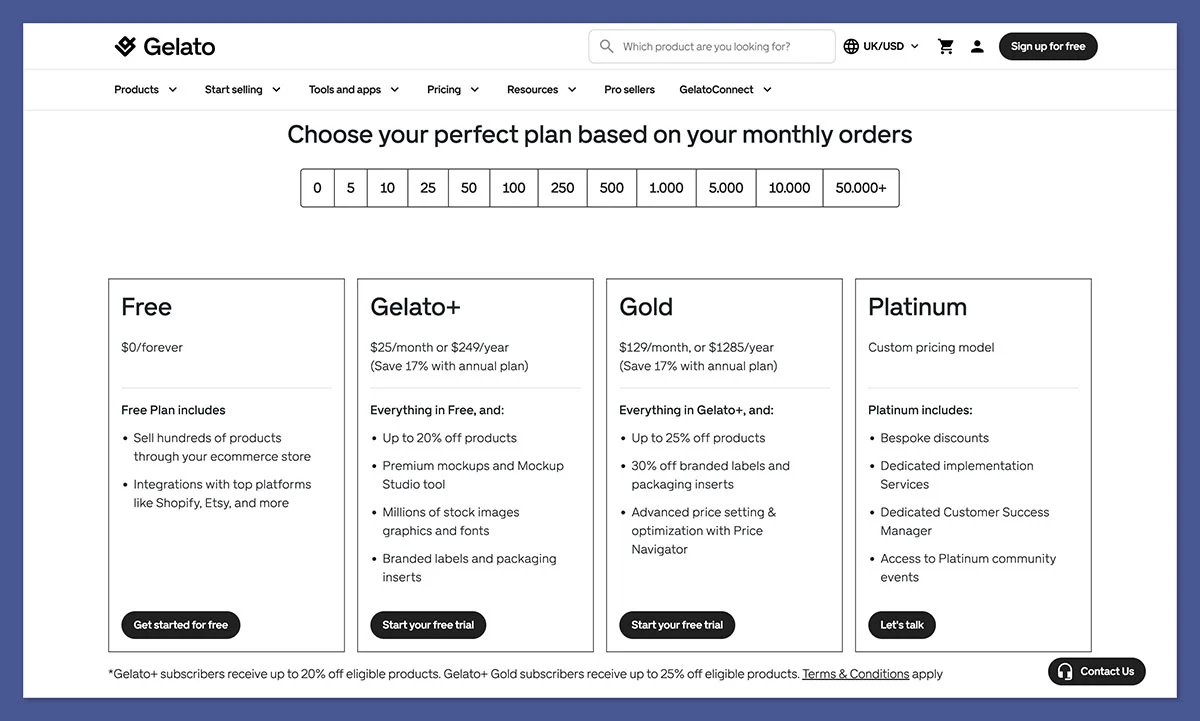
The print-on-demand (POD) landscape has undergone a seismic shift over the past few years. As creators and entrepreneurs increasingly pivot toward lean, inventory-free business models, the infrastructure supporting these ventures has become more sophisticated. Among the heavy hitters in this space, Gelato and Fourthwall stand out as two of the most robust, albeit fundamentally different, solutions.
Choosing between the two is not merely a question of "which is better," but rather "which aligns with your current business maturity." While Gelato operates as a high-octane fulfillment powerhouse for existing storefronts, Fourthwall functions as a comprehensive, all-in-one ecosystem for brand building.
The Core Distinction: Fulfillment Partner vs. Brand Ecosystem
To understand the rivalry between these two, one must first categorize their primary value propositions.
Gelato: The Fulfillment Specialist
Gelato is, at its heart, a global production network. It does not provide you with a website, a checkout flow, or a domain. Instead, it acts as a silent partner that integrates seamlessly with the platforms you already use, such as Shopify, Squarespace, or Etsy. Its primary mission is to minimize the distance between the point of purchase and the point of delivery. By leveraging over 140 production hubs, Gelato ensures that products are printed locally, reducing shipping times and carbon footprints.
Fourthwall: The Integrated Brand Architect
Fourthwall represents a more holistic approach. It is an e-commerce platform that comes with a built-in print-on-demand engine. When you sign up for Fourthwall, you aren’t just getting a supplier; you are getting a storefront builder, a merchant-of-record service, and a suite of tools designed to handle memberships, digital downloads, and even donation collection. It is designed for the creator who wants to move from "selling items" to "building a brand" without managing a complex stack of third-party plugins.
Chronology of Evolution
The rise of these platforms mirrors the maturation of the creator economy.
- The Early Days (The "Plug-and-Play" Era): Initially, POD was a fragmented industry. Sellers struggled with inconsistent quality and slow shipping. Gelato emerged during this period by focusing on a "local production, global scale" model, solving the logistical bottlenecks that plagued early competitors.
- The Shift to Monetization (2022-2024): As creators sought to diversify their income, simple apparel sales became insufficient. Fourthwall entered the market to address this, recognizing that successful creators needed to sell digital assets, physical goods, and subscriptions under one roof.
- The AI Integration Phase (2025-Present): Most recently, both companies have aggressively integrated AI. Gelato introduced AI-powered mockup generators and enhanced analytics to help creators optimize their product ranges, while Fourthwall launched "Eli," an AI assistant capable of managing store operations, price adjustments, and customer inquiries.
Comparative Data: A Technical Breakdown
| Comparison Factor | Fourthwall | Gelato |
|---|---|---|
| Platform Type | All-in-one Storefront & POD | POD Fulfillment Partner |
| Sales Channels | Native Storefront | Integrates with Shopify, Etsy, etc. |
| Product Variety | POD + Sourced + Digital + Memberships | POD + Personalized Goods |
| Merchant of Record | Yes (handles tax/compliance) | No (User handles store tax) |
| Sustainability | Strong (Eco-conscious options) | Elite (Industry leader in local production) |
| Support | Full support for catalog items | Fulfillment & back-end support |
Deep Dive: Quality and Sustainability
Gelato’s Commitment to Green Logistics
Gelato has carved out a niche as the "sustainable choice." Because 90% of its orders are produced locally, the carbon footprint associated with shipping is significantly lower than traditional models where items are shipped across oceans. Their commitment to non-toxic inks and eco-conscious collections makes them the preferred partner for brands prioritizing ESG (Environmental, Social, and Governance) values.
Fourthwall’s Retail-Grade Quality
Fourthwall does not compete on volume of shipping hubs, but rather on the "premium" nature of the product. The quality of their print is consistently described as retail-grade, often featuring specialized printing areas (such as sleeve prints) that are rare in standard POD services. They cater to creators who want to build a high-end fashion line rather than a generic merchandise shop.
Operational Implications: Managing Your Business
The "Merchant of Record" (MoR) Factor
This is perhaps the most significant operational difference for new entrepreneurs.
Fourthwall acts as your Merchant of Record. In practical terms, this means they handle the headache of global sales tax and compliance. If you sell to a customer in the EU, Fourthwall manages the VAT implications. This removes a massive layer of administrative burden for creators who don’t have a dedicated accounting team.
Gelato, by contrast, operates as a traditional supplier. Because you are selling via your own Shopify or Etsy store, you are the merchant. You are responsible for configuring your tax settings, managing shipping policies, and handling customer service disputes. This provides more control, but significantly more liability.
Support Structures
Both companies maintain high standards for technical support. However, their scope differs. Fourthwall’s support team will step in to handle customer issues related to their catalog items—if a shirt arrives damaged, Fourthwall resolves it. With Gelato, you are the primary point of contact for your customer. You must manage the relationship, and if a refund is necessary, you are the one issuing it.

Financial Considerations: Pricing in Practice
While both offer "free" tiers, the cost-benefit analysis changes as you scale.
- Gelato: The free plan is excellent for starters. However, to maximize margins, the Gelato+ subscription ($29.99/mo) is essentially mandatory once you reach a certain volume. It offers up to 33% discounts on product costs, which quickly pays for the subscription. You must factor in the costs of your separate e-commerce platform (e.g., Shopify fees).
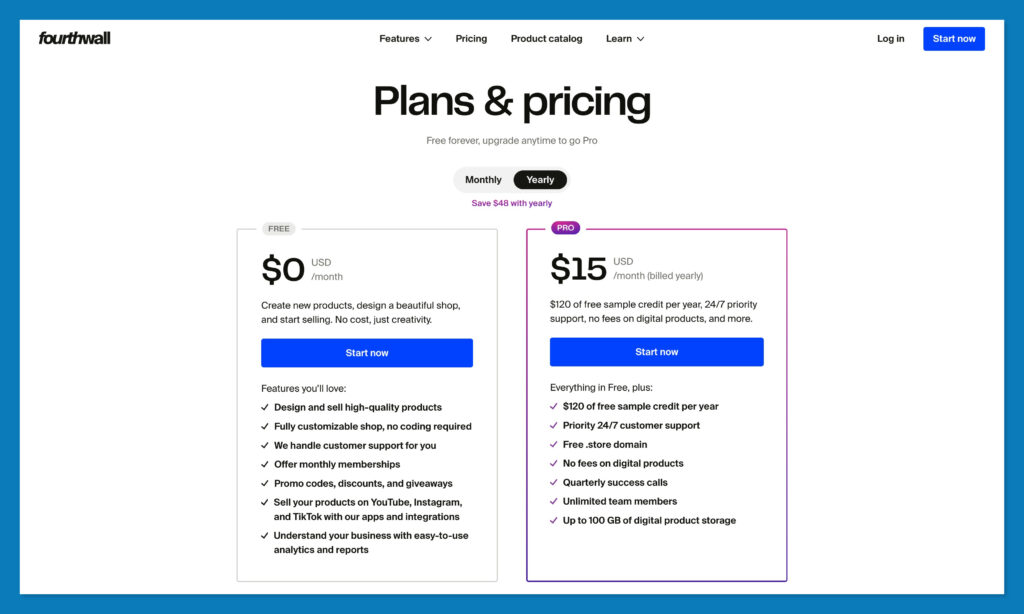
- Fourthwall: Their model is inherently cheaper for the "all-in-one" user. There is no base platform fee for the storefront, but they charge a 5% fee on digital products and memberships on the free plan. Their $19/mo Pro plan is a value-add that removes these fees and provides advanced analytics and priority support.
Expert Verdict: Which One Should You Choose?
Choose Gelato if:
- You already have a successful store: If you are well-established on Shopify, WooCommerce, or Etsy and simply need a reliable, high-quality production partner.
- You prioritize sustainability: If your brand identity is built on eco-conscious manufacturing and low-carbon shipping.
- You want customization: You intend to use the Personalization Studio to allow customers to add their own names or graphics to your designs.
- You want to scale globally: Their massive network of 140+ production hubs is unmatched for rapid, local delivery.
Choose Fourthwall if:
- You are starting from scratch: If you don’t want the technical headache of building a website, setting up SSL certificates, or integrating apps.
- You want a diverse product mix: If you want to sell a mix of apparel, digital downloads, courses, and memberships in one place.
- You want to outsource the "boring" stuff: You want a partner to act as the Merchant of Record to handle the complex legalities of global tax compliance.
- You are a creator-entrepreneur: You need a platform that integrates with YouTube Shopping, TikTok Shop, and RSS.com for podcast monetization.
Final Thoughts
The evolution of these two platforms signifies a maturing market. Gelato is the choice for the operationally savvy seller who wants to own every aspect of their customer experience. Fourthwall is the choice for the creator-centric entrepreneur who wants to focus on content and brand loyalty, leaving the logistical and legal infrastructure to a trusted partner. Both are industry-leading, and the "correct" choice depends entirely on how much of the operational heavy lifting you are willing to manage yourself.
 Dwi Wanna
  Basiran