
 By Laily UPN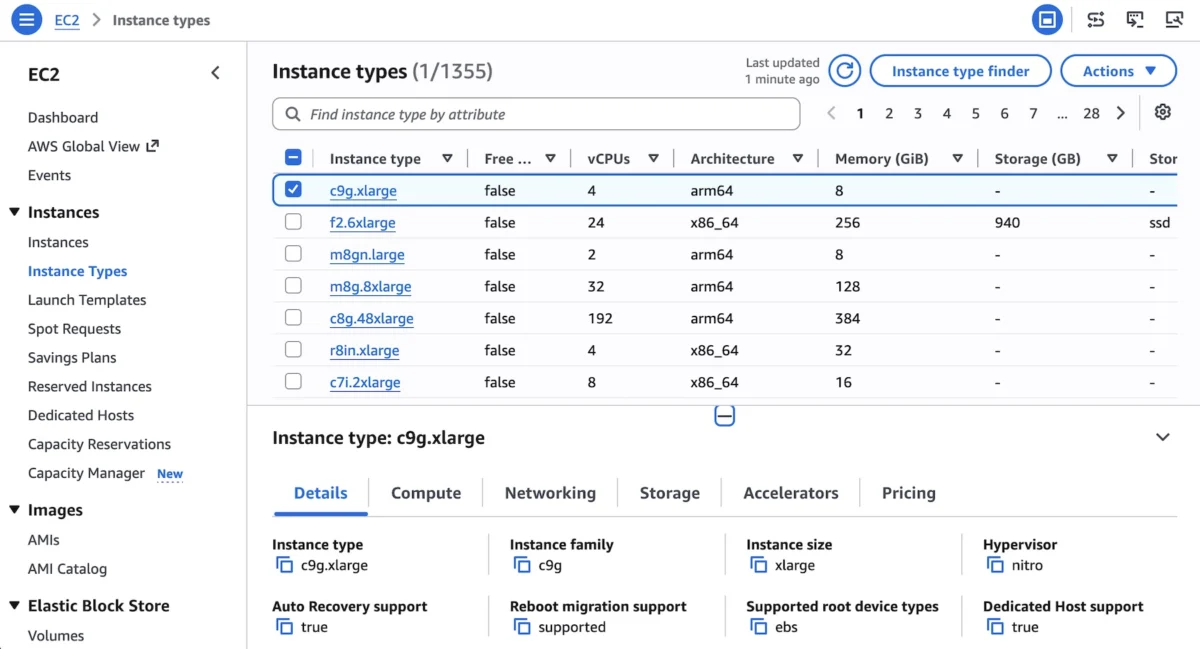
SEATTLE — Twenty years ago today, a single blog post published by Jeff Barr introduced a quiet revolution to the technology sector. Titled simply to announce the Amazon Elastic Compute Cloud (EC2) Beta, that post invited developers to spin up resizable Linux virtual servers in the cloud, billed strictly by the hour. At launch, the service offered a single instance type (m1.small) restricted to a single geographic Region (US East).
What began as a minimal yet functional utility has spent the last two decades fundamentally altering how the world builds, scales, and conceptualizes computing infrastructure. Today, Amazon EC2 stands not merely as a pioneer of cloud infrastructure-as-a-service (IaaS), but as the beating heart of the modern internet—powering everything from simple startup web applications to trillion-parameter artificial intelligence training clusters.
Main Facts: The Genesis and Scale of a Cloud Titan
To understand the trajectory of modern software engineering, one must look back at the constraints of 2006. Before EC2, provisioning compute capacity meant ordering physical servers, waiting for hardware delivery, racking equipment in a datacenter, and configuring networking manually—a process that took weeks or months. EC2 collapsed that timeline to minutes.
The core value proposition laid down two decades ago remains remarkably unchanged:
- Instant Provisioning: Secure, resizable compute capacity available on demand.
- Pay-As-You-Go Economics: Eliminating upfront capital expenditure in favor of operational expenditure billed strictly by consumption.
- Elasticity: The ability to scale capacity up or down instantly without long-term commitments.
Over the past twenty years, that initial m1.small footprint has exploded. EC2 now boasts over 1,200 distinct instance types, meticulously engineered to cater to specialized workloads spanning general-purpose computing, memory-optimized, storage-optimized, compute-optimized, accelerated computing (GPUs and custom accelerators), and high-performance computing (HPC).
Geographically, the service has expanded from a single availability zone in US East to a massive global footprint spanning 39 AWS Regions worldwide. Furthermore, EC2 has broken past traditional data center boundaries through specialized edge models like AWS Outposts, AWS Local Zones, and AWS Wavelength (which embeds instances directly inside 5G telecommunications carrier networks).
Chronology: Milestones That Shaped the Cloud Era
The evolution of Amazon EC2 did not happen overnight; it was forged through a steady, relentless cadence of architectural breakthroughs. Reflecting on past milestone retrospectives—including the platform’s 15th-anniversary deep-dive—several landmark releases stand out as the foundational building blocks upon which modern cloud architecture rests:
2008: Persistent Storage Arrives
- Amazon Elastic Block Store (EBS): Introduced block storage volumes designed for use with EC2 instances. EBS provided the persistent, high-performance storage required to run production databases and enterprise applications reliably in the cloud.
2009: The Architecture of Scale and Security
- Elastic Load Balancing (ELB), Auto Scaling, and Amazon CloudWatch: This trio of services transformed EC2 from a collection of isolated virtual servers into a dynamic, highly available ecosystem. Applications could now automatically scale out during traffic spikes and scale in during lulls, monitored in real-time by robust telemetry.
- Amazon Virtual Private Cloud (VPC): Gave customers the ability to provision a logically isolated section of the AWS cloud, bringing traditional enterprise security and networking controls to public cloud infrastructure.
2017: The Hardware Revolution
- The AWS Nitro System: A transformative combination of dedicated hardware and lightweight hypervisor software. Nitro offloaded virtualization, storage, and networking functions from the host CPU to specialized AWS silicon, drastically improving security, reducing virtualization overhead, and accelerating feature delivery.
2018: Custom Silicon and Hybrid Edge
- AWS Graviton Processors: AWS introduced custom, Arm-based processors designed specifically for cloud workloads, delivering superior price-performance for scale-out applications.
- AWS Outposts: Brought native AWS infrastructure and operating models directly to on-premises data centers, merging cloud agility with local data residency requirements.
2019–Present: Edge and Acceleration
- AWS Local Zones & Wavelength: Extended ultra-low latency compute resources closer to end-users and into 5G carrier networks, catering to real-time gaming, autonomous vehicle processing, and AR/VR applications.
Supporting Data: The Foundational Layer of the AWS Ecosystem
While Amazon EC2 is a massive standalone product, its most profound impact lies in its role as the underlying substrate for almost every other service in the AWS portfolio.
Whether a customer interacts with higher-level abstractions, they are almost universally running on EC2 silicon under the hood. The architectural dependency graph of the cloud relies directly on this foundation:
- Containers: Both Amazon ECS (Elastic Container Service) and Amazon EKS (Elastic Kubernetes Service) orchestrate container workloads running on EC2 nodes (or AWS Fargate, which itself abstracts EC2 capacity).
- Serverless and Compute: AWS Lambda and AWS Batch manage execution environments backed by underlying EC2 compute fleets.
- Data and Analytics: Amazon EMR (Elastic MapReduce) spins up clustered EC2 instances to process petabytes of data via Hadoop, Spark, and other big-data frameworks.
- Artificial Intelligence: Amazon SageMaker AI and Amazon Bedrock rely heavily on accelerated EC2 instance types equipped with advanced GPUs and custom machine learning accelerators to train and deploy massive foundation models.
Every architectural pattern engineered over the past two decades—from a straightforward, single-instance LAMP stack web server to complex, multi-region, distributed neural network training clusters—begins with a single API call to launch an EC2 instance.

Official Responses and Reflections
Marking the 20th milestone of the platform, AWS leadership and long-time evangelists have reflected on the philosophy that enabled such enduring success.
Channy Yun, writing for the AWS News Blog, emphasized that the foundational strategy established in 2006 continues to dictate product development today:
"We made strong foundational decisions in 2006, and we left room for the service to grow. Twenty years later, that strategy of creating services that are minimal-yet-useful, launching quickly, and iterating rapidly in response to your feedback continues to guide how we build."
Industry analysts note that AWS’s aggressive pivot toward custom silicon—such as the Nitro system, Graviton processors, and specialized AI training chips like Trainium and Inferentia—has allowed Amazon to control its hardware supply chain, insulate customers from rising component costs, and extract maximum performance-per-watt efficiencies that merchant silicon struggles to match.
Furthermore, cloud architects point out that EC2’s resilience in the face of tectonic shifts in software engineering—from monolithic architectures to microservices, serverless, and now generative AI—proves that the core abstraction of the virtual server remains endlessly adaptable.

Implications: The Next Twenty Years of Cloud Computing
As Amazon EC2 enters its third decade, the computing landscape looks vastly different than it did in 2006. The primary drivers of infrastructure consumption have shifted from general-purpose web hosting and database scaling to hyper-scale data processing, edge computing, and, most prominently, the explosive demand for generative artificial intelligence.
The implications for enterprise IT and cloud engineering over the next twenty years point toward several key transformations:
- AI-First Infrastructure: The demand for accelerated computing will only intensify. Future EC2 instances will increasingly be co-designed with purpose-built neural processing units (NPUs) and optical interconnects capable of handling multi-trillion-parameter AI models seamlessly.
- Ubiquitous Edge and Hybrid Continuity: As IoT devices, smart manufacturing plants, and 5G networks proliferate, the boundary of the cloud will continue to blur. EC2 will run less in centralized mega-datacenters and more at the extreme edge, embedded directly into local physical environments.
- Sustainable Computing: With global data center energy footprints under intense scrutiny, the continuous evolution of custom silicon like Graviton and advanced power-management systems will make energy efficiency the primary metric of cloud evolution.
When Jeff Barr hit "publish" on that blog post two decades ago, cloud computing was an unproven concept viewed with skepticism by traditional enterprise CTOs. Today, it is the undisputed bedrock of the global digital economy. As the industry looks toward the horizon, one truth remains absolute: whatever computational capabilities the next twenty years demand, Amazon EC2 will continue to serve as the engine where those workloads come to life.
 Neng Nana
  Suro Senen
  Lina Hope