
 By Neng Nana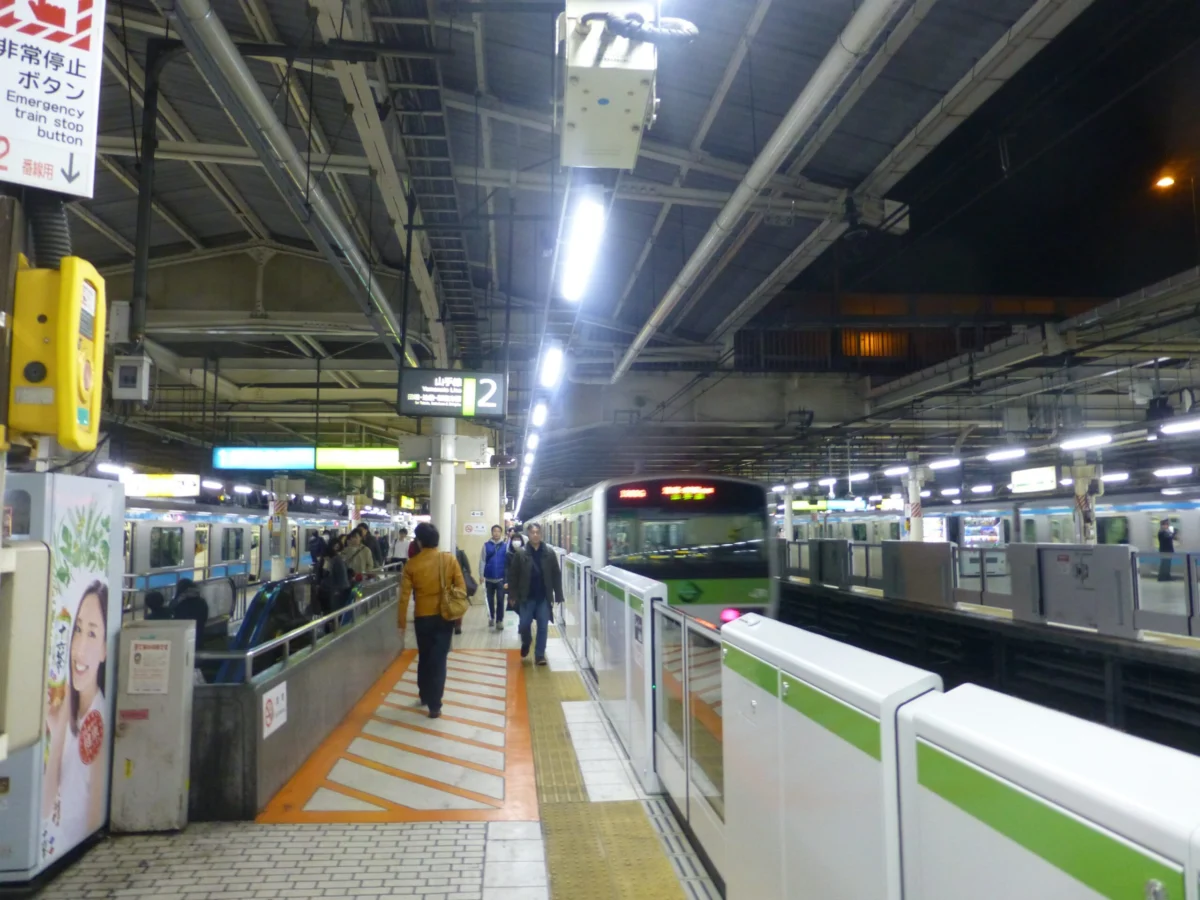
Main Facts
For millions of commuters navigating the sprawling, hyper-efficient labyrinth of the Greater Tokyo rail network, the daily commute is accompanied by a uniquely Japanese auditory phenomenon: the hassha-merodi, or departure melody. These micro-compositions—typically lasting a mere seven seconds—play out across station platforms just as train doors chime and the carriages prepare to roll. Serving not only as a psychological cue for closing doors but also as a distinct localized signature, these jingles transform routine transit into an immersive sensory experience.
However, despite their cultural ubiquity, these sonic markers have long lacked a centralized, official directory. While Tokyo’s open-data infrastructure provides meticulous real-time information on timetables, geographic coordinates, and live train positions, it completely overlooks the musical identity of its platforms. Enter data visualization designer Akash Wadhwani, who spent a month bridging this archival gap. Operating from northern India, Wadhwani synthesized fragmented volunteer records, open-source transit files, and user-generated YouTube archives to build the first comprehensive map of Greater Tokyo’s rail melodies.
The resulting interactive visualization, hosted on his platform sheets.works, maps all 2,496 stations across the Greater Tokyo network, meticulously isolating the 200 locations with publicly archived, playable melodies. The project not only sheds light on an ephemeral urban art form but also exposes the fragile, decentralized nature of digital folklore preservation in modern Japan.
Chronology
Sparking an Obsession
The journey toward the map began not in a data science laboratory, but on a platform during Wadhwani’s first-ever trip to Tokyo alongside his wife. A long-time rail enthusiast, Wadhwani had read about departure melodies for years without ever experiencing them firsthand. When he finally heard the chime echo across a platform, the unexpected emotional resonance prompted an impulsive detour.

Intent on catching more of the brief melodies, the couple deliberately boarded trains heading in the wrong direction, inadvertently discovering that the musical pieces shift dynamically depending on the platform, the railway line, and even the direction of travel. What started as an accidental misadventure evolved into a profound curiosity regarding how these sonic environments were cataloged, organized, and maintained.
Sourcing the Infrastructure
Upon returning home, Wadhwani initiated his research by hunting for a master dataset. He quickly discovered that while official municipal and corporate repositories—such as the Public Transportation Open Data Center—offered exhaustive structural data, they held no records of the musical cues. The curation of these jingles, which have been commissioned from small independent sound studios since 1989, had historically been left to passionate train fans (tetsudō-fan) maintaining independent wikis, niche audio archives, and crowdsourced YouTube videos.
Utilizing the robust open-source foundation of Mini Tokyo 3D, a live 3D map of the capital’s rail network, Wadhwani extracted 2,522 rows of raw station data. After filtering out non-transit infrastructure like airline check-in desks, he was left with 2,496 distinct stations. Using spatial reconciliation files, he solved complex structural anomalies—such as mega-hubs like Shinjuku, which appears in transit databases as 11 distinct rows managed by disparate companies like JR East, Odakyu, Keio, Toei, and Tokyo Metro.
Reconciling the Archives
With the geographic skeleton secured, Wadhwani turned his attention to the melodies—a grueling exercise in reconciling four distinct, contradictory fan-maintained databases. Some archives cataloged entries by song title with matching stations; others inverted the structure to list stations alongside their respective tracks; while a third category split entries by individual platforms and travel directions.

Faced with divergent spellings and chaotic editorial formats, Wadhwani engineered a Python-based normalization script to align the data. The script tackled insidious data corruptions, such as full-width and half-width character discrepancies that register to a computer as entirely different glyphs, and stripped out parenthetical editorial asides that threatened to break database joins.
The YouTube Excursion and Final Audiovisual Integration
Wadhwani initially hoped to pull audio files directly from crowdsourced YouTube videos, which feature chapter markers designed to timestamp specific stations. However, out of 44 collected videos, only 38 yielded usable text, and just 13 incorporated chapter markers. Furthermore, these markers were generally formatted for human listeners dragging video sliders rather than automated data scrapers, frequently noting transit lines rather than individual station stops.
Ultimately, 11 manually timed clips were repurposed as contextual media embedded alongside the project’s written essays, while the primary audio links on the map were drawn from verified fan archives. The resulting database accounted for 242 documented stations, with 200 fully playable audio streams: 143 managed by Tokyo Metro, 55 by JR East, and two by Toei.
Supporting Data
The scope of Wadhwani’s final visualization highlights both the staggering scale of Greater Tokyo’s transit infrastructure and the gaps inherent in crowdsourced digital preservation:

- Total Greater Tokyo Stations Mapped: 2,496
- Stations with Documented Melodies in Fan Archives: 242 (approx. 9.7%)
- Stations with Fully Playable, Published Audio: 200 (8%)
- Primary Corporate Contributors in Audio Set:
- Tokyo Metro: 143 stations
- JR East: 55 stations
- Toei Transportation: 2 stations
- Composer Attribution Rate: Out of 517 total melody entries mapped, only 83 bear verified composer attributions. Of those, 42 belong to veteran sound designer Minoru Mukaiya.
The visualization handles the remaining 92% of silent or undocumented stations by rendering them as neutral gray dots. Rather than making unsubstantiated claims that these platforms lack melodies entirely, Wadhwani’s interface explicitly notes that these locations simply lack publicly accessible digital recordings—distinguishing between the physical reality of Tokyo’s transit network and the limitations of digital volunteer archives.
Official Responses and Verification Challenges
Maintaining strict journalistic and data integrity required a rigorous pre-publication audit. Wadhwani cross-examined approximately 140 factual claims within his project’s accompanying essay against primary and secondary sources, identifying and correcting 17 foundational errors before launch.
Notable corrections included rectifying the timeline of prominent composer Minoru Mukaiya. Initial drafts erroneously claimed Mukaiya’s station career commenced with a 1985 commission for the Tokyu Toyoko Line—conflating the founding year of his production studio with his actual first verified composition for the line in 2013. Additional corrections addressed Japanese terminology, swapping a fabricated colloquialism (otomachi) with the correct soundscape descriptor oto fūkei, and accurately re-attributing the iconic Yamanote Line melody "Spring" (Haru) from Yamaha’s engineering team to Itagaki Makito of Nippon Denon.
From an institutional standpoint, transit authorities in Tokyo have historically maintained a hands-off approach regarding the informal digital archiving of platform jingles. Because these compositions are protected by strict copyright enforcement bodies like JASRAC (Japanese Society for Rights of Authors, Composers and Publishers), and because railway operators have routinely rebuffed external commercial licensing requests, independent fan sites remain the primary custodians of this auditory heritage. Wadhwani’s map respects this ecosystem by refusing to host pirated audio files directly; instead, it acts as a cartographic bridge, routing users outward to established fan archives while properly attributing anonymous digital preservationists wherever possible.

Implications
Akash Wadhwani’s Greater Tokyo rail melody map transcends a mere exercise in transit geek culture; it offers profound implications for how we conceptualize urban memory, open data, and digital preservation.
Urban spaces are increasingly dominated by sterile, homogenized infrastructure. In Tokyo, the aggressive installation of modern platform screen doors (hōmu-doa)—designed to enhance commuter safety—has inadvertently accelerated the silencing of departure melodies, as physical barriers alter platform acoustics and prompt transit companies to phase out older chimes. By capturing 200 operational melodies and preserving historical context on discarded tracks, the project acts as a vital digital museum for an ephemeral art form that risks being engineered out of existence.
Furthermore, the project highlights the untapped power of crowdsourced cultural data. While municipal open-data initiatives excel at publishing hard logistics—coordinates, schedules, and spatial boundaries—they frequently fail to capture the sensory textures that define a city’s cultural identity. By combining official open transit data with the grassroots, anonymous labor of internet hobbyists, Wadhwani demonstrates how individual passion can bridge the gap between municipal utility and human experience.
Ultimately, the map challenges urban designers and civic technologists to look beyond raw functionality. Cities are not merely networks of transport links and economic nodes; they are acoustic ecosystems. By rendering Tokyo’s invisible soundscape legible, Wadhwani’s work proves that the heartbeat of a metropolis can be mapped, measured, and profoundly felt.
 Lina Irawan
  Nana
Nana  Nila Kartika Wati