WASHINGTON — Home appliance and consumer electronics giant LG Electronics has announced a decisive policy shift targeting smart TV applications that quietly convert household televisions into always-on proxy nodes. Under the newly enforced measures, LG will suspend any application hosted on its webOS app store that utilizes residential proxy software development kits (SDKs).
This enforcement action follows explosive security research published earlier this month, which revealed that an alarming percentage of smart TV applications were actively routing third-party internet traffic through unsuspecting consumers’ home networks. The revelations have thrust the largely unregulated intersection of monetized software development kits, consumer IoT (Internet of Things) devices, and data scraping into the regulatory spotlight.
Main Facts
The core issue revolves around the integration of residential proxy SDKs into applications designed for smart televisions. Developers seeking alternate monetization streams beyond traditional advertising have increasingly partnered with proxy network providers. These providers embed specialized code into consumer apps—ranging from casual video games and utility tools to digital screensavers.
Once installed, the application repurposes the user’s broadband connection, transforming their smart TV into an active proxy node. This node allows paying third-party customers to route their web traffic through the residential IP address.
The Scale of the Problem: Security analysis indicates that over 42 percent of applications available on LG’s webOS app store contained residential proxy components. A similar, albeit slightly lower, prevalence was found on competing platforms, with more than 25 percent of apps built for Samsung’s Tizen operating system housing comparable SDKs.
LG’s Response: Responding to industry scrutiny, LG Senior Vice President John Taylor confirmed that the corporation is actively auditing its application ecosystem. Developers have been given a clear ultimatum: remove the residential proxy functionality or face immediate suspension from the webOS platform.
Industry Giants Involved: Security researchers identified major proxy network operators—most notably Bright Data—as accounting for the vast majority of proxy SDK implementations across both LG and Samsung television ecosystems.
Chronology of Events
The unfolding controversy over smart TV proxy networks traces a rapid path from technical discovery to corporate remediation:
Early July 2026: Cybersecurity researchers at the threat intelligence firm Spur publish a comprehensive study detailing the widespread integration of residential proxy SDKs within consumer smart televisions. The report highlights that televisions are uniquely vulnerable because consumers view them as media appliances rather than computing nodes capable of routing external network traffic.
July 2, 2026: Industry publications, including KrebsOnSecurity, spotlight Spur’s findings, drawing public attention to how seemingly benign applications (such as a version of Pac-Man) offer users a choice between viewing traditional advertisements or opting into a residential proxy network.
Mid-July 2026: Public pressure mounts against hardware manufacturers as privacy advocates question how background data routing impacts household network security, bandwidth consumption, and user privacy compliance.
Late July 2026: LG Electronics USA formally responds to media inquiries, announcing that its review of webOS apps is "well underway" and that it will systematically purge any applications refusing to strip out residential proxy SDKs.
July 22, 2026: Major proxy provider Bright Data issues a formal defense of its operations, emphasizing that its network relies on explicit user consent, rigorous customer vetting, and independent security audits.
Supporting Data & Technical Findings
The empirical data compiled by Spur paints a startling picture of modern software monetization on connected living room displays. Far from being isolated incidents, proxy SDKs have quietly permeated the application pipelines of major television manufacturers.
According to Spur’s technical breakdown:
Application Diversity: The SDKs were not restricted to shadowy or unauthorized apps; they were found embedded in standard utility software, file managers, and games downloaded directly from official manufacturer marketplaces.
The "Consent" Dilemma: Many implementations utilized deceptive or overly complex user-interface prompts. For instance, games like Pac-Man presented users with a binary choice during onboarding: watch video advertisements or agree to let the television serve as a residential proxy node.
Ecosystem Disparity: While LG bore the brunt of the initial findings—with over 42 percent of its tested applications harboring these tools—Samsung’s Tizen ecosystem was similarly impacted, with roughly a quarter of its analyzed apps containing equivalent SDK frameworks.
Market Dominance: Bright Data emerged as the primary beneficiary and operator behind the majority of these proxy installations on smart TVs, followed by smaller or white-labeled proxy networks.
Official Responses and Stakeholder Positions
The confrontation between hardware manufacturers, security researchers, and proxy infrastructure providers has brought starkly contrasting philosophies to light regarding consumer consent and data routing.
LG Electronics
LG has sought to distance its brand entirely from the practice of network monetization via television hardware. In an official statement provided to security journalists, LG Senior Vice President John Taylor was unequivocal:
"A residential proxy network is not an intended use for LG smart TVs, and LG Electronics is working with developers to remove the residential proxy option from their apps on the webOS platform. If this option is not removed, these apps will be suspended."
Taylor added that the company is actively strengthening its app-vetting protocols to prevent future submissions from bypassing quality assurance checks.
Bright Data
Defending its business model, Bright Data emphasized transparency, consent, and stringent oversight. In a statement addressing the Spur report, the company asserted:
"Every peer opts in through a dedicated screen and receives value in return; every customer is vetted, and our practices have now undergone a second independent audit by PwC. We remain committed to an open, transparent internet where legitimate businesses, researchers, and institutions can responsibly access data that lives in the public domain."
Proxy providers routinely argue that their services undergo strict "Know Your Customer" (KYC) verifications and are deployed primarily for legitimate enterprise tasks, such as brand protection, ad verification, and public web indexing. Furthermore, these companies maintain that technological safeguards prevent proxy users from interacting with local network devices connected to the host’s router.
Implications for Consumer Security and IoT
The smart TV proxy controversy highlights a broader, systemic vulnerability in the modern consumer electronics landscape: the blurring lines between dedicated appliances and general-purpose computing devices.
1. The Auditability Gap
As security researcher Trevor Sutter of Spur pointed out, consumers fundamentally misjudge the nature of modern smart devices. Televisions, refrigerators, and thermostats run complex operating systems (such as webOS and Tizen) capable of executing third-party code. However, unlike traditional desktop computers or laptops, consumers lack the visibility, monitoring tools, and technical literacy required to audit network traffic flowing through a home television.
2. The Perils of Household Consent
Relying on a single prompt during an app’s installation sequence fails to account for modern household dynamics. Televisions are communal devices utilized by multiple individuals, including minors, guests, and elderly family members. A child clicking "agree" on a pop-up prompt to skip an in-game advertisement inadvertently compromises the network security and IP reputation of the entire household.
3. IP Reputation and Legal Exposure
When a residential IP address is converted into a proxy node, it can be rented out to third parties whose activities—ranging from aggressive web scraping to brute-force attacks or credential stuffing—are stamped with the homeowner’s residential IP. This can lead to the homeowner’s IP address being blacklisted by major websites, flagged by email service providers, or, in worst-case scenarios, drawing unwanted scrutiny from law enforcement investigating cyber-incidents originating from that IP.
4. Broader Ecosystem Concerns
The crackdown on LG’s webOS app store occurs alongside separate controversies involving the company. Parallel criticisms emerged regarding high-end LG LCD monitors automatically installing promotional third-party antivirus software (McAfee) via Windows Update without explicit user prompts. Together, these events suggest that hardware manufacturers face mounting pressure to balance lucrative software partnerships and monetization deals with basic consumer trust and platform hygiene.
Conclusion
LG’s pledge to purge residential proxy SDKs from its webOS ecosystem marks a critical step toward reclaiming living room security. Yet, the broader phenomenon underscores a persistent challenge in the IoT era: as everyday appliances evolve into connected computers, consumers remain vulnerable to monetization schemes that trade their network integrity for convenience and ad-free gaming.

 By Ammar Sabilarrohman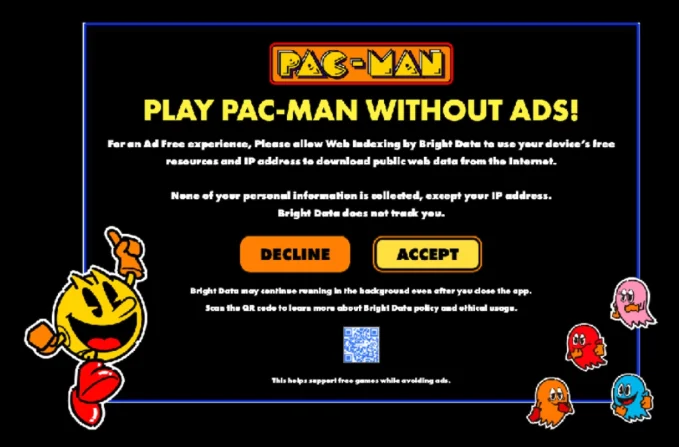

 Sagoh
Sagoh  Evan Lee Salim