
 By Iffa Jayyana
As we navigate through 2026, the dropshipping landscape remains a cornerstone of global e-commerce, commanding a market valuation of approximately $543.53 billion. However, the barrier to entry has shifted. While the model remains "alive and well," the sheer volume of new entrants has transformed the industry into a high-stakes environment where success is no longer dictated by mere product availability, but by the efficiency of one’s operational partner.
For retailers operating on platforms like Shopify, the decision between Doba and Spocket is no longer just about which site has more items; it is about choosing a logistics infrastructure capable of handling the complexities of modern, multi-channel retail.
Main Facts: The Strategic Divide
The fundamental difference between the two platforms lies in their operational philosophy.
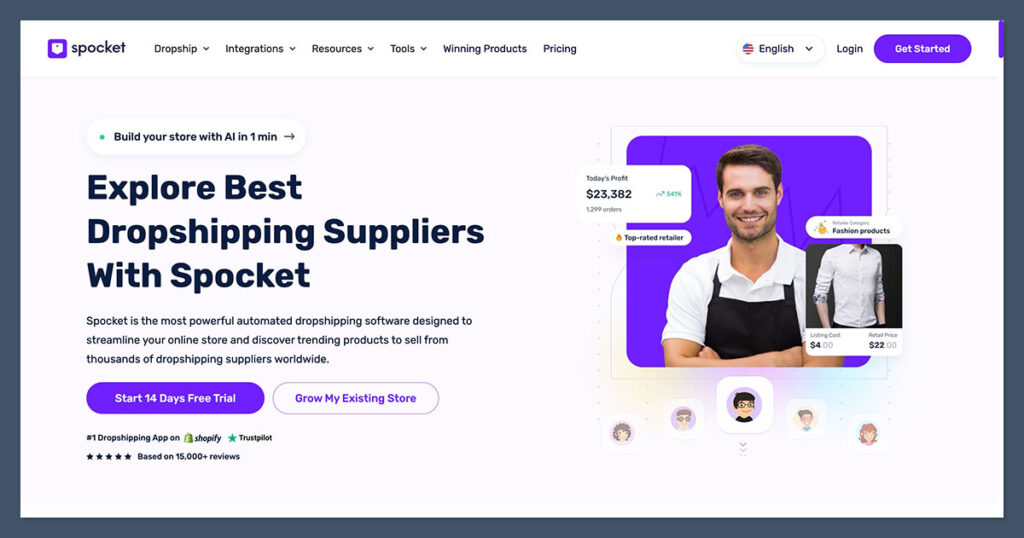
- Spocket is built on the principle of curated selectivity. It prioritizes a high-quality, boutique-style catalog sourced primarily from the United States and Europe. It is the "specialist" tool, designed for entrepreneurs who want to curate a brand image centered on quality and regional shipping speed.
- Doba operates as a centralized operations hub. It has evolved beyond a simple supplier directory into a comprehensive ecosystem that leverages advanced AI to manage the entire product lifecycle—from market research and sourcing to complex, multi-channel order fulfillment.
While both offer millions of SKUs, Doba is engineered for the retailer looking to scale across Amazon, TikTok Shop, Walmart, and beyond, whereas Spocket is optimized for the store owner who values simplicity and a "white-glove" supplier experience.
Chronology: The Evolution of the Platforms
To understand the current market, one must look at how these platforms have adapted over the last 24 months.
The Rise of the AI Agent
Historically, dropshipping platforms were static databases. In early 2025, Doba shifted the paradigm by introducing "Doba Pilot," an AI agent that initially served as a search assistant. By mid-2026, this tool underwent a massive upgrade, transitioning into a full-scale automated business manager. This shift reflects a broader industry trend where "manual dropshipping"—the act of individually managing listings and tracking—is being rendered obsolete by automated AI workflows.
The Specialization Gap
Conversely, Spocket has spent the last year refining its supplier vetting processes. Recognizing that "too much choice" often leads to "poor quality," they have doubled down on the 25% minimum discount rule for retailers and strictly enforced supplier reliability metrics. While Doba pursued breadth and automation, Spocket pursued depth and brand integrity.
Supporting Data: Comparative Metrics
Selecting the right partner requires a granular look at the data. Below is how these platforms compare across critical operational benchmarks.
| Feature | Doba | Spocket |
|---|---|---|
| Primary Focus | Scaling & Multi-Channel | Curation & Brand Identity |
| AI Integration | High (Doba Pilot: Research to Fulfillment) | Moderate (Intelligent filtering) |
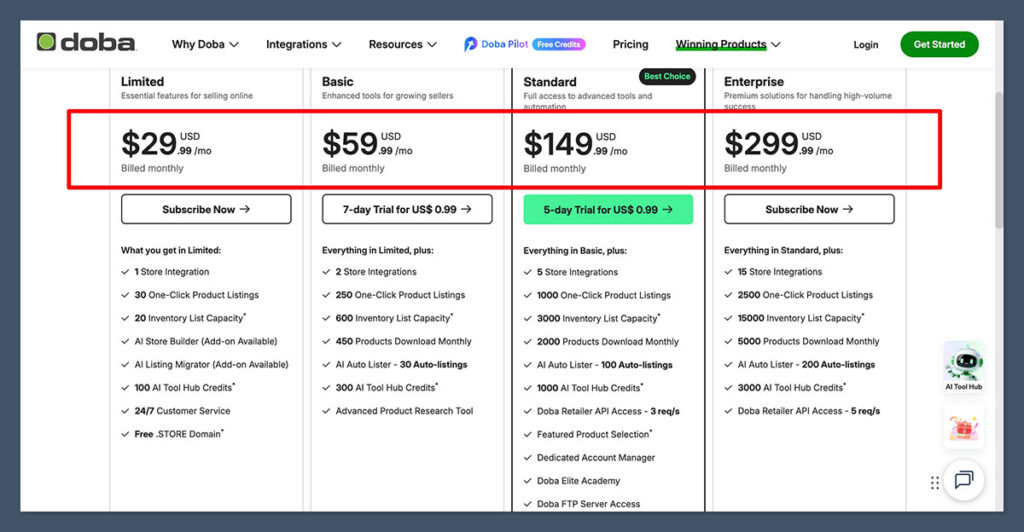
| Pricing (Entry) | $29.99/mo | $39.99/mo |
| Catalog Size | 1M+ SKUs | ~1M Products |
| Best For | Growing/Mid-market sellers | Beginners/Boutique owners |
| Key Strength | Operational Automation | Supplier Quality/Vetting |
Financial Implications
A critical, often overlooked factor in 2026 is the "hidden" cost of scalability. Spocket requires a separate subscription for every connected store. For an entrepreneur testing five different niches across five different storefronts, the cost of Spocket can balloon rapidly. Doba, while having a steeper learning curve, offers multi-store management within its higher-tier plans, making it more cost-effective for serial entrepreneurs.

Operational Implications: AI and Automation
The introduction of Doba Pilot has created a significant divide in how merchants handle their daily tasks.
Market Research and Sourcing
Doba’s "Market Scout" tool uses live market data to analyze demand, competition, and seasonality. This allows users to make data-backed decisions before spending a single dollar on inventory. Spocket offers intelligent filtering, but it lacks the predictive analytics found in the Doba ecosystem.
Multi-Channel Syncing
For sellers targeting TikTok Shop or Walmart, the friction of manually updating inventory is a death sentence. Doba’s ability to sync stock counts, pricing rules, and order status across multiple marketplaces from a single dashboard provides a "central nervous system" for the business. Spocket excels at the "Shopify-to-Customer" journey, but it is less optimized for the complex web of external marketplaces that define the 2026 retail environment.
Shipping, Fulfillment, and Returns: The Reality
Regardless of the platform, the customer’s experience is defined by the package arrival time.
- Doba’s U.S. Footprint: With roughly 90% of its products shipping from U.S. warehouses, Doba mitigates the biggest risk in dropshipping: the "China-to-Customer" wait time. Their policy on prepaid return labels for damaged goods provides a layer of security for the retailer.
- Spocket’s Quality Control: Spocket’s mandate that suppliers maintain a 95% order success rate provides peace of mind. However, because each supplier on Spocket creates their own return policy, the lack of a universal standard can be a hurdle for retailers managing large catalogs.
Official Stances and Industry Feedback
Industry analysts note that the choice between the two is increasingly becoming a question of "lifecycle stage."
The Beginner’s Perspective: For those launching their first store, the consensus is that Spocket’s interface is significantly more approachable. The ability to easily request samples and the intuitive, clean UI allows new merchants to focus on marketing rather than backend logistics.
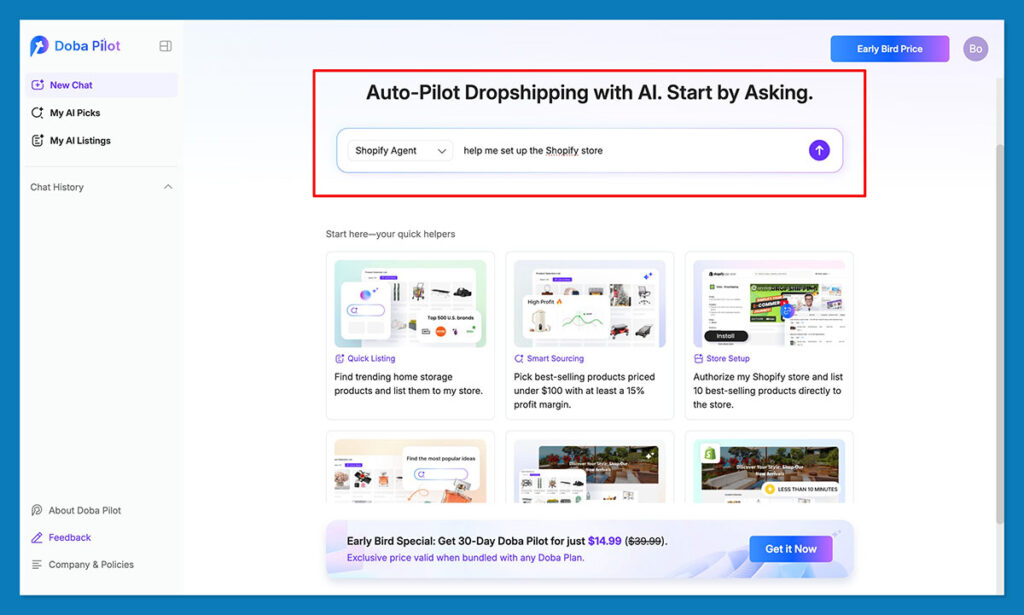
The Scaler’s Perspective: For merchants doing over $10,000 in monthly revenue, the consensus shifts toward Doba. The ability to use the "AI Store Builder" and "AI Listing Migrator" allows these businesses to launch new store variants in hours rather than days. The professional consensus is clear: Doba is an infrastructure play, while Spocket is a curation play.
The Verdict: Choosing Your Path in 2026
When to choose Spocket:
- You are a beginner or operate a single, highly curated store.
- You prioritize branded invoices and professional-looking packaging.
- You want an easy, stress-free way to sample products before selling them.
- Your brand is focused on high-quality, localized, or boutique items.
When to choose Doba:
- You are managing multiple stores or selling across various marketplaces (Amazon, TikTok, Walmart).
- You want to leverage AI for market research, sourcing, and automated fulfillment.
- You are looking to scale quickly and want to reduce the administrative burden of daily operations.
- You need a platform that can handle API integrations for complex data streams.
Final Assessment
As the 2026 market matures, the "one-size-fits-all" dropshipping platform is effectively extinct. If you view dropshipping as a creative endeavor—a way to build a specific brand with a tight, high-quality collection—Spocket remains the premier choice. However, if you view dropshipping as a scalable logistical business model, Doba has positioned itself as the superior tool. Its recent investment in AI-driven automation via Doba Pilot transforms it from a supplier directory into a comprehensive business operating system, providing the necessary leverage to compete in an increasingly crowded digital marketplace.
Ultimately, your success will not be defined by the platform alone, but by your ability to utilize the tools provided to minimize friction. Whether you choose the curated simplicity of Spocket or the automated power of Doba, the winners in 2026 will be those who master the operational workflow, prioritize U.S.-based shipping speeds, and remain agile enough to pivot based on the AI-driven market insights now at their fingertips.
 Dwi Wanna
  Lina Irawan
  Basiran