
 By Nana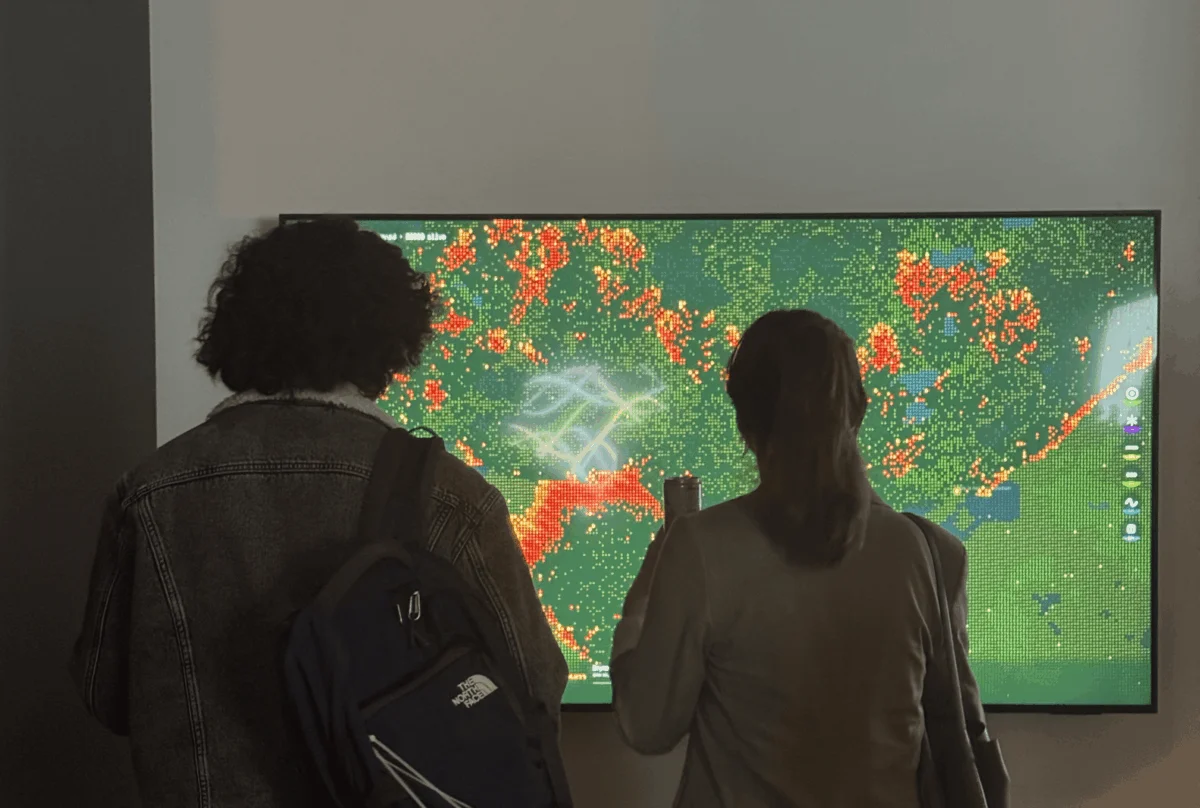
SAN FRANCISCO — In the modern era of climate discourse, humanity is routinely inundated with a ceaseless tide of metrics. We are told of soaring demand forecasts, multi-gigawatt grid expansion curves, and degrees of planetary warming that exist comfortably outside our historical comprehension. Yet, numbers on a report remain fundamentally abstract. A chart embedded in a corporate slide deck is routinely met with an obligatory nod, only to be promptly forgotten.
For Pranavi Aourpally, a San Francisco-based data experience designer working within the energy sector, translating these alarming trends into actionable insights is a daily professional obligation. However, it is an endeavor continuously undermined by what she terms the “empathy gap”—the vast, yawning chasm between what cold, hard data objectively states and what a human being actually feels.
Nowhere is this disconnect more acutely felt than in the overlapping realms of energy infrastructure and wildland fire risk. As global temperatures rise and extreme weather events multiply, regions like Northern California are experiencing longer burn windows and unprecedented ecological stress. These are not isolated natural cycles; they form a dangerous, compounding feedback loop. The exponential growth of our digital demand—epitomized by energy-hungry AI data centers consuming power at a pace rivaling sovereign nations—places an increasingly heavy physical burden on a warming planet.
As energy grids expand to meet this insatiable appetite, more transmission lines slice through terrain that grows drier with each passing season. Aourpally understood this interconnected causality intellectually. She could cite the statistics on demand surge and fuel aridity without hesitation. What she could not do, however, was make the average person genuinely feel the real-world stakes hidden behind a simple, routine AI prompt.
The Chronology of an Idea: From Northeastern Roots to the DVS Mentorship
Aourpally’s journey toward bridging this perceptual divide began during her formal training in Information Design and Data Visualization at Northeastern University. There, she was taught to treat data not merely as a spreadsheet entry, but as a tangible design material—something possessing physical texture, weight, and emotional resonance.
Yet, arriving at the Data Visualization Society (DVS) mentorship program, she faced a formidable conceptual hurdle: How does one accurately visualize and evoke the heavy human cost of something entirely invisible?
Enter Divya Meghnani, Head of Product at Databricks and Aourpally’s assigned mentor within the DVS program. Meghnani proved instrumental in helping Aourpally synthesize her professional domain expertise in data systems with a deeply personal creative intent. Rather than focusing solely on the technical architecture of a build, Meghnani challenged his mentee to look past the conventional “what” of data presentation and interrogate the deeper “why” of the human experience.
This mentorship served as the catalyst for a radical departure from traditional static infographics. Drawing inspiration from Daniel Shiffman’s foundational text Nature of Code and the philosophy of “Data Humanism” pioneered by data artist Giorgia Lupi, Aourpally sought a medium capable of mirroring the organic, unpredictable nature of ecological systems. She turned away from standard charts and embraced cellular automata.
Anatomy of a Simulation: Wired to Burn
The culmination of this creative exploration is Wired to Burn (accessible via wired-to-burn.vercel.app), an interactive, generative wildfire simulator designed to thrust the user directly into the center of an ecological crisis.
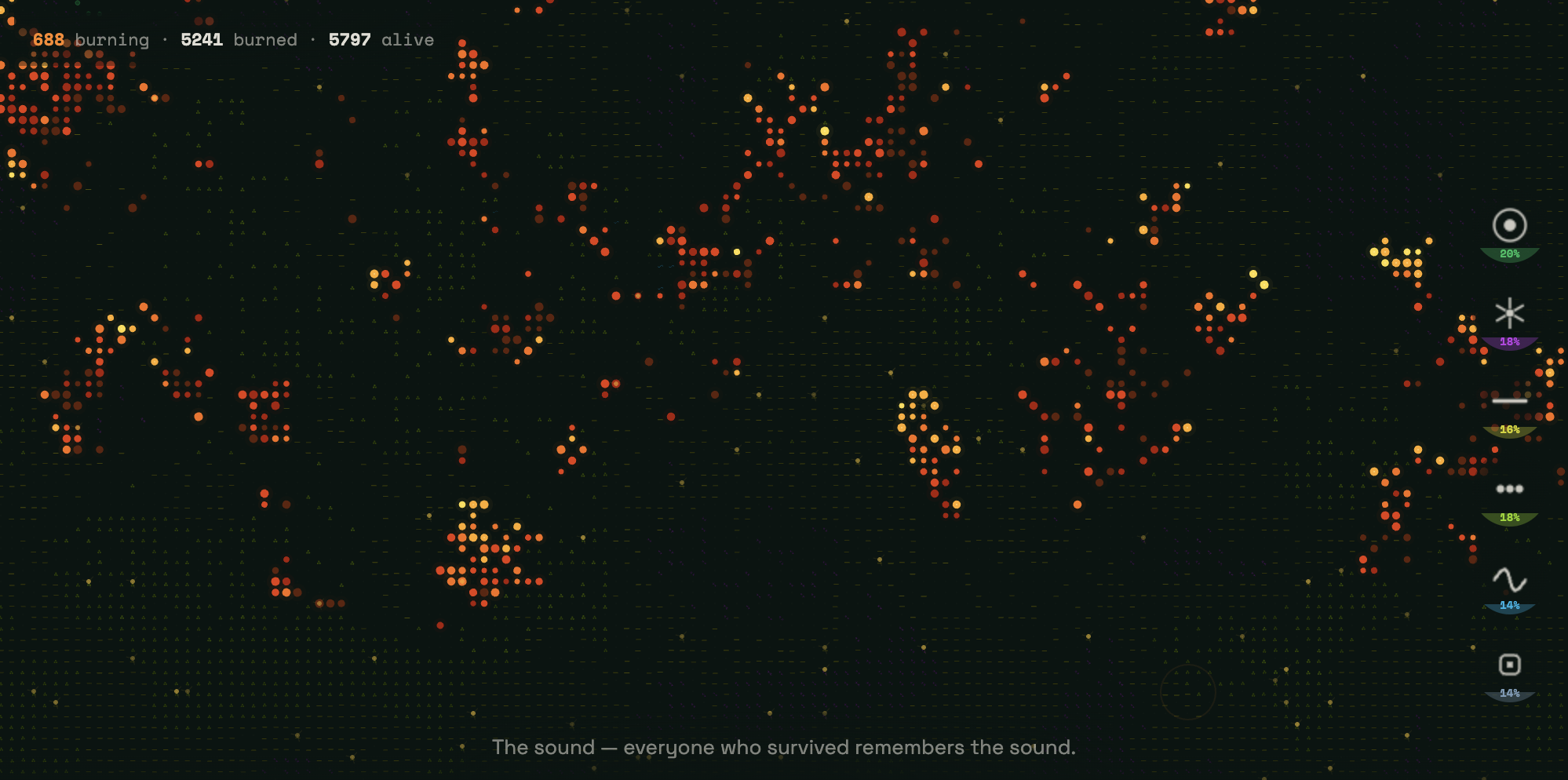
In this digital environment, the user is stripped of their traditional role as a passive observer. Instead, the cursor itself becomes the environmental spark. Upon launching the simulation, the user selects from six distinct terrain types, each represented on a near-black canvas by repeating symbols in vivid neon hues: emerald green targets for dense forests, violet starbursts for shrubland, acid yellow dashes for agricultural fields, lime green dots for grasslands, cyan sine waves for wetlands, and slate-blue squares for developed lands.

An amber ember cursor hovers at the center of the quiet, unblemished landscape. The user sets the initial ignition conditions—adjusting variables for fuel density and baseline dryness levels that directly mirror the real-world impacts of escalating energy demands. Once the user clicks to ignite, the human element recedes, and the raw mathematics of cellular automata take over.
Utilizing the p5.js library, Aourpally engineered a system where the fire behaves as a living, breathing entity. The simulation calculates risk dynamically across more than 9,000 individual grid cells, evaluating the state of each cell based on its immediate neighbors and overarching environmental variables.
Crucially, as the fire sweeps across the terrain, it does not simply scorch pixels into a void of neutral black. Following Giorgia Lupi’s tenet that data should serve as a vessel for human stories, the advancing flame leaves behind “ash zones.” Within these scarred patches of the digital landscape, narrative text emerges organically, detailing the hidden infrastructure costs and environmental externalities of everyday digital behaviors.
The TIAT Exhibition: Closing the Empathy Gap
The true test of Wired to Burn arrived when Aourpally debuted the installation at the TIAT exhibition in San Francisco. It was here that she witnessed the closure of the empathy gap in real-time.
Observers approached the screen initially drawn by the mesmerizing visual aesthetics of generative fire algorithms. However, as the flames subsided and they began to read the narrative fragments embedded within the digital ash, the psychological shift was palpable. Visitors quickly realized they were not merely playing an interactive browser game; they were actively engaging with an uncompromising mirror of contemporary climate reality.

One recurring behavioral pattern stood out during the exhibition: visitors repeatedly returned to the ash-strewn zones to read the narrative text multiple times. This tangible engagement demonstrated a fundamental truth about modern communication—when complex, systemic data is imbued with a human pulse, audiences transition effortlessly from mindless digital scrolling to deep, sustained reflection.
Broader Implications for Data Design and the Energy Sector
Aourpally’s transition from a recent academic graduate to an exhibiting creative technologist within the span of a single mentorship program highlights a broader evolution within the data design community. As the industry looks ahead to events like the upcoming Outlier Conference—centered appropriately around the theme of "The Final Draft"—practitioners are increasingly forced to re-evaluate their methodologies.
In the framework of data humanism, "The Final Draft" is recognized as a misnomer. Data visualization concerning climate and energy systems is never truly a finished product; it is an iterative, living process. Just as natural terrain regenerates after a blaze and wildfire cycles repeat, the underlying data continuously evolves, demanding new modes of emotional translation.
The implications of Aourpally’s work extend far beyond the confines of art galleries and tech exhibitions. As artificial intelligence infrastructure continues to place unprecedented demands on public utility grids, energy companies, regulators, and civic planners face an urgent communications crisis. Technical reports and environmental impact statements, while necessary, frequently fail to galvanize public urgency or secure meaningful behavioral change.
By proving that complex, systemic risks can be effectively communicated through interactive empathy engines, Wired to Burn offers a compelling blueprint for the future of environmental advocacy and corporate transparency. It serves as a timely reminder that the primary obligation of data designers is not merely to display numerical accuracy, but to maintain profound humility when confronting complex planetary systems—ensuring that whenever we speak about the future of our world, the people inhabiting it are made to feel precisely what is at stake.
 Lina Irawan
  Nila Kartika Wati
  Lina Hope