
 By Ammar Sabilarrohman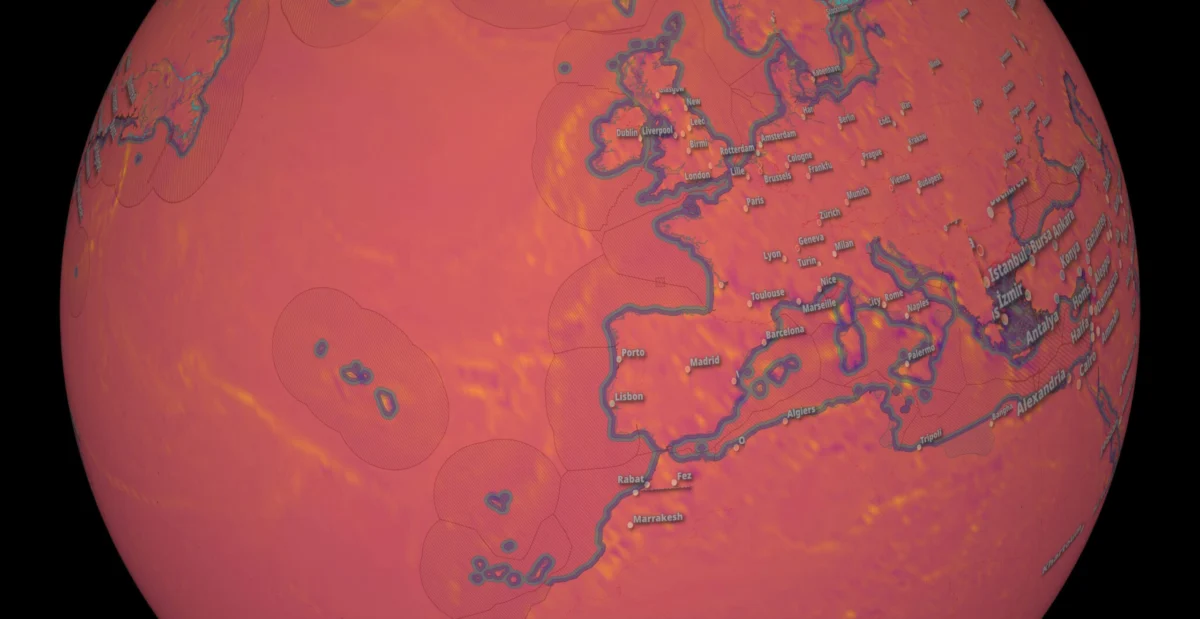
For the aviation industry, the cost of a single long-haul flight is staggering. A Boeing 787-9 Dreamliner, embarking on a nonstop journey from Newark Liberty International (EWR) to Rome’s Leonardo da Vinci-Fiumicino Airport (FCO), incurs an estimated $68,000 in jet fuel expenses over its 8.5-hour duration. In an era of razor-thin airline margins and increasing environmental scrutiny, these numbers are not just operational costs—they are a focal point for massive potential efficiency gains. By dynamically adjusting flight paths based on real-time atmospheric data, carriers can shave thousands of dollars off a single trip while simultaneously reducing their carbon footprint.
While legacy firms like Jeppesen have long dominated the market for flight planning software, a new, open-source paradigm is emerging. Spearheaded by the integration of Scikit-decide and OpenAP, researchers and data scientists are now democratizing access to high-fidelity flight trajectory modeling. This shift promises to move flight path optimization from a black-box service to a transparent, reproducible, and community-driven science.
The Technical Foundation: Bridging AI and Aerodynamics
At the heart of this movement is a six-year development effort known as Scikit-decide. This comprehensive framework is designed for reinforcement learning, automated planning, and complex scheduling. Its versatility allows it to handle everything from optimizing multi-drone swarms to reorganizing airline workforce schedules. When paired with the OpenAP toolkit—an aircraft performance model developed by Dr. Junzi Sun, a tenured assistant professor at Delft University of Technology—the framework gains the ability to simulate precise fuel consumption for a vast array of commercial aircraft.
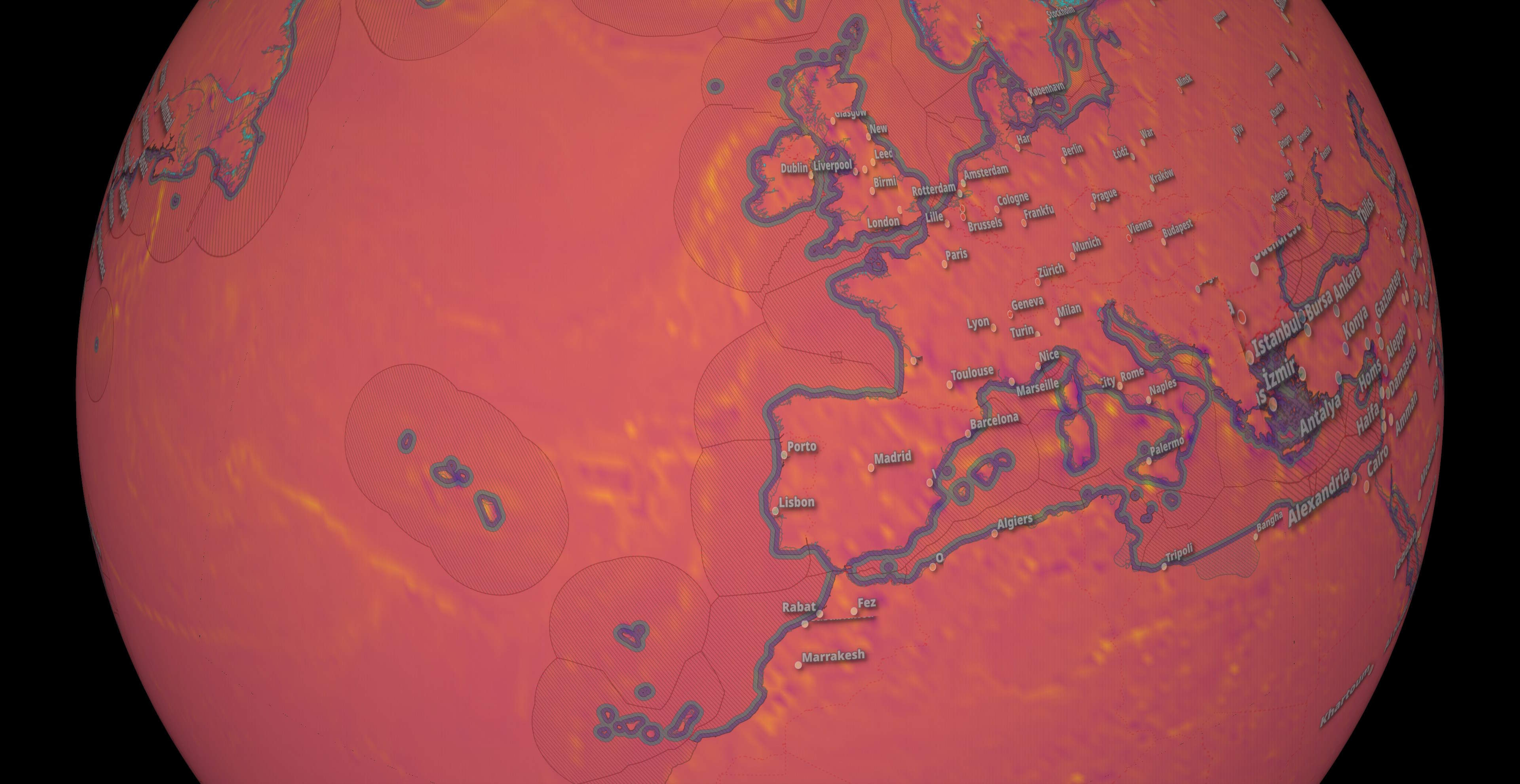
The utility of this combination lies in its ability to ingest meteorological data from the National Oceanic and Atmospheric Administration (NOAA). By cross-referencing aircraft performance models with global wind patterns, the system calculates the "path of least resistance," which is rarely a straight line.
A High-Performance Workstation Environment
Modern computational flight planning requires more than just clever algorithms; it demands significant hardware overhead. To facilitate this analysis, the development environment utilizes an AMD Ryzen 9 9950X processor, boasting 16 cores and 32 threads, paired with 96 GB of DDR5 RAM. This hardware allows for the rapid iteration of trajectory simulations.
The software stack relies on Ubuntu 24 LTS, running atop Windows 11 via the Windows Subsystem for Linux (WSL). While a pure Linux environment is often preferred for high-performance computing, the continued need for industry-standard tools like ArcGIS Pro and legacy support for NVIDIA drivers ensures that a hybrid setup remains the most pragmatic choice for researchers who bridge the gap between GIS and data science.
Chronology of Development and Implementation
The development of these open-source tools followed a rigorous path:
- Initial Frameworks: The foundation was laid by the creation of OpenAP, providing the data-driven backbone for aircraft performance.
- Tooling Integration: The addition of OpenTop allowed for flight trajectory visualization and optimization.
- Data Curation: The assembly of massive datasets covering nearly 14,000 airports and 427 distinct engine types provided the necessary variables for realistic simulations.
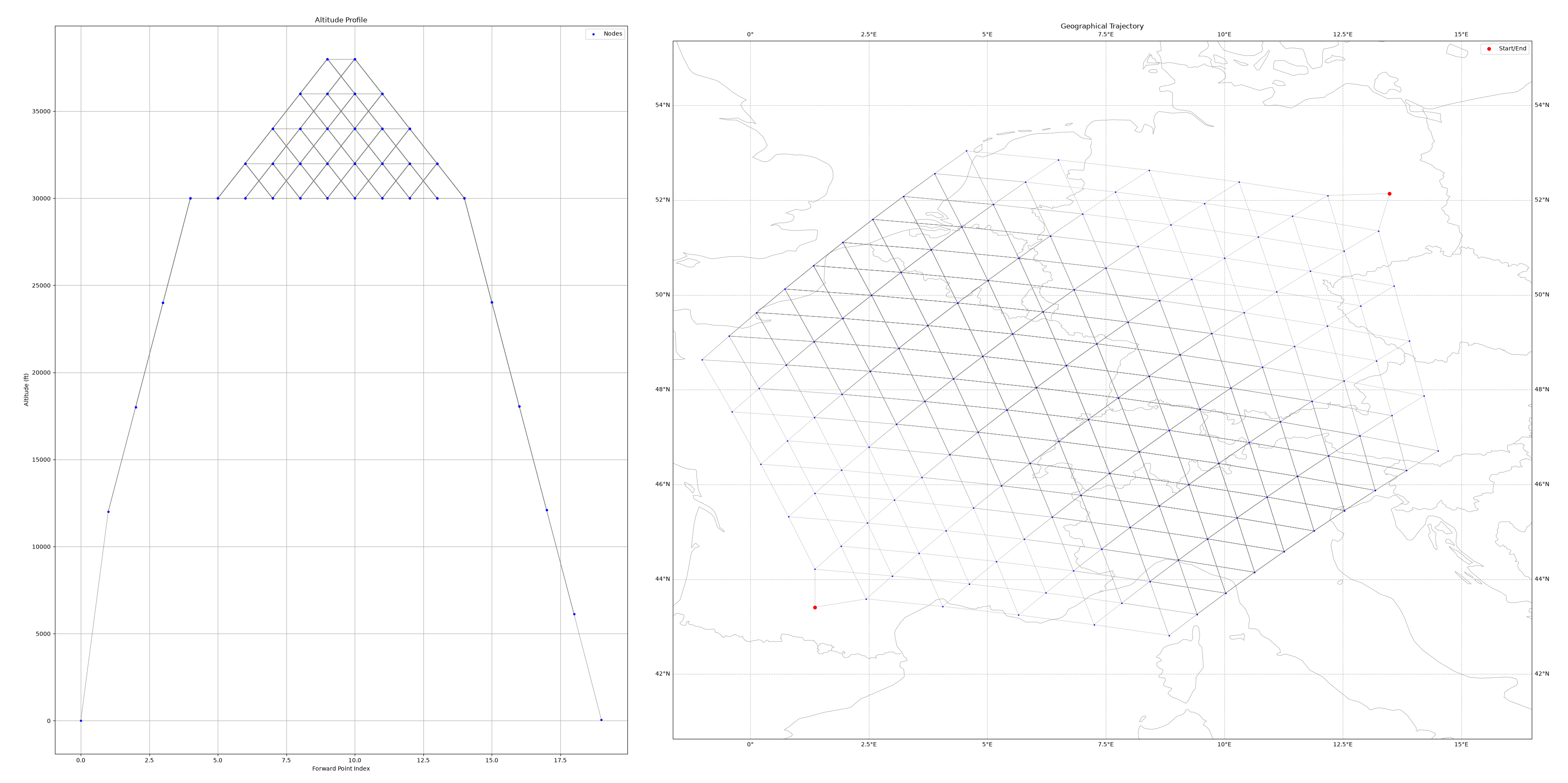
- Solver Deployment: The application of A* (A-star) search algorithms allowed for the calculation of the most fuel-efficient routes, taking into account specific aircraft weights, altitudes, and wind speeds.
Supporting Data: Mapping the Aircraft and Engines
The strength of the OpenAP model is its exhaustive dataset. By analyzing the repository, we can see the sheer diversity of modern aviation. The model includes granular performance data for 17 Boeing models, 13 Airbus models, and various smaller manufacturers. Each entry provides precise drag polar coefficients, fuel flow rates, and engine thrust capabilities.
For instance, looking at the Rolls-Royce Trent 970-84 engine, we find a complex set of emission indices and thrust parameters that allow the simulation to account for fuel burn at different flight phases—takeoff, climb, cruise, and descent. This level of granularity is what allows Scikit-decide to differentiate between the fuel efficiency of an Airbus A320 and a Boeing 737 under identical weather conditions.
Comparative Analysis: Toulouse to Berlin vs. Warsaw
A critical test of these models involves comparing optimal flight paths between major European hubs.
Toulouse to Berlin (EDDB)
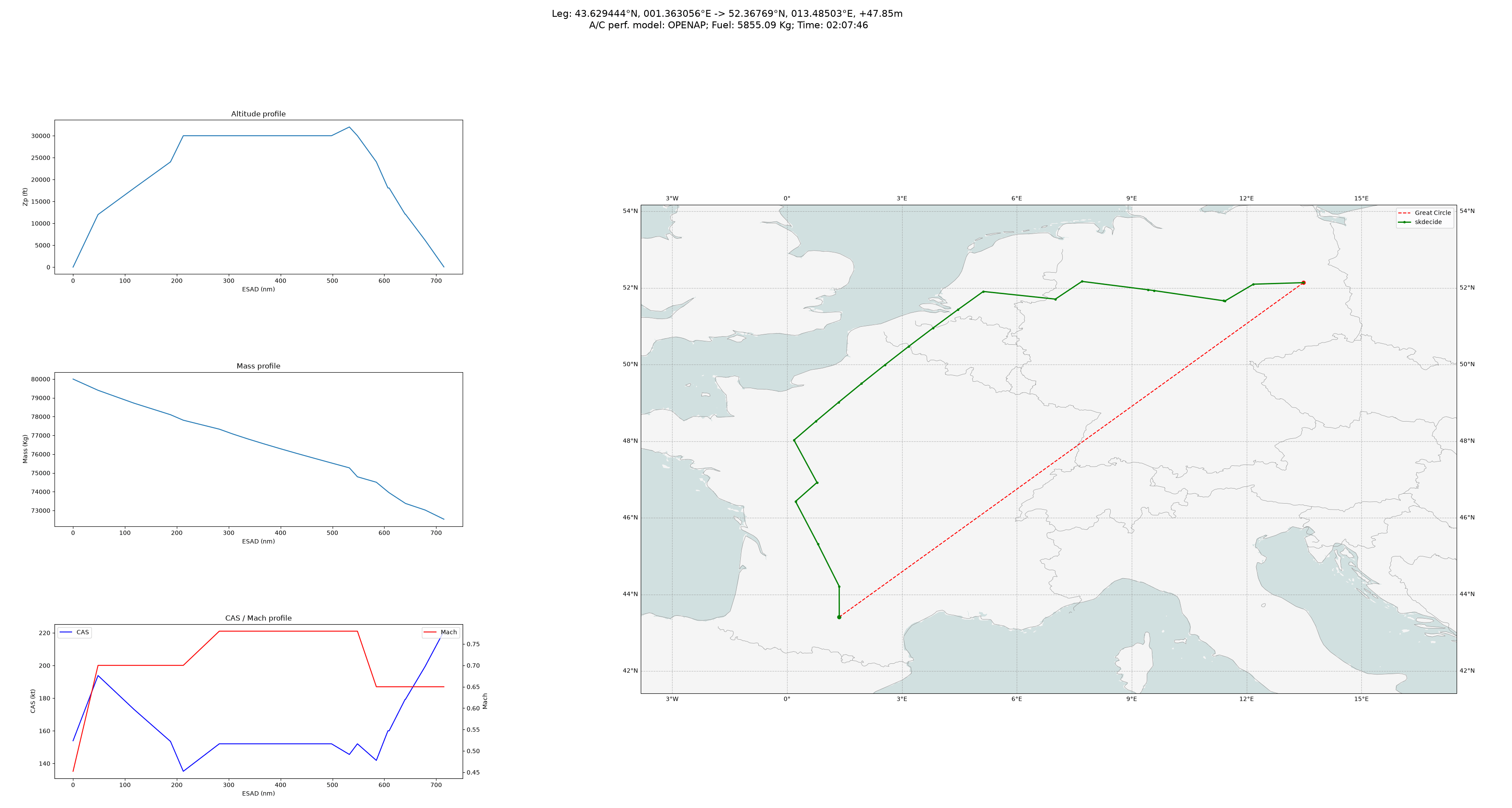
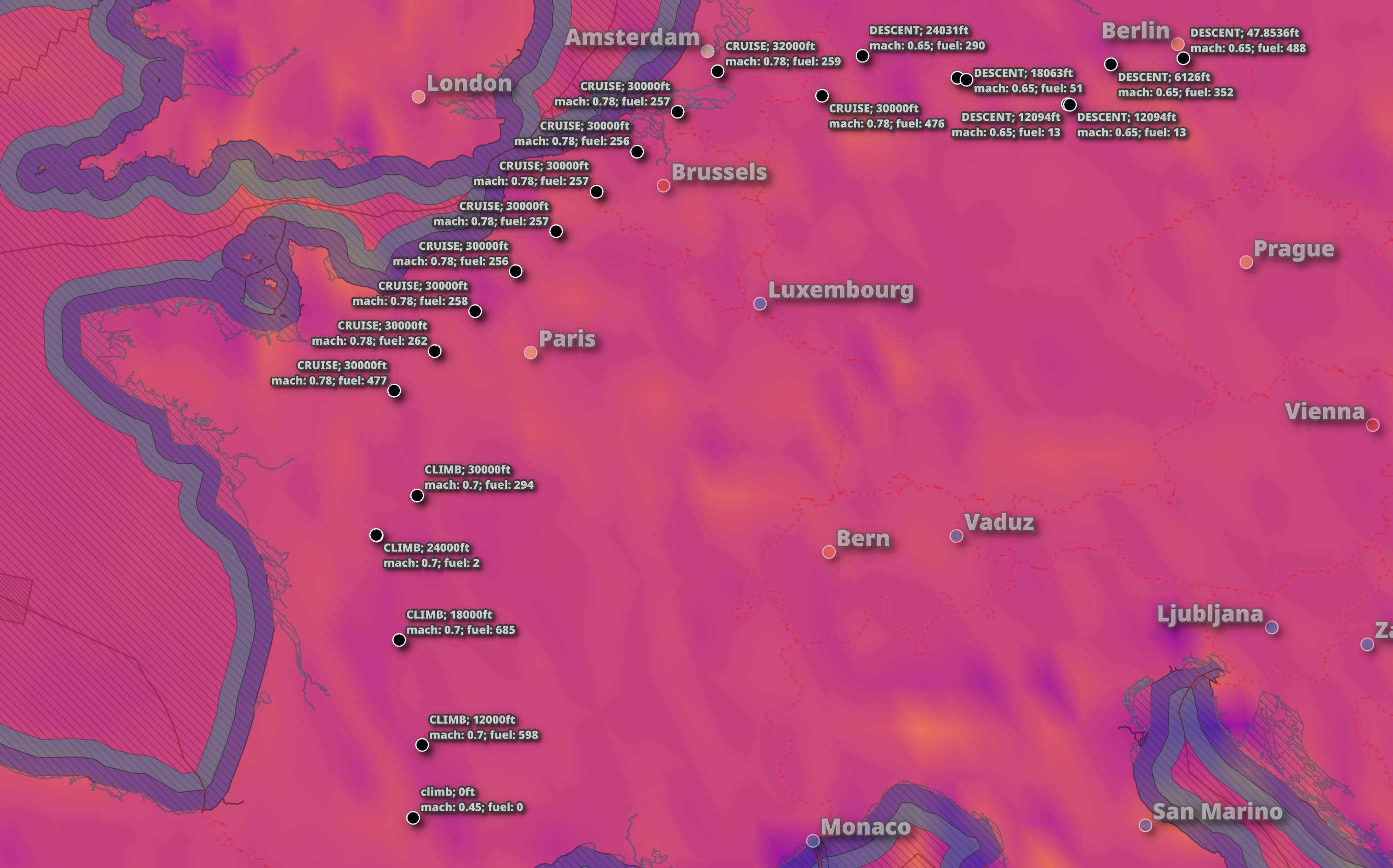
When configuring the solver for a flight from Toulouse (TLS) to Berlin (BER) for an Airbus A320, the A* algorithm evaluates the trade-offs between time and fuel. By utilizing the "lazy_fuel" heuristic, the system identifies a path that balances the energy expended against the duration of the flight. The solver successfully calculated a trajectory in under 0.3 seconds, reaching the destination in approximately 128 minutes with a total fuel burn of roughly 5,855 kilograms.
Toulouse to Warsaw (EPWA)
A comparative flight to Warsaw (WAW) yielded unexpected results. Despite being 500 kilometers further than the flight to Berlin, the Warsaw flight was completed significantly faster. The reason lies in the atmospheric conditions and the aircraft’s ability to reach a higher initial cruising altitude. Under the specific weather parameters modeled, the A320 reached its cruising state more efficiently, resulting in a flight that required only 76% of the fuel used for the shorter Berlin trip. This underscores the core mission of modern flight planning: wind, altitude, and weight are far more influential than simple distance.
Implications for the Aviation Industry
The move toward open-source optimization has profound implications for the industry.
1. Operational Efficiency and Sustainability
Airlines are under immense pressure to meet net-zero emissions targets. By moving away from static flight plans and toward dynamic, AI-optimized trajectories, carriers can reduce fuel burn by a margin that, when aggregated across thousands of flights, equates to millions of tons of carbon emissions saved annually.
2. Transparency and Standardisation
Proprietary flight planning software often acts as a black box. By using open-source tools like OpenAP and Scikit-decide, aviation authorities and researchers can verify the models being used. This transparency is vital for regulatory compliance and for building public trust in the industry’s sustainability efforts.
3. Future-Proofing with AI
As the integration of "grid costs"—such as contrail mitigation—becomes standard, these tools allow for a more nuanced approach to flight planning. The ability to input custom cost functions (e.g., 30% fuel burn and 70% environmental impact) into an optimization solver allows airlines to align their operational strategies with both their financial goals and their corporate social responsibility targets.
Final Reflections
The convergence of high-performance computing, open-source frameworks like Scikit-decide, and robust aircraft performance models like OpenAP is fundamentally altering the landscape of aviation management. What was once the exclusive domain of large, well-funded flight planning vendors is now becoming accessible to a wider array of analysts and developers.
As these tools continue to evolve, we can expect to see them integrated directly into the flight management systems of the future. The transition from "flying by the book" to "flying by the data" is not just a technological upgrade—it is a necessary evolution for an industry striving to become more efficient, more transparent, and more sustainable. Whether you are a researcher, an airline operator, or a developer, the codebases provided by Dr. Sun and his collaborators represent a major step toward a more efficient sky.
 rifanmuazin
  Layla Zulfa
  Evan Lee Salim