
 By Lina Irawan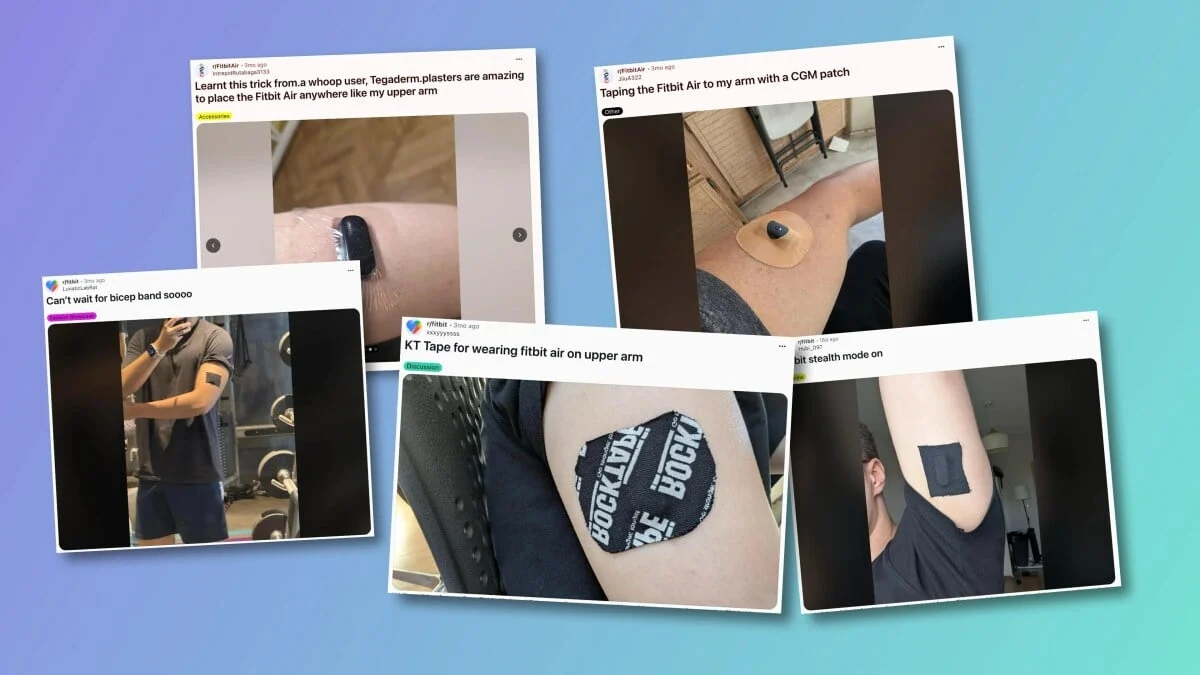
In the ever-evolving landscape of wearable technology, form factor has traditionally dictated function. Fitness trackers and smartwatches have long been tethered to the wrist, designed to mimic traditional timepieces while quietly logging steps, sleep, and heart rates. However, a growing subculture of fitness enthusiasts is breaking free from convention. Inspired by the "any-wear" versatility popularized by brands like Whoop and its dedicated bicep bands, users of Google’s Fitbit Air are increasingly taking matters into their own hands—quite literally—by shedding the wrist strap altogether and taping the device directly to their arms.
While tech giants have been slow to officially support alternative placement options for mainstream consumer devices, grassroots DIY hacks are filling the void. This trend, which has gained significant traction across online fitness communities and Reddit forums, highlights a growing consumer demand for more ergonomic, unobtrusive ways to track biometric data without the traditional constraints of a wrist-bound band.
Main Facts: The Rise of the Bicep-Taped Fitbit
The core phenomenon is remarkably straightforward: users are removing the standard silicone or metal bands from their Fitbit Air devices and adhering the tracker module directly onto their upper arms, calves, or torso using medical adhesives.
The primary motivation is comfort and utility. For weightlifters, CrossFit athletes, and martial artists, wrist-based trackers can interfere heavily with equipment. Wrist wraps, kettlebell handles, lifting straps, and boxing gloves frequently clash with traditional smartwatches, causing pinching, inaccurate readings, or physical damage to the device. Moving the tracker to the bicep completely clears the wrist, allowing athletes to train unhindered.
Furthermore, a growing segment of consumers simply suffers from "wrist fatigue"—the desire to wear traditional watches, mechanical timepieces, or nothing at all on their wrists, while still maintaining uninterrupted health tracking.
However, because Google and other mainstream manufacturers have yet to release official bicep bands or body-adhesion accessories for devices like the Fitbit Air, users have had to experiment with various DIY methods to keep the hardware securely attached during high-intensity, sweat-drenched workouts.
Chronology: From Fringe Hacks to Mainstream Fitness Forums
The Evolution of Alternative Wearables
The concept of moving biometric sensors away from the wrist is not entirely new. Specialized athletic ecosystems like Whoop pioneered the market for bicep bands and specialized athletic apparel with integrated pockets, recognizing that certain biometric metrics—particularly optical heart rate monitoring—can actually benefit from more stable placement on the upper arm.
The Fitbit Air Subreddit Discovery
The current trend surrounding the Fitbit Air began as a series of isolated experiments documented on niche online forums. Over the past several months, users on the Fitbit Air subreddit began posting photos and tutorials detailing how they successfully discarded their wristbands. What started as humorous, makeshift experiments involving basic household tape quickly evolved into serious discussions regarding optimal placement, sweat resistance, and adhesive longevity.
Real-World Testing and Validation
As the trend caught on, tech reviewers and early adopters began putting the "taped Fitbit" hypothesis to the test. Field trials involving runs, high-intensity interval training (HIIT), and heavy lifting sessions confirmed that while the physical attachment is viable, the software integration and accelerometer data require careful user adaptation.
Supporting Data: Adhesives, Accuracy, and Anatomy
Experimenting with body-worn tech requires finding the right adhesive. Users have tested a wide variety of medical and athletic tapes, each presenting distinct advantages and drawbacks.
Comparing Adhesives: What Works Best?
| Adhesive Type | Sweat Resistance | Longevity | Removal Ease | Best Use Case |
|---|---|---|---|---|
| KT Tape / Athletic Tape | Moderate | Poor to Moderate (1–2 days) | Easy | Short-term workouts or temporary trials |
| Medical / Surgical Tape | Low to Moderate | Poor | Very Easy | Sensitive skin, brief application |
| CGM Overpatches | High | Excellent (Up to 2 weeks) | Difficult (Requires warm water) | Long-term wear, heavy training regimens |
1. KT Tape and Athletic Tape
Initially, many users gravitated toward KT tape—the elastic therapeutic tape commonly used by athletes to stabilize joints and muscles. While readily available, fitness testers quickly discovered that standard strips of KT tape tend to degrade rapidly under heavy sweat and post-workout showers. Because a small piece of tape is required to secure a Fitbit Air module, the surface area for adhesion is drastically reduced compared to its intended use for muscle support, leading to premature peeling.
2. Continuous Glucose Monitor (CGM) Overpatches
The gold standard for this trend has quickly become the CGM overpatch. Originally designed to secure medical continuous glucose monitors (such as those used by diabetic patients) to the back of the upper arm, these specialized medical-grade stickers are engineered to withstand weeks of movement, sweat, swimming, and daily showers.
Given that a typical CGM sensor lasts roughly two weeks—while the Fitbit Air’s battery life hovers around one week—these overpatches are ideally suited for the task. They keep the device completely snug against the skin, sealing out ambient light, which can notoriously disrupt optical heart rate sensors.
Heart Rate Accuracy vs. Activity Detection
Placing a fitness tracker on the upper arm yields mixed results when evaluated through a technical lens:
- Heart Rate Monitoring: Because the upper arm provides a stable platform with good vascular access on many individuals, heart rate tracking via the optical sensor often performs on par with dedicated chest straps or wrist placement. The tightness of the overpatch successfully blocks out ambient light, a common culprit behind inaccurate photoplethysmography (PPG) readings.
- Auto-Detection and Accelerometry: This is where the DIY method hits a roadblock. Fitness trackers rely heavily on proprietary algorithms tuned to the expected kinetic patterns of the human wrist. When the device is strapped to a bicep, its accelerometer interprets movement entirely differently. During field tests, automatic workout detection frequently failed to register runs or cycling sessions. Users must manually initiate workouts through the app or device interface to ensure accurate activity logging.
Official Responses and Industry Silence
As of publication, major consumer tech manufacturers—including Google and Fitbit—have not officially endorsed or commented on the trend of taping consumer trackers to the body. Customer support channels generally advise against modifying the device, removing factory-standard bands in non-approved ways, or applying unregulated chemical adhesives directly to the hardware casing.
However, industry analysts suggest that consumer behavior of this nature often serves as a precursor to official hardware development. The commercial success of dedicated bicep bands in the athletic market proves there is a profitable demographic of users who prefer alternative placement. Whether Google or third-party accessory manufacturers will capitalize on this trend by releasing official arm straps or specialized housing cases for the Fitbit Air remains to be seen.
Implications: Convenience, Cost, and Skin Health
While taping a Fitbit Air to your bicep is an ingenious workaround for specific athletic needs, prospective adopters should weigh several practical implications before raiding their local pharmacy’s first-aid aisle.
The Removal Dilemma
The very feature that makes CGM overpatches great—industrial-strength adhesion—creates a formidable challenge upon removal. Because the Fitbit Air’s battery requires recharging approximately once a week, users must peel back the overpatch weekly. Doing so repeatedly on the delicate skin of the upper arm can lead to irritation, redness, or micro-tears. Veteran users advise a simple pro tip: removal should always be done in a warm shower, allowing water to break down the adhesive bond and minimize skin trauma.
Financial Considerations
Continuously purchasing specialized medical overpatches adds a recurring operational cost to owning a consumer fitness tracker. While a roll of athletic tape is inexpensive, medical-grade overpatches designed for sensitive skin and long-term wear can become costly over months of continuous use.
A Viable Niche Solution
Ultimately, taping a fitness tracker to your arm is neither a flawless corporate feature nor a completely terrible idea. For weightlifters frustrated by wrist interference, or for individuals seeking a discreet way to log health metrics without wearing a traditional watch, it offers a functional, highly customizable workaround.
As consumer wearables continue to mature, the blurring lines between medical-grade monitoring accessories and consumer fitness tech will likely prompt manufacturers to design more modular, multi-placement hardware out of the box. Until then, fitness enthusiasts armed with medical tape and overpatches will continue to forge their own path—proving that when it comes to personal health tracking, form will always follow function.
 Nana
Nana  Siti Muinah
  Neng Nana