
 By rifanmuazin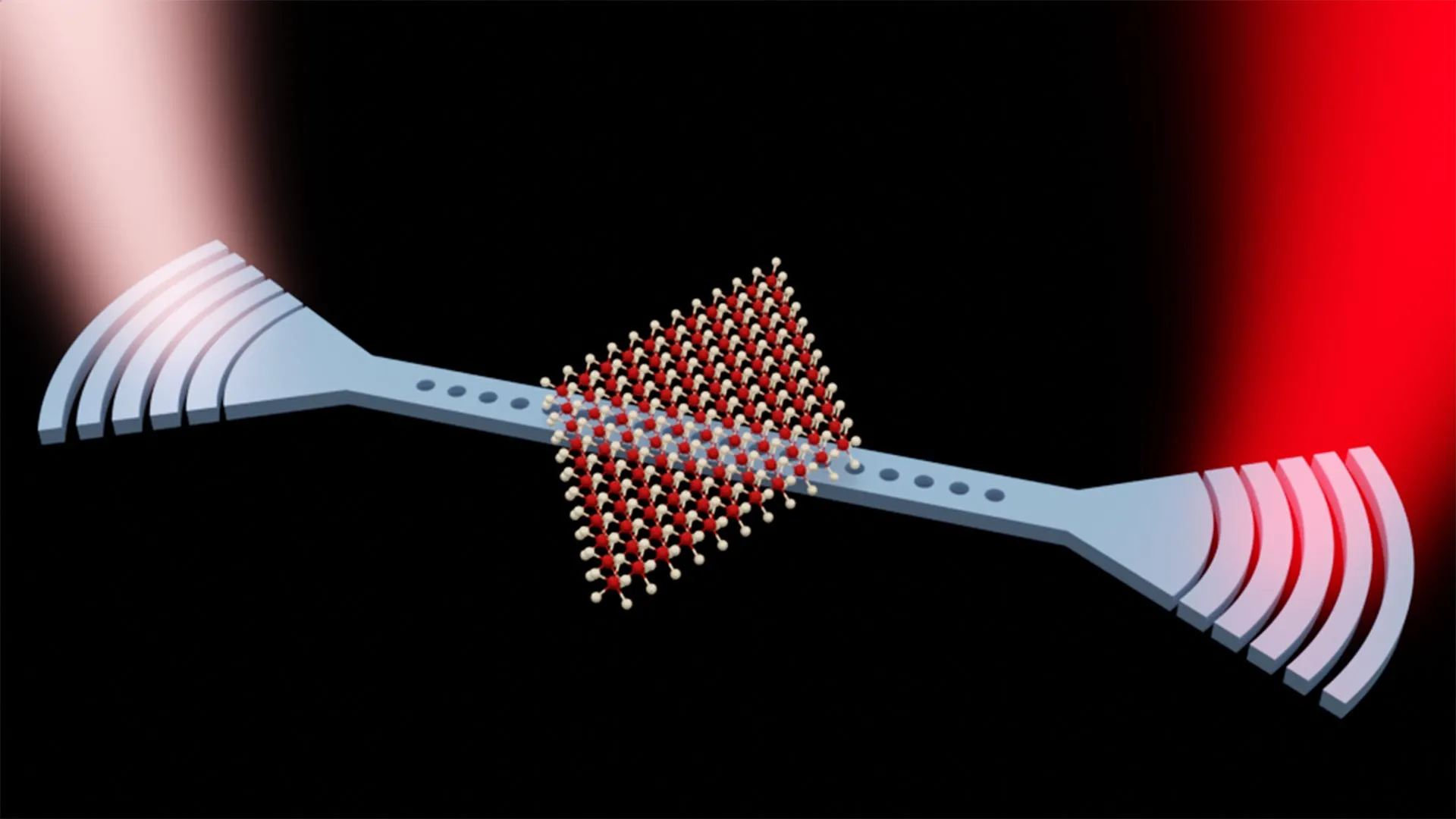
Eighty years ago, the University of Pennsylvania etched its name into the annals of history with the birth of ENIAC (Electronic Numerical Integrator and Computer). Developed by J. Presper Eckert and John Mauchly, this room-sized behemoth—relying on thousands of vacuum tubes and the frantic, heat-generating movement of electrons—launched the modern digital age. Today, that same electron-based architecture remains the foundation of our smartphones, laptops, and the colossal data centers powering modern artificial intelligence.
However, as we push against the physical boundaries of silicon and electricity, we are nearing a "thermal wall." The energy costs and physical limitations of moving electrons are becoming the primary bottleneck for the future of AI. Now, researchers at the University of Pennsylvania are looking back to the birthplace of modern computing to propose a radical shift: moving away from the electron and toward the photon.
The Chronology of Computing: From Vacuum Tubes to Photons
The history of computing is a story of miniaturization and efficiency. In the 1940s, ENIAC solved complex ballistic trajectories by manipulating the flow of electrons through vacuum tubes. By the 1960s and 70s, the invention of the transistor allowed us to shrink these switches onto silicon chips, leading to the rapid acceleration of computing power famously described by Moore’s Law.
For decades, this paradigm—using electrical charges to represent the "zeros" and "ones" of binary code—served us well. But the nature of the electron itself is becoming a liability. Because electrons carry mass and charge, they interact violently with the lattice structures of the materials they traverse. This resistance generates heat, and heat is the enemy of efficiency. In massive AI models, where trillions of parameters are processed in real-time, the energy required to simply move data across a chip has become a significant ecological and economic burden.
The researchers at Penn, led by Bo Zhen, the Jin K. Lee Presidential Associate Professor in the Department of Physics and Astronomy, argue that we are currently at a historical inflection point. Having spent decades refining the electron-based logic of the ENIAC era, we are now entering the era of "Photonic Computing."
Why Electrons Have Hit a Wall
To understand the necessity of this shift, one must look at the fundamental physics of the electron. When a signal travels through a modern processor, it is essentially a stream of charged particles being pushed through a circuit.
- Thermal Dissipation: Every time an electron encounters resistance, it sheds energy as heat. As chips become more densely packed, cooling these chips becomes exponentially harder.
- Latency: The mass of the electron introduces a physical limit to how fast it can be accelerated and steered.
- Data Bottlenecks: AI systems are inherently data-hungry. Moving vast swaths of data from memory to processor—a process known as the "von Neumann bottleneck"—uses more energy than the actual calculation itself.
"Electrons are the workhorses of the 20th century," explains a researcher close to the project. "But they are heavy, they get hot, and they are prone to interference. In the age of AI, we need something lighter, faster, and cooler."
The Paradox of the Photon
If light is so efficient—as evidenced by the fiber-optic cables that carry the world’s internet traffic at the speed of light—why hasn’t it replaced electricity in our processors?
The answer lies in a paradox: the very trait that makes light perfect for communication makes it terrible for computation. Because photons are charge-neutral and possess zero rest mass, they travel through space with almost no loss of signal. However, because they lack charge, they do not interact with one another. In a computer, you need logic gates; you need a signal to be able to "switch" another signal on or off. Photons, however, pass through each other like ghosts. They simply refuse to interact, making the "switching" logic essential for computing virtually impossible using traditional light.
The Breakthrough: Exciton-Polaritons
This is where the team at the University of Pennsylvania, including Li He, Zhi Wang, and Bumho Kim, made their pivotal breakthrough, recently published in Physical Review Letters. To bridge the gap between the speed of light and the logic of electronics, the team engineered a "quasiparticle" known as an exciton-polariton.
What is an Exciton-Polariton?
The team created this hybrid particle by sandwiching photons with electrons within an atomically thin semiconductor material. By confining light in this specific environment, the photon is forced to "clothe" itself in the properties of the semiconductor’s electronic excitations.
The result is a particle that acts like a photon—moving at immense speeds—but carries the interaction capabilities of an electron. This allows the researchers to perform "all-light" switching. The light is no longer just a carrier of information; it is the logic itself.
Energy Efficiency at the Atomic Scale
The team demonstrated this switching at a staggering level of efficiency: 4 quadrillionths of a joule. To put this into perspective, this is a fraction of the energy required to power the most minuscule LED. This breakthrough solves the "non-linear activation" problem that has plagued previous photonic computing attempts.
Currently, experimental photonic AI chips often suffer from "conversion tax." They process data using light, but when they reach a step requiring a decision (a non-linear activation), they must convert the light back into an electrical signal, perform the operation, and convert it back to light. This back-and-forth is slow and energy-intensive. The Penn team’s approach removes the need for this conversion, keeping the data in the optical domain from start to finish.
Official Perspectives and Implications
"Because they are charge-neutral and have zero rest mass, photons can carry information quickly over long distances with minimal loss, dominating communications technology," says Li He, co-first author of the study. "But that neutrality means they barely interact with their environment, making them bad at the sort of signal-switching logic that computers depend on."
The implications for this technology are vast.
1. The Future of AI Hardware
Large Language Models (LLMs) and deep learning systems currently require massive data centers that consume as much electricity as small cities. If photonic chips can handle the heavy lifting of AI matrix multiplications without the heat penalty of electrons, the energy demand of AI could plummet, making the technology more sustainable and accessible.
2. Edge Computing and Vision
Because this technology allows for direct processing of light, we could see cameras that act as their own processors. Instead of sending raw image data to a central GPU, the camera itself—using these photonic chips—could perform edge-based image recognition or decision-making in real-time, with near-zero latency.
3. Toward Quantum Integration
While this specific research focuses on classical computing, the ability to control and switch light at the level of exciton-polaritons creates a foundation for quantum information processing. Future chips could potentially integrate these photonic switches to handle quantum bits (qubits) alongside classical light-based logic.
Challenges Ahead: From Lab to Fab
Despite the optimism surrounding the Penn study, the road to commercialization remains steep. Silicon-based electronics have had 80 years of supply chain refinement. Manufacturing "atomically thin semiconductor materials" at a scale that can fit onto a standard motherboard is a task that will require years of industrial engineering.
However, the team’s research, supported by the US Office of Naval Research and the Sloan Foundation, provides the proof of concept that the physics of light can indeed be bent to the will of human logic.
As we approach the limits of what traditional silicon can do, the work of Bo Zhen and his colleagues suggests that the next generation of computing will not just be faster; it will be fundamentally different. If ENIAC was the "Big Bang" of the electronic age, the exciton-polariton may well be the spark that ignites the age of light.
In the coming decade, as AI demand continues to skyrocket, the shift from moving electrons to manipulating light may prove to be the most significant technological pivot of the 21st century—a transition that, fittingly, started right back where it all began: at the University of Pennsylvania.
 Ammar Sabilarrohman
  Nana Muazin
  Dwi Wanna