
 By Asep Darmawan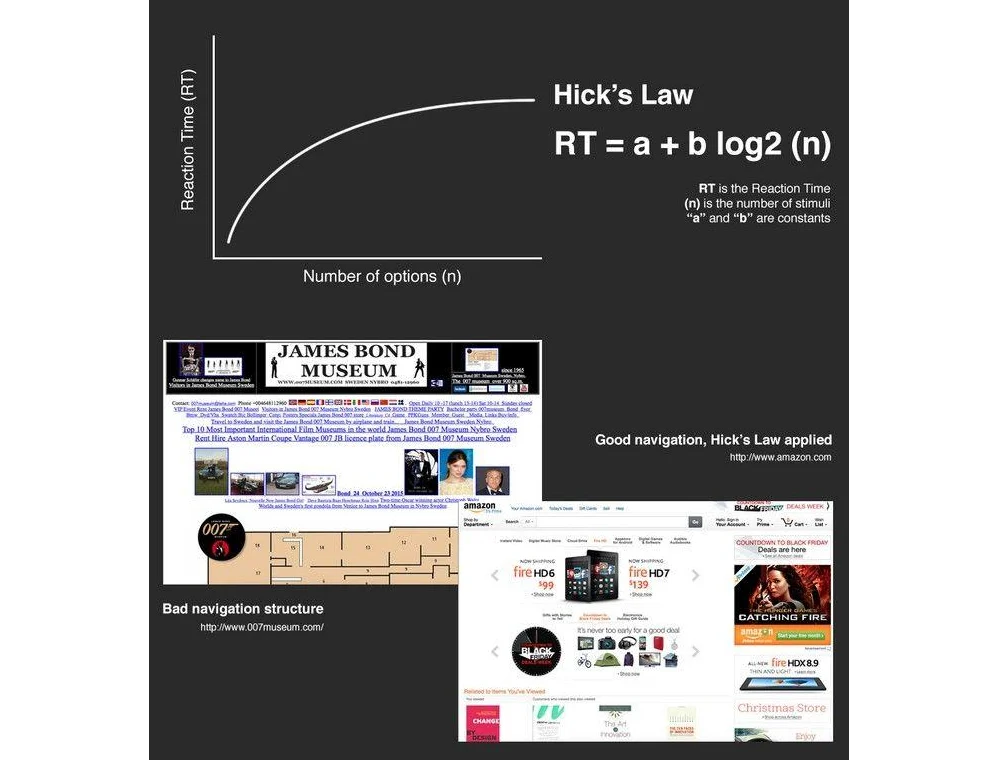
By the Smashing Editorial Desk
Estimated reading time: 12 minutes
Quick Summary
In today’s hyper-competitive digital economy, the cost of a friction-heavy interface is no longer measured merely in "lost clicks," but in millions of dollars in wasted engineering spend and evaporated business value. Veteran UX designer Carrie Webster breaks down ten data-backed user experience facts that link interface design directly to revenue, user retention, and long-term enterprise growth.
Introduction: From Cosmetic Preference to Boardroom Imperative
In the high-stakes digital economy of today, the cost of a friction-heavy interface goes far beyond minor user frustration. It translates directly into millions of dollars in wasted engineering spend and squandered business potential. For years, executive leadership teams viewed user experience (UX) as a "cosmetic preference"—a layer of polish applied at the tail end of a product cycle to make things "look nice."
However, a profound shift has occurred. Industry veterans who have navigated the digital landscape since the early mobile-first era recognize a fundamental truth: user experience is no longer a peripheral feature; it is the primary engine of business survival and financial growth.
A modern UX design role is just as heavily rooted in rigorous research and quantitative analytics as it is in visual layout and pixels. Hard data serves as the critical bridge connecting design teams to the corporate boardroom. Facts do not merely advocate for the user; they prove that exceptional UX is a non-negotiable requirement for a healthy bottom line. Even in high-level decision-making rooms where visual design is frequently undervalued, empirical evidence remains the most effective tool to dismantle outdated myths.
What follows are ten clinical, data-backed realities of the modern digital ecosystem. These are not simply "design tips"; they are foundational pillars for financial growth in a saturated market, grounded in behavioral psychology and hard economic metrics.

1. Fixing Issues in the Design Phase Is 100 Times Cheaper
One of the most compelling financial arguments for investing in upfront UX is the classic 1:100 rule. Landmark studies from institutions such as the IBM Systems Institute and Segue Technologies demonstrate that fixing a software error or usability flaw after a product has been developed and launched can be up to 100 times more expensive than addressing it during the initial design and prototyping phase.
Think of UX as a form of engineering insurance. By the time a software developer writes the first line of production code, every user interaction should be thoroughly validated. Discovering a fundamental navigation or structural flaw post-launch forces organizations to pay a heavy toll. You are not just paying for a quick code patch; you are paying off technical debt, covering lost developer time, and absorbing the revenue lost while real users struggle against a broken conversion flow.
2. Performance Directly Impacts User Experience and Revenue
In the contemporary digital landscape, performance is the non-negotiable foundation of user experience. A visually stunning interface is completely worthless if the user bounces before the browser finishes rendering.
The data surrounding performance is uncompromising: 47% of users expect a web page to load in two seconds or less, and missing this critical window is a financial catastrophe. A mere one-second delay in page load time can reduce conversions by 20% and customer satisfaction by 16%, while global retail businesses lose an estimated $2.6 billion annually strictly due to sluggish load times. When mobile load times stretch from one second to three seconds, the bounce rate spikes by 32%, and by the third second, conversion rates typically plummet from 40% down to 29%.
Conversely, this volatility offers organizations a massive lever for rapid growth. Even a microscopic 0.1-second improvement in load speed can lift retail conversions by 8.4% and travel site conversions by 10.1%. Improving your Largest Contentful Paint (LCP) benchmark drives a direct, measurable increase in sales.
“If the site isn’t instantaneous,” notes Webster, “the design hasn’t just failed—it effectively doesn’t exist.”

3. Your Site Has 50 Milliseconds to Impress Your Customers
First impressions online are both visceral and deeply aesthetic. Research indicates that users form an unconscious opinion about a website’s visual appeal in approximately 50 milliseconds (0.05 seconds). That is a vanishingly small window of time.
This split-second "gut-feeling" reaction operates as an evolutionary survival mechanism that dictates whether a user stays to explore your core value proposition or bounces away immediately. Studies show that 94% of first impressions are strictly design-related. If an interface feels visually dated, amateurish, or "off," users subconsciously project that lack of quality onto the entirety of your product, brand, or service. If your design fails to earn that initial micro-moment of attention, your content effectively ceases to exist.
4. Hick’s Law: The Financial Cost of Overwhelm
Corporate stakeholders frequently operate under the assumption that "more options equal more value." Human psychology, however, proves the exact opposite. Hick’s Law dictates that the time it takes for a user to make a decision increases logarithmically with the number of choices available to them.
Every extra menu item, navigation link, or form field acts as a cognitive tax on the user’s brain. Top-performing digital properties achieve conversion rates exceeding 11%, while average performers struggle below 3%. The market leaders have successfully applied personalization and relentless optimization strategies to simplify the experience.
“If you want to increase your revenue by tomorrow,” industry experts advise, “find one unnecessary field to delete from your checkout flow today.”
5. White Space Drastically Improves Comprehension
"White space"—or negative space—is frequently dismissed by non-designers as wasted screen real estate. In reality, it is a precision tool for cognitive focus. Strategic deployment of white space can increase a user’s content comprehension by up to 20%.

White space prevents cognitive load from peaking. By giving the user’s eyes a place to rest, effective design guides their visual path directly toward primary conversion elements, such as "Buy Now" or "Sign Up" calls to action. In an era where human attention spans have dropped to roughly 8 seconds, radical simplicity is the ultimate luxury and a primary driver of digital engagement.
6. The Power of "Fake" Progress and the Goal Gradient Effect
One of the most surprising psychological mechanisms in UX design is that users will complete a task significantly faster if they believe they have already made tangible progress toward the finish line. This behavioral phenomenon is known as the Goal Gradient Effect.
In a famous loyalty card study, researchers discovered that a 10-stamp coffee card featuring two stamps already "pre-filled" was completed much faster than an 8-stamp card starting from zero—even though the total number of purchases required to earn the reward was identical.
In digital product design, displaying an onboarding progress bar that starts at 15% immediately upon account creation increases completion rates for onboarding by over 40%. Designers are not merely arranging pixels on a screen; they are actively managing the user’s dopamine levels and sense of momentum.
7. Readability Drives Conversion
Many stakeholders believe that cramming dense walls of text "above the fold" maximizes informational value. Empirical data proves the opposite. Proper typography, specifically optimized line spacing (leading), adequate font sizing, and controlled paragraph widths, can increase content comprehension and reading speed by up to 20%.
Optimal line height (generally 1.5 times the base font size) reduces visual noise, allowing the human brain to process information with minimal cognitive effort. When users struggle to read text due to cramped spacing or poor contrast, their perceived effort skyrockets, directly driving up bounce rates. Legibility is, at its core, a conversion tool: if it is hard to read, it is hard to buy.

8. Users Scan, They Do Not Read
Modern digital consumers do not read web pages word for word; they scan them. On a typical web page, users consume only about 20% to 28% of the total text present.
Because modern users naturally scan content in an F-pattern or a Spotted pattern, designing strictly for traditional reading is a tactical error. Designers must tailor interfaces for scanning by utilizing clear headings, bullet points, bolded keywords, and concise paragraphs that cater to how human eyes actually navigate digital space.
9. Why User Testing With 5 People Is the Magic Number
Many organizations waste six-figure research budgets conducting massive user studies involving 100 or more participants, only to become hopelessly buried in qualitative noise. Usability engineering data reveals a powerful statistical truth: testing with just 5 users typically uncovers 85% of usability problems.
This represents the mathematical sweet spot of user research. After the fifth user, projects hit a point of diminishing returns, spending exponentially more capital to discover fewer novel insights. The true competitive advantage belongs to teams that run small, frequent, iterative user testing cycles. Testing with five people, iterating rapidly, and testing again is the most cost-effective methodology for building a bulletproof digital product.
10. The Staggering Financial ROI of UX: 9,900%
Rounding out these foundational truths is the most striking statistic in the digital product industry: on average, every $1 invested in UX design returns $100. This 9,900% return on investment is not magical thinking; it is the cumulative mathematical result of boosted conversion rates, streamlined workflows, and drastically reduced customer support overhead.
Fully optimized UX design can improve conversion rates by up to 400%. Furthermore, intuitive digital products dramatically lower customer service requirements. When software is self-explanatory, enterprises no longer require massive call centers to troubleshoot basic user errors.

Chronology and Evolution of Design Maturity
The integration of UX into enterprise strategy has undergone a radical evolution over the past two decades.
Phase 1: The Decorative Era (Late 1990s – Early 2000s)
During the early commercialization of the web, design was largely treated as an afterthought—a coat of paint applied after backend engineering was entirely finished. Usability was rarely measured, and sites succeeded based on novelty rather than ease of use.
Phase 2: The Mobile-First Pivot (2010s)
The proliferation of smartphones forced a dramatic reckoning. Small screens, variable connection speeds, and touch interfaces exposed the flaws of cluttered desktop paradigms. Companies began to realize that bad UX on mobile meant instant abandonment. Design systems and mobile-first principles emerged as industry standards.
Phase 3: The Data-Driven Boardroom (Present Day)
Today, the most successful firms treat UX as a continuous improvement loop rather than a one-off project. Industry research from firms like McKinsey shows that companies demonstrating high design maturity see 32% higher revenue growth and 56% higher total returns to shareholders compared to their less design-focused competitors.
Mature UX organizations move far beyond simple "user delight" and focus aggressively on "user efficiency." Shaving thirty seconds off a core workflow for a corporate workforce of 1,000 employees reclaims hundreds of thousands of dollars in annual productivity—an internal ROI that matches consumer-facing conversion metrics in value.
Official Responses and Industry Implications
Despite overwhelming empirical evidence, a massive disconnect persists within the corporate landscape. According to market research from Bain & Company, 80% of companies believe they deliver a "superior experience," yet only 8% of their customers agree.

This "experience gap" represents a massive market vulnerability—and a corresponding opportunity—for enterprises willing to embrace hard UX data. Industry analysts note that corporate boards are increasingly demanding quantifiable accountability from design teams. Chief Product Officers and Chief Financial Officers are no longer accepting subjective aesthetic justifications; they require hard metrics around page speed, conversion lifts, and support cost reductions.
Furthermore, the integration of Artificial Intelligence (AI) has accelerated solutions for many traditional UX bottlenecks. AI-driven personalization and predictive analytics have transformed static interfaces into dynamic, living guides for users. However, foundational human psychology—such as our 50-millisecond visual judgments and our innate need for white space—remains entirely unchanged. AI acts as an accelerator, but human-centered design principles remain the steering wheel.
Conclusion
The historical line dividing "design" and "business strategy" has officially vanished. The data is definitive: companies that lead in UX design outperform their competitors by 1.7x in revenue growth.
"UX design is no longer a team you hire to ‘make things look nice.’ It is the research-driven, data-backed discipline that ensures your digital product isn’t just a cost centre, but a revenue-generating machine."
We have moved well past the era of subjective opinions and gut feelings. The data is clear, human psychology is proven, and the financial ROI is undeniable. The only remaining question for modern enterprises is whether they will let empirical facts guide their digital strategy, or allow their competitors to do it first.
 Ali Ikhwan
  Iffa Jayyana