
 By Neng Nana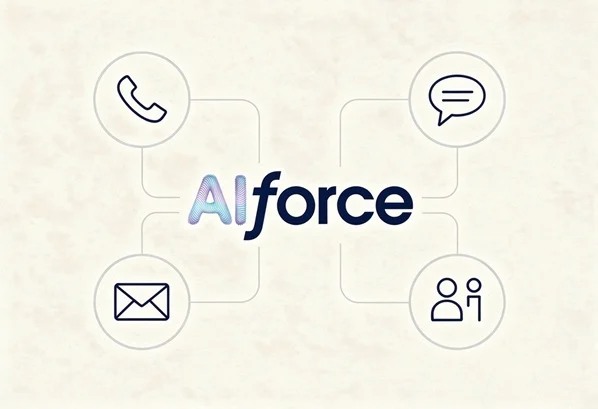
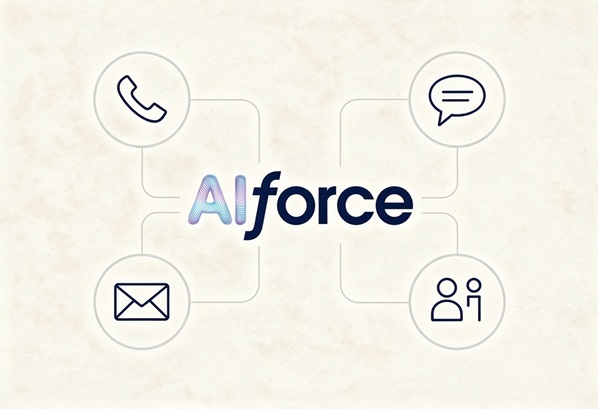
At its annual Dreamforce conference—the global epicenter of customer relationship management (CRM) innovation—Salesforce has fundamentally challenged the traditional software paradigm. The company announced the launch of AIforce, an advanced interface layer designed to decouple Salesforce’s vast data, logic, and workflows from its proprietary UI, extending them directly into third-party environments and agentic AI ecosystems.
This announcement marks a seismic shift in how enterprises interact with software. For decades, the "Salesforce experience" was synonymous with navigating its dedicated, often complex, browser-based dashboard. AIforce dismantles this requirement, enabling users and autonomous agents to query records, trigger automations, and construct on-the-fly, custom data visualizations within external tools such as Anthropic’s Claude, Slack, and the Salesforce Lightning environment itself.
The Evolution of the Enterprise Workspace: From Static to Composable
The transition from static, monolithic software layouts to dynamic, "composable" workspaces is no longer a trend; it is an industry mandate. Traditional CRM architecture required employees to perform what is known as "swivel-chair integration"—manually moving between an email client, a CRM tab, and a communication tool to resolve a single customer query.
AIforce serves as the bridge that eliminates this friction. By acting as a headless interface layer, it allows the underlying data and logic of Salesforce to manifest wherever the user is currently working. Whether a developer is coding in Vercel, a marketer is collaborating in Slack, or a customer service agent is consulting an LLM via Claude, the "source of truth" remains constant, governed, and accessible.
Chronology: The Road to AIforce
The trajectory toward AIforce has been a multi-year effort within Salesforce’s R&D labs:
- 2023: Salesforce pivoted heavily toward "Agentforce," focusing on autonomous agents capable of performing specific tasks.
- Early 2024: The company began integrating the Model Context Protocol (MCP) into its core infrastructure to standardize how AI models communicate with enterprise databases.
- Mid-2024: Beta testing commenced for Slack-integrated CRM modules, proving that users preferred interacting with data through natural language queries rather than manual form-filling.
- September 2024 (Dreamforce): The official unveiling of AIforce as the unified layer connecting Claudeforce, Slackforce, and the Agentforce Coworker.
Official Perspectives: Redefining the Interface
Marc Benioff, Chair and CEO of Salesforce, framed the launch as an "interface revolution." Speaking to the assembled crowd at Dreamforce, Benioff emphasized the necessity of context-aware intelligence.
"AI is creating an interface revolution," Benioff stated. "We are combining model intelligence with all the context that customers have built into Salesforce to create an intelligent, dynamic, composable system that is securely governed, built with Zero Data Retention, and designed to work with the core systems that already run your business."
The emphasis on "Zero Data Retention" is critical. In an era of heightened cybersecurity concerns, Salesforce is signaling that while data is exposed to LLMs for the purpose of inference, it is not being harvested to train external models, ensuring that proprietary corporate insights remain behind the client’s firewall.
Architectural Integration: The "Headless" Strategy
Salesforce has framed AIforce as an additional, vital tier within its enterprise architecture. It sits above the foundational data layer, acting as a broker between the database and the end-user environment.
The Headless Toolkit
The architecture is underpinned by Salesforce’s Headless Toolkit, a suite of APIs, plug-ins, and developer tooling that allows for unprecedented customization. This toolkit feeds directly into the AgentExchange marketplace, a growing ecosystem of integrations. Current technology partners leveraging these tools include AWS, Google, Vercel, DocuSign, and Ramp, effectively turning Salesforce into the "operating system" for the modern enterprise tech stack.
Governance and Security
A primary concern with decentralizing CRM data is the potential for unauthorized access. Salesforce has mitigated this by ensuring that the AIforce layer respects existing permission sets and security protocols. If a user does not have permission to view high-level financial records in the native Salesforce app, the AI interface will explicitly deny that same user access to that data through Claude or Slack.
The Three Pillars: Claudeforce, Slackforce, and Agentforce Coworker
The rollout of AIforce is segmented into three primary solutions, each targeting a specific user persona and workflow.
1. Claudeforce: Intelligence at the Model Layer
By integrating Salesforce data directly into Anthropic’s Claude interface via a Model Context Protocol (MCP) server, users can now have "conversations" with their CRM. A user can ask Claude to "Summarize the last three months of interaction with Client X and draft a renewal strategy." Claude, armed with the context fetched via AIforce, generates the output without the user ever leaving the AI chat window.
2. Slackforce: Collaborative Context
Slackforce aims to bring CRM context into the heart of team communication. Instead of sharing screenshots of dashboards—which are outdated the moment they are captured—teams can use Slackforce to pull real-time data into a thread.
Elia Wallen, Founder and CEO of Engine, provided a compelling use case: "We handle over 800,000 customer inquiries a year, so getting our people the right context fast is everything. Slackforce makes that possible. Instead of waiting on someone else’s time and expertise to turn data into a dashboard or report, anyone on our team can just describe what they need and get a real, working interface back, built from data we already have, without ever leaving the conversation."
3. Agentforce Coworker: Native CRM Empowerment
For those who continue to work within the native Salesforce ecosystem, Agentforce Coworker acts as an intelligent layer that sits alongside the human user. It helps automate repetitive data entry, predicts next-best actions, and provides rapid-fire insights into account health.
Brandon Bernard, SVP and Sales Technology Strategist at Fulton Bank, reported rapid adoption: "In just weeks, we went from zero to more than 20 use cases live in production, supporting approximately 3,000 users. We’re seeing substantial daily usage and real examples of how Coworker is helping teammates find information faster, prepare more effectively, and move work forward."
Implications for the CX Industry
The introduction of AIforce is more than just a product update; it represents a fundamental change in the philosophy of Customer Experience (CX) management.
Eliminating the Swivel-Chair
The "swivel-chair" effect has long been the silent killer of productivity in contact centers. By unbundling CRM data from rigid interfaces, Salesforce is effectively allowing the user to define the interface that best suits their current task. Whether that interface is a chat window, a collaborative channel, or a dashboard, the underlying intelligence remains consistent.
The Shift to Fluid Workflows
For the broader CX industry, this composable, headless approach signals a transition from "Case Management" (where a human manages a ticket in a static grid) to "Context-Aware Service" (where AI and humans collaborate to resolve issues in a fluid, continuous flow).
As autonomous agents and human teams increasingly share the same workspace, the ability to provide both with identical, governed access to CRM records is paramount. This integration will likely result in:
- Reduced Handle Times: Agents spend less time searching for information and more time engaging with the customer.
- Decreased Agent Fatigue: By removing the cognitive load of navigating complex software, employees can focus on empathy and high-level problem-solving.
- Coherent Customer Resolutions: Because the AI and the human are pulling from the same, governed source, the risk of conflicting information or fragmented service is significantly reduced.
Conclusion: The Future is Composable
Salesforce has effectively placed its bets on an "AI-first, interface-second" future. By decoupling its powerful CRM engine from its legacy visual interfaces, the company is preparing for a world where software is no longer a place you go, but a service that follows you.
As AIforce gains traction, the competitive landscape will shift. Other CRM vendors will undoubtedly feel pressure to adopt similar headless, model-agnostic architectures. However, for now, Salesforce has set a high bar, successfully bridging the gap between deep enterprise data and the rapidly evolving, chat-driven world of modern artificial intelligence. The message is clear: The future of enterprise productivity is not in building better windows, but in tearing down the walls entirely.
 Asep Darmawan
  Iffa Jayyana
  Raul Delapena Setiawan