
 By Pevita Pearce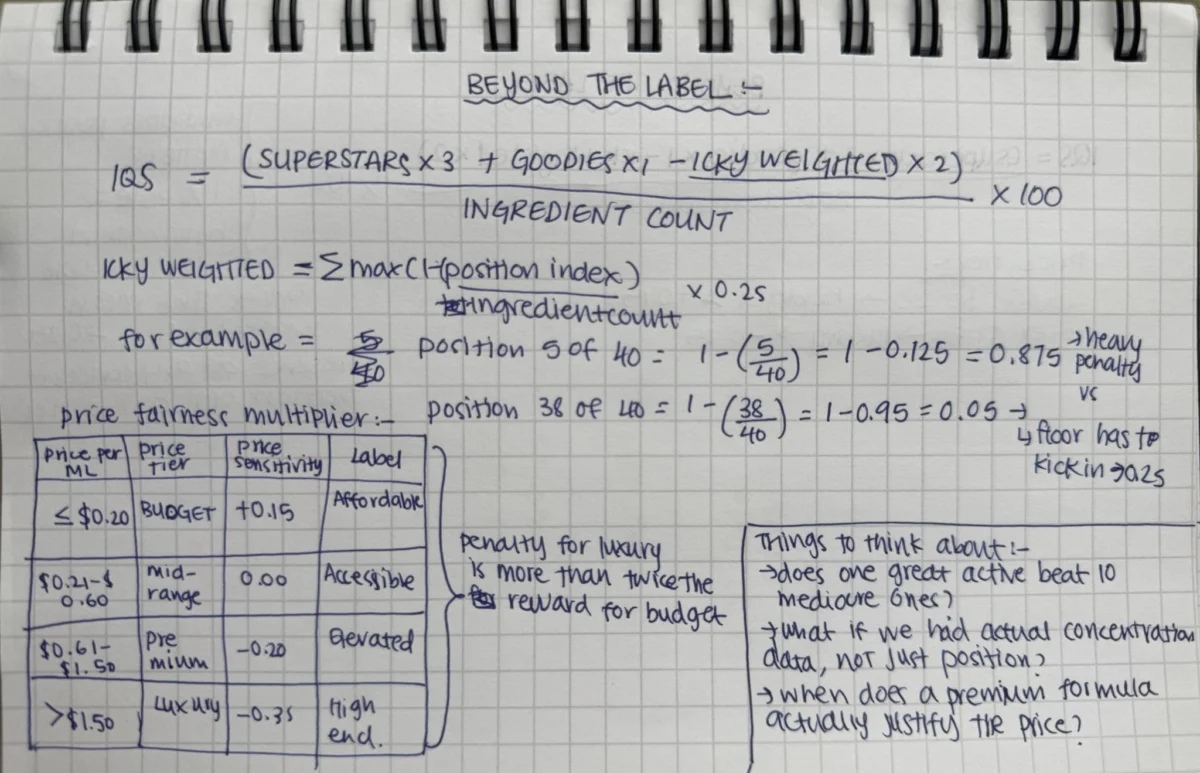
By Global Investigative Desk
Published in partnership with Data & Aesthetics Review
Main Facts: The Skincare Illusion
On the pristine, brightly lit shelves of high-end beauty retailers like Sephora, a $390 luxury face cream and a $15 drugstore moisturizer often sit mere inches apart. To the untrained eye, the price disparity telegraphs a clear hierarchy of quality, efficacy, and scientific achievement. The heavy glass jar, the embossed gold lettering, and the sleek minimalist packaging all conspire to convince the consumer that they are paying for a superior chemical concoction.
According to data scientist and visualization designer Dhruvi Mehta, creator of the groundbreaking interactive project Beyond the Label, that assumption is almost entirely an illusion.

More often than not, the $390 price tag buys you a better bottle, not a better formula.
By analyzing the chemical compositions of popular cosmetic products through a newly developed metrics system called the Ingredient Quality Score (IQS), Mehta’s research reveals a startling disconnect in the global beauty market: luxury skincare products are systematically poorer in formulation value than their affordable counterparts. While federal regulations require every skincare product sold in the United States to print its full ingredient list in descending order of concentration, this legally mandated transparency remains virtually unread by the consuming public. Instead, brand storytelling, celebrity endorsements, and high-end packaging do the heavy lifting, masking formulations that are frequently dominated by inexpensive silicones, fillers, and potential irritants.
Chronology: From Obsessive Label-Reading to a Data-Driven Crusade
The genesis of Beyond the Label did not begin in a computer lab or a corporate boardroom; it started at a family dressing table.
- The Catalyst: Frustrated by her mother’s recurring requests to purchase La Mer’s The New Moisturizing Soft Cream—a staple of luxury beauty retail priced at $390—Mehta began scrutinizing the product’s back-of-pack disclosure.
- The Initial Dissection: Deconstructing the formula revealed a stark reality. While the product’s marketing centered entirely around its proprietary "Miracle Broth" (an algae extract listed first), positions two through six were occupied almost exclusively by inexpensive silicones and petrolatum. Highly touted supporting players like peptides and hyaluronic acid languished past position 38.
- The Research Phase: Recognizing a wider pattern, Mehta turned to public cosmetic formulation databases, specifically INCIDecoder. She posed fundamental questions: Was this formulation disparity systemic? Were luxury items consistently underperforming compared to budget alternatives? And if so, by precisely how much?
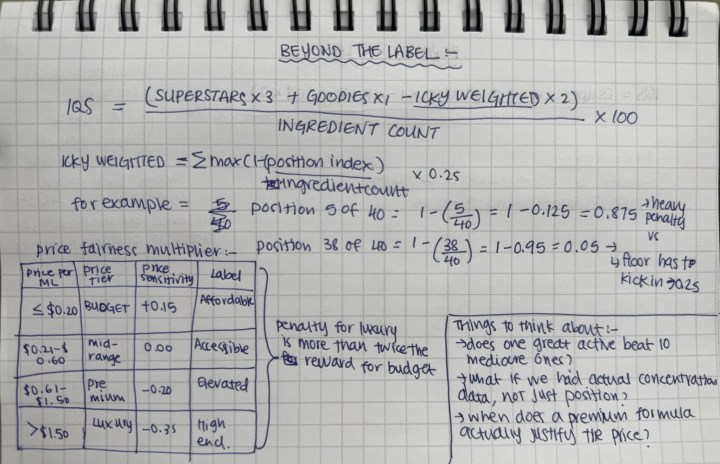
- The Methodology Development: Over several months, Mehta constructed a custom scoring architecture from scratch. She categorized ingredients into four distinct groups—superstars, goodies, icky components, and neutrals—and applied positional weighting algorithms to account for the FDA’s 1% rule, which allows manufacturers to list trace ingredients in any order at the bottom of a label.
- The Launch: Translating raw datasets into an interactive, visual medium, Mehta built Beyond the Label, utilizing 3D Fibonacci-distributed spheres rendered with game-design lighting techniques to make chemical formulation quality physically perceptible.
Supporting Data: The Anatomy of an Ingredient Quality Score
To transform complex chemical disclosures into an objective, comparative metric, Mehta devised the Ingredient Quality Score (IQS), subsequently modified by a Price Fairness Multiplier to evaluate whether a product’s formula justifies its cost.
The Categorization Engine
Ingredients are pulled from database records and parsed into four pillars:
- Superstars: Rare, high-impact active ingredients with proven clinical efficacy.
- Goodies: Baseline beneficial contributors (e.g., ceramides, glycerin, amino acids).
- Icky: Compounds flagged as potential irritants, allergens, or questionable chemical agents.
- Neutrals: Functional fillers and emulsifiers that provide texture without directly altering skin health.
The mathematical model weighs superstars at triple the value of goodies, while penalizing icky compounds at twice the positive weight. Crucially, the system accounts for concentration through positional weighting. An irritant appearing at position five in a 40-ingredient list is penalized nearly ten times more heavily than the exact same compound lingering at position 38, where it exists in negligible trace amounts. To prevent loopholes regarding the regulatory "1% rule"—where bottom-tier ingredients can be scrambled—a strict floor ensures that no harmful compound escapes a baseline penalty.
Head-to-Head: The Numbers Speak
When applied to a curated dataset of 16 products spanning eight direct luxury-versus-affordable pairings, the scoring model laid bare the disparities of the cosmetics industry.
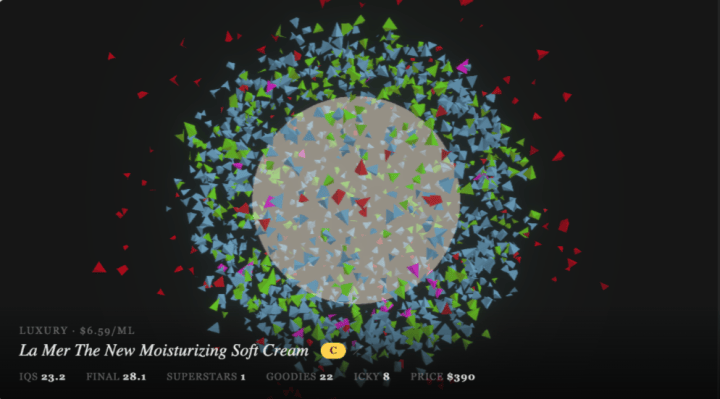
- The Moisturizer Divide: CeraVe’s humble Moisturizing Cream—priced at a meager $0.03 per milliliter ($14.99 total)—claimed the top spot in the dataset with a normalized final score of 100.0. Featuring one superstar and seven beneficial ingredients (including three essential ceramides, cholesterol, and hyaluronic acid) with zero flagged irritants, it served as the benchmark. Its rival, La Mer’s The New Moisturizing Soft Cream ($6.59/mL, $390 total), scored a dismal 28.1. The luxury cream featured eight flagged ingredients—including eucalyptus oil, denatured alcohol, synthetic fragrance, and four separate EU-regulated fragrance allergens.
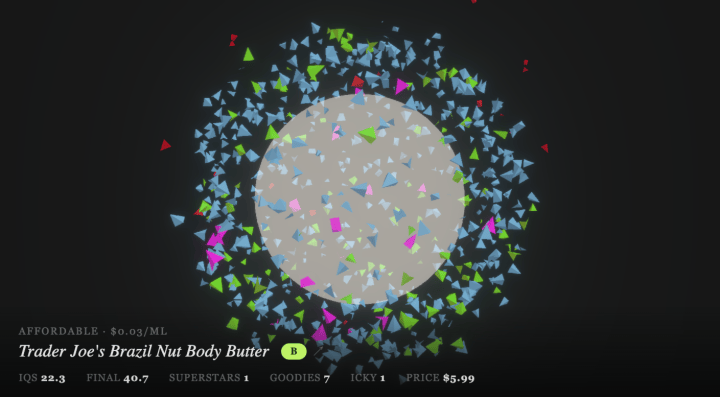
- The Viral Product Trap: Sol de Janeiro’s ubiquitous Brazilian Bum Bum Cream, a mid-range cult favorite backed by hundreds of thousands of five-star reviews, scored a devastating 0.0. The formulation contained nine flagged icky ingredients, including multiple potential contact allergens like benzyl salicylate, coumarin, and limonene, many of which appeared in the upper half of the ingredient list. Conversely, its affordable grocery-store equivalent, Trader Joe’s Brazil Nut Body Butter ($5.99), achieved a score of 40.7, offering a vastly superior ratio of beneficial ingredients to potential irritants.
- The Nuances of Prestige: The dataset was not without its exceptions. SkinCeuticals’ C E Ferulic—a globally renowned, heavily clinical vitamin C serum—scored an impressive 90.2, holding its own against budget competitors like TruSkin’s Vitamin C Super Serum (80.6). In rare instances, premium pricing correlated with genuine formulation complexity and stability science. However, these proved to be the exception rather than the rule.
Official Responses and Industry Dynamics
To date, major luxury beauty conglomerates have largely maintained a stony silence regarding the viral dissemination of data-driven critique sites like Beyond the Label. Industry representatives historically argue that skincare pricing encompasses far more than raw material costs. Corporate justifications routinely point to:
- Research and Development (R&D): Multi-year clinical trials, patent acquisitions, and proprietary extraction technologies (such as La Mer’s fermentation processes).
- Supply Chain Integrity: Sourcing rare botanicals, ethical harvesting practices, and rigorous stability testing to ensure product longevity across extreme global shipping climates.
- Sensory Experience: The emotional and psychological value of tactile luxury—how a cream feels on the skin, its delicate dispersion, and the sensory joy of the unboxing experience.
Dermatologists and cosmetic chemists offer a more nuanced perspective. Many agree that while high-end brands often pad their formulas with expensive marketing buzzwords and sensitizing botanical extracts (like essential oils that smell divine but can provoke contact dermatitis), luxury lines occasionally provide superior aesthetic elegance. A budget moisturizer may have an objectively superior, irritant-free ingredient list (earning a higher IQS), but a consumer with specific sensory preferences or compromised skin barriers might genuinely favor the texture or finish of a more expensive alternative.

Yet, independent consumer advocates argue that these rationalizations have been stretched past their breaking point. When a $390 cream relies primarily on petrolatum and silicones—the exact same occlusive bases found in $5 tubes of petroleum jelly—the "R&D justification" begins to ring hollow.
Implications: Visualizing Transparency in the Age of Dupe Culture
The resonance of projects like Beyond the Label signals a profound cultural shift in how modern consumers interact with commerce. Driven by "dupe culture" and online skincare communities, ingredient-list literacy has transformed from an obscure niche hobby into a mainstream pastime. Millions of shoppers are actively interrogating whether a $90 serum genuinely outperforms a $12 equivalent.
By translating dry numerical scores into interactive, three-dimensional digital art—where beneficial ingredients glow with a filmic bloom and harmful compounds jut outward as sharp, aggressive spikes—Mehta’s work bridges the gap between complex analytical data and human intuition. You do not need a degree in cosmetic chemistry to understand the visual contrast between a radiant, harmonious white sphere (CeraVe) and a dark, spiky, unlit orb constrained by chemical irritants (La Mer).
What Consumers Take Away
- Look Past the Hero Ingredient: Marketing laws allow brands to build an entire multi-hundred-dollar narrative around a single extract that constitutes a fraction of the total volume. Always check where that ingredient sits relative to the preservative and surfactant thresholds.
- Beware Fragrance and Botanical Overload: Many luxury formulations prioritize heavy synthetic scents and natural essential oils for sensory appeal, inadvertently introducing high concentrations of contact allergens and sensitizers that compromise long-term skin health.
- Price Does Not Equal Efficacy: As demonstrated across multiple product categories, budget formulations frequently deploy gold-standard active ingredients (such as ceramides and niacinamide) at therapeutic concentrations without the markup of prestige branding.
Ultimately, the data exposes an uncomfortable truth for the multi-billion-dollar beauty apparatus: the evidence of what you are paying for has always been printed plainly on the back of the box. Consumers no longer need to rely on the promises made by the bottle—they finally have the tools to see right through it.
 Siti Muinah
  Raul Delapena Setiawan
  Layla Zulfa