Long dismissed as one of the most glaring technological flops of the 2010s, stereoscopic 3D is staging a dramatic, unexpected comeback. More than a decade after James Cameron’s Avatar shattered global box office records and sparked a brief, frantic industry-wide rush into third-dimension entertainment, consumers and tech enthusiasts are falling in love with the medium all over again.
The secret to this revival isn’t found in the aging, compromise-laden projection systems of traditional movie theaters or the abandoned 3D TV sets gathering dust in basements. Instead, modern video glasses, augmented reality (AR) displays, and mixed reality (MR) headsets have solved the fundamental physics problems that crippled the original 3D boom. As tech giants finally convince Hollywood to embrace digital streaming for 3D content, the format is transitioning from an awkward cinematic gimmick into a pristine, immersive home entertainment experience.
Main Facts: Solving the Compromises of Traditional 3D
To understand why 3D is experiencing a renaissance, one must first understand why it failed in the first place. Historically, viewing 3D content required painful visual compromises.
In commercial movie theaters, polarized glasses split a single reflected image between the viewer’s left and right eyes. This cut perceived resolution and brightness in half, leaving images dim and washed out. Active shutter glasses—popularized by short-lived 3D home televisions and Nintendo’s 3DS handheld console—introduced distracting flicker, reduced refresh rates, and caused eye strain.
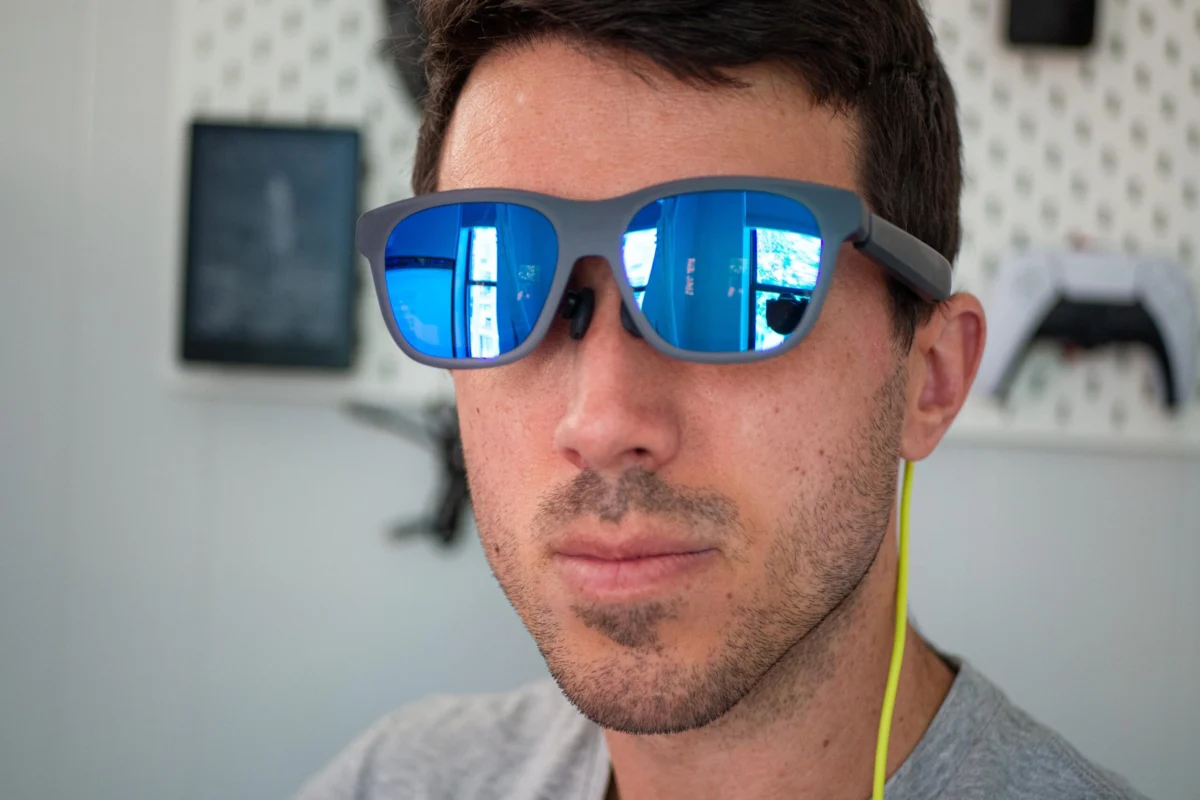
Modern video glasses and headsets bypass these limitations entirely by utilizing dedicated, full-resolution micro-displays for each eye.
The Hardware Shift: Devices like the Xreal One Pro AR glasses, Meta Quest 3, Steam Frame, and Apple Vision Pro deliver independent, high-definition video feeds to the left and right fields of vision.
The Visual Payoff: By dedicating an entire screen to each eye, modern viewers enjoy full 1080p or 4K resolution per eye, vibrant high-dynamic-range (HDR) color, and spatial audio.
The Content Gap: Despite the hardware leap, physical 3D media remains locked in the past. Standard 4K Ultra HD Blu-ray discs do not support 3D formats. Consequently, enthusiasts have had to rely on legacy 3D Blu-rays—which are restricted to 1080p at 24 frames per second without HDR—or engage in complex, manual file-ripping processes to enjoy high-quality stereoscopic content at home.
Chronology: From Theater Craze to the Modern Headset Era
The journey of stereoscopic 3D over the past twenty years reads like a classic tech rollercoaster ride:
December 2009: James Cameron releases Avatar, grossing over $2.9 billion worldwide and sparking a global gold rush for 3D cinematic experiences. Hollywood studios rapidly convert hundreds of legacy films into 3D, and consumer electronics brands flood the market with 3D-enabled televisions.
2016–2019: Consumer fatigue sets in. The lack of standardized home formats, expensive equipment, and poor "fake 3D" post-conversions cause the market to collapse. Major manufacturers quietly phase out 3D TV production, relegating the format to a failed tech experiment of the decade.
February 2024: Apple launches the Vision Pro, redefining the spatial computing landscape. It introduces a streamlined, high-end ecosystem for streaming 3D movies in 4K with HDR, spatial audio, and high frame rates (such as 48fps for Avatar), alongside free 3D upgrades for users who previously purchased films in 2D on digital storefronts.
Late 2025 – Spring 2026: A new wave of affordable mixed-reality headsets and lightweight AR glasses—ranging from the Meta Quest 3S to upcoming specialized Meta VR Glasses and Google/Xreal collaborations—paves the way for mass-market 3D streaming. Major streaming platforms begin integrating robust stereoscopic libraries, democratizing access to the format without requiring a $3,500 investment.
Supporting Data and Real-World Impressions
When viewed through modern micro-OLED and micro-LED displays, properly mastered stereoscopic content transforms familiar films entirely.
What Works Best in 3D
Content featuring transparent barriers, complex particle effects, and deep foreground-to-background layering shines brightest in modern headsets:
Transparent Elements: Cockpits, diving helmets, glass-encased machinery, and futuristic vehicles (such as the lightcycles in Tron: Legacy or racing rigs in Mad Max: Fury Road) reveal intricate micro-details, scratches, and water droplets that feel tangible.
Animation: Modern animated films like Moana, Zootopia 2, and The Lego Movie transition from flat digital paintings into living, breathing dioramas where water currents and tiny plastic textures possess genuine physical depth.
Documentaries: Werner Herzog’s critically acclaimed 3D documentary, Cave of Forgotten Dreams, proves that stereoscopy enhances historical art. The bulging rock surfaces of 32,000-year-old cave paintings naturally form the dynamic bodies of prehistoric bison when viewed with proper depth perception.
The Problem with "Fake 3D"
Not all content is created equal. Expert critics and database projects like Real or Fake 3D note that live-action films converted to 3D in post-production frequently suffer from a "billboard effect"—where actors and objects appear as flat cardboard cutouts layered sequentially against a background, rather than occupying true three-dimensional space.
Official Responses and Industry Shifts
The transition from physical media to streaming is the vital catalyst saving the 3D format from permanent obscurity. Speaking on the future of spatial entertainment, Meta Director of Entertainment Sarah Malkin confirmed that major streaming providers are preparing to bridge the accessibility gap.
According to Malkin, upcoming Meta hardware will natively support 3D streaming through major applications including Disney Plus, HBO, Paramount Plus, and Peacock. By the time Meta’s next-generation VR glasses debut in the spring, users will have access to hundreds of 3D titles available for rent or purchase directly through Meta’s TV application.
"Our 3D movies will also be in line with typical pricing for 2D Ultra High Definition (UHD) films," Malkin noted, emphasizing that consumers will no longer face an exorbitant financial penalty or technical hurdles to enjoy stereoscopic entertainment.
Furthermore, Meta’s engineering targets suggest a battery life of roughly three hours in dedicated Theater mode, ensuring users can watch standard-length feature films on a single charge without interruption.
Implications: The Future of Home Cinema
The resurgence of 3D through wearable displays carries significant implications for the entertainment industry:
The Death of Physical Discs, The Rise of Digital Spatial Libraries: Just as streaming replaced physical CDs and standard Blu-rays for the mainstream consumer, digital spatial storefronts are solving the distribution nightmare that plagued 3D Blu-rays. Consumers no longer need to hunt through online marketplaces for rare imports or rely on cumbersome software tools like MakeMKV and BD3D2MK3D to transcode files for personal viewing.
A New Standard for Cinematography: As directors like James Cameron continue to push technical boundaries—utilizing twin-camera rigs and specialized remote-controlled tracking systems for live events and concert films like Billie Eilish’s latest project—cinematographers are designing visual compositions with spatial depth explicitly in mind from day one.
Mainstream Acceptance of Headsets: For years, VR and AR glasses have struggled to find a killer app beyond enterprise utility and hardcore gaming. By positioning lightweight glasses and mixed-reality headsets as private, premium cinematic displays, tech companies are finding a frictionless path to consumer adoption.
The revival of 3D proves a timeless adage in consumer technology: sometimes an idea isn’t fundamentally bad—it simply arrived a decade before the hardware was ready to support it.

 By Nana


 Nana Muazin
 Raul Delapena Setiawan
 Pevita Pearce
