
 By Suro Senen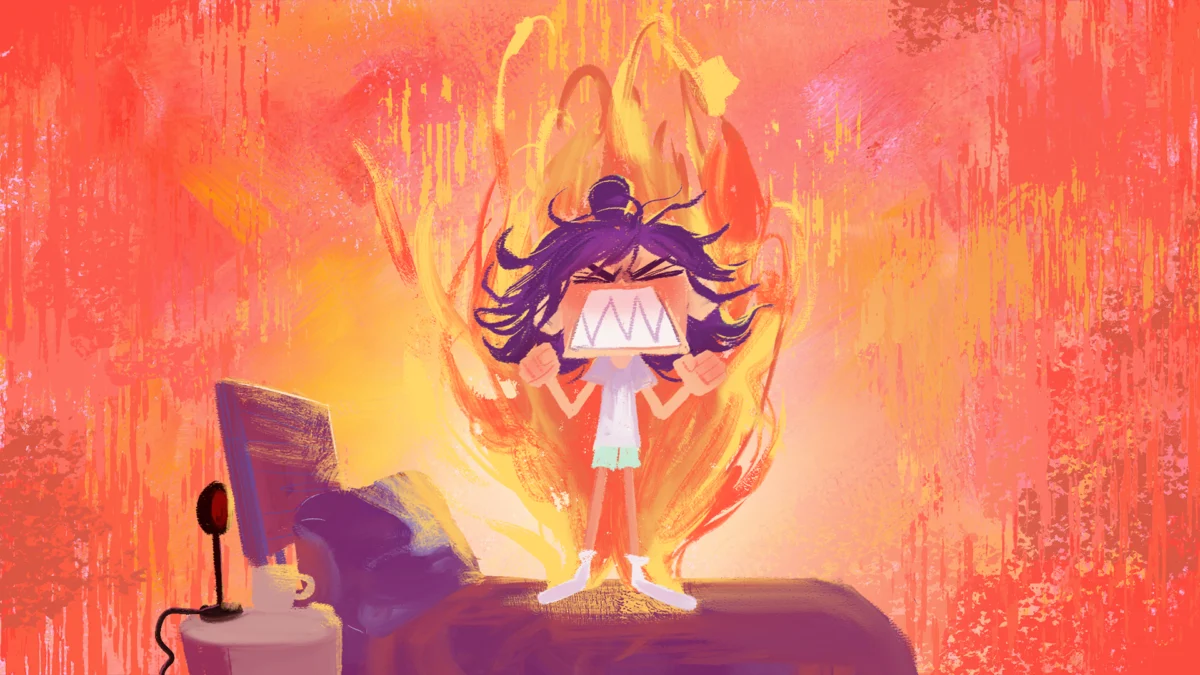
For years, Silicon Valley has promised that generative AI would usher in a new golden age of filmmaking, effectively democratizing Hollywood and allowing anyone with a prompt to become an auteur. Yet, as the industry wades into 2026, the reality has been markedly underwhelming. For every hyperbolic claim about "revolutionizing the industry," there has been a glaring lack of consumer-ready content that feels like genuine entertainment.
Most early forays into AI video—churned out by models incapable of maintaining basic visual consistency—have resulted in little more than "video slop." Furthermore, the sudden evaporation of high-profile partnerships between major studios and AI giants has fueled a sense of skepticism within the creative community. However, as evidenced by this year’s Tribeca Film Festival, the narrative is shifting. The focus is moving away from the "magic button" fallacy toward a more nuanced, collaborative model where generative tools act as a specialized brush in the hands of a master painter.
A Chronology of the AI Experiment in Cinema
The timeline of AI in film has been rapid and volatile.
- The Early Hype (2023–2024): Generative AI platforms emerged with promises to disrupt traditional VFX and animation workflows. Major studios initially courted partnerships with firms like OpenAI, seeking to reduce production costs.
- The "Slop" Era (2024–2025): The internet became flooded with short-form, incoherent AI clips. Projects that attempted to bridge the gap, such as those from companies like Runway, were often dismissed as soulless or technically flawed.
- The Cooling Period (Late 2025): Several high-profile collaborations stalled. OpenAI’s sudden shuttering of its video tool, Sora, left projects like the feature-length film Critterz in limbo, unable to secure a debut. This signaled a pivot—or perhaps a retreat—from the "text-to-movie" dream.
- The Tribeca Realignment (2026): The recent Tribeca festival served as a proving ground. It showcased a clear divide: projects that relied on raw, unguided AI felt like incoherent montages, while those that integrated AI into traditional human-led workflows pointed toward a sustainable path forward.
Tribeca’s Lessons: The Good, The Bad, and The Lifeless
At this year’s Tribeca Film Festival, the distinction between "AI as a replacement" and "AI as a tool" was stark. Projects like Illuminai Studios’ Roar and Asteria Film Co.’s ChikaBOOM! served as cautionary tales. Despite the technological ambition, these films suffered from a lack of visual and sonic cohesion. Roar appeared as a disorienting collection of clips rather than a narrative, while ChikaBOOM! struggled to maintain the necessary polish required for a fast-paced fantasy. These projects were "lifeless" precisely because they lacked the human-led creative scaffolding required to ground generative imagery.
Conversely, films like Google DeepMind’s Dear Upstairs Neighbors and OpenAI’s Mauvais Soleil demonstrated that when AI is constrained by clear creative boundaries, the results are exponentially better.
The DeepMind Approach: A Case Study in Bespoke AI
Dear Upstairs Neighbors, directed by Pixar veteran Connie Qin He, represents the most successful application of AI at the festival. Rather than relying on a "black box" model, He partnered with Google DeepMind to develop a workflow that prioritized human artistry.
The process began with traditional methods: Pixar production designer Yingzong Xin created concept art using physical acrylics and digital Photoshop layers. This expressionistic aesthetic provided the "DNA" for the AI. DeepMind researchers then built custom versions of their Veo and Imagen models, trained specifically on Xin’s art. To ensure narrative cohesion, the team utilized Autodesk Maya to create rough 3D animations, which were then fed into the AI models to "skin" them with stylized, consistent textures.
This workflow transformed AI from a random generator into a sophisticated rendering engine, effectively validating the idea that the technology is most powerful when it is subservient to a human director’s vision.
Supporting Data: The Efficiency of the Individual
The potential for AI to aid independent creators was best illustrated by Ash Koosha’s Dreams of Violets. With a total budget of $2,000—allocated entirely to computing power—Koosha managed to produce a docudrama on Iranian protests. By leveraging a stack of tools including Kling AI, Claude, and Gemini, he completed the project in just a few weeks.

While the film does not break new ground in terms of visual fidelity, its existence highlights a crucial economic reality: for independent filmmakers, AI acts as a force multiplier. By collapsing the time required for pre-visualization and asset generation, AI can allow small teams to execute complex narratives that were previously financially out of reach.
Official Responses and Industry Skepticism
The industry’s reaction to these experiments remains cautious. Major studios are no longer blindly chasing "AI-generated features." The collapse of OpenAI’s Sora project and the subsequent cancellation of Critterz at Cannes have created a "wait and see" environment.
Industry leaders are increasingly wary of the "uncanny valley" effect, where AI-generated content triggers negative psychological responses from audiences. Furthermore, the legal landscape surrounding copyright for AI-generated works remains murky. Studios are now focusing on "bespoke models"—proprietary systems built on a studio’s own IP library—rather than relying on generalized models from Silicon Valley that could potentially infringe on third-party copyrights.
Implications: The Future of the Creative Workflow
The evidence from the 2026 festival season suggests three major implications for the future of film:
1. The End of "Prompt-and-Pray"
The era of believing that a single prompt can generate a commercially viable, 90-minute film is effectively over. Audiences have demonstrated a clear preference for content with intentionality. Films that feel "generated" rather than "composed" will likely struggle to find audiences outside of niche experimental circuits.
2. The Rise of the "AI Architect"
We are entering an era where the role of the director will evolve into that of an "AI Architect." The most successful filmmakers will be those who, like Connie Qin He, understand how to feed traditional, high-quality human art into AI systems to maintain a specific visual language. The skill set of the future involves less traditional manual labor and more rigorous curation and technical direction.
3. Bespoke Partnerships over Generalization
The future of Hollywood’s relationship with AI lies in custom, closed-loop systems. Rather than utilizing public tools like ChatGPT or Midjourney, major studios will likely commission bespoke versions of these models, trained exclusively on their internal archives of assets, character designs, and cinematic styles. This ensures brand consistency while mitigating the risks associated with open-source models.
Conclusion
Generative AI will not replace the director, the animator, or the writer, but it is fundamentally altering the pipeline of film production. The success of Dear Upstairs Neighbors proves that technology is not the enemy of art; rather, it is the lack of human guidance that results in the "slop" currently plaguing the industry.
As we move forward, the most compelling films will not be the ones that hide their AI usage, but the ones that treat AI as a sophisticated, controllable instrument. The technology has finally matured from a parlor trick into a tool, but it is the human heart, eye, and mind that must remain firmly in the director’s chair. Hollywood’s heavyweights will eventually embrace AI, but only when they can ensure that the machine is working for the artist—and never the other way around.
 Raul Delapena Setiawan
  Siti Muinah
  Asro
Asro 