
 By rifanmuazin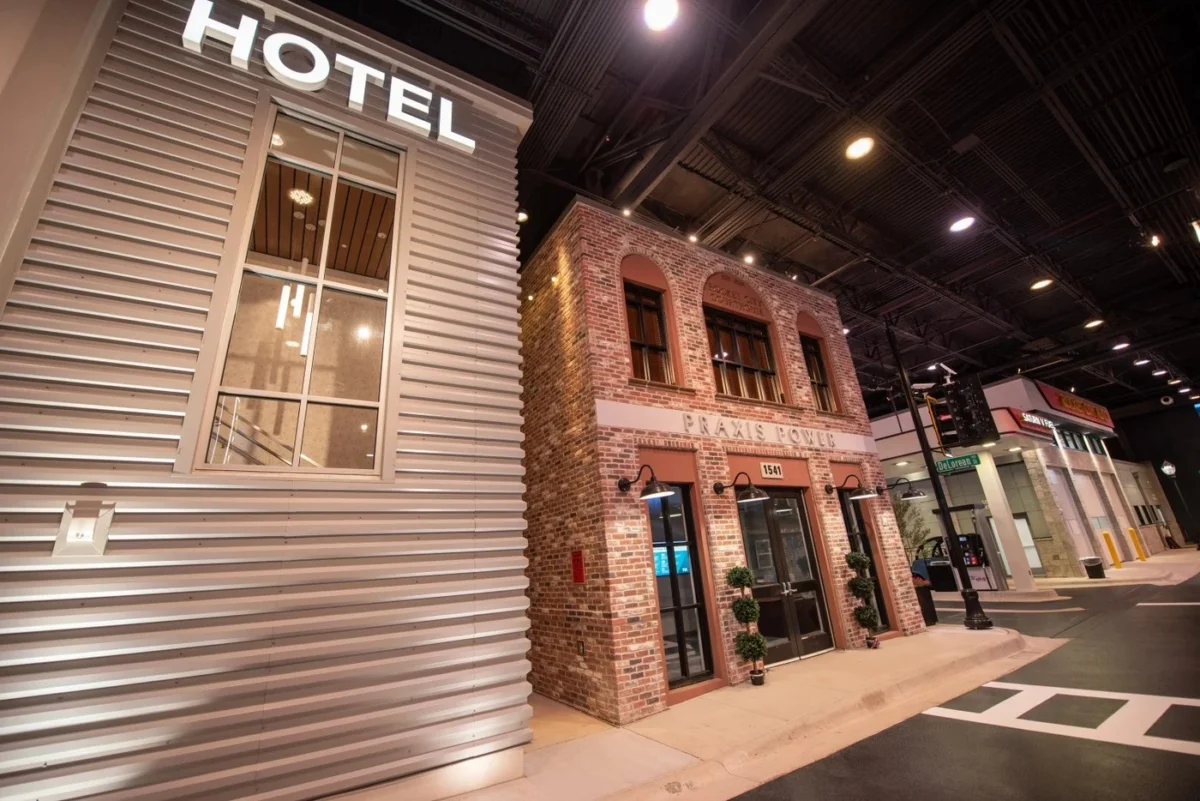
By Editorial Staff
In the quiet sprawl of Huntsville, Alabama, the FBI has constructed a sprawling suburban dreamscape that is, in reality, a digital nightmare. It is a place where convenience stores are perpetually stocked, houses are fully furnished, and gas stations stand ready for business. However, unlike the bustling towns that dot the American landscape, no one lives here. This is the FBI’s "Kinetic Cyber Range," a 22,000-square-foot facility designed not for commerce, but for the simulation of high-stakes, real-world cyber warfare.
As the lines between physical security and digital infrastructure continue to blur, the bureau’s latest training ground represents a paradigm shift in how federal agents prepare for the next generation of domestic threats. By replicating the architecture of modern life—from hospital networks to the internal systems of a connected vehicle—the FBI is moving beyond theory and into the realm of kinetic, hands-on defense.
Main Facts: A Town Built for Chaos
The Kinetic Cyber Range is effectively a "Hogan’s Alley" for the 21st century. While the FBI’s historic Hogan’s Alley at the Quantico training academy has long served as a physical proving ground for tactical agents to practice raids and urban combat, the Huntsville facility focuses on the invisible, yet potentially more devastating, threat of cyberattacks.
The facility is an isolated ecosystem. Within its 22,000 square feet, the FBI has constructed a modular replica of a modern municipality. This includes:
- Residential infrastructure: Fully furnished homes equipped with smart devices and home networks to study the propagation of IoT (Internet of Things) malware.
- Critical infrastructure simulations: A localized power grid and utility framework to test the resilience of national infrastructure against foreign and domestic state-sponsored actors.
- Medical facilities: Simulated hospital networks, allowing agents to understand the catastrophic implications of ransomware in a clinical environment.
- The Data Core: A high-density data center housing over 200 physical servers that act as the "nervous system" for the fake town. These systems are specifically designed to be infected, compromised, and studied without the risk of "patient zero" spreading into the real world.
The genius—and the safety—of the range lies in its air-gapped architecture. Everything within the Huntsville facility is physically and digitally cut off from the global internet. This "containment" strategy allows researchers to unleash weaponized code, stress-test malware, and observe the cascading failures of interconnected systems without endangering the public.
Chronology: From Concept to Reality
The journey to the Kinetic Cyber Range began years ago as the FBI recognized that traditional classroom training was insufficient for the speed at which modern cybercrime evolves.
- 2020–2022: Conceptualization and Design. As cyber-espionage and ransomware attacks surged globally, the FBI determined that they required a persistent environment to simulate large-scale attacks. The decision was made to leverage Huntsville—a growing hub for federal technology and defense research—as the site for this development.
- 2023: Construction and Commissioning. The facility was constructed with the specific goal of mimicking the "Internet of Things" sprawl. Engineers focused on creating a "living" network that could be reconfigured on the fly to simulate everything from an office building’s firewall breach to the disruption of a municipal power grid.
- 2024: Operational Launch. The facility officially opened its doors to specialized teams, marking the transition from a purely theoretical research model to a practical training ground.
- February 2025: Public Unveiling. While the facility had been operational for some time, the FBI released a comprehensive video tour this week, providing the public with its first look inside the simulation. This transparency move was intended to demonstrate the bureau’s commitment to modernization and to signal to adversaries that the FBI is actively preparing for systemic cyber-threats.
Supporting Data: Why Physical Proximity Matters
The necessity for a "kinetic" range stems from the limitations of software-only simulations. While virtual sandboxes are useful, they often fail to replicate the complexity of physical hardware.
At the Huntsville range, agents conduct forensic investigations on actual vehicle entertainment systems—which are increasingly vulnerable to remote hacking—and physical hospital servers. By interacting with the hardware, agents learn the "physical footprint" of a cyberattack. For example, they can track how a breach of a smart thermostat might serve as a gateway into a home router, which then grants access to a corporate VPN.
The scale of the facility allows for "Red Team vs. Blue Team" exercises that last for days or weeks. These simulations include:

- Forensic Deep Dives: Agents pull apart infected hard drives to trace the origin of a breach.
- Infrastructure Stress Tests: Simulating a "lights out" scenario to see how a regional grid reacts to a coordinated logic bomb attack.
- IoT Vulnerability Mapping: Understanding how the proliferation of connected devices has expanded the "attack surface" of the average American household.
Official Responses and Strategic Intent
During the unveiling, federal officials emphasized that the primary goal of the Kinetic Cyber Range is defensive posture. "We are in an arms race with digital adversaries," said a spokesperson for the bureau. "The ability to witness the physical consequences of a cyberattack—to see the servers physically react and the simulated utility networks buckle—is an invaluable tool for our agents."
The FBI notes that the range is not just for training agents in the field; it is also a research laboratory. The bureau is collaborating with private-sector security firms and academic researchers to share anonymized data on how new strains of malware behave in a contained environment. By observing these "digital pathogens" in a controlled setting, the FBI can develop better detection tools for the private sector, essentially using the range as a massive, high-fidelity Petri dish for cybersecurity.
Implications: The New Frontier of National Security
The existence of the Kinetic Cyber Range has profound implications for the future of national security.
The Normalization of Digital Warfare
By building a town specifically to be "hacked," the FBI is acknowledging that the next major conflict will likely be fought in the shadows of our own utility grids and home networks. The range signifies a move toward a more proactive, rather than reactive, stance.
Forensic Evolution
The ability to perform forensics on hardware that has been subjected to real-world attack vectors in a 22,000-square-foot environment gives the FBI a significant edge. When a real-world breach occurs in a hospital or power plant, agents who have trained in the Huntsville facility will have seen these patterns before. They will understand the "physics" of the digital breach, allowing for faster response times and more effective containment.
The Challenge of the "Internet of Everything"
Perhaps the most significant takeaway from the Huntsville facility is the vulnerability of the modern home. The inclusion of residential houses in the range highlights a growing concern: the transition from attacking large, well-defended corporate targets to attacking the soft underbelly of consumer technology. By training in a suburban-style environment, the FBI is preparing for a future where the home network is a primary battleground for espionage and data theft.
Privacy and Policy
While the FBI maintains that the range is for training and research, the existence of such a facility raises questions about the scope of surveillance. As the FBI refines its ability to hack into common consumer devices, it invites ongoing scrutiny regarding how these techniques are deployed outside of the controlled environment of the range. The bureau will need to balance its mandate to protect the public with the growing public concern over the "internet-connected" nature of modern life.
Conclusion
The FBI’s Kinetic Cyber Range is more than just a training facility; it is a manifestation of the digital era’s most pressing fears. It stands as a silent monument to the fact that, in the 21st century, the most dangerous weapons are not found in armories, but in code. By recreating the suburban experience in a high-security, air-gapped facility, the bureau is attempting to outpace the threats that hide within our networks, our cars, and our homes.
As the digital and physical worlds continue to collide, Huntsville, Alabama, has become the unlikely frontline of a war that is fought not with bullets, but with packets, protocols, and persistence. The question remains: can the defenders learn fast enough to keep up with the evolving ingenuity of those who seek to tear our digital infrastructure apart? If the work being done in this 22,000-square-foot facility is any indication, the FBI is certainly trying.
 Raul Delapena Setiawan
  Siti Muinah
  Asro
Asro 