
 By Neng Nana
You have executed the perfect campaign. You spent hours A/B testing the subject line to ensure it earns the click, crafted copy that resonates with human emotion, and mapped out a sophisticated automation sequence. You hit "Send" with the confidence of a seasoned founder, only to watch your analytics stagnate.
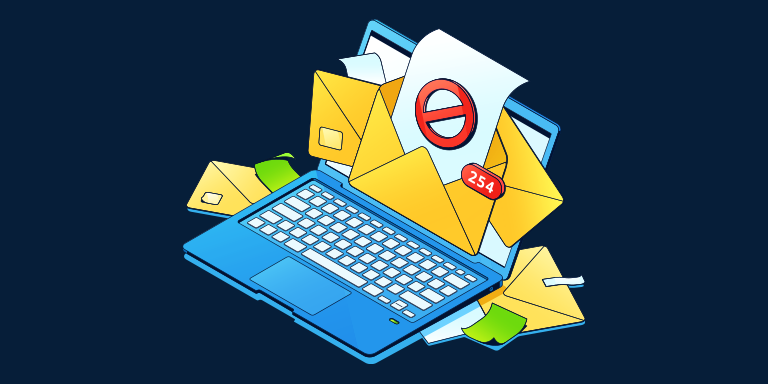
The harsh reality is that your message likely never reached its destination. It didn’t bounce; it simply vanished into the "black hole" of the spam folder. In the modern digital economy, email deliverability is the silent killer of growth. You can have the most persuasive copy and the highest-converting offer, but if your emails aren’t landing in the primary inbox, none of it matters.
The Core Problem: Deliverability vs. Delivery
To understand why your campaigns are underperforming, one must first distinguish between "delivery" and "deliverability." Delivery is a technical baseline—it simply means your email did not bounce and reached the receiving server. Deliverability, however, is the art and science of ensuring that the email lands in the recipient’s primary inbox rather than the promotions tab or the junk folder.
For ecommerce founders, this is not a marginal technical detail; it is a critical revenue driver. If 20% of your emails are being filtered as spam, you have effectively incinerated 20% of your marketing reach. Because this damage is invisible, many founders only realize there is a problem when they notice a steady, unexplained decline in open rates and a subsequent dip in bottom-line revenue.
The Anatomy of Sender Reputation
At the heart of inbox placement lies your "Sender Reputation." Think of this as a credit score for your domain. Every time you hit send, major email service providers (ESPs) like Gmail, Outlook, and Yahoo evaluate your behavior. They look for patterns: Are people opening your emails? Are they marking them as spam? How many addresses on your list are no longer active?
The Feedback Loop
Your reputation is a cumulative score built on three pillars:
- Engagement: Do users open, click, or reply? High engagement signals to the ESP that your content is valuable.
- Complaints: Every time a user hits "Report Spam," your reputation takes a significant hit. A high complaint rate is the fastest way to get blacklisted.
- Bounces: Sending to invalid or non-existent email addresses signals poor list management, which further erodes trust.
If your reputation slips, ESPs will prioritize other senders, deprioritizing your messages until they are eventually blocked entirely.
Technical Authentication: Your Digital ID
If reputation is your credit score, authentication is your identity. Without proper protocols, you are essentially an anonymous sender in the eyes of an ESP, which is a major red flag.
The Big Three: SPF, DKIM, and DMARC
To prove that you are who you say you are, your domain must be configured with these three technical standards:
- SPF (Sender Policy Framework): A record that lists which IP addresses and domains are authorized to send email on your behalf.
- DKIM (DomainKeys Identified Mail): A digital signature that ensures the email has not been tampered with in transit.
- DMARC (Domain-based Message Authentication, Reporting, and Conformance): A policy that tells receiving servers what to do if an email fails SPF or DKIM checks.
Without these, even the most legitimate, high-quality newsletter will be viewed with suspicion. Configuring these is often a one-time task that takes less than 15 minutes but offers a lifetime of protection.
The Unsexy Necessity: List Hygiene
In the pursuit of vanity metrics, many founders fall into the trap of obsessing over list size. However, a massive list of inactive subscribers is a liability, not an asset.
The 90-Day Rule
Every email list naturally accumulates "dead weight"—contacts who changed jobs, abandoned old accounts, or simply lost interest. These inactive users drag down your engagement metrics.
- Re-engagement Campaigns: If a user hasn’t opened or clicked in 90 to 180 days, launch a "win-back" sequence. If they still don’t engage, remove them.
- The Power of Shrinking: While it feels counterintuitive to delete subscribers, a smaller, hyper-engaged list will almost always result in higher revenue than a bloated, inactive one. A cleaner list signals to ESPs that you are a responsible sender, which improves your placement for your active customers.
Engagement Signals as Deliverability Triggers
Modern spam filters are sophisticated. They don’t just look for keywords like "FREE" or "WINNER"; they observe how your audience interacts with your brand. Every time a subscriber moves your email from the spam folder to the inbox or adds you to their contacts, they are sending a "positive signal" to their ESP.
This is why the Welcome Series is the most important sequence you will ever write. It sets the tone for the entire relationship. If a subscriber ignores your first three emails, the ESP learns that your content is not "wanted," and future emails will be filtered out.
Common Content Habits That Trigger Filters
Even with a perfect technical setup, your content itself can trigger automated filters. To avoid this, audit your emails for:
- Excessive Link Usage: Including too many links in a single email can be seen as spammy behavior.
- Broken HTML: Sloppy code can cause rendering issues, which modern filters associate with low-quality, automated bulk mail.
- Urgency Overload: Using all-caps, excessive punctuation, or aggressive sales language (e.g., "ACT NOW!!!") triggers the heuristic filters used by modern inbox providers.
The Path Forward: Ongoing Maintenance
Deliverability is not a "set it and forget it" task. It is a continuous practice of maintenance and vigilance. The founders who see the highest ROI from their email programs are those who treat their sending reputation as a core business metric.
Utilizing Modern Infrastructure
Given the complexity of current deliverability standards, many founders are turning to specialized platforms like Omnisend. These tools provide the necessary infrastructure—including real-time deliverability monitoring, automated list hygiene, and simplified authentication support—to ensure your message consistently reaches the inbox.
Conclusion: The Bottom Line
In an era where digital noise is at an all-time high, your ability to reach the inbox is a competitive advantage. Do not wait for a catastrophic drop in open rates to take action. Audit your authentication, prune your list, and prioritize engagement over volume. By building these habits today, you ensure that your message is not just sent, but heard.
Foundr readers can get 50% off their first three months with Omnisend by using code FOUNDR50 when signing up. Take control of your email program and ensure your hard work pays off in the inbox where it belongs.
 Dwi Wanna
  rifanmuazin
  Asep Darmawan