
 By Ammar Sabilarrohman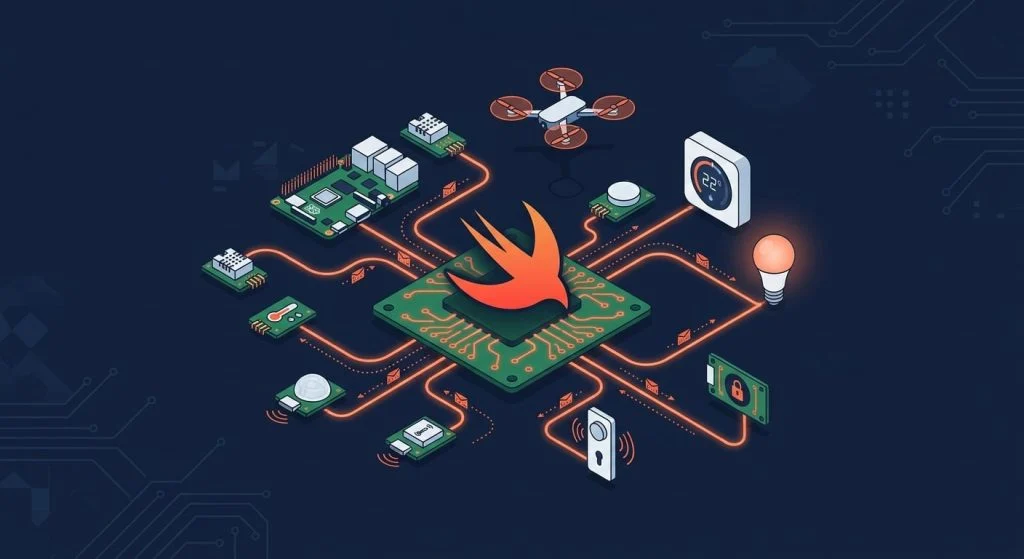
The landscape of cloud computing is evolving at a breakneck pace, and this week’s AWS announcements underscore a clear shift toward three pillars: language-agnostic flexibility, architectural resilience, and the deepening integration of high-level artificial intelligence into enterprise workflows. From the expansion of the Swift ecosystem into the Internet of Things (IoT) to the deployment of OpenAI’s latest models on Amazon Bedrock, developers and enterprises are being equipped with a more sophisticated toolkit than ever before.
Swift’s Leap into the IoT Ecosystem
In a landmark development for the developer community, the AWS IoT Device SDK for Swift has officially reached general availability. This release marks a significant milestone for the Swift Server Workgroup (SSWG) and signals AWS’s commitment to supporting modern, memory-safe languages across the entire technology stack.
Breaking Down the SDK
The new SDK is not merely a wrapper; it provides production-ready connectivity for MQTT 5, Device Shadow, and Jobs, while also facilitating complex fleet provisioning. By extending native support to macOS, iOS, tvOS, and Linux, AWS is effectively enabling developers to write code that traverses from the cloud down to the edge.
The Rise of Edge Computing
The implications of this move go beyond simple connectivity. We are witnessing a paradigm shift where Swift—a language historically tethered to Apple’s consumer hardware—is becoming a cornerstone of server-side and edge-device architecture. Projects like WendyOS exemplify this trend, offering specialized environments for physical AI on hardware like the NVIDIA Jetson and Raspberry Pi. The ability to deploy consistent, high-performance Swift code across diverse edge hardware is a game-changer for industrial IoT, autonomous systems, and real-time data processing.
Major Infrastructure Announcements: RDS and Cognito
Beyond the developer-centric updates, AWS has rolled out critical infrastructure improvements aimed at simplifying enterprise migrations and bolstering system reliability.
1. Amazon RDS for SQL Server: Bring Your Own Media (BYOM)
For enterprises hesitant to migrate due to licensing complexities, the introduction of Bring Your Own Media (BYOM) for Amazon RDS for SQL Server is a strategic relief.
- The Mechanism: Customers can now leverage existing Microsoft SQL Server licenses, including Software Assurance, via Microsoft’s License Mobility program.
- Operational Integration: The feature is tightly integrated with AWS License Manager, providing a centralized dashboard to track license consumption and ensure compliance. This reduces the friction of moving legacy on-premises workloads to the cloud by allowing organizations to preserve their existing capital investments.
2. Multi-Region Replication for Amazon Cognito
Resilience is the bedrock of modern cloud architecture. With the new multi-Region replication for Amazon Cognito, AWS is addressing the critical need for disaster recovery in identity management.
- Near Real-Time Synchronization: Cognito can now replicate user credentials, pool configurations, and federation setups to a secondary standby region.
- Continuity of Operations: In the event of a regional outage, users face no interruption. They remain signed in, and their credentials remain valid in the standby region, effectively eliminating the "re-authentication" barrier that typically plagues recovery scenarios. This add-on feature is now available across 16 major AWS Regions for both Essentials and Plus tiers.
The AI Frontier: GPT-5.5, GPT-5.4, and Codex on Bedrock
The most headline-grabbing update of the week is the general availability of OpenAI’s cutting-edge models on Amazon Bedrock. By integrating GPT-5.5, GPT-5.4, and the Codex coding engine into the Bedrock ecosystem, AWS is providing a unified gateway for AI-driven transformation.
GPT-5.5: The New Standard for Autonomous Tasks
GPT-5.5 is currently positioned as the flagship model within the OpenAI suite. Its capabilities represent a leap forward in:
- Agentic Coding: The model demonstrates superior proficiency in writing, testing, and debugging complex software modules autonomously.
- Data Analysis: Enhanced reasoning capabilities allow it to process massive, unstructured datasets and extract actionable business intelligence with higher accuracy than previous iterations.
- Multi-Step Reasoning: It excels at managing complex, autonomous workflows that require long-range planning and execution.
Codex and the Future of Software Development
The integration of Codex via the Codex App, CLI, and IDE plugins (Visual Studio Code, JetBrains, Xcode) is poised to accelerate development cycles. By aligning pricing with OpenAI’s first-party rates and allowing usage to count toward existing AWS Enterprise commitments, Amazon has removed the financial barrier to adopting these models at scale.
Supporting Data and Strategic Implications
Architectural Impact
The introduction of multi-Region replication for Cognito and the expansion of the IoT SDK suggest a clear strategic focus: distributed systems reliability. AWS is moving toward a future where a regional failure should be transparent to the end user. By syncing identity data in near real-time, Amazon is essentially providing a "failover" safety net for the most sensitive part of the stack: the user session.
The "Swift at the Edge" Phenomenon
Data from recent developer surveys suggests that Swift usage in server-side environments has grown by 30% year-over-year. By providing an official IoT SDK, AWS is validating Swift as a viable alternative to C++ and Python in memory-constrained environments. This could lead to a wave of performance-optimized IoT applications that leverage Swift’s robust type system and safety features.
Economic Considerations for Enterprises
The BYOM program for RDS is an explicit attempt to capture the "on-premises" market. According to recent migration whitepapers, the primary deterrent for legacy SQL Server migrations is the potential for double-paying for licenses. By integrating License Manager, AWS is simplifying the cost-benefit analysis for CIOs and IT directors looking to modernize their database infrastructure.
Official Perspective: The Path Forward
The sentiment from the AWS engineering teams, as echoed in the recent developer blog posts, is one of "builder-centricity." The goal is to reduce the "undifferentiated heavy lifting" that developers face. Whether it is configuring regional failover for identity pools or managing MQTT connectivity on an edge device, AWS is shifting the burden from the developer to the platform.

Looking Ahead: The Developer Experience
As we look toward the remainder of the quarter, the industry can expect a deeper focus on AI-assisted development. With the general availability of Codex on Bedrock, the IDE is becoming the new interface for cloud infrastructure. Developers will spend less time writing boilerplate code and more time defining architectural intent, with AI models handling the implementation.
Event Horizon: Engaging the Community
AWS continues to lean heavily into community engagement. With a busy schedule of AWS Summits, Community Days, and the specialized AWS Builder Center, the company is fostering an environment where these new tools—Swift SDKs, Multi-Region Cognito, and Bedrock AI—can be stress-tested by the community.
Conclusion: A Week of Consolidation and Innovation
This week’s updates reflect a mature cloud ecosystem that is no longer just focused on adding "more" features, but rather on refining the integration and reliability of existing services.
- For the IoT Engineer: The Swift SDK opens a new realm of type-safe, performant development for the edge.
- For the Database Administrator: BYOM for RDS offers a clearer, more cost-effective path to the cloud.
- For the Architect: Cognito multi-Region replication solves one of the most persistent headaches in disaster recovery.
- For the AI Developer: The arrival of GPT-5.5 on Bedrock provides the muscle required to build the next generation of autonomous, agentic applications.
As AWS continues to harmonize these disparate services, the barrier to entry for building resilient, AI-powered, and edge-native applications continues to lower. We are moving toward a future where the distinction between "local," "edge," and "cloud" becomes increasingly blurred, replaced by a seamless fabric of compute and intelligence that simply works—wherever it is needed.
Stay tuned for next week’s roundup as we continue to track the rapid evolution of the AWS ecosystem.
 Neng Nana
  Suro Senen
  Lina Hope