
 By Siti Muinah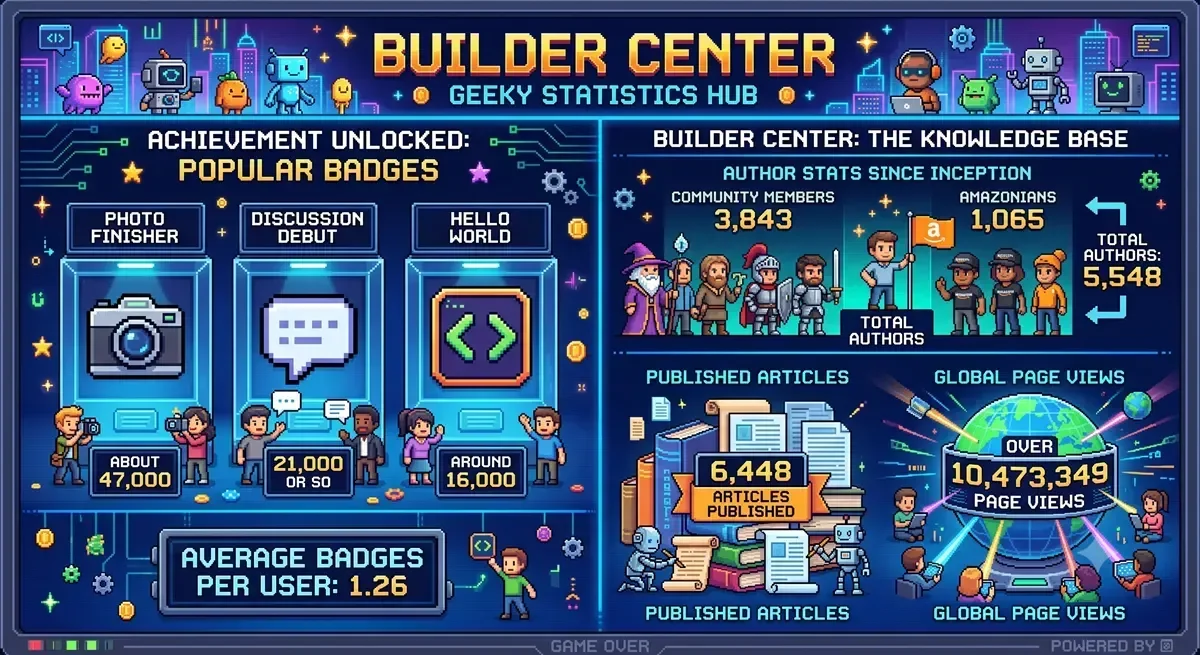
It has been exactly one year since the launch of the AWS Builder Center, a platform that has rapidly transformed from a simple community hub into a cornerstone of the global cloud development ecosystem. On July 9, 2025, Amazon Web Services unveiled the platform with the intent of fostering collaboration, knowledge sharing, and hands-on skill development. Twelve months later, the platform has surpassed initial expectations, establishing itself as the premier destination for developers to learn, contribute, and build.
To commemorate this milestone, the AWS team has released comprehensive retrospectives that not only highlight the platform’s explosive growth but also provide a roadmap for the future of cloud-native collaboration.
The Chronology of Growth: From Hub to Ecosystem
The trajectory of the AWS Builder Center is a testament to the agility of the modern development community. In its infancy, the platform focused on foundational community needs: wishlist voting, user profiles, and a centralized toolbox. However, the feedback loop between the platform’s engineers and its users was remarkably short, leading to an iterative development cycle that saw major feature releases almost every week.
Key Milestones Over the Last 12 Months:
- July 2025: The initial launch of the Builder Center, focusing on community identity and the "Wishlist" feature.
- Late 2025: Integration of the "Builders’ Library," providing authoritative architectural guidance.
- Early 2026: Launch of the gamification suite, including badges and activity streaks, to incentivize consistent learning.
- Spring 2026: Expansion of community-created "Spaces," allowing for niche collaboration.
- Summer 2026: Introduction of sandbox environments, arguably the most anticipated feature in the platform’s history.
As Rick Suttles detailed in his full feature timeline, the platform now boasts support for over 1,500 AWS services across 37 regions, a massive undertaking that requires granular, real-time data integration. The platform has effectively bridged the gap between documentation and practical application.
Supporting Data: By the Numbers
The metrics released by AWS to mark the anniversary illustrate a vibrant and hyper-active community. According to a retrospective published by Jeff Barr, the engagement numbers are staggering for a platform that has only been operational for a single year:
- Content Proliferation: 5,548 unique authors have contributed to the knowledge base, resulting in 6,448 articles.
- Audience Reach: These articles have collectively garnered over 10.4 million page views, underscoring the platform’s role as a vital technical resource.
- Gamification Success: Since the introduction of the badge system in March 2026, builders have earned 99,226 badges, indicating high levels of platform "stickiness" and user motivation.
- Community Influence: The "Wishlist" feature has become a primary driver of product development, with 565 community-submitted wishes recorded. Of these, 10 have already been fully implemented, with another 20 currently on the near-term development roadmap.
The content that performed the best reflects the diverse interests of the AWS user base. Dineshraj Dhanapathy’s guide, Building an AWS Study Buddy with MCP + Strands Agents SDK, led the pack with over 50,000 views, proving that developers are eager for practical, AI-driven solutions to modern workflow challenges.
The "Sandbox" Revolution: A New Paradigm for Learning
Perhaps the most significant development to emerge from the anniversary week is the introduction of Sandbox Environments. For years, the primary barrier to entry for many developers looking to experiment with AWS was the friction of account setup—managing billing, setting up IAM roles, and the anxiety of potential "runaway" costs.
Rick Suttles’ announcement of Sandbox Environments changes the game. By providing a free, pre-provisioned AWS account tailored for specific workshop exercises, AWS has essentially democratized hands-on cloud experience.
Key Features of the Sandbox Initiative:
- Zero-Friction Access: No personal credit card or account creation required.
- Safety and Security: Each environment is ephemeral, remaining active for only 8 hours.
- Automatic Cleanup: Resources are automatically de-provisioned, eliminating the need for manual cleanup and ensuring no lingering costs.
- Accessibility: With a limit of one active sandbox at a time, the system is designed to be equitable while ensuring that all users have the opportunity to practice.
This initiative is a direct response to the community’s desire for safer, faster ways to test new services without the burden of administrative overhead.
Official Perspectives: The Leadership View
In his reflective post, AWS veteran Jeff Barr noted that the success of the Builder Center is not just in the software, but in the culture it has cultivated. "The Builder Center was built to be a living, breathing reflection of what our customers are actually doing," Barr wrote. "Seeing 5,500+ authors share their expertise is the ultimate validation that we have provided the right infrastructure for a global brain-trust."
The focus on "student status" and "availability notifications" suggests that AWS is viewing the Builder Center as more than just a documentation portal—it is an educational hub intended to support the next generation of cloud architects. By integrating GitHub and Amazon account sign-ins, they have reduced the barrier to entry, ensuring that the platform remains inclusive for both enterprise professionals and hobbyists.
Implications for the Industry
The success of the AWS Builder Center signals a shift in how major cloud providers handle developer relations. The traditional "Top-Down" model—where the provider dictates the curriculum—is being replaced by a "Community-First" model.
1. The Rise of "Peer-Verified" Knowledge
When an article like Chris Miller’s Migrating an EOL Linux Server to AWS in 8 Hours with Kiro garners 45,000 views, it proves that developers trust peer-reviewed, field-tested guides more than they trust generic marketing copy. This shift forces vendors to foster community hubs where authentic, problem-solving content can thrive.
2. AI as a Catalyst
The popularity of AI-themed articles, such as Yash Aggarwal’s AIdeas: NeuroVoice, highlights the community’s rapid pivot toward generative AI and multimodal applications. The Builder Center is providing a platform for the rapid dissemination of AI patterns that are only months old, significantly accelerating the industry’s adoption of these new technologies.

3. Frictionless Onboarding
By removing the "credit card barrier" through the Sandbox program, AWS is setting a new standard for developer experience. This is likely to influence other SaaS and IaaS providers to follow suit, as the "try before you buy" model for infrastructure becomes an industry expectation rather than a premium feature.
Looking Ahead: The Road to Year Two
As the AWS Builder Center moves into its second year, the focus appears to be on scalability and personalization. With "Spaces" for community-created groups and an active roadmap for features requested via the Wishlist, the platform is poised to become more modular.
The sheer volume of content—10.4 million page views in 12 months—demonstrates that there is a massive, untapped demand for high-quality, practical cloud knowledge. As the platform matures, we can expect to see more integration with external IDEs, improved AI-assisted search functionality, and potentially deeper gamification elements that mirror real-world professional certifications.
The anniversary serves as a reminder that the "cloud" is not just a set of servers and APIs; it is a community of individuals solving complex problems in real-time. For developers, architects, and students, the AWS Builder Center has transitioned from a new experiment into an essential utility. Whether you are migrating a legacy Linux server, exploring the frontiers of multimodal AI, or simply looking to sharpen your cloud skills, the platform provides the necessary tools and, more importantly, the community to support your journey.
As we look toward the next year, one thing is clear: the builders are just getting started. The culture of "building, learning, and recharging" promoted by the AWS team seems to be the perfect ethos for a community that is helping define the future of the digital world.
 Neng Nana
  Suro Senen
  Lina Hope