
 By Nana Muazin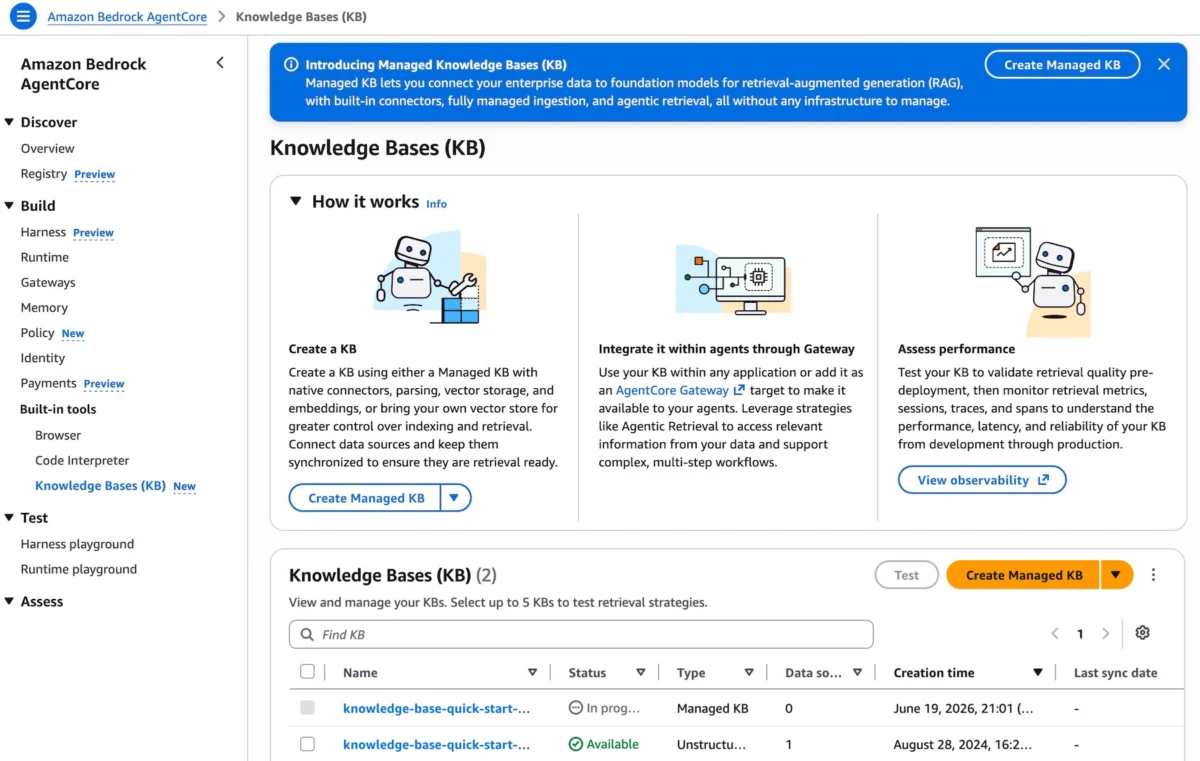
In a move set to redefine how enterprises deploy generative AI, Amazon Web Services (AWS) has unveiled Amazon Bedrock Managed Knowledge Base. This new suite of capabilities aims to eliminate the infrastructure bottlenecks that have historically plagued organizations attempting to implement Retrieval-Augmented Generation (RAG). By abstracting the complex, multi-layered architecture required for enterprise-grade AI, AWS is enabling developers to transition from proof-of-concept to production-ready applications in a fraction of the traditional time.
The State of Generative AI: Moving Beyond the Prototype
For the past two years, the industry has grappled with the "Last Mile" problem of generative AI: how to make foundation models reliably ingest and reason over proprietary, siloed enterprise data. While LLMs are inherently powerful, they suffer from hallucinations and a lack of access to real-time company information.
RAG has become the industry standard for bridging this gap, but building a production-grade RAG pipeline is notoriously difficult. It requires the orchestration of vector databases, embedding models, re-ranking logic, and data parsing pipelines—all of which must be maintained, secured, and scaled. Developers often find themselves spending 80% of their time on "undifferentiated heavy lifting" rather than the business logic of their AI agents. Amazon Bedrock Managed Knowledge Base arrives as a comprehensive answer to this systemic friction.
Core Innovations: A New Standard for RAG
The new managed service simplifies the RAG lifecycle by treating the entire pipeline as a single managed primitive. Instead of manually connecting disjointed services, developers can now rely on a cohesive system that handles storage, retrieval, embeddings, and foundation model selection automatically.
1. Smart Parsing: The End of Data Preparation Headaches
One of the most labor-intensive tasks in AI development is document parsing. Enterprises hold data in a chaotic variety of formats—PDFs, scanned documents, sprawling SharePoint repositories, and nested Google Drive folders. Bedrock Managed Knowledge Base introduces "Smart Parsing," an automated capability that determines the optimal strategy for data ingestion without manual intervention. By combining advanced layout analysis and semantic chunking, it ensures that retrieved information maintains its context, significantly improving the accuracy of downstream AI responses.
2. The Agentic Retriever: Multi-Step Reasoning
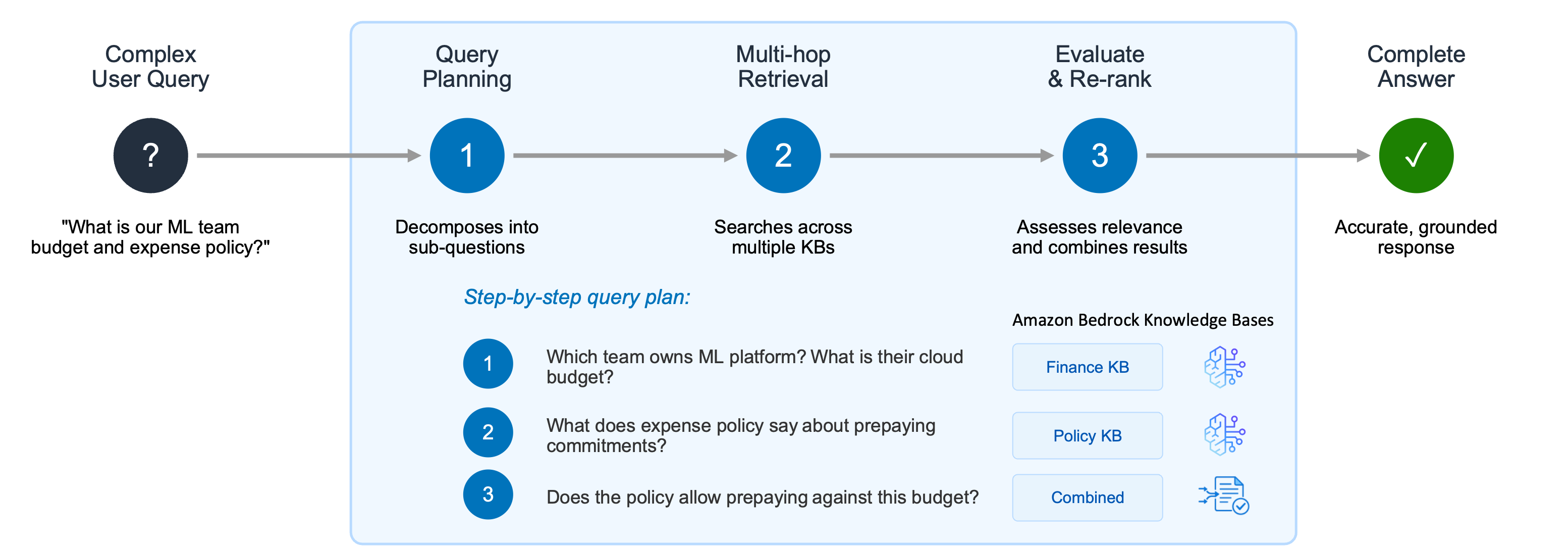
Perhaps the most significant leap forward is the introduction of the "Agentic Retriever." Conventional RAG systems often fail at complex queries that require multi-hop reasoning. For instance, a question like, "Does our current travel policy permit prepaying for an annual software subscription?" requires the system to understand two distinct document sets and synthesize a logical conclusion.

The Agentic Retriever solves this by decomposing complex queries into a step-by-step plan. It performs recursive multi-hop retrieval, evaluates intermediate findings, and gathers sufficient context before generating a final answer. This move toward "reasoning-first" retrieval marks a departure from static keyword-based search toward intelligent, goal-oriented information synthesis.
3. Native Integration with AgentCore Gateway
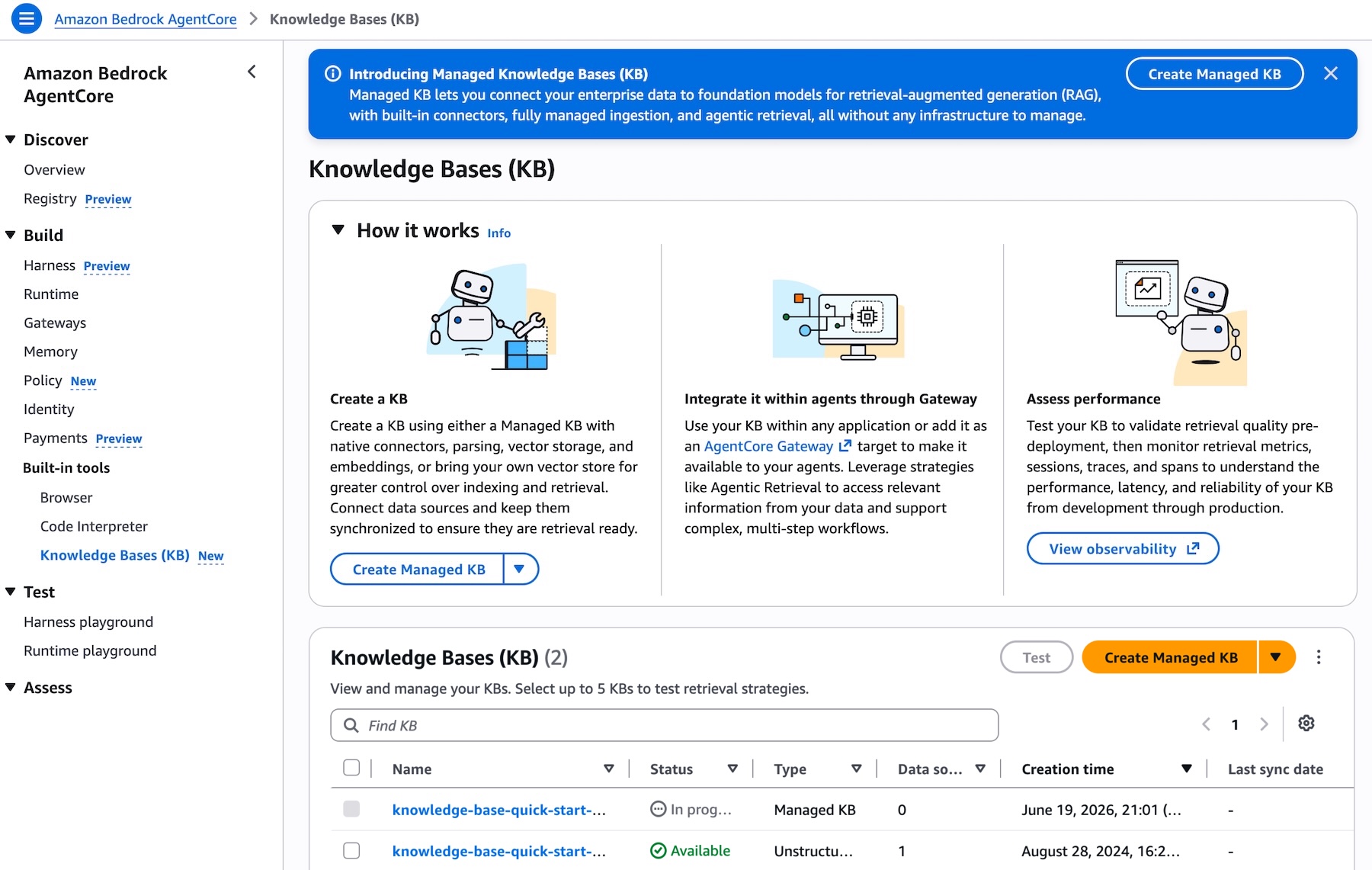
The service integrates seamlessly with the Amazon Bedrock AgentCore Gateway. By offering the knowledge base as a pre-built target, AWS has effectively reduced the integration overhead to a few lines of code. This includes auto-generating role-based access control (RBAC) and providing built-in observability metrics via the AgentCore dashboard, allowing teams to monitor performance and latency without building custom telemetry.
Chronology of Development
The rollout of Managed Knowledge Base is the culmination of a broader strategic shift within AWS Bedrock over the last 18 months:
- Early 2025: AWS began emphasizing the "Agentic" nature of Bedrock, focusing on orchestration tools like AgentCore to manage multi-step agent workflows.
- Late 2025: Beta testing of the Managed Knowledge Base began with select enterprise partners, focusing on the pain points of data connectors and retrieval latency.
- June 16, 2026: Official announcement of the service, highlighting its ability to turn enterprise data into actionable intelligence in minutes.
- June 19, 2026: Update to the documentation and console interface, streamlining the user experience for creating managed knowledge bases across various AWS regions.
Supporting Data and Technical Flexibility
A key differentiator of the Amazon approach is the rejection of vendor lock-in. Unlike many "all-in-one" AI platforms that force users into a single model provider, Bedrock Managed Knowledge Base maintains strict separation between infrastructure and the model layer.
- Model Agnostic: Users can choose any foundation model available on Bedrock for the generation step.
- Performance Tuning: Developers retain the ability to swap embedding and re-ranking models as better versions become available, ensuring that the system can evolve without a total infrastructure overhaul.
- MCP Support: By leveraging the Model Context Protocol (MCP), the knowledge base is instantly compatible with leading open-source frameworks, including LangChain, CrewAI, LlamaIndex, and LangGraph. This ensures that even if a team switches orchestration frameworks, their data pipeline remains consistent.
Official Responses and Strategic Implications
Industry analysts suggest that this launch signals a maturation phase for the generative AI market. "The era of ‘glue-code’ engineering is ending," says one lead cloud architect. "Enterprises don’t want to be in the business of managing vector databases; they want to be in the business of using their data to drive revenue."
AWS has framed this release as a democratization of high-end AI capabilities. By providing a managed service that handles the nuances of re-ranking and multi-hop reasoning, AWS is effectively lowering the barrier to entry for mid-sized enterprises that previously lacked the engineering headcount to build custom RAG pipelines.
Furthermore, the integration with AWS GovCloud and regional availability in major hubs like London, Frankfurt, and Tokyo indicates that AWS is positioning this service for heavily regulated industries, such as finance and healthcare, where data residency and strict permission management are non-negotiable.
The Road Ahead: What This Means for Enterprises
The implications for the enterprise AI landscape are threefold:
- Accelerated Time-to-Market: The transition from a "raw data" state to an "AI-ready" state is now measurable in minutes rather than weeks. This will likely lead to an explosion in the number of internal-facing AI agents within organizations.
- Focus on Higher-Level Logic: With the "plumbing" taken care of by AWS, developers can dedicate their efforts to refining prompt engineering, evaluating model outputs, and creating superior user experiences.
- Standardization: As more companies adopt the Bedrock Managed Knowledge Base, we will likely see a move toward industry-standard patterns for agentic search, making it easier for organizations to hire talent that is already familiar with the AWS AI ecosystem.
Getting Started: A Practical Guide
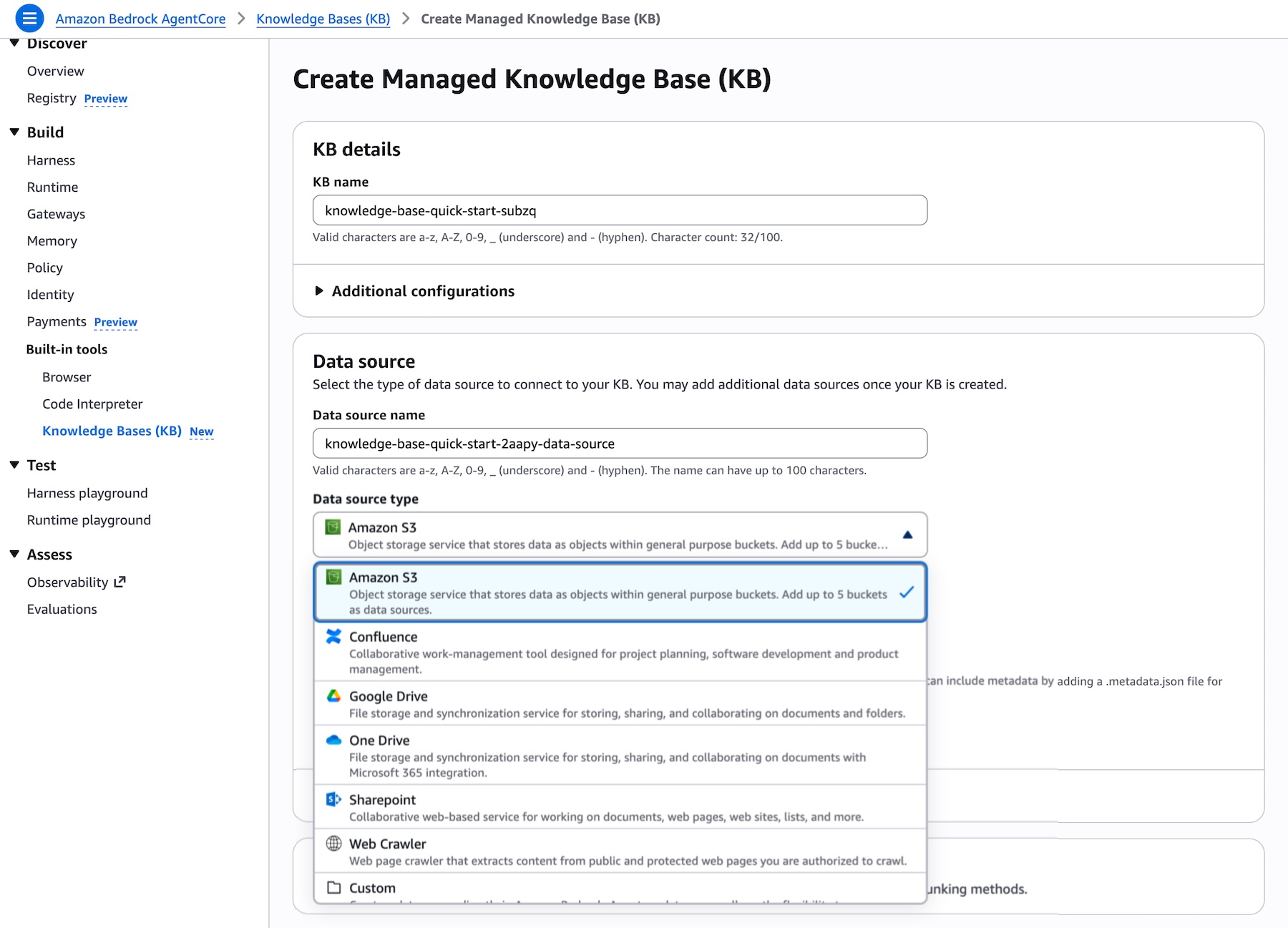
For organizations looking to deploy, the process is designed to be highly accessible. By navigating to the Bedrock AgentCore console, users can select their data sources—ranging from S3 buckets and SharePoint to custom APIs—via a dropdown menu. Once the "Create Managed KB" button is clicked, AWS handles the provisioning of the underlying storage, the automated parsing, and the initial indexing.
Pricing follows a pay-as-you-go model, tied to indexed data volume and the number of retrievals. This granular billing structure allows startups and enterprises alike to experiment at low cost, scaling only as their AI applications gain traction.
As generative AI continues its rapid evolution, the winners will be those who can most effectively synthesize their internal knowledge. With the Amazon Bedrock Managed Knowledge Base, AWS has provided the essential scaffolding for this synthesis, moving the industry one step closer to the vision of a truly "intelligent enterprise."
For more information on implementation, developers are encouraged to review the Bedrock Knowledge Bases Developer Guide or visit the AWS Bedrock console to begin a free-tier trial.
 Neng Nana
  Suro Senen
  Lina Hope