
 By Dwi Wanna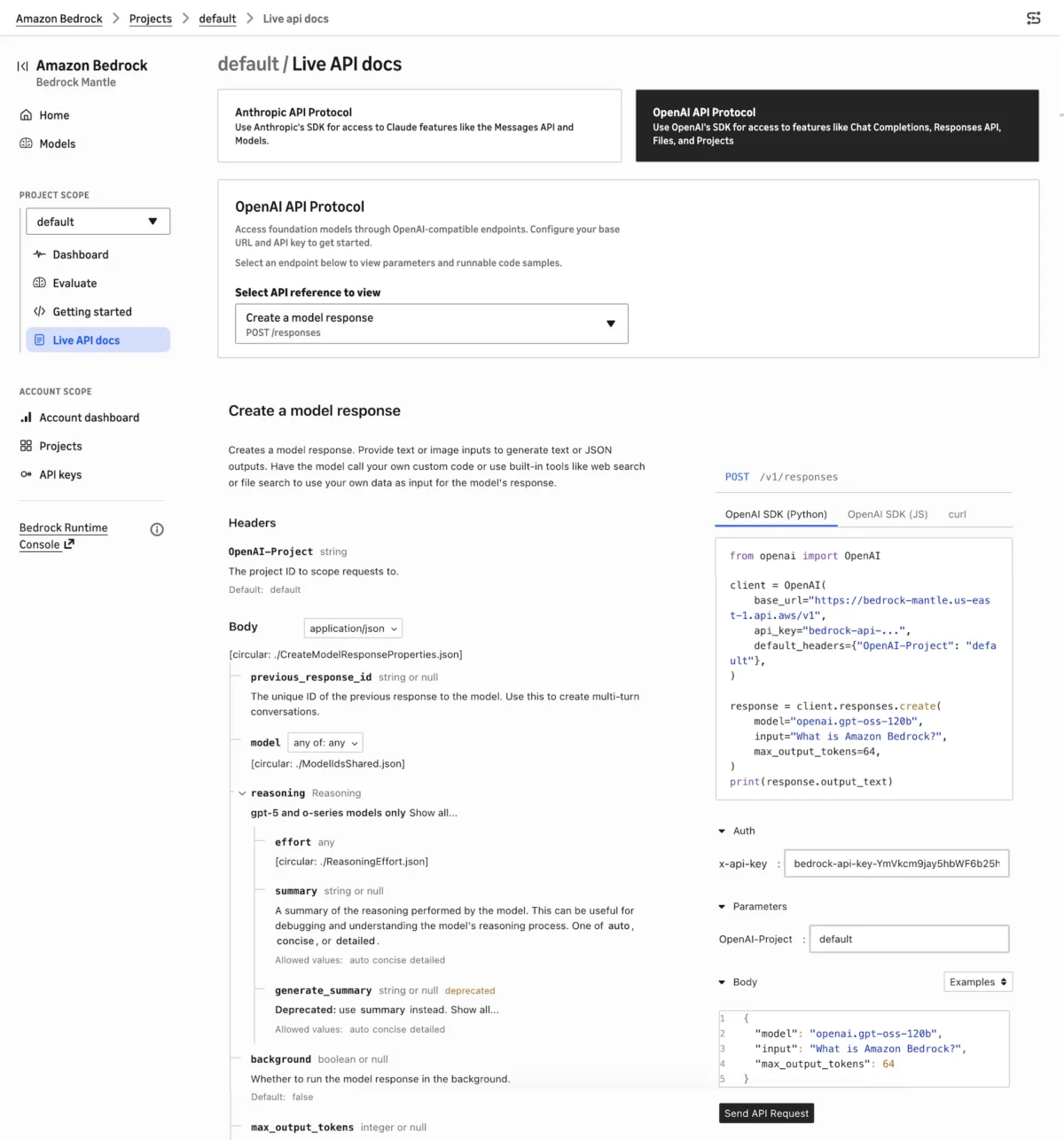
In a significant move to streamline the development lifecycle for generative AI applications, Amazon Web Services (AWS) has officially launched a new, specialized console experience for Amazon Bedrock. This refreshed interface is purpose-built to interface with the bedrock-mantle inference engine—a high-performance, secure, and reliable infrastructure designed to support the latest iterations of industry-leading models, including those from OpenAI and Anthropic.
By decoupling the high-level experimentation and integration workflow from the broader suite of managed services, AWS is aiming to reduce the "time-to-production" for developers, AI engineers, and data scientists who require rapid iteration cycles.
Main Facts: A Paradigm Shift in Model Deployment
The core objective of the new bedrock-mantle console is to simplify the transition from model evaluation to deployment. Unlike the existing Bedrock console—which focuses on comprehensive management features like Agents, Knowledge Bases, Guardrails, and fine-tuning—the new interface prioritizes speed, API compatibility, and developer productivity.
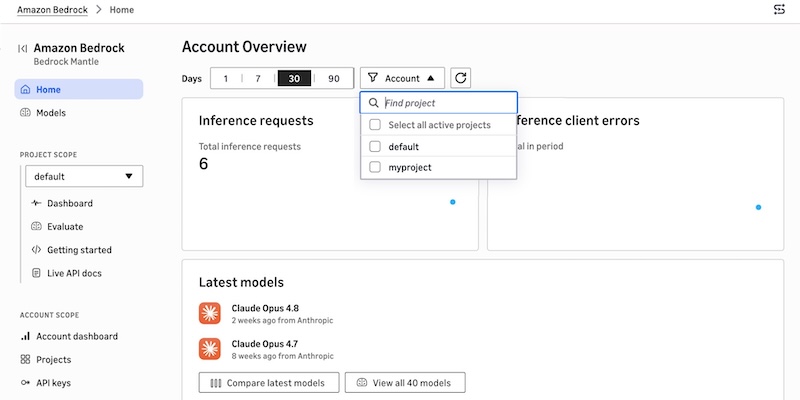
Key Highlights of the New Console:
- Unified API Compatibility: The console natively supports OpenAI’s Responses and Chat Completions APIs, as well as the Anthropic Messages API. This allows developers to swap underlying models with minimal code refactoring.
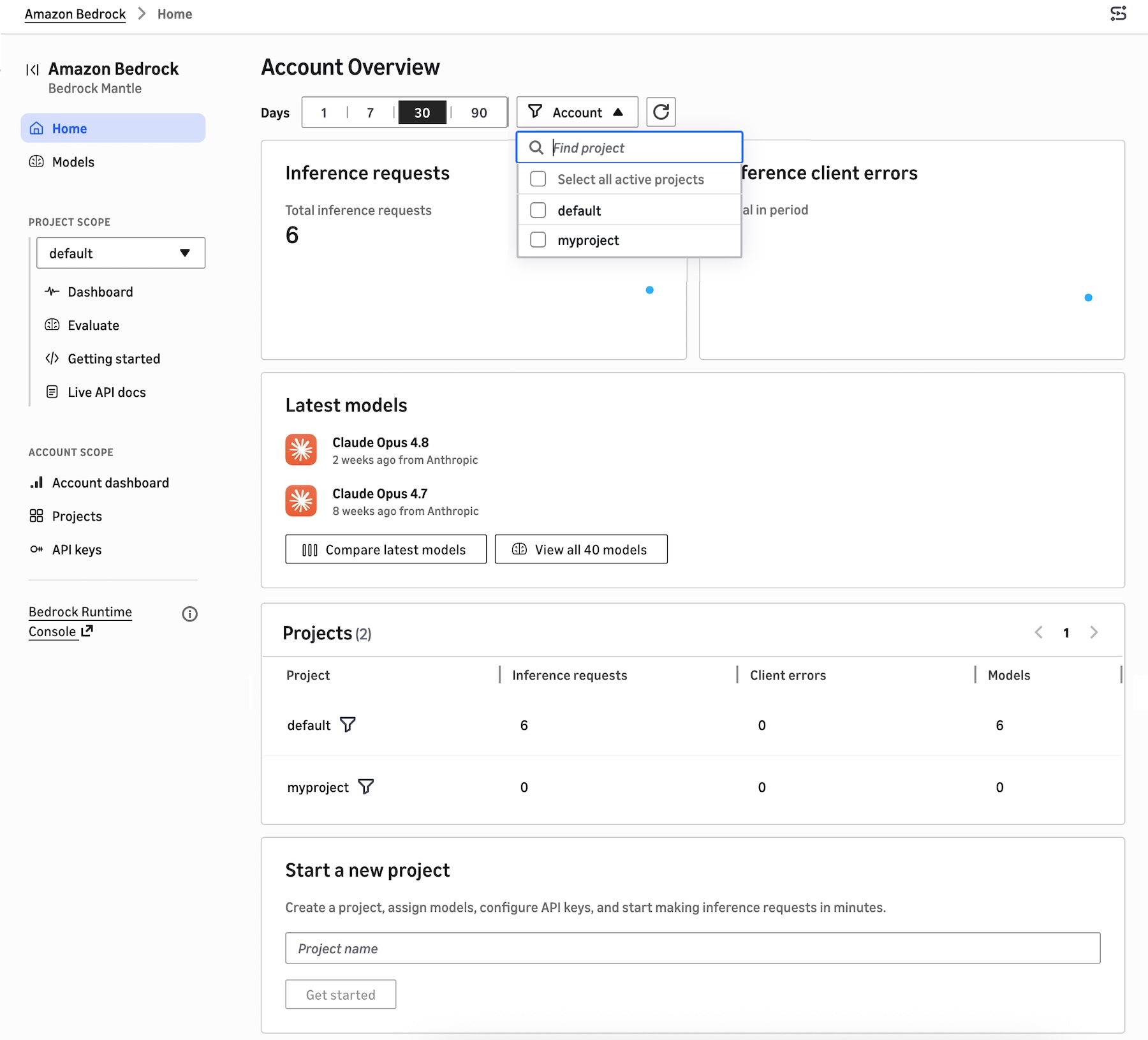
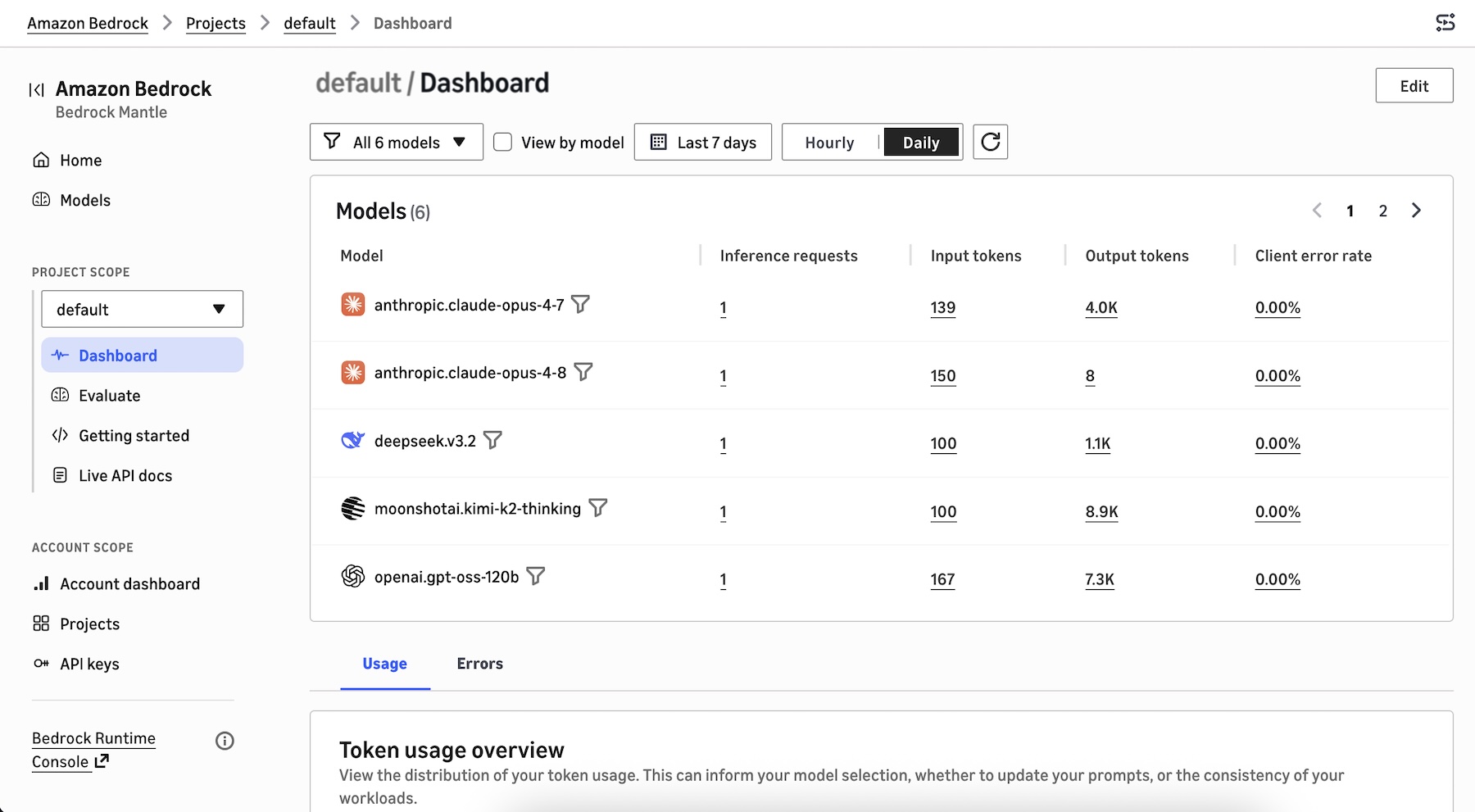
- Project-Based Architecture: Users can organize their work into specific projects, each with dedicated dashboards that track inference requests, error rates, and token usage metrics.
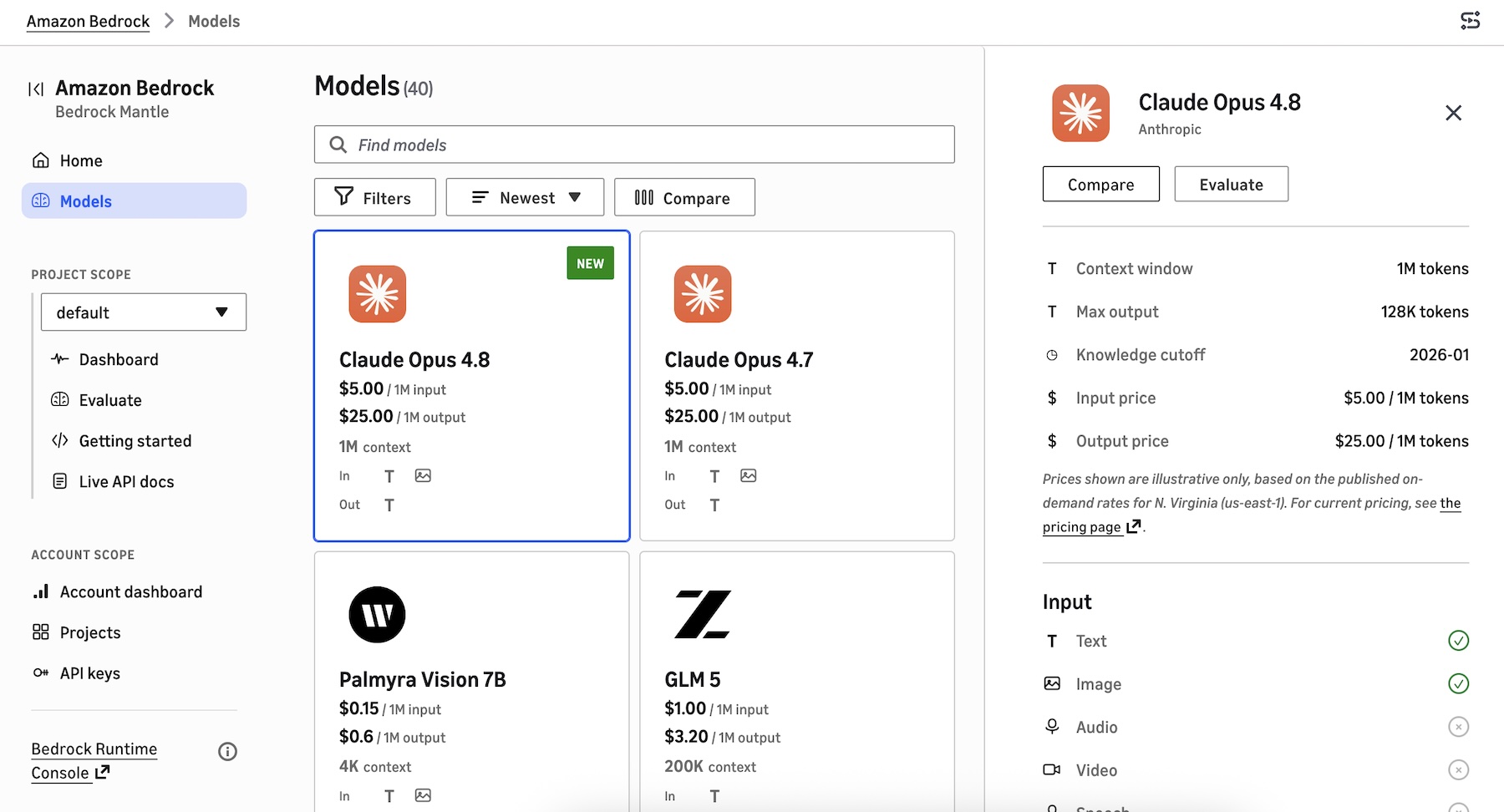
- Advanced Model Catalog: A centralized hub allows developers to compare up to three models side-by-side. The catalog provides granular data on pricing, token limits, and regional availability.
- AI Agent Integration: The platform offers built-in support for connecting popular AI coding assistants, such as Cursor, Cline, Claude Code, and OpenCode, directly to the Bedrock backend.
- Live API Documentation: The console features interactive documentation that dynamically updates based on the user’s selected model and endpoint configuration, complete with pre-filled authentication keys and environment variables.
Chronology: The Evolution of the Bedrock Ecosystem
The release of the bedrock-mantle console marks a significant milestone in a multi-year effort by AWS to standardize generative AI access.
- Early 2023: AWS announces Amazon Bedrock, introducing a fully managed service that offers access to foundation models (FMs) through a unified API.
- Late 2023 – Mid 2024: AWS expands the model catalog significantly, adding support for Claude 3, Meta Llama, and Mistral, while introducing features like Knowledge Bases and Guardrails to meet enterprise compliance requirements.
- Late 2024: Industry demand shifts toward high-performance, low-latency inference for coding agents and complex RAG (Retrieval-Augmented Generation) systems, highlighting the need for a more specialized inference engine.
- June 2025: AWS initiates the rollout of the
bedrock-mantleengine, a next-generation backend architecture optimized for the specific latency and throughput requirements of modern AI agents. - June 2026: The official launch of the dedicated
bedrock-mantleconsole experience. This serves as the primary gateway for developers interacting with this high-performance engine, marking a bifurcation in the user experience between "management-heavy" tasks and "developer-first" experimentation.
Supporting Data: Understanding the "Mantle" Advantage
The transition to the bedrock-mantle engine is not merely cosmetic; it is a fundamental shift in how inference requests are handled. The new console provides visual telemetry to help developers optimize these workloads.
Token Usage and Performance Analytics
One of the most critical additions to the new console is the Project Dashboard. By providing real-time visibility into token distribution—broken down by total usage, tokens per minute (TPM), and requests per minute (RPM)—AWS is empowering teams to make data-driven decisions regarding model selection. For instance, if a project shows high latency or excessive token costs, developers can use the console’s side-by-side comparison tool to evaluate a smaller, faster model against their current choice without leaving the interface.

The "Three-Model" Comparison Matrix
Efficiency in AI development often hinges on the "Golden Prompt" and the "Golden Model." The console’s evaluation feature allows users to run the exact same prompt across three distinct models simultaneously. This feature is particularly valuable for teams balancing the trade-offs between model intelligence (reasoning capabilities) and cost (inference price per 1k tokens).
Regional Availability
AWS has prioritized a global rollout for the new console, ensuring that the bedrock-mantle engine is accessible to developers worldwide. As of the launch, the service is available in:
- North America: US East (N. Virginia, Ohio), US West (Oregon).
- Asia-Pacific: Jakarta, Mumbai, Sydney, Tokyo.
- Europe: Frankfurt, Ireland, London, Milan, Stockholm.
- South America: São Paulo.
Official Responses and Strategic Implications
The introduction of this console reflects a broader trend within the cloud industry: the shift from "AI-as-a-Service" (a broad, catch-all offering) to "AI-Developer-Experience" (a specialized, high-velocity toolset).
The Developer Experience (DX) Perspective
AWS, through spokesperson Channy Yun, has emphasized that the new console was built in response to direct feedback from the developer community. By offering a "Getting Started" wizard that allows users to migrate existing code or generate snippets for Anthropic and OpenAI SDKs, AWS is removing the friction that historically kept developers tethered to other platforms.
The Strategic Shift
By aligning the bedrock-mantle engine with industry-standard OpenAI and Anthropic API protocols, AWS is effectively positioning Bedrock as the "universal middleware" for the generative AI era. Developers no longer need to choose between the proprietary ecosystems of model providers and the cloud infrastructure of AWS; they can now enjoy the security, compliance, and global scale of AWS while maintaining the flexibility of the APIs they are already comfortable with.
Implications: What This Means for the Future of AI Development
The launch of the new console has profound implications for the industry at large.
1. Standardization of AI APIs
The widespread adoption of OpenAI’s API format as a standard is solidified by AWS’s decision to build the bedrock-mantle console around these protocols. This "standardization" is a major win for developers, as it reduces lock-in and simplifies the process of switching between foundation models as they evolve.
2. The Rise of "Agentic" Development
The inclusion of dedicated "Client" configurations for AI coding agents like Cursor and Cline suggests that AWS recognizes the future of software development is agent-led. By providing a streamlined path for these agents to route their requests through the secure bedrock-mantle backend, AWS is facilitating a new way of building software where AI agents are the primary consumers of cloud infrastructure.
3. Lowering the Barrier to Entry
By separating the "enterprise-grade" features (like fine-tuning and Guardrails) from the "developer-velocity" features (like the new console), AWS has effectively created a tiered experience. Startups and individual developers can now dive straight into model experimentation without needing to navigate the complexities of the full AWS console, while large enterprises can continue to utilize the standard Bedrock console for their more complex, regulated workflows.
4. A Focus on Economics
The transparency of the new console—which displays pricing, token limits, and usage patterns directly within the dashboard—indicates that AWS is leaning into the economic aspect of AI. As organizations move from proof-of-concept to production-scale generative AI, the ability to monitor, forecast, and optimize token spend will become a primary competitive advantage.
Conclusion: How to Get Started
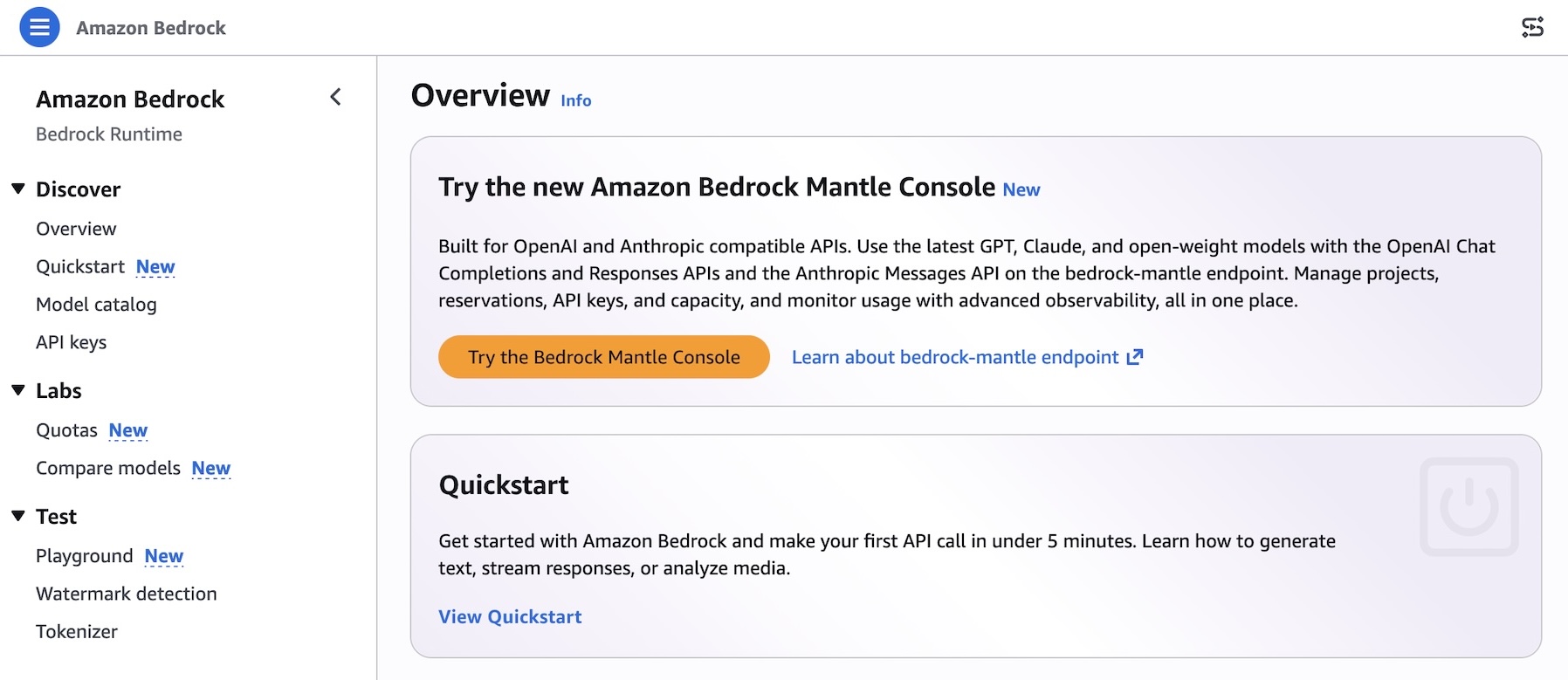
The new Amazon Bedrock console experience is now live. Developers can access it by visiting the standard Amazon Bedrock console and selecting the "Try the Bedrock Mantle Console" banner, or by navigating directly to the new dedicated link.
For teams looking to transition their workloads, the "Getting Started" section within the console serves as the optimal entry point. Whether you are migrating existing code or building a new application from the ground up, the new interface provides a streamlined, high-performance environment designed to keep pace with the rapidly evolving landscape of generative AI.
As AWS continues to iterate on this experience, the company is encouraging users to provide feedback via the AWS re:Post for Amazon Bedrock forum. This feedback loop will be instrumental in shaping the next generation of tools that will inevitably define the future of software development.
The bedrock-mantle engine and its associated console are more than just a software update; they represent a fundamental commitment from AWS to empower developers with the tools, performance, and flexibility required to build the next generation of AI-native applications.
 Neng Nana
  Suro Senen
  Lina Hope