
 By Iffa Jayyana
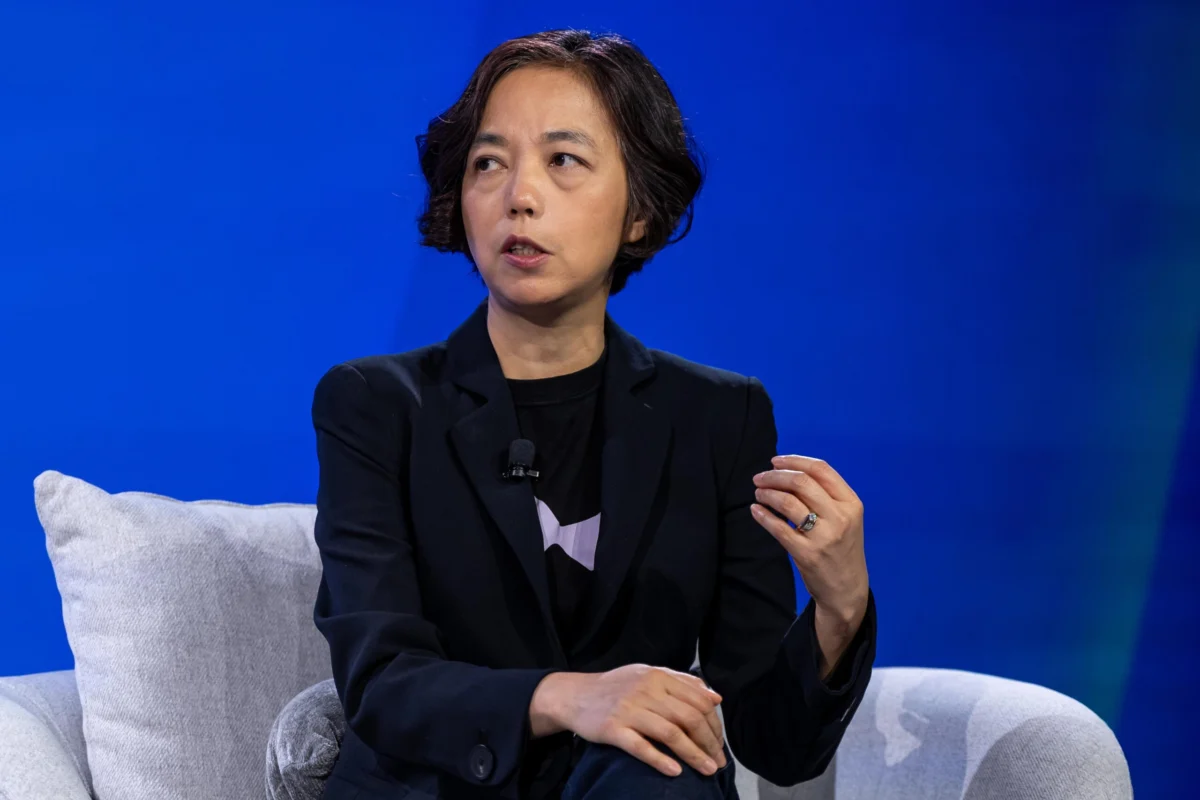
In a landmark consolidation move within the artificial intelligence sector, semiconductor giant AMD has officially announced its acquisition of World Labs. The all-stock transaction values the cutting-edge AI research startup at approximately $8.2 billion.
Founded just last year by renowned AI pioneer and computer science luminary Dr. Fei-Fei Li, World Labs captured the technology industry’s attention with its meteoric rise. Within months of its 2024 launch, the startup achieved a unicorn valuation of $1 billion, fueled by high-profile backing from venture capital heavyweights such as Andreessen Horowitz and Radical Ventures. The company subsequently debuted its flagship commercial product, Marble, a pioneering world-generation model allowing users to synthesize interactive three-dimensional environments entirely from text and visual prompts.
Under the terms of the agreement, which is subject to customary regulatory approvals and closing conditions, the transaction is expected to finalize by the end of the year. Following the completion of the merger, Dr. Li will assume the dual roles of Executive Vice President and Chief Scientist at AMD, reporting directly to AMD Chief Executive Officer Lisa Su. Meanwhile, the core engineering and research personnel of World Labs will integrate into AMD’s organizational structure, maintaining their primary focus on advancing foundational spatial intelligence and world-modeling research.
Main Facts
The $8.2 billion acquisition of World Labs represents one of the most significant structural integrations of algorithmic research talent and hardware manufacturing prowess in recent technological history.
- Transaction Valuation and Structure: The deal is structured as an all-stock transaction valued at approximately $8.2 billion.
- Leadership Transition: Dr. Fei-Fei Li, co-founder of World Labs and widely celebrated as the "Godmother of AI" for her foundational work on ImageNet, will join AMD as Executive Vice President and Chief Scientist.
- Reporting Lines: Dr. Li will report directly to AMD CEO Lisa Su.
- Product Ecosystem: World Labs’ core technological asset, Marble—a generative AI model capable of producing interactive 3D environments from basic prompts—will continue its development under the AMD corporate umbrella.
- Timeline: The acquisition has a targeted closing window by the end of the current calendar year, pending standard regulatory reviews.
- Strategic Integration: The merger aims to align World Labs’ software and algorithmic breakthroughs directly with AMD’s hardware pipeline, optimizing future silicon architectures for spatial computing and complex world-simulation models.
Chronology of Events
The trajectory of World Labs from a nascent concept to an $8.2 billion acquisition target is a testament to the hyper-accelerated timeline of modern artificial intelligence development.
2024: The Genesis and Unicorn Status
World Labs officially emerged from stealth mode in mid-2024, positioned as a direct counter-narrative to the prevailing industry obsession with purely linguistic Large Language Models (LLMs). Co-founded by Dr. Fei-Fei Li—who previously served as the co-director of the Stanford Institute for Human-Centered AI (HAI) and as a chief scientist of AI at Google Cloud—the startup sought to imbue machines with spatial intelligence.
By leveraging visual data and the principles of physics, World Labs aimed to teach AI models not just to read and write, but to perceive, understand, and interact with three-dimensional space. The market response was immediate and overwhelming. Within months of its formal establishment, venture capital funding rounds propelled the startup to a $1 billion valuation, driven by strong interest from top-tier institutional investors including Andreessen Horowitz and Radical Ventures.
2025: The Launch of Marble
Building upon its foundational research, World Labs achieved a major commercial milestone in 2025 with the introduction of its premier product: Marble. Billed as a breakthrough in world-generation technology, Marble allowed users to input descriptive prompts and instantly generate explorable, interactive 3D environments. This technology demonstrated practical applications across gaming, architectural visualization, virtual reality, and cinematic production, cementing World Labs as a leader in the next generation of AI research beyond traditional text-based interfaces.
Late 2025: The AMD Acquisition
As the computational demands of spatial and world-generation models began to strain conventional hardware infrastructures, World Labs sought a deeper integration with silicon manufacturing capabilities. Discussions between Dr. Li and AMD leadership culminated in the formal announcement of the $8.2 billion acquisition, marking a major turning point for both organizations and setting a new precedent for hardware-software synergy in the AI sector.
Supporting Data and Industry Context
The acquisition of World Labs does not happen in a vacuum. It arrives amid an unprecedented wave of multi-billion-dollar consolidation deals reshaping the artificial intelligence landscape. Earlier this month, graphics processing unit (GPU) titan Nvidia announced its acquisition of Hugging Face, the prominent collaborative AI platform, in a deal valued at nearly $13 billion.
These massive valuations reflect a fundamental shift in how hardware manufacturers view their competitive moats. Historically, chipmakers focused primarily on raw compute power, clock speeds, and thermal efficiencies, leaving software developers to optimize their algorithms for available hardware. However, as AI models evolve from text-based transformers to complex multimodal systems—incorporating video, audio, physics simulations, and 3D spatial reasoning—the architectural requirements of silicon are changing radically.
Industry analysts note that companies controlling both the underlying hardware (silicon, accelerators, system architecture) and the advanced generative models (spatial intelligence, world generation) will possess a decisive advantage in training and deploying the next wave of artificial intelligence systems. World Labs’ models require massive parallel processing capabilities, making a direct pipeline to AMD’s Instinct accelerators a natural strategic fit.

Official Responses and Leadership Insights
Leadership from both AMD and World Labs emphasized the strategic alignment and shared vision driving the multi-billion-dollar merger.
In a detailed post on her personal Substack, Dr. Fei-Fei Li reflected on the decision to integrate her startup into a larger enterprise, drawing parallels to her original motivations for founding the company.
"Just like I knew it was time to do a startup to jumpstart the work of creating foundation models beyond LLMs and achieve the most impact in AI, it’s again very clear that the right path for myself and World Labs is to continue our mission as a part of AMD," Dr. Li wrote. "Together we’re committed to keep pushing the frontier of AI to solve real problems, and doing so openly with the community and the entire ecosystem."
AMD CEO Lisa Su underscored the importance of co-designing hardware and software in an era where AI models are rapidly outpacing traditional computing paradigms.
"Building the compute platforms for the next generation of AI requires a deep understanding of how models are evolving," Su stated. "Fei-Fei and the World Labs team bring exceptional research leadership and model expertise. Together, we can use that insight to develop the hardware, software and systems that will power the next generation of AI and strengthen the open AI ecosystem."
Both executives took care to emphasize their ongoing commitment to openness, signaling that despite the massive commercial consolidation, the resulting technologies will continue to interact with and support the broader open-source AI and developer communities.
Implications for the AI and Semiconductor Industries
The absorption of World Labs by AMD carries profound implications for the future of technology markets, hardware design, and artificial intelligence research.
1. The Rise of Spatial Intelligence Over Pure LLMs
For the past several years, the global AI race has been dominated by Large Language Models trained primarily on text corpora. While LLMs excel at linguistic synthesis, translation, and basic reasoning, they struggle inherently with the physical realities of the three-dimensional world.
By bringing Dr. Fei-Fei Li—a pioneer in computer vision and spatial reasoning—into its executive ranks, AMD is signaling a major strategic bet on spatial intelligence. Models like World Labs’ Marble represent a paradigm shift where AI can simulate physics, geometry, and spatial relationships. This capability is expected to unlock advanced applications in robotics, autonomous driving, industrial automation, and immersive digital entertainment.
2. Vertical Integration as the Ultimate Competitive Advantage
The race between AMD and its chief rival, Nvidia, is no longer restricted to who can manufacture the fastest graphics card or tensor core. The modern battleground is defined by full-stack vertical integration. By acquiring elite research labs, hardware manufacturers are ensuring that their next-generation silicon is co-designed alongside the most demanding and sophisticated AI models in existence. This co-design philosophy allows engineers to anticipate hardware bottlenecks before they manifest, optimizing memory bandwidth, interconnect speeds, and instruction sets specifically for spatial and generative workloads.
3. Regulatory Scrutiny and Market Consolidation
With transactions like Nvidia buying Hugging Face for $13 billion and AMD acquiring World Labs for $8.2 billion occurring within weeks of each other, antitrust regulators globally are paying close attention. The concentration of top-tier AI research talent and foundational model intellectual property within a handful of massive hardware conglomerates raises questions about market access, open-source longevity, and competitive barriers for smaller startups. However, both AMD and World Labs have publicly committed to maintaining openness within the ecosystem, a pledge that regulators and industry observers will monitor closely as the deal moves toward its anticipated closure.
As the transaction finalizes later this year, the combined forces of AMD’s engineering might and Dr. Fei-Fei Li’s visionary research team are poised to redefine the boundaries of what compute platforms and artificial intelligence can achieve together.
 Raul Delapena Setiawan
 Pevita Pearce
 Sagoh
