
 By Evan Lee Salim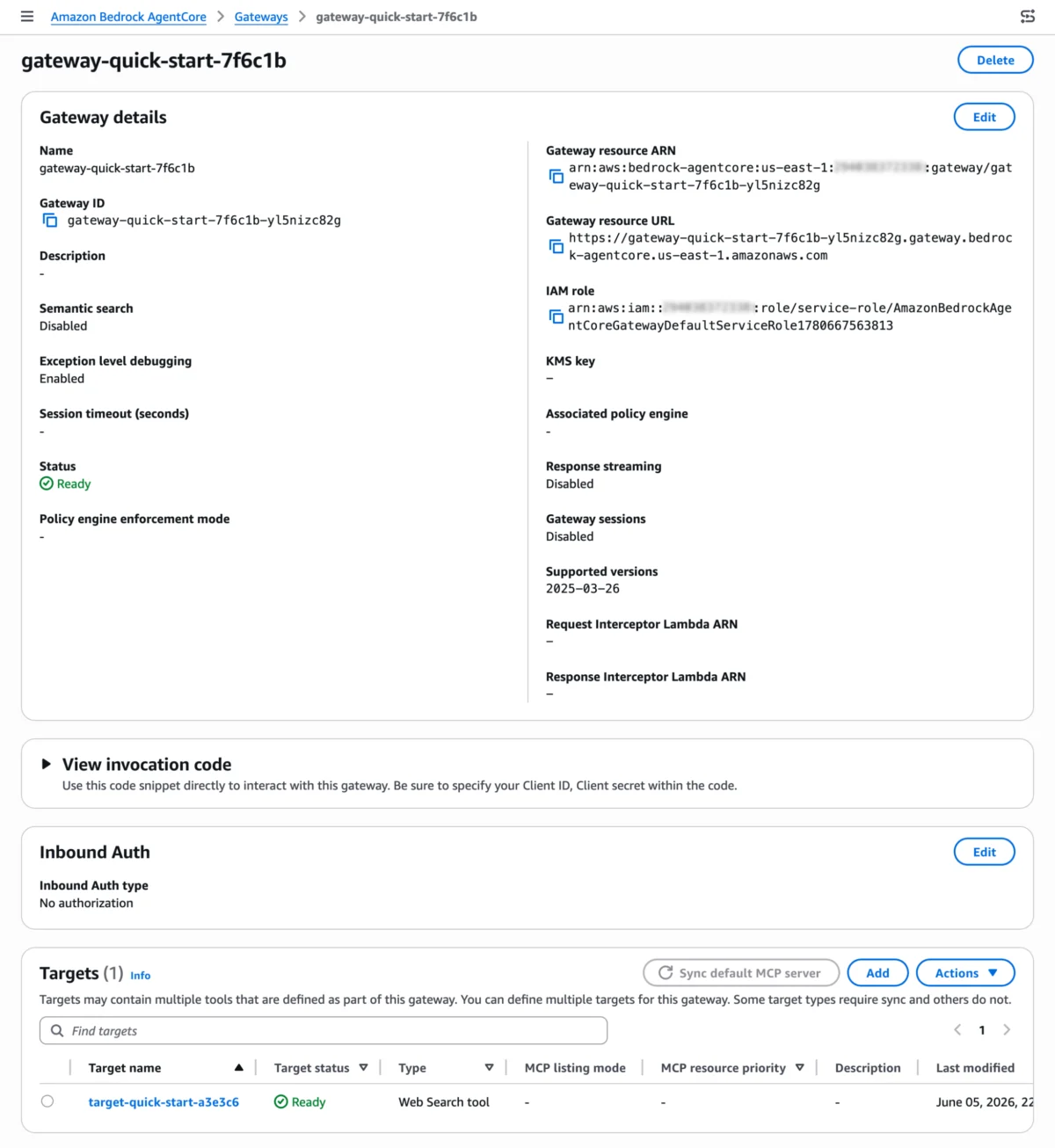
In a significant leap forward for generative AI and enterprise automation, Amazon Web Services (AWS) has announced the general availability of Web Search for Amazon Bedrock AgentCore. This new, fully managed capability marks a pivotal shift in how AI agents interact with real-time information. By allowing agents to ground their responses in live, cited web knowledge without requiring data to leave the secure confines of a customer’s AWS environment, Amazon is addressing one of the most critical bottlenecks in enterprise AI: the "stale data" problem.
The Core Innovation: Bridging the Gap Between LLMs and Real-Time Data
Large Language Models (LLMs) are historically constrained by their training data cut-off dates. While they excel at reasoning and linguistic synthesis, they often struggle when tasked with providing information on current events, breaking news, or rapidly evolving market conditions.
Previously, developers attempting to integrate web search into their AI agents faced a trifecta of challenges: the engineering complexity of managing search infrastructure, the security risks of sending proprietary prompts to third-party search APIs, and the latency associated with stitching together disparate services.
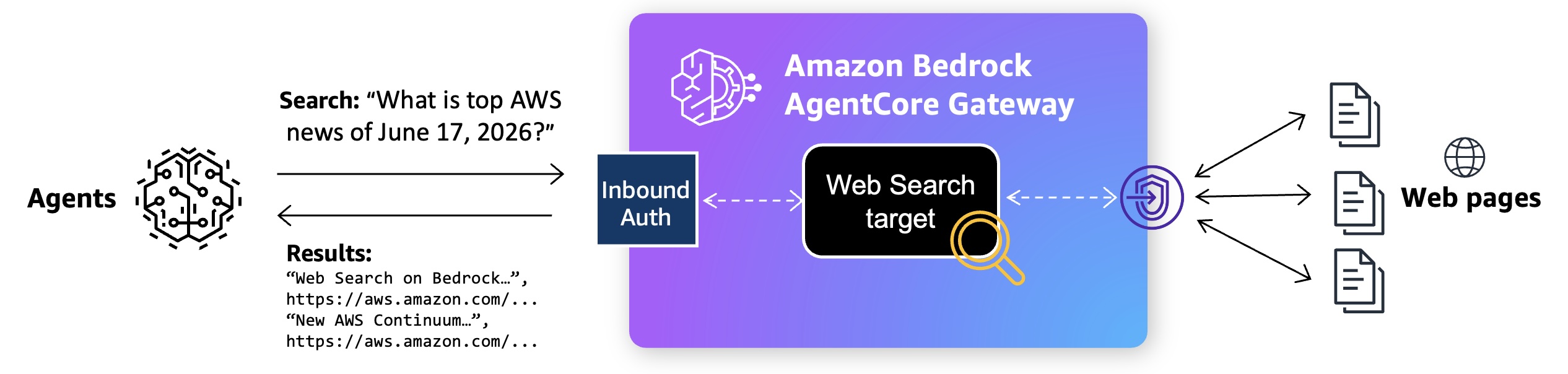
Web Search on Bedrock AgentCore eliminates these friction points. By leveraging a built-in connector target on the Bedrock AgentCore Gateway—utilizing the Model Context Protocol (MCP)—AWS now provides a streamlined pathway for agents to perform natural-language queries. The system returns not just raw text, but comprehensive snippets, source URLs, titles, and publication timestamps, allowing the underlying model to reason over the retrieved data and produce highly accurate, grounded responses.

A Chronology of the Development
The path to this release is rooted in Amazon’s deep institutional history in search and information retrieval.
- Foundation (Pre-2024): Amazon’s search infrastructure, which powers global platforms like Alexa, Amazon Quick, and the research-focused Kiro, provided the technical backbone for this development. Engineers at AWS spent years refining the balance between speed, index quality, and relevancy.
- The Integration Phase (Early 2025): AWS began testing the integration of the Model Context Protocol (MCP) into the Bedrock AgentCore ecosystem. The objective was to create a "plug-and-play" architecture where developers could deploy search capabilities without re-architecting their entire agentic framework.
- Beta/Early Access (Q1–Q2 2026): Throughout the first half of 2026, enterprise partners like Benchling and Gen Digital were granted early access. During this phase, the focus shifted from technical stability to "enterprise-grade compliance," ensuring that data egress remained zero-touch and that governance policies were strictly enforced.
- General Availability (June 2026): Today’s announcement signifies that the tool is ready for production-grade workloads, initially launching in the US East (N. Virginia) region.
Multi-Source Grounding: The Science Behind the Accuracy
What differentiates the Bedrock AgentCore Web Search from standard search APIs is its "multi-source grounding approach." Traditional search tools often rely on a single index. In contrast, Amazon’s solution fuses its proprietary web index with structured knowledge graph data.
By incorporating the Amazon Knowledge Graph, the system cross-references search snippets with verified, structured facts. When an agent queries for information, it doesn’t just "read the web"; it validates the information against established data points. This dual-layer validation process significantly reduces hallucinations—a common ailment of LLMs—by ensuring that the information presented to the end user is not only current but also factually consistent with known data models.
Implications for Enterprise Governance and Security
For many CTOs and CISOs, the adoption of generative AI has been slowed by data privacy concerns. The primary fear is that sensitive user prompts or proprietary queries might be harvested by third-party search providers.

Web Search on Bedrock AgentCore is designed with a "Privacy-First" architecture. Because the tool operates entirely within the AWS ecosystem, it ensures that there is zero data egress to external search API providers. This allows organizations to maintain strict adherence to internal security policies and regulatory frameworks (such as GDPR, HIPAA, or SOC2) while still empowering their agents with the collective intelligence of the internet.
Implementation: How It Works for Developers
The deployment process for Web Search is designed to be highly intuitive, catering to both seasoned engineers and those newer to the AWS ecosystem.
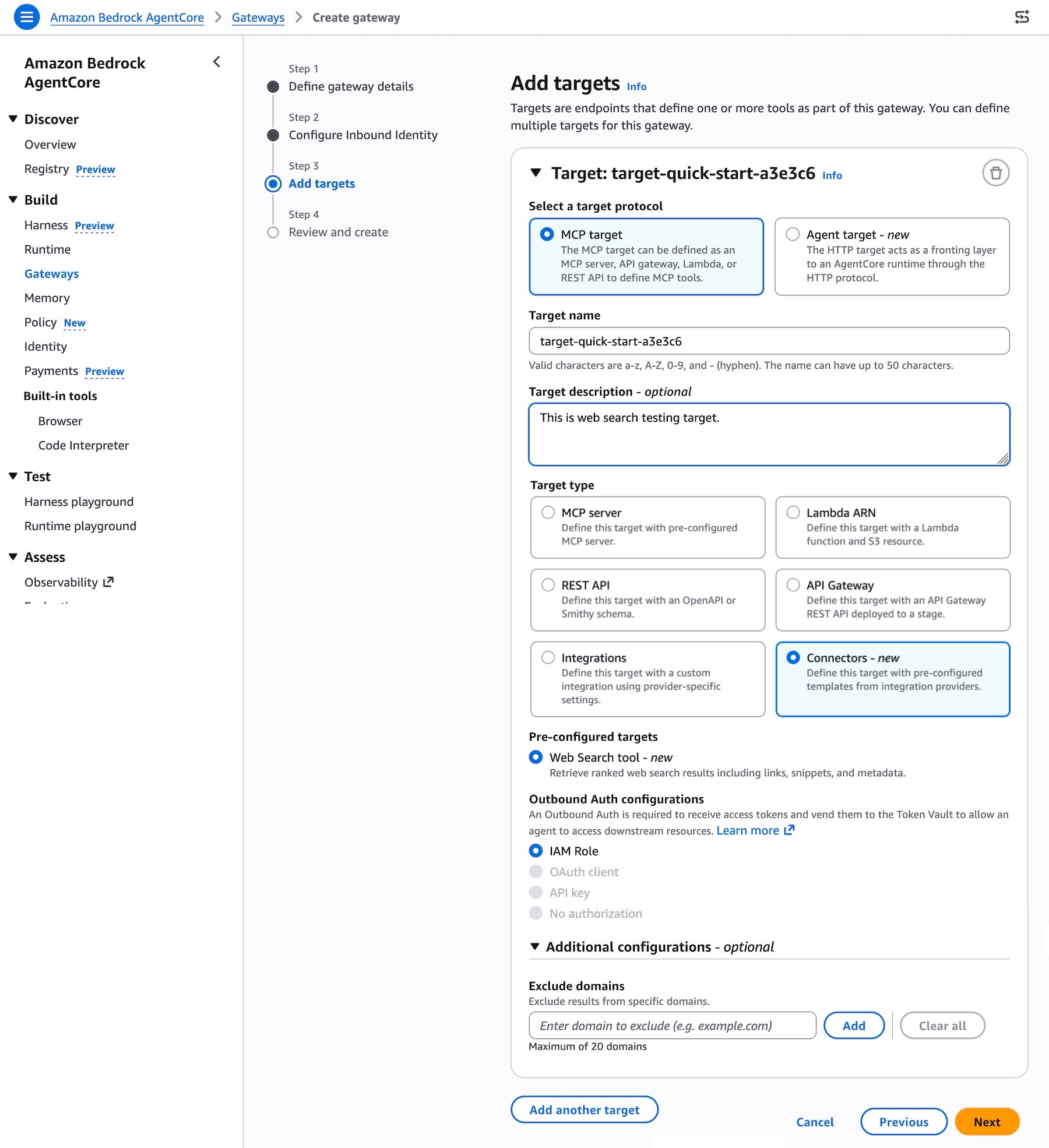
1. Gateway Creation
Developers initiate the process via the Bedrock AgentCore console. By choosing the "MCP target" protocol and selecting "Connectors," they can toggle the Web Search tool as a preconfigured target.
2. Interaction Methods
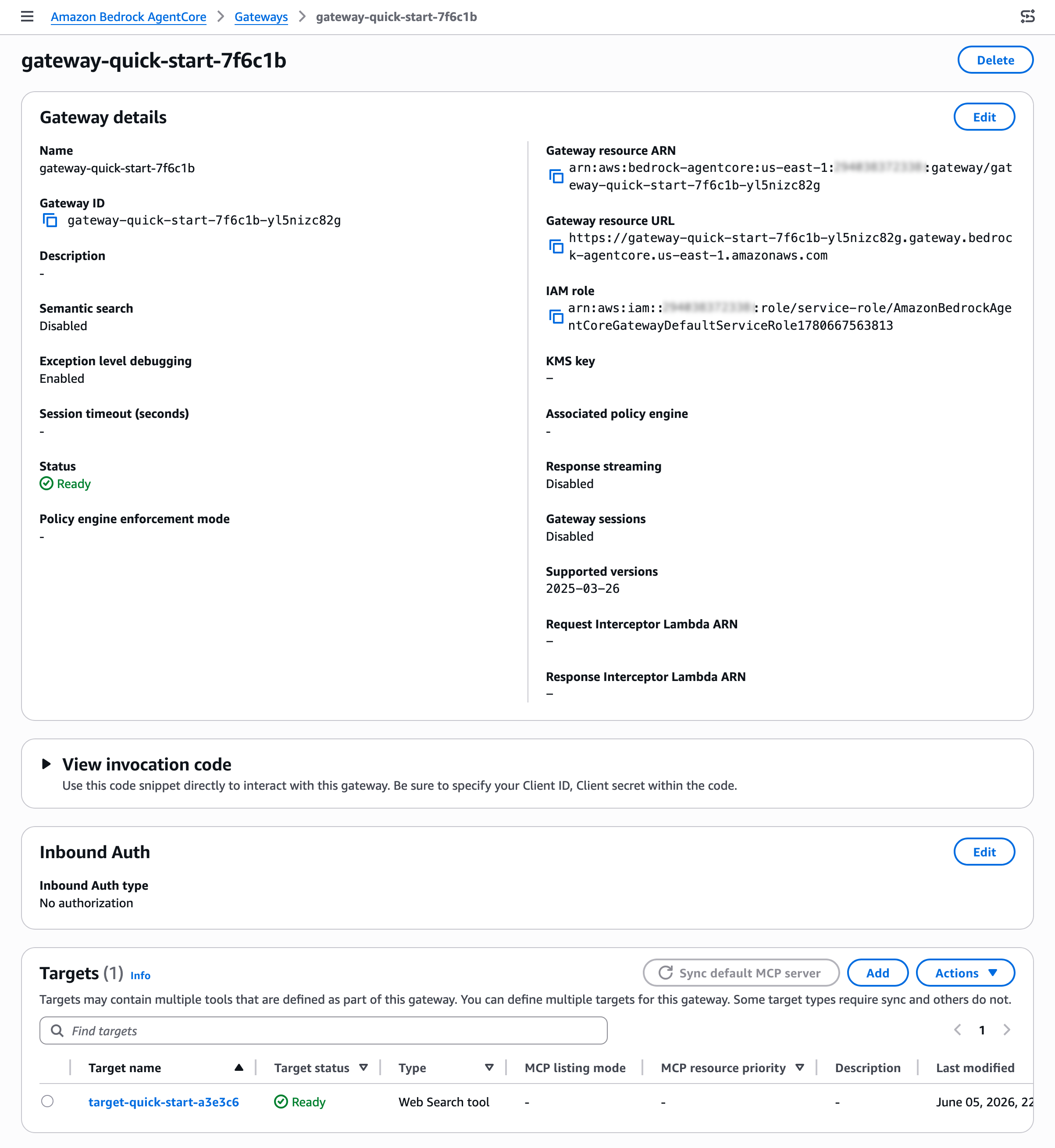
Once the Gateway URL is generated, developers have a high degree of flexibility in how they interact with the tool. Supported methods include:
- API Calls: Ideal for production-level backend integration.
- CLI (Command Line Interface): Preferred by DevOps teams for rapid testing and automation.
- MCP Inspector: A powerful interactive developer tool that allows for real-time debugging and visualization of the search results before they are passed to the LLM.
3. Code Integration
The system provides ready-to-use invocation code snippets. Whether utilizing the MCP Python SDK or the Strands MCP Client, the developer experience is characterized by minimal boilerplate, allowing them to focus on the business logic of the agent rather than the plumbing of the search infrastructure.
Official Responses and Customer Perspectives
Early adopters have reported significant gains in both productivity and the quality of their AI-generated outputs.
Nicholas Larus-Stone, Head of AI Agents at Benchling, highlighted the transformation in scientific research: "Scientists using Benchling AI can now ask about a target they’re actively working on and get answers grounded in both their institutional data in Benchling and published literature. The result is more complete science and hypothesis generation done right."
He emphasized the security aspect, noting: "Because we’re using the Web Search tool on Amazon Bedrock AgentCore, customers have a secure, governed environment to bring that high-quality published data into their workflows without compromising how they manage their data."
Iskander Sanchez-Rola, Senior Director of AI & Innovation at Gen Digital, echoed the sentiment, particularly regarding the need for "real-world" relevance in cybersecurity and digital reputation management. "With the Web Search tool, Norton Revamp helps professionals build their online reputation with current, grounded content ideas shaped by what’s actually happening in the world today. What we value most is that AWS uses its own search index and keeps queries within our trusted AWS environment."
Future Roadmap and Economic Accessibility
AWS has adopted an aggressive pricing model for this feature to encourage widespread adoption. The tool is available at no additional cost for the service itself; users only pay for the standard data transfer charges associated with the Gateway. Furthermore, new AWS customers can leverage up to $200 in Free Tier credits, effectively lowering the barrier to entry for startups and individual developers.
As for the roadmap, while the tool is currently available in US East (N. Virginia), AWS has confirmed that global expansion is a high priority. Organizations can monitor the "AWS Capabilities by Region" portal for updates on local availability.
Conclusion: The New Standard for Agentic Intelligence
The general availability of Web Search on Amazon Bedrock AgentCore represents a maturing of the agentic AI market. We are moving away from the era of "disconnected" chatbots that rely solely on training data and into an era of "informed agents" that act as extensions of an organization’s internal and external knowledge bases.
By solving the three pillars of AI deployment—accuracy (grounding), security (zero egress), and simplicity (managed infrastructure)—AWS has effectively cleared the path for the next wave of enterprise AI adoption. Whether in scientific research, cybersecurity, or customer support, the ability to combine LLM reasoning with real-time, verified web intelligence is no longer an experimental feature; it is now a standard, accessible, and secure business capability.
 Dwi Wanna
  Lina Irawan
  Ammar Sabilarrohman