
 By Iffa Jayyana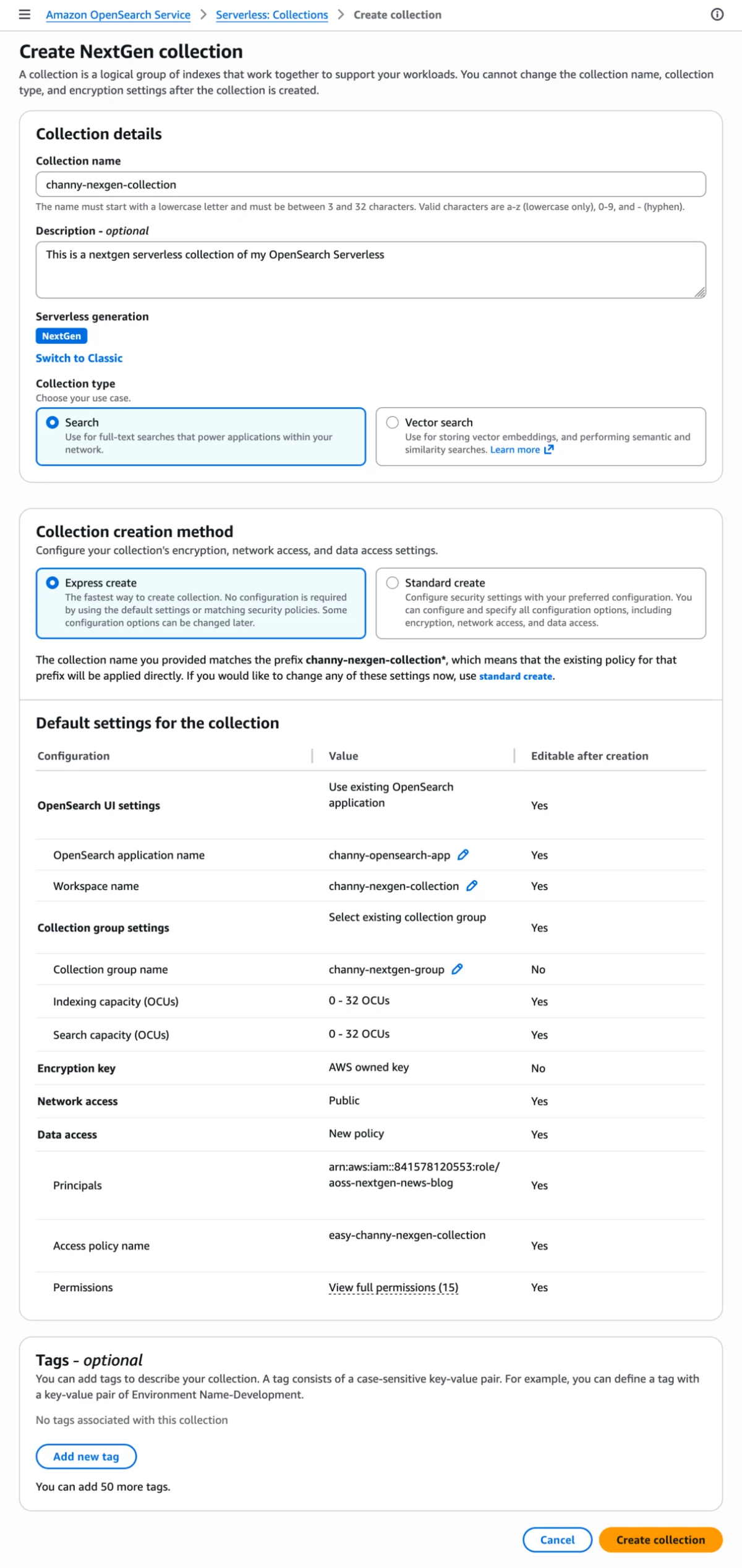
In a move set to redefine how developers architect intelligent applications, Amazon Web Services (AWS) has officially launched the next generation of Amazon OpenSearch Serverless. This fully managed search and vector engine is purpose-built to serve as the foundational data layer for AI agents, offering a significant leap in scalability, cost-efficiency, and deployment velocity.
As the demand for Retrieval-Augmented Generation (RAG) and autonomous AI agents explodes, developers have struggled with the traditional trade-off between the high performance of provisioned clusters and the convenience of serverless architectures. The next generation of OpenSearch Serverless addresses this by eliminating the "cold start" and infrastructure management hurdles, allowing search backends to scale from zero to thousands of requests per second with near-instant responsiveness.
Main Facts: Redefining Serverless Search
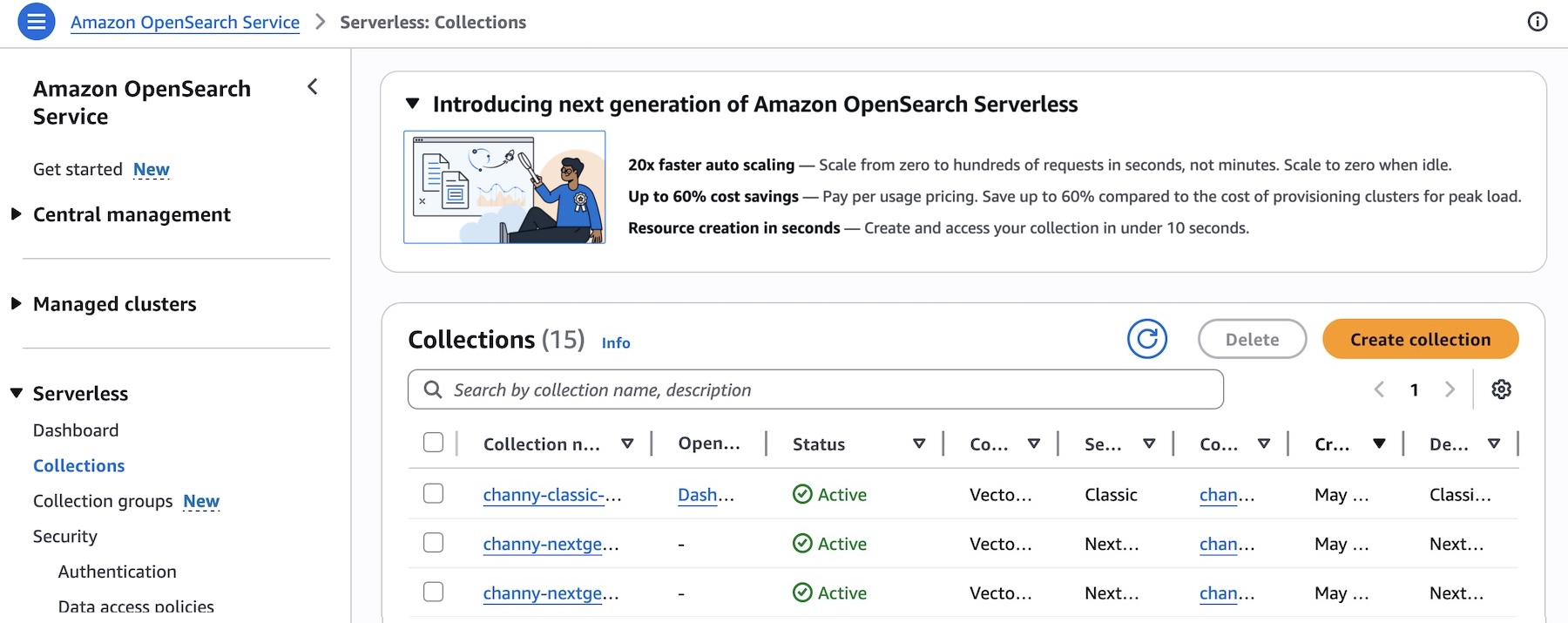
The headline feature of this release is the engine’s ability to achieve true "scale-to-zero" functionality, which directly translates to significant cost savings. AWS reports that customers can realize up to a 60% reduction in costs compared to traditional OpenSearch Service clusters that must be provisioned for peak capacity.
Key Technical Breakthroughs:
- Rapid Resource Provisioning: The new architecture creates resources in seconds, offering a performance boost that is up to 20 times faster than the previous generation of OpenSearch Serverless.
- Intelligent Auto-Scaling: The platform dynamically adjusts to traffic, eliminating the need for manual intervention or predictive capacity planning.
- AI-Native Integrations: With native support for modern development platforms like Vercel and Kiro, developers can deploy production-ready vector backends in minutes.
- Simplified Management: Through the "Express Create" option, AWS has automated the configuration process, applying security policies and default settings out-of-the-box, significantly lowering the barrier to entry for developers who are not infrastructure experts.
Chronology: The Evolution of Search at AWS
The release of the next-generation OpenSearch Serverless is the culmination of a multi-year effort by AWS to pivot its data services toward the era of Generative AI.
- Early 2020s: AWS begins the transition from traditional Elasticsearch-based services to the open-source OpenSearch project, establishing a foundation for community-led innovation.
- Mid-2023: The original Amazon OpenSearch Serverless is introduced, marking the first major attempt to decouple compute and storage for search workloads.
- 2024–2025: As LLM adoption grows, the industry faces a bottleneck in vector database performance. AWS responds by integrating GPU acceleration into OpenSearch, facilitating faster similarity searches for RAG applications.
- May 26, 2026: Initial rollout of the "NextGen" dashboards and console improvements, signaling a major architectural shift under the hood.
- May 29, 2026: General availability of the next-generation OpenSearch Serverless. AWS concurrently releases documentation updates and refines CLI parameter guidelines to ensure enterprise-grade stability for early adopters.
Supporting Data: Why "NextGen" Matters
The technical specifications provided by AWS highlight why this release is more than just a minor update. The shift to a more modular compute model allows for granular control over resources without the burden of manual cluster management.
Cost-Performance Metrics
By moving away from "provisioned for peak" models, businesses no longer have to pay for idle capacity. In scenarios where search traffic is bursty—common in AI agent interactions where a user might ask a question at irregular intervals—the ability to scale to zero ensures that the bill reflects only actual usage.
Deployment Velocity
For development teams, the integration with platforms like Vercel is a game-changer. By providing a "Create Collection" function directly within the Vercel console, AWS has effectively reduced the "time-to-first-query" from hours of infrastructure setup to mere minutes of configuration.
Scalability Factors
The new generation handles throughput scaling by decoupling the OCU (OpenSearch Compute Unit) limits. With the ability to set minimum and maximum OCU thresholds, companies can ensure their applications remain responsive during high-traffic events (e.g., product launches or marketing campaigns) while maintaining a strict budget floor.

Official Responses and Developer Experience
The reception among the developer community has been largely focused on the ease of integration. Channy Yun, a prominent voice in the AWS developer advocate community, highlighted that the update is not merely about speed—it is about the "Agentic" workflow.
"By using OpenSearch Agent Skills, developers can now embed domain knowledge directly into their agents," notes the official documentation. These skills act as pre-packaged logic blocks that allow agents to understand not just the what of a search result, but the how—providing a pathway for agents to execute multi-step workflows.
Furthermore, the integration with Kiro Powers and OpenSearch Launchpad allows teams to visualize their architecture before a single line of code is written. This guided approach to infrastructure planning is designed to prevent common misconfigurations that previously plagued serverless setups.
Implications: The Future of AI Agents
The implications of this release for the broader tech ecosystem are profound.
1. Lowering the "Agent Tax"
For startups and enterprises alike, the cost of running an AI agent that is "always on" has been a significant barrier to entry. By reducing the overhead of managing the vector backend, AWS is effectively lowering the "Agent Tax," allowing smaller teams to experiment with more complex, multi-agent systems without fearing an exponential rise in infrastructure bills.
2. Standardization of the Vector Stack
With the rise of various vector database solutions, the industry has been fragmented. By providing a "next-gen" serverless option that is deeply integrated into the AWS ecosystem (CLI, SDKs, Console), AWS is pushing for a standardization of how developers store and retrieve context for LLMs.
3. The Shift toward "Intelligent" Infrastructure
We are moving toward a paradigm where infrastructure is no longer a passive utility but an active participant in the application lifecycle. The next generation of OpenSearch Serverless is designed to be "agent-aware," meaning it is built to handle the high-dimensional, noisy data characteristic of vector search, which is fundamentally different from traditional keyword-based text search.
4. Enterprise Adoption
For the enterprise, the transition is seamless. The "Switch to Classic" feature allows existing customers to migrate at their own pace, ensuring that they can test the new, cost-effective infrastructure alongside their legacy production environments. This risk-averse approach is likely to accelerate the adoption of GenAI features in mission-critical business applications.
Conclusion: A New Era of Search
The launch of the next generation of Amazon OpenSearch Serverless is a clear signal that AWS is betting heavily on the agentic future of the web. By marrying the convenience of serverless with the performance demands of AI, the company has provided a robust toolset that lowers costs and increases development velocity.
As AI agents become a standard component of software architecture, the ability to rapidly scale, deploy, and manage search intelligence will be the defining factor for success. With its combination of instant scaling, Vercel-native integration, and cost-optimized compute, the new OpenSearch Serverless stands as a cornerstone of the modern AI developer’s toolkit.
Developers are encouraged to start by experimenting with the "Express Create" workflow in the AWS console or by exploring the OpenSearch Agent Skills repository on GitHub. As the ecosystem matures, the focus will undoubtedly shift from the mechanics of how to search, to the creative potential of what can be built when that search is effectively infinite and practically free.
 Suro Senen
  Lina Hope
  Asep Darmawan