
 By Basiran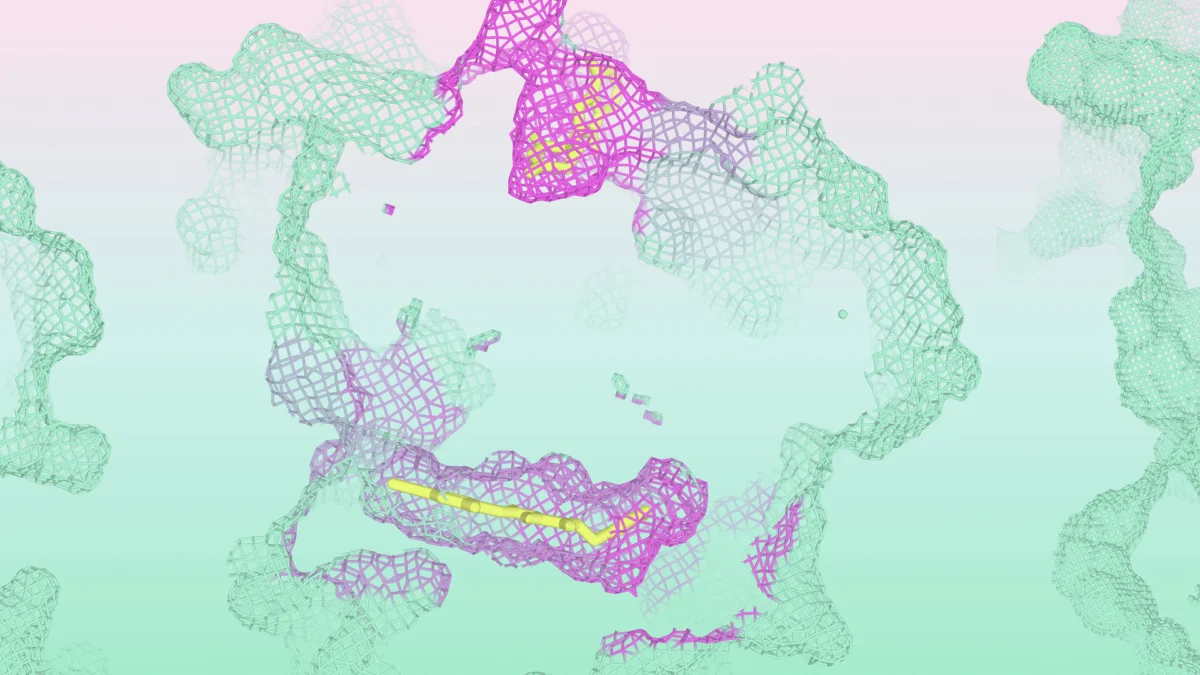
In the rapidly evolving theater of artificial intelligence, the distance between "predicting a shape" and "designing a cure" has long been the industry’s most formidable barrier. Today, Isomorphic Labs—a spin-off from the pioneers at Google DeepMind—announced a breakthrough that promises to bridge this gap. By unveiling the Isomorphic Labs Drug Design Engine (IsoDDE), the company has introduced a unified computational system that doesn’t just mimic the biological world; it navigates it with a level of precision previously thought to be the exclusive domain of years of wet-lab experimentation.
This development marks a definitive step beyond the landmark achievements of AlphaFold 3 (AF3). While AF3 revolutionized structural biology by allowing scientists to see the "lego bricks" of life with unprecedented clarity, IsoDDE shifts the focus from observation to intervention. It is a system designed to engineer medicines from scratch on a computer, moving the needle from academic curiosity to clinical utility.
Main Facts: The Engine Under the Hood
At its core, IsoDDE is a multi-modal, predictive powerhouse. Its primary value proposition lies in its ability to generalize—a common pitfall for previous AI models that faltered when faced with proteins or ligands that lacked a "cousin" in the training database.
IsoDDE’s performance metrics are striking. In head-to-head testing against AlphaFold 3 on the "Runs N’ Poses" benchmark—a rigorous test designed to evaluate performance on highly novel, "out-of-distribution" protein-ligand structures—IsoDDE more than doubled the accuracy of its predecessor.
Beyond structure, the engine tackles the "holy grail" of pharmacology: binding affinity. Knowing that a drug fits into a protein is insufficient; you must know how tightly it holds on. IsoDDE achieves this with a speed and accuracy that surpasses gold-standard, physics-based simulations, which are notoriously slow and computationally expensive. Perhaps most impressively, the engine can identify "cryptic" binding pockets—sites that remain hidden from sight until a specific drug molecule forces them open—using nothing more than an amino acid sequence as its starting point.
A Chronology of Computational Evolution
To understand the magnitude of the IsoDDE announcement, one must place it in the context of the last decade’s exponential growth in bioinformatics.
- 2018–2020: The Folding Breakthrough: The early years were defined by the Protein Structure Prediction challenge (CASP), where AI first demonstrated it could solve the 50-year-old "protein folding problem."
- 2024: The AlphaFold 3 Milestone: The release of AlphaFold 3 represented the first time a model could predict not just proteins, but the complex dance of proteins with DNA, RNA, and ligands. It provided a universal map of biological interactions.
- 2025–2026: The Gap Emerges: As researchers applied AF3 to real-world drug discovery, a "generalization gap" became apparent. The models were brilliant with known biological structures but struggled with novel, unexplored areas of the proteome—the very areas where the most lucrative and medically necessary drug targets reside.
- February 2026: The IsoDDE Debut: Isomorphic Labs unveils the IsoDDE, shifting the focus from static structural modeling to dynamic, actionable drug design. This marks the transition from "what does it look like?" to "how can we use this to treat a disease?"
Supporting Data: The Evidence of Superiority
The technical report accompanying the launch of IsoDDE provides a rigorous breakdown of how the engine outperforms current standards.
Structure Prediction of Novel Systems
In the most difficult generalisation category—systems with low structural similarity to training data—IsoDDE’s ability to model "induced fits" (where a protein changes shape to accommodate a drug) has proven transformative. In testing, the engine successfully modeled the binding of a protein-protein interaction inhibitor to a cryptic pocket on the NKG2D homo-dimer. While previous models like AlphaFold 3 failed to identify the interaction, IsoDDE correctly predicted the structural shift required for binding.
The Biologics Revolution
Small molecules are only the beginning. As medicine shifts toward large, complex biologics like antibodies, the ability to model the antibody-antigen interface is critical. IsoDDE has shown a 2.3x improvement over AlphaFold 3 and a staggering 19.8x improvement over the Boltz-2 model in high-fidelity (DockQ > 0.8) predictions. This success on the highly variable CDR-H3 loop of antibodies suggests that the era of de novo antibody design—creating custom-made immune therapies in a digital environment—is finally within reach.
Binding Affinity and Pocket Identification
IsoDDE’s performance on binding affinity benchmarks (FEP+, OpenFE, and CASP16) suggests that the engine has effectively "learned" the physics of molecular interaction without needing to run traditional, slow force-field simulations. By bypassing these constraints, researchers can now rank thousands of candidate molecules in seconds, a task that would have previously taken weeks of supercomputer time.
Official Perspectives: The Path Forward
The team at Isomorphic Labs has positioned IsoDDE not as a replacement for human intellect, but as an "accelerant for the imagination."
"Our mission has always been to decode the molecular machinery of life," noted a spokesperson for the development team. "With IsoDDE, we aren’t just reading the code; we are learning to rewrite it. By providing the predictive fidelity required to navigate novel biological systems, we are moving the industry toward a future where drug discovery is a rational, calculated, and high-success-rate endeavor."
The company emphasized the collaborative spirit of the research, noting, "We thank our friends at Google DeepMind for the productive discussions and ongoing collaboration that helped ground these models in the deep, fundamental principles of AI and biology."
Implications for the Future of Medicine
The arrival of IsoDDE has profound implications for both the pharmaceutical industry and the patient population.
1. Expanding the "Ligandable" Proteome
Historically, drug discovery has focused on a narrow subset of the human proteome—proteins that have obvious, "easy" binding pockets. IsoDDE’s ability to find cryptic pockets means that the "undruggable" portion of the human genome is shrinking. Diseases caused by proteins that were previously considered impossible to target are now potentially within reach.
2. A Shift in Economics
The cost of bringing a new drug to market is often cited in the billions of dollars, with failure rates reaching over 90%. By replacing high-cost, high-failure-rate wet-lab trial and error with high-fidelity digital simulation, IsoDDE could drastically reduce the "cost of failure." If a molecule is predicted to have poor binding affinity or toxicity in the digital domain, it never needs to be synthesized in a lab.
3. Precision Medicine at Scale
The ability to quickly model antibody-antigen interfaces allows for the development of personalized therapies. Imagine a scenario where a patient’s specific mutation can be mapped, and an antibody tailored to that specific geometry can be designed and simulated in days rather than years.
4. The "Blind" Discovery Advantage
Perhaps the most potent implication is the engine’s "blind" discovery capability. In the case of the cereblon protein, IsoDDE identified a novel allosteric binding pocket without any prior knowledge of the target’s druggability. This means that for newly discovered disease markers, researchers no longer need to start from scratch. They can feed the sequence into the engine and, in a matter of seconds, receive a map of every potential "door" to the protein.
Conclusion
The release of IsoDDE is more than just a software update; it is a fundamental shift in the methodology of pharmaceutical research. By moving from the descriptive to the prescriptive, Isomorphic Labs has provided the scientific community with a tool that behaves less like a static database and more like a seasoned medicinal chemist—one capable of reasoning, hypothesizing, and iterating at the speed of light.
As the industry digests the implications of this breakthrough, one thing is clear: the frontier of drug design has moved. The challenges that once defined the limits of what was possible in the lab are now the challenges that the IsoDDE is systematically solving in the cloud. For researchers, the focus is no longer on whether we can map the molecular basis of disease, but on how quickly we can use these new digital maps to craft the cures of tomorrow.
 rifanmuazin
  Layla Zulfa
  Evan Lee Salim