
 By Iffa Jayyana
Main Facts: The $390 Jar Versus the $15 Tub
On the brightly lit shelves of high-end beauty retailers, a $390 luxury face cream and a $15 drugstore moisturizer sit mere inches apart. To the casual shopper, the aesthetic distinction is immediate: the luxury product features heavy glass, minimalist typography, and a weight that signals indulgence. The drugstore alternative comes in a utilitarian plastic tub.
According to a groundbreaking data visualization and analysis project titled Beyond the Label, created by data designer Dhruvi Mehta, that is where the superiority of the luxury item largely ends.

The project evaluates the chemical formulations of 16 popular skincare products—split into eight head-to-head pairs of luxury items and their affordable equivalents—using a custom-built scoring system. The results reveal an uncomfortable truth for the beauty industry: at the formulation level, high-end products are systematically poorer value than their budget-friendly counterparts.
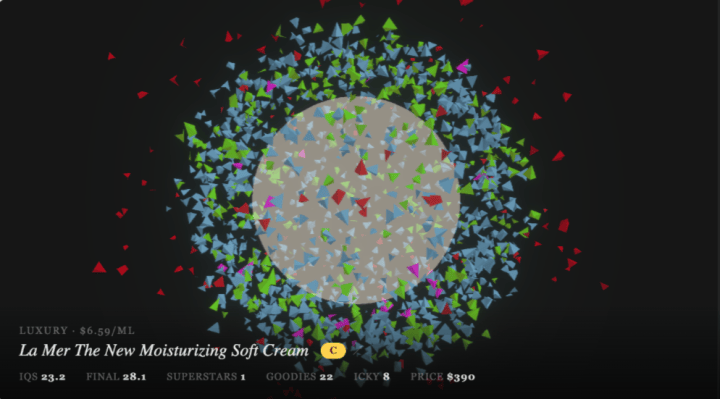
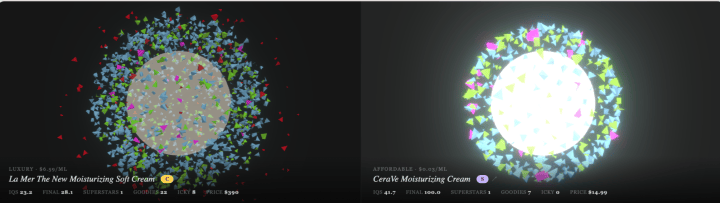
At the center of this investigation is a stark comparison: CeraVe’s Moisturizing Cream, priced at $14.99 ($0.03 per milliliter), achieved the highest score in the dataset (100.0). Its luxury counterpart, La Mer’s The New Moisturizing Soft Cream, priced at $390 ($6.59 per milliliter), scored a dismal 28.1. While the La Mer cream relies on a proprietary algae extract ("Miracle Broth") as its primary ingredient, positions two through six are dominated by simple silicones and petrolatum, with heavily marketed peptides and hyaluronic acid buried past position 38.
Chronology: From Obsessive Label-Reading to a Data-Driven Crusade
The origins of Beyond the Label trace back to a familiar domestic friction: a mother repeatedly asking her daughter to purchase La Mer’s luxury cream from Sephora.
- The Awakening: Frustrated by the steep price tag, the project’s creator began obsessively studying the mandatory ingredient lists printed on packaging. She discovered a systemic pattern: hero active ingredients were frequently overshadowed by cheap fillers, while expensive products often contained a cocktail of potential irritants.
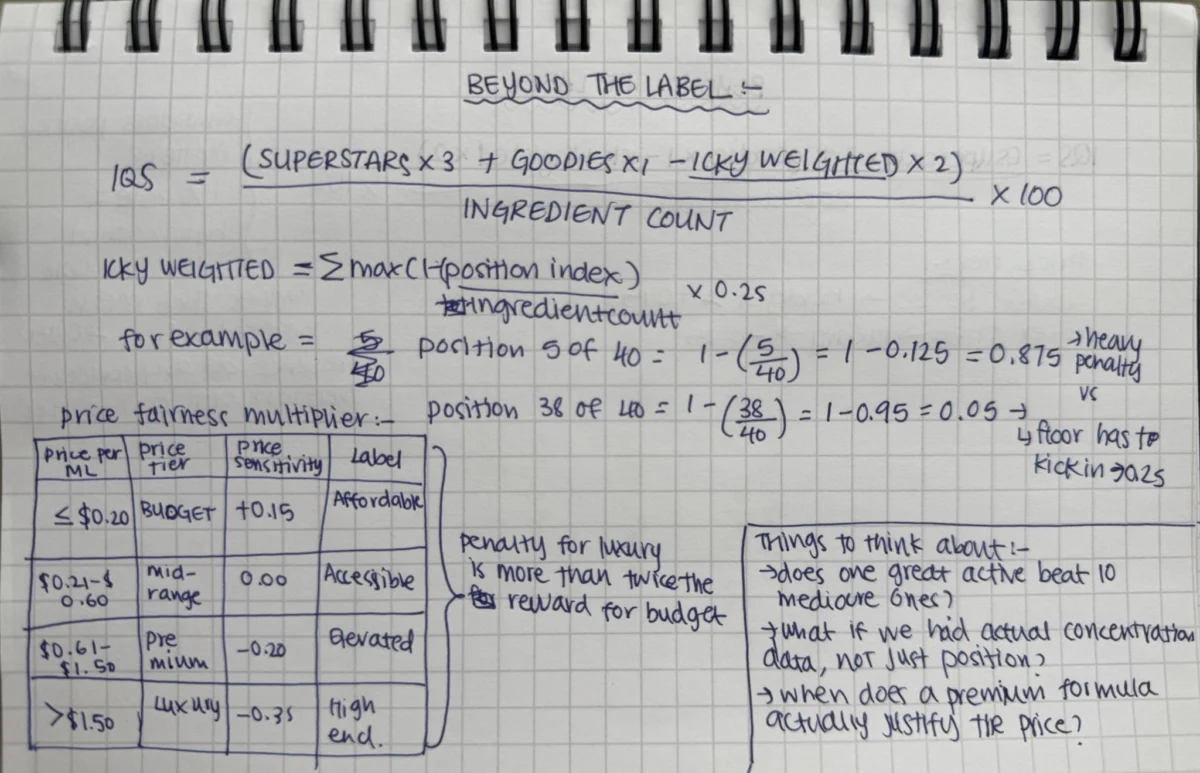
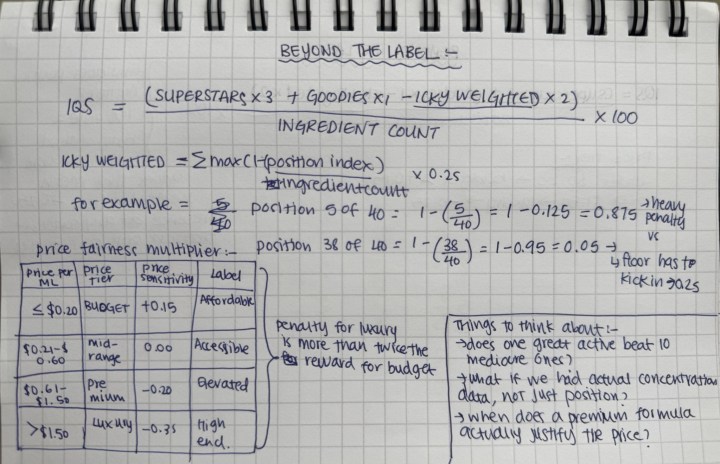
- The Formulation of a Methodology: Seeking to answer whether luxury skincare products are systematically poorer value than affordable options, the researcher built an analytical framework from scratch. She pulled ingredient data from INCIDecoder, a public cosmetic database, and categorized compounds into four distinct groups: superstars (rare, high-impact actives), goodies (beneficial baseline contributors), icky (harmful or questionable compounds), and neutrals (functional fillers).
- Building the Scoring Engine: To quantify formulation quality, she developed the Ingredient Quality Score (IQS), factoring in ingredient concentrations based on their descending order on product labels. She introduced a regulatory floor to account for the "1% rule"—a loophole allowing ingredients present at concentrations under 1% to be listed in any order—ensuring that potential irritants carried a minimum penalty regardless of placement.
- Economic Adjustment: The raw IQS was then modified using a Price Fairness Multiplier. Budget-friendly formulas with high ingredient quality were rewarded, while overpriced, low-quality formulations were heavily penalized.
- The 3D Visualization Phase: Moving beyond traditional spreadsheets, Mehta translated the data into 3D interactive spheres using a Fibonacci distribution algorithm. Each product became a sphere studded with hundreds of crystal shards representing individual ingredients. Using bloom post-rendering techniques borrowed from gaming and film, beneficial ingredients glowed, while questionable compounds pushed outward as jagged red spikes.
- Launch: The completed project debuted online, transforming dry chemical datasets into an intuitive, visually striking critique of modern consumer culture.
Supporting Data: What the Numbers and Spheres Reveal
The data gathered in Beyond the Label challenges long-held consumer assumptions about price and efficacy, while also highlighting nuanced exceptions within the skincare market.
The CeraVe vs. La Mer Divide
- CeraVe Moisturizing Cream: Scored 100.0 (normalized dataset benchmark). It features 1 superstar ingredient, 7 goodies (including three essential ceramides, cholesterol, and hyaluronic acid), and 0 icky ingredients, retailing at a mere $0.03/mL.
- La Mer The New Moisturizing Soft Cream: Scored 28.1. Despite costing $6.59/mL, its formula contains 8 flagged compounds—including eucalyptus oil, denatured alcohol, fragrance, and four recognized fragrance allergens (limonene, linalool, hydroxycitronellal, and geraniol).
The Viral Product Paradox
The investigation also cast a critical eye on internet-famous products, yielding surprising results:
- Sol de Janeiro Brazilian Bum Bum Cream: A massive commercial success with hundreds of thousands of five-star reviews, the mid-range body cream scored a 0.0. The formula contains nine icky ingredients, several of which are regulated fragrance allergens under European Union cosmetics standards, appearing prominently in the top half of the ingredient list.
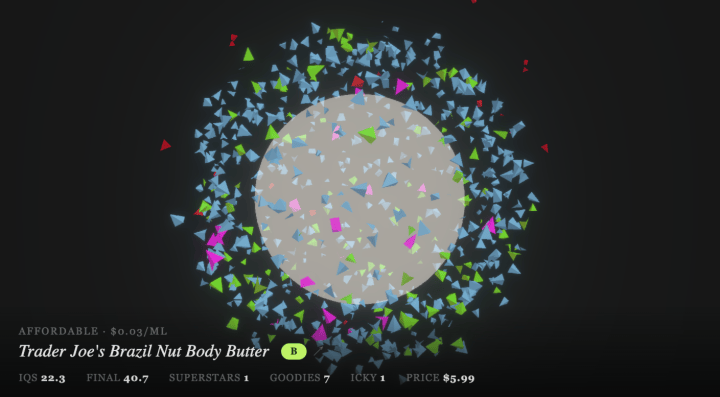
- Trader Joe’s Brazil Nut Body Butter: Retailing at just $5.99 ($0.025/mL), this affordable alternative scored 40.7. It features a favorable ratio of seven beneficial ingredients to just one flagged compound.
The Prestige Nuance
Not every luxury product failed the test. SkinCeuticals C E Ferulic, a heavily researched and clinically backed vitamin C serum, scored an impressive 90.2. Its affordable rival, TruSkin Vitamin C Super Serum, scored closely behind at 80.6. In this specific category, the premium product demonstrated a measurable, albeit narrow, justification for its elevated price tag. Conversely, luxury single-active essences like SK-II Facial Treatment Essence scored lower (11.5) due to the methodology’s preference for compositional complexity over single-ingredient reliance.

Official Responses and Industry Dynamics
The beauty industry operates on a foundation of transparency that is paradoxically hidden in plain sight. Under United States federal law, every skincare product must display its full ingredient list in descending order of concentration. Yet, beauty conglomerates rely heavily on what marketers call "fairy dusting"—including minuscule, legally mandated amounts of expensive hero ingredients purely for label-reading marketing appeal, while the bulk of the formulation consists of inexpensive water, silicones, and emulsifiers.
Major beauty brands and luxury conglomerates have historically declined to comment on comparative chemical formulations, relying instead on experiential marketing, sensory luxury, elegant packaging, and celebrity endorsements to justify retail markups. Representatives for brands like La Mer and Sol de Janeiro emphasize the emotional resonance, user experience, and proprietary blending processes that standard chemical databases cannot quantify.
However, regulatory bodies are tightening scrutiny. The increasing prevalence of "dupe culture" and independent consumer advocacy groups utilizing databases like INCIDecoder signal a growing shift in consumer awareness. Regulatory adjustments in regions like the European Union regarding fragrance allergens further validate the inclusion of icky compound penalties in modern analytical models.
Implications: Changing How We Shop for Skincare
The implications of Beyond the Label extend far beyond a critique of overpriced face creams; they strike at the heart of modern consumer literacy.
- Democratizing Formulation Literacy: For decades, consumers lacked an accessible framework to interpret complex chemical nomenclature. Projects like this bridge the gap between scientific data and public understanding, proving that high cost does not equate to high chemical integrity.
- The Shift in Consumer Values: As dupes and ingredient-conscious shopping become mainstream pastimes, shoppers are increasingly asking whether a $90 cream genuinely outperforms a $12 alternative. The data suggests that for moisturizers and body care, budget-friendly options frequently deliver superior safety and active ingredient profiles.
- Redefining Product Design and Transparency: By turning data into visceral 3D visual art—where glowing spheres represent healthy skin barriers and spiked, dark spheres visually warn of chemical irritants—designers are pioneering new ways to communicate complex technical audits to the public.
Ultimately, Beyond the Label delivers a blunt reality check to the beauty consumer: the luxury moisturizer may come with a better bottle, but the drugstore tub often holds a better formula. Armed with data, transparency, and new ways of visualizing chemical realities, consumers are finally equipped to look past the marketing hype and see what is truly on their skin.
 Azzam Bilal Chamdy
 Asep Darmawan
 Suro Senen
