
 By Azzam Bilal Chamdy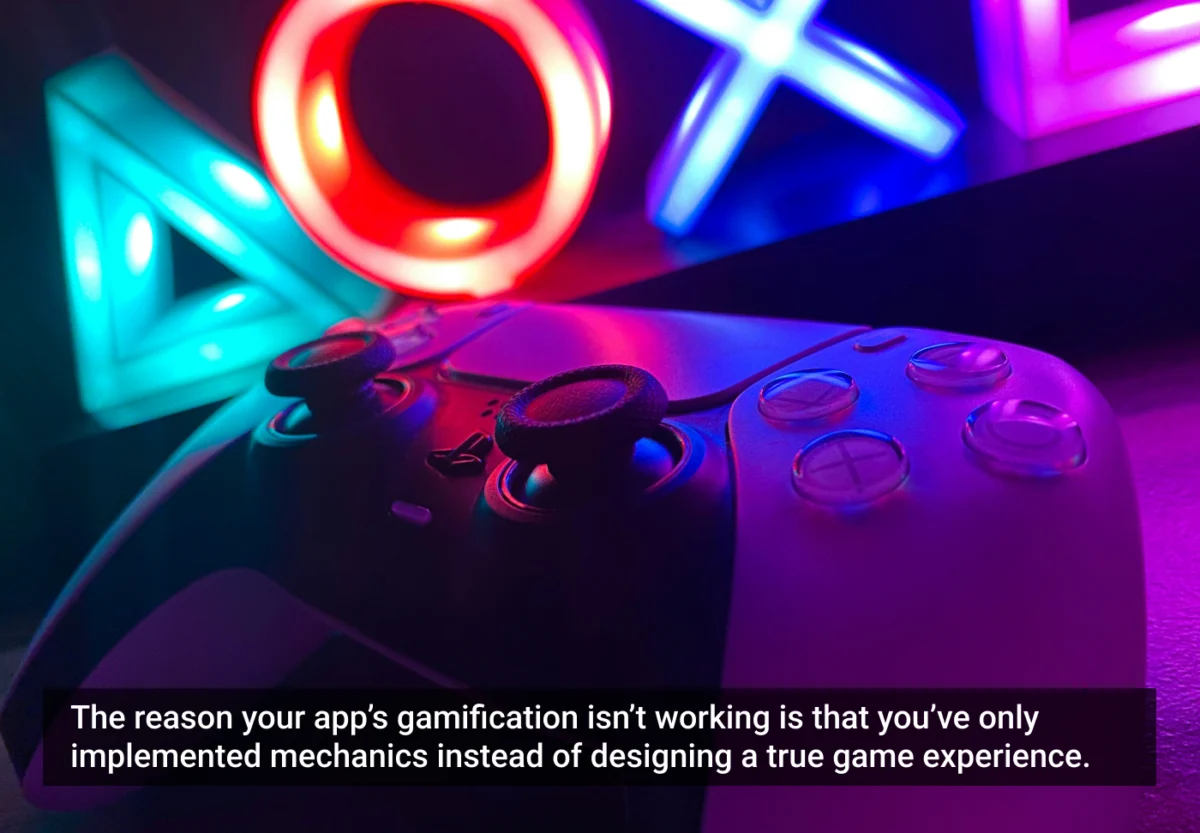
In the modern digital landscape, "gamification" has become a dirty word—a synonym for the cynical application of points, badges, and leaderboards (PBL) onto fundamentally boring software. Developers have long operated under the assumption that if they simply tack a progress bar onto a dull task, users will flock to their applications. However, this superficial approach is failing. As user fatigue sets in, the industry is pivoting toward "Gamification 2.0"—a design philosophy that prioritizes psychological alignment and intrinsic satisfaction over the dopamine-chasing mechanics of the past.
The Paradigm Shift: From Theory to Practice
For years, product teams have viewed gamification as an "add-on" feature, something to be bolted onto the final build in a frantic end-of-quarter sprint. This approach is fundamentally flawed. If an application lacks an inherently engaging core, no amount of digital window dressing will save it. To build products that stick, developers must move beyond surface-level mechanics and integrate game design principles into the very DNA of their software.
Step 1: Abandon the Mechanics, Embrace the Genre
The most common mistake in product development is the urge to copy the "greats." A team might look at Duolingo and decide to add streaks, or look at LinkedIn and add progress bars. This is a fatal error. The correct question is not "What mechanics should we add?" but rather, "What genre of game does our app naturally align with?"
Every successful app mirrors a game genre. Notion, for instance, functions as a digital sandbox—much like Minecraft—where the value lies in the freedom to create. Strava leans into competitive social dynamics, while language apps often adopt RPG-lite progression systems. When you choose a genre, you gain a blueprint for how your users expect to interact with your product. Attempting to be a "hybrid" that tries to satisfy every type of user usually results in a product that satisfies no one.
Step 2: Mapping Psychographics to Genre Psychology
Demographics are the relic of traditional marketing; psychographics are the future of product design. You must understand not just who your users are, but why they play games.
If your user base consists of puzzle-lovers, they crave the "Aha!" moment—the satisfaction of solving a complex problem through logic. If you force an RPG-style "grind" onto them, you are fundamentally violating their user experience. Conversely, strategy-game enthusiasts want long-term consequences and the ability to plan. Giving them twitch-based, action-oriented mechanics will frustrate them.
The framework is simple: survey your users about their gaming habits. Map their preferences to your genre choice. This alignment is not a luxury; it is the foundational requirement for long-term retention.
Step 3: The Primacy of the Intrinsic Loop
Before a single point or badge is awarded, the core action of your app must be satisfying in isolation. This is the "Intrinsic Loop." Imagine your app without the gamification: Is logging a workout, clearing a task, or finishing a lesson inherently pleasant?
If the answer is no, your gamification is merely a bribe—a way to convince users to perform a chore they dislike. True Gamification 2.0 uses rewards only to amplify an experience that is already fundamentally satisfying. Study your chosen genre to determine what makes its core loops feel "juicy"—the immediate, clear, and tactile feedback that makes a player want to perform an action for the sake of the action itself.
Step 4: The "Sniff Test" and Gamer Validation
Product teams often operate in a bubble, ignoring the fact that their users have been conditioned by decades of world-class game design. If your RPG-style progression system feels hollow to a player of Baldur’s Gate, it is because it is hollow.
To pass the "sniff test," you must put your prototypes in the hands of gamers who specialize in the genre you are emulating. If your social features don’t feel like a legitimate multiplayer experience, they will be dismissed as artificial engagement metrics. Gamers have highly calibrated detectors for hollow mechanics; if your system doesn’t respect their time, they will abandon it instantly.
Step 5: Iterative Development: Thinking Like a Studio
The most successful games—those that survive for decades—are never "finished" in a single launch. They are the result of thousands of hours of playtesting and ruthless iteration.
In the software world, we often fear "killing our darlings." If a feature sounds great on paper but fails to drive engagement during testing, it must be removed. This requires the same ruthlessness a game studio employs when cutting a mechanic that doesn’t "feel right." Duolingo’s decade-long evolution is a testament to this process. While they face valid criticism regarding their streak mechanics, their survival is due to their relentless, data-driven refinement of the user loop.
Red Flags: Why Your Gamification is Failing
If you find your application struggling despite having "gamified" elements, you may be falling into the "cargo cult" trap. Watch for these warning signs:
- The Single-Sprint Syndrome: If your gamification was planned in a single meeting and built in two weeks, it is superficial. Real game design is a deep-seated architecture, not a skin.
- The Absence of Game Designers: You wouldn’t hire a novice to build your infrastructure; why hire non-gamers to design your engagement systems? If you are serious, bring in professional game designers as core team members, not external consultants.
- The Copycat Trap: Points, badges, and leaderboards are not a strategy; they are a default. If your product looks like everyone else’s, you aren’t designing; you’re just checking boxes.
- The Completionist Cliff: If your users stop using the app once they reach the "max level" or collect all the badges, your system has failed. A good game doesn’t end at the level cap; it provides a platform for mastery. If your progression system is the only thing keeping users engaged, you haven’t built a product—you’ve built a glorified progress bar.
Implications: The Future of Engagement
The implications of this framework are clear: the era of "easy" gamification is over. As users become more sophisticated, they will increasingly reject products that attempt to manipulate them with shallow incentives.
The shift toward Gamification 2.0 signifies a transition from a metrics-first mindset to a player-first mindset. When companies stop viewing users as data points to be optimized and start viewing them as players to be engaged, the results are profound. An app that respects the user’s desire for agency, mastery, and social connection will always outperform an app that merely bribes them with digital trinkets.
The Ultimate Litmus Test
Ultimately, the success of your gamification rests on one final, terrifying question: If you stripped away every point, badge, and leaderboard, would your users still stay?
If the answer is yes, you have succeeded in creating a valuable, engaging experience, and your gamification serves as a meaningful enhancement. If the answer is no, your app is a chore in disguise. No amount of design polish or UI flair can fix a broken core. It is time to stop patching the leaks and start redesigning the ship.
Gamification is not a shortcut to engagement. It is a commitment to craft. By treating your application with the same rigor, creativity, and player-centricity as a top-tier game studio, you move beyond the limitations of the "Gamification 1.0" era and into a space where users don’t just use your software—they play it.
 Ammar Sabilarrohman
  Neng Nana
  Sagoh
Sagoh 