
 By Lina Irawan
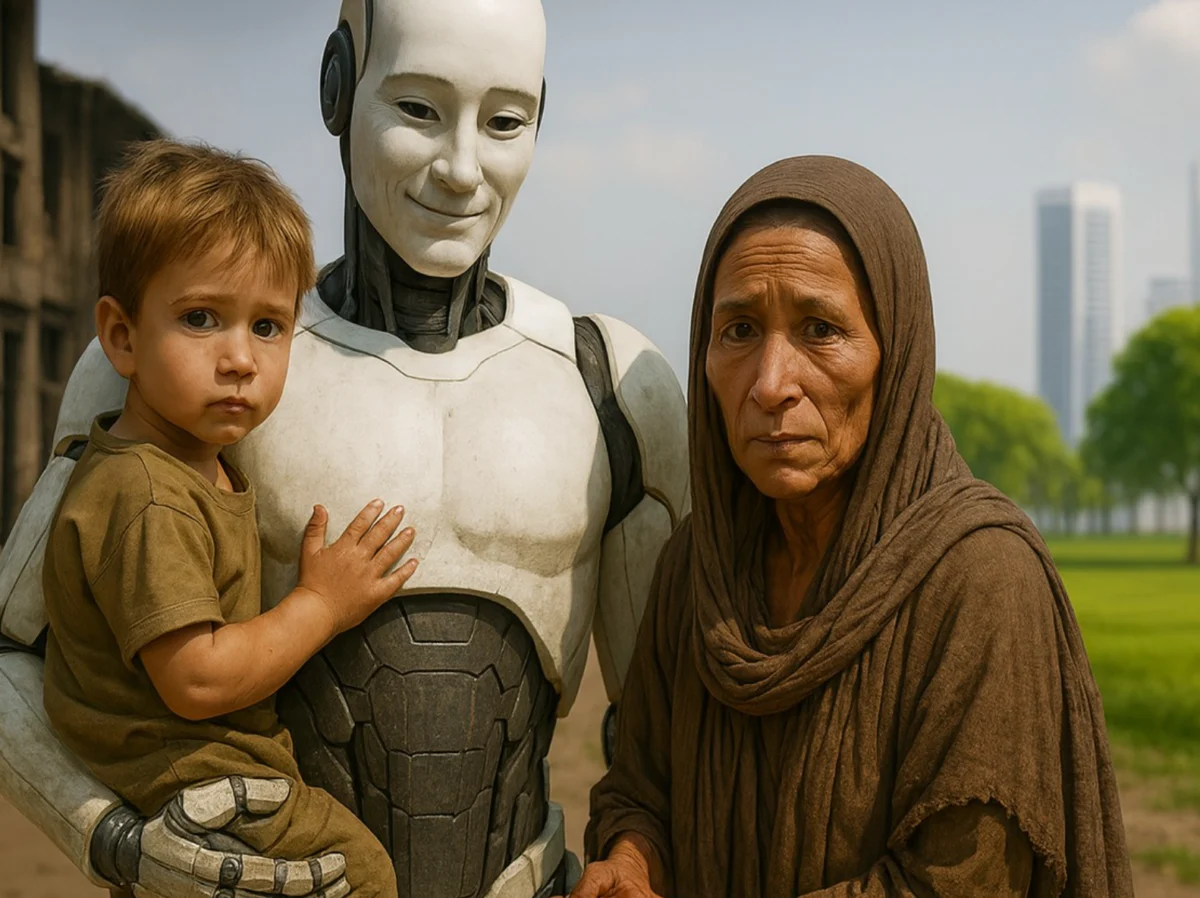
For decades, science fiction cushioned society with the comforting illusion that the "android revolution" was a distant, hypothetical milestone. Popular culture framed autonomous machines as cinematic tropes rather than imminent economic realities. Today, that comfortable distance has evaporated.
The convergence of electromechanical engineering and artificial intelligence has firmly pushed humanoid robots out of the public relations stunt era. Companies are no longer showcasing prototypes that merely manage to stumble up a flight of stairs; they are deploying versatile, learning machines onto active factory floors and commercial supply chains.
As the boundaries between human and machine begin to blur, society faces a profound psychological, economic, and existential shift. What happens when our world is populated by entities that mirror us perfectly in form, yet possess none of our biological history?
1. Main Facts: The Current State of Humanoid Robotics
The modern landscape of robotics is defined by an aggressive race toward commercial deployment. The paradigm has shifted from rigid, hard-coded automation to dynamic, learning platforms.
The Technological Leap: From Programming to Observation
Historically, a robot required millions of lines of strict, unchangeable code to perform even a single, simple task. Today, modern humanoids are powered by sophisticated cognitive software architectures—such as Figure AI’s Helix and NVIDIA’s GR00T.
Instead of being meticulously programmed line by line, these robots leverage visual learning models. A modern humanoid can watch a human fold laundry, load a dishwasher, or sort parts, understand the context of the action, mimic it, and independently optimize the task over time.

Industrial Deployment and Real-World Integration
We have moved past laboratory demonstrations. Industry leaders are actively testing and utilizing humanoids in production environments:
- Figure AI: The company’s Figure 02 model recently completed a multi-month deployment at BMW’s Spartanburg plant, actively assisting in the production of over 30,000 vehicles by handling complex sheet metal components.
- Tesla: Tesla continues to test early versions of its Optimus humanoids inside its Gigafactories, utilizing reinforcement learning to accelerate the platform’s capabilities ahead of mass commercial scale.
Physical Hurdles and Limitations
Despite monumental leaps in artificial intelligence, physical hardware is still catching up to biological efficiency:
- Power Constraints: Contemporary battery technology limits most operational humanoids to just a few hours of continuous work before requiring a recharge.
- Navigation Complexity: While walking bipedally is manageable on flat, predictable factory floors, navigating a chaotic household or a crowded public street remains deeply challenging.
- Manufacturing Costs: While fierce market competition is slowly driving prices down, humanoids remain exceptionally expensive to build, limiting immediate mass consumer adoption.
2. Chronology: The Evolution Toward Lifelike Machines
To understand how rapidly the robotics landscape has transformed, it is vital to trace its development from academic novelties to commercial assets:

- November 2000: Honda introduces ASIMO, a milestone in bipedal locomotion. While celebrated globally for its ability to walk smoothly and recognize simple gestures, ASIMO remained a purely research-focused public relations and engineering showcase.
- February 2016: Hanson Robotics activates Sophia, an international celebrity in the robotics world. Designed with a remarkably expressive face and integrated AI conversational capabilities, Sophia sparked global conversations about how closely machines could mirror human affect.
- Early 2024: Figure AI successfully integrates its humanoid units into BMW’s manufacturing plants, marking a critical transition from controlled laboratory settings to live industrial production lines.
- CES 2025: Companies like Realbotix showcase ultra-realistic models such as "Aria," pushing price points past $175,000 and demonstrating hyper-lifelike facial tracking, silicone skin, and conversational nuance that challenge human perception.
- Present Day: The industry transitions from pilot programs to scalable commercial platforms, driven by heavy venture capital investment and breakthroughs in vision-language-action (VLA) models.
3. Supporting Data and Market Projections
The shift toward humanoid integration is backed by intense financial momentum and demographic pressures.
- Market Transition: According to market research reports, the global humanoid robotics market is shifting rapidly from experimental research and development to commercial supply chains, logistics, and manufacturing sectors.
- Demographic Urgency: Nations facing severe demographic crunches—such as Japan, South Korea, and parts of Europe—are experiencing rapidly aging populations coupled with shrinking workforces. Humanoid automation is increasingly viewed by economists not as a luxury, but as an infrastructure necessity to maintain healthcare systems and elderly care networks.
- Cost and Efficiency Projections: Proponents argue that widespread robot labor could drastically reduce the cost of basic goods, manufacturing, and housing, potentially paving the way for hyper-abundant economies. However, economists warn that the transitional phase could devastate traditional labor markets if wealth distribution models fail to adapt.
4. Official Responses and Industry Perspectives
As the technology accelerates toward consumer markets, reactions from ethicists, economists, and technologists are sharply divided between visionary optimism and profound caution.
The Optimistic Outlook: Eliminating the 3 Ds
Industry proponents emphasize that humanoids are uniquely positioned to take over the "3D" jobs: Dull, Dirty, and Dangerous. By deploying machines into high-risk environments—such as deep underground mining, hazardous waste handling, or high-voltage power grid maintenance—we can drastically reduce workplace fatalities and injuries.

In healthcare, proponents envision a future where friendly, lifelike humanoids alleviate the crushing burdens of eldercare, offering physical support and cognitive companionship to isolated seniors.
The Critical Concern: Psychological and Economic Risks
Conversely, social psychologists and labor economists issue severe warnings regarding widespread adoption:
- Deep Human Isolation: If humanoids become indistinguishable from real humans and are programmed to be perpetually agreeable, patient, and compliant, individuals may increasingly abandon messy human relationships in favor of synthetic companionship. This withdrawal could erode community structures.
- Labor Displacement: The rapid deployment of capable physical workers threatens millions of jobs in warehousing, logistics, retail, and transportation. Without proactive government safety nets—such as universal basic income (UBI) or robotic labor taxes—the wealth gap between tech monopolies and displaced workers could widen catastrophically.
- Erosion of Social Trust: When authenticity can be faked, foundational societal trust breaks down. Distinguishing between genuine human interaction and synthetic simulation becomes a daily cognitive tax.
5. Implications: Navigating the Threshold of Human Identity
The imminent arrival of hyper-realistic humanoid robots forces humanity to confront profound existential questions. As machines learn to breathe, blink randomly, use natural body language, and mimic emotional flaws to bypass the unsettling "Uncanny Valley," society faces an urgent need for regulatory guardrails.

Mitigating Misuse and Malicious Intent
The risks of indistinguishable androids span both individual and national security threats:
- Identity Theft and Scams: Criminals could theoretically leverage lifelike androids or deepfake physical replicas to impersonate corporate executives, political figures, or family members to bypass physical security or commit fraud.
- Synthetic Manipulation: Commercial entities could weaponize synthetic empathy, programming household robots to feign genuine emotional attachment to children or families to subtly influence consumer behavior and brand loyalty.
- Geopolitical Risks: The militarization of bipedal platforms introduces catastrophic risks regarding autonomous combat deployment and international accountability.
Establishing Global Guardrails
Because technological progress cannot be halted by bans, society must manage its trajectory through proactive governance. Experts recommend three foundational pillars:
- Mandatory Transparency: Strict international standards requiring humanoids to clearly identify themselves as machines via acoustic, visual, or digital signatures.
- Robust Economic Safety Nets: Transition policies—including automation taxes and re-skilling programs—to protect workforces from sudden economic displacement.
- Ethical Boundaries in Care: Clear legal frameworks limiting the degree to which synthetic entities can emotionally mimic human relationships, particularly regarding vulnerable populations like children and the elderly.
Preserving Our Humanity
Ultimately, the arrival of lifelike humanoid robots acts as a mirror for humanity. For centuries, our species has defined itself through its capacity to think, speak, create, and feel. As machines master these exact attributes, they force us to look inward and redefine what makes us truly unique.

This technological revolution does not have to spell the end of human meaning. By delegating dangerous, repetitive chores to mechanical assistants, humanity gains a rare opportunity to redirect its collective energy toward philosophy, art, scientific inquiry, and authentic human connection. The ultimate goal of the humanoid era must never be to replace humanity, but to give us our humanity back.
 Azzam Bilal Chamdy
 Nila Kartika Wati
 Evan Lee Salim
