
 By Sagoh
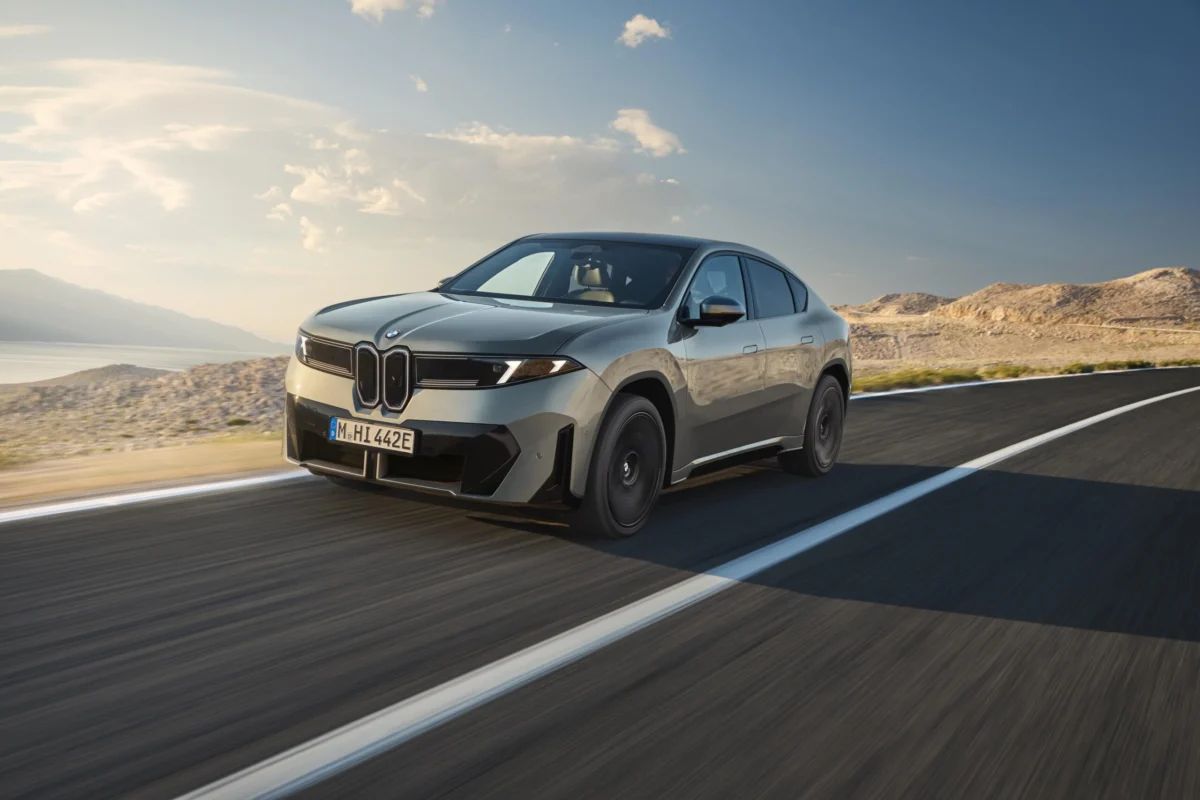
MUNICH — While much of the legacy automotive world remains paralyzed by the rapid market penetration of affordable Chinese electric vehicles across global markets, BMW continues to forge ahead with a masterclass in engineering. The German automaker is steadily rolling out a portfolio of technologically advanced, exceptionally crafted battery-electric vehicles (BEVs) that consistently impress in both drive quality and range efficiency.
The latest addition to this offensive is the BMW iX4, a coupe-shaped sport activity vehicle (SAV) designed to inject a dynamic, athletic personality into the automaker’s growing electric footprint. Sitting as a sportier sibling to the forthcoming iX3, the iX4 represents a critical pillar in BMW’s multi-billion-euro bet on its next-generation Neue Klasse architecture.
However, as Western automakers scramble to defend their home turfs against an influx of low-cost imports from the East, the billion-dollar question remains: Can technological superiority and staggering driving range compensate for a premium price tag?
Main Facts: The BMW iX4 Enters the Fray
The BMW iX4 is the third major model built upon the highly anticipated, purpose-built Neue Klasse platform, following closely behind the redesigned iX3 and the resurrected i3 model lines.
The vehicle will launch globally in March 2027, beginning with the iX4 50 xDrive. For buyers seeking a sharper, track-inspired edge, BMW will follow up later in the year with the high-performance M60 xDrive variant.
At its core, the iX4 is designed to showcase BMW’s cutting-edge powertrain technology. The entry point for the lineup, the iX4 50 xDrive, carries a base manufacturer’s suggested retail price (MSRP) of $66,200 (excluding destination, handling, and applicable taxes).
Key engineering highlights of the iX4 include:
- The "Gen6" Battery System: A high-voltage, 112.2kWh usable energy battery pack utilizing cylindrical lithium-ion cells.
- 800-Volt Architecture: Enabling ultra-fast DC charging capabilities of up to 400kW.
- Staggered Range Estimates: Up to 428 miles of driving range based on projected EPA testing standards.
- Dual-Motor Powertrains: Offering muscular performance figures across both model trims, with the M60 xDrive pushing boundaries into supercar acceleration territory.
Chronology: The Rollout of the Neue Klasse Era
BMW’s transition to the Neue Klasse platform has been meticulously mapped out to systematically overhaul its core segments, offering a direct response to both Tesla’s market dominance and the regulatory pressures facing European legacy brands.
- January 2025 (CES): BMW debuts the groundbreaking Panoramic iVision and next-generation iDrive concepts, previewing the radical cabin architecture and heads-up display technology destined for Neue Klasse vehicles.
- Late 2025 / 2026: Initial rollouts and deep dives into the foundational platforms, including the unveiling of the iX3 and the revamped i3. These models lay the groundwork for high-volume manufacturing using the Gen6 battery cells.
- March 2027: Official market launch of the BMW iX4 50 xDrive. Deliveries begin in select markets alongside the continued global expansion of the Neue Klasse ecosystem.
- Late 2027: Introduction of the performance-focused BMW iX4 M60 xDrive. Furthermore, BMW confirms that its flagship 7 Series lineup is slated for a comprehensive Neue Klasse makeover.
- Beyond 2027: BMW plans to introduce more advanced automated driving features, including point-to-point assisted navigation, cementing the software-defined architecture of its vehicles.
Supporting Data: Engineering and Performance Metrics
BMW is positioning range efficiency and power density as its primary differentiators in an increasingly crowded EV marketplace.
Battery and Charging Performance
The shift from Gen5 prismatic cells to Gen6 cylindrical cells—measuring 46mm in diameter and 95mm in height—yields a 20 percent increase in energy density. Rather than utilizing traditional modular battery packs, BMW has adopted a "pack-to-open-body" architecture. In this configuration, the robust battery housing doubles as the vehicle’s structural underbody, significantly reducing overall curb weight while dramatically increasing torsional rigidity.
Thanks to its 800-volt electrical backbone, the iX4 supports DC fast charging speeds of up to 400kW. Under optimal conditions, drivers can recover roughly 184 miles of range in just 10 minutes, while a standard 10% to 80% state-of-charge replenishment takes a mere 21 minutes. Additionally, standard integration with a NACS (North American Charging Standard) port guarantees immediate access to over 80,000 Tesla Superchargers globally.

Powertrain and Dynamics
The iX4 utilizes dual-motor setups to deliver power to all four wheels.
- iX4 50 xDrive: Produces 463 horsepower and 475 lb-ft of torque, launching the SAV from 0 to 60 mph in 4.7 seconds.
- iX4 M60 xDrive: Outputs a staggering 603 horsepower and 645 lb-ft of torque, slicing a full second off the 0–60 mph sprint compared to its stablemate.
A vital engineering feat is found on the rear axle, which features an Electrically Excited Synchronous Motor (EESM). Unlike traditional permanent magnet motors—which rely on rare-earth materials—the EESM uses controlled electrical currents to power both the stator and the rotor. Governed by a sophisticated inverter acting as the neural center of the powertrain, this configuration cuts drive-system energy losses by 40 percent and trims overall weight by 10 percent.
Official Responses and Strategic Positioning
BMW executive leadership has been remarkably transparent regarding the macroeconomic climate. The European automotive sector is currently grappling with a historic wave of affordable Chinese imports that threaten to erode legacy market share. While regulatory bodies in Brussels debate tariff policies, BMW is countering not with political lobbying, but with aggressive product development.
BMW executives maintain that consumers will not compromise on driving dynamics, build quality, or long-term reliability. By offering staggering range figures—surpassing even the segment-leading Tesla Model Y—BMW aims to eradicate "range anxiety" entirely.
Industry analysts, however, have questioned whether the market truly requires upwards of 420 miles of range in a standard crossover, pointing out that high-capacity batteries add unnecessary cost. Figures from automotive outlets like InsideEVs note that while competitors like Lucid have proven high-range capabilities, they have historically struggled with mainstream commercial volume due to steep pricing. BMW’s counter-strategy relies on unmatched interior luxury, heritage brand equity, and manufacturing agility.
Implications: Can BMW Weather the Storm?
The introduction of the iX4 carries broad implications for the global electric vehicle landscape.
1. The Death of Range Anxiety?
With the iX4 50 xDrive delivering an estimated 428 miles of EPA range, BMW is pushing the psychological boundaries of what drivers expect from an EV. However, the true test will be whether consumers are willing to pay a premium for range that exceeds daily commuting needs, especially when more affordable alternatives exist.
2. The Tesla Contrast: Variety vs. Simplicity
Tesla has long dominated global EV sales largely on the back of two high-volume products: the Model 3 and the Model Y. While Tesla’s product lineup has remained stagnant outside of niche offerings like the Cybertruck and the delayed Cybercab, BMW is executing a masterclass in portfolio diversification. Whether a customer desires a compact sedan (i3), an entry-level crossover (iX3), a coupe-styled athletic SAV (iX4), or a full-size luxury flagship (7 Series), the Neue Klasse platform provides a scalable solution.
3. Software and Autonomy
While Tesla continues to heavily market its Full Self-Driving (Supervised) software, BMW is taking a more conservative, safety-forward approach with its "Symbiotic Drive" Level 2 system. Designed for fluid interaction, the system allows drivers to intervene—steering or braking manually—without disengaging automated functions. While full point-to-point autonomous routing from BMW may not materialize until later in the decade, the highway hands-free capability meets current consumer expectations for long-distance cruising.
Final Outlook
As the automotive industry barrels toward 2027, the BMW iX4 stands as a testament to traditional engineering resilience in the face of tectonic market shifts. By marrying cutting-edge Gen6 battery chemistry, blazing-fast 800V charging, and classic BMW driving dynamics, the iX4 is more than just a coupe-shaped SUV—it is a clear signal that the storied German marque does not intend to yield its turf without a fight.
 Nana Muazin
 Raul Delapena Setiawan
 Pevita Pearce
