
 By Lina Hope
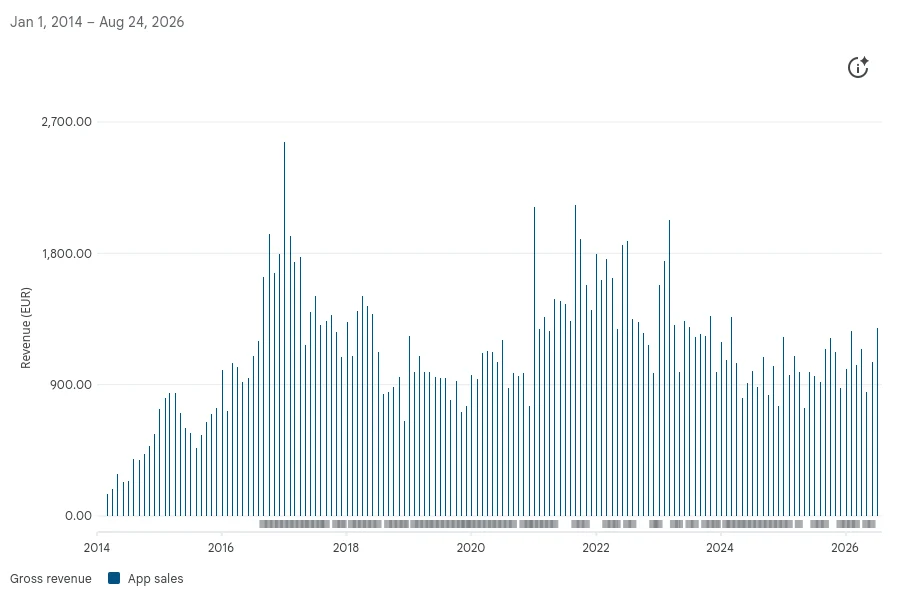
In the landscape of modern software, the narrative of the independent developer is often one of struggle, compromise, and eventual attrition. For Daniel Gultsch, the creator of Conversations—a premier federated instant messaging client for Android—the journey has been a definitive study in the friction between open-source idealism and the monopolistic realities of digital distribution platforms.
Twelve and a half years after its public debut, Gultsch has officially announced a clean break from the Google Play Store. This decision marks the end of a long-standing, often volatile relationship between a pioneering open-source project and the world’s largest mobile ecosystem. It is a story of economic survival, the evolution of funding models in the free software movement, and a scathing indictment of the automated bureaucracy that currently governs the mobile app economy.
The Genesis: A Student’s "Scratch"
The project began in January 2014 within the confines of a university dormitory. Like many foundational open-source tools, Conversations was born out of personal necessity—a developer’s attempt to solve a communication problem for himself and his immediate social circle. By March 2014, the project was ready for the public, but Gultsch took a path that was, at the time, considered unconventional: he treated the project as a business.
While the source code remained open and transparent, Gultsch leveraged the convenience of pre-compiled binaries distributed through the Google Play Store as a revenue stream. In 2014, this "paid-for-convenience" model was an outlier. Most developers either opted for a purely free model supported by donations or a proprietary model that kept the source code locked away. Gultsch’s approach proved to be a viable bridge, allowing him to sustain his livelihood while contributing to the XMPP ecosystem.
A Chronology of Dependency and Disillusionment
The history of Conversations is best viewed as a decade-long transition from platform dependency to sovereign autonomy.
- 2014: The launch of Conversations on Google Play. The developer adopts the paid-binary model to fund continuous development.
- 2015–2018: The "Hustle Years." Revenue streams are diversified. The project sustains itself through a combination of B2B consulting, custom feature development for corporate clients, and the steady, predictable income of Play Store sales.
- 2019–2022: The strain increases. The developer notes a marked decline in the quality of Google’s developer support. Repeated, opaque rejections of app updates become common.
- 2023–2024: The shift to grants. With consistent backing from organizations like NLnet and the European Commission, the financial reliance on Google Play begins to evaporate.
- March 2024: The definitive exit. Gultsch concludes that the "toxic relationship" is no longer economically necessary and shifts his focus entirely to F-Droid and independent distribution.
The Anatomy of a Toxic Relationship
At the heart of Gultsch’s departure is a profound frustration with the lack of human recourse within Google’s infrastructure. For years, Conversations faced "incomprehensible" rejection notices from Google’s automated review systems. In one notable incident, the app was removed from the store based on a false accusation of illicitly uploading user contacts—a claim that was not only factually incorrect but lacked any basis in the app’s codebase or update history.
Gultsch describes the experience as an encounter with "AI and click-workers." The absence of a human representative to discuss policy disputes is not merely a bureaucratic nuisance; for an app that handles encrypted communications, it is a significant operational hazard.
The Security Dilemma
A critical point raised by Gultsch is the danger posed by Google’s review delays. In the current ecosystem, Google makes no distinction between a feature update and a security patch. When an update is caught in a review queue for two weeks—a common occurrence in the current climate of "AI-generated slop" clogging the review pipelines—security vulnerabilities remain unpatched for users who rely on the Play Store for updates. For a privacy-focused messaging app, this delay is an unacceptable security risk.
Economic Analysis: The Cost of the Gatekeeper
The financial toll of the Google Play partnership is significant. Google extracts a 15% commission on every sale. Gultsch estimates that he pays over 1,000 Euro annually to Google—a sum he compares unfavorably to the cost of his internet and hardware expenses.
The crux of his argument is the lack of value proposition. In other sectors, such as ISP services or hardware maintenance, a payment of this magnitude secures a service level agreement (SLA) or at least a human point of contact. With Google, Gultsch argues, the developer pays a premium price for a service that provides zero accountability, zero support, and a high probability of arbitrary service disruption.
The Evolution of Open Source Funding
The sustainability of Conversations is a roadmap for other developers looking to escape the "walled garden" economy. The transition from individual user-paid revenue to institutional grants represents a significant maturation of the open-source sector.
By securing long-term funding through bodies like the European Commission and NLnet, Gultsch has achieved what many developers dream of: the ability to prioritize the project’s health over the platform’s terms of service. This shift allows the project to move away from the "convenience-based" monetization of binary distribution on Play Store and toward a sustainable, grant-backed future where the primary goal is software integrity rather than satisfying an algorithm.
Implications for the Mobile Ecosystem
The departure of Conversations from the Play Store is a symbolic blow to the platform’s "official" app catalog. It highlights a growing trend among independent developers: the realization that the costs of being on a major app store—both financial and existential—far outweigh the benefits of discoverability.
The Rise of F-Droid
As Gultsch pivots, F-Droid has emerged as the primary distribution channel. Unlike the Play Store, F-Droid operates on a philosophy of transparency. The builds are reproducible, and the distribution process is governed by the community. Gultsch’s decision to sign the APKs with his personal key while utilizing F-Droid’s infrastructure ensures that users still receive a secure, verified experience without the interference of a corporate middleman.
Conclusion: "Fuck the Gatekeepers"
The finality of Gultsch’s announcement is not merely an act of defiance; it is a calculated professional pivot. After a decade of navigating the "toxic" bureaucracy of the Google Play Store, the developer has reached a state of economic independence that allows him to close the door on an abusive partner.
For the wider community, this case study serves as a warning and a template. It warns that even successful, well-regarded projects are susceptible to the whims of algorithmic gatekeepers. Simultaneously, it provides a template for how independent projects can leverage the growing infrastructure of public and non-profit funding to secure their independence. As Daniel Gultsch exits the Play Store, he leaves behind not just a messaging app, but a testament to the fact that, in the long run, the most sustainable business model for open-source is one that rejects the middleman entirely.
 Sagoh
 Pevita Pearce
 Layla Zulfa
