
 By Asro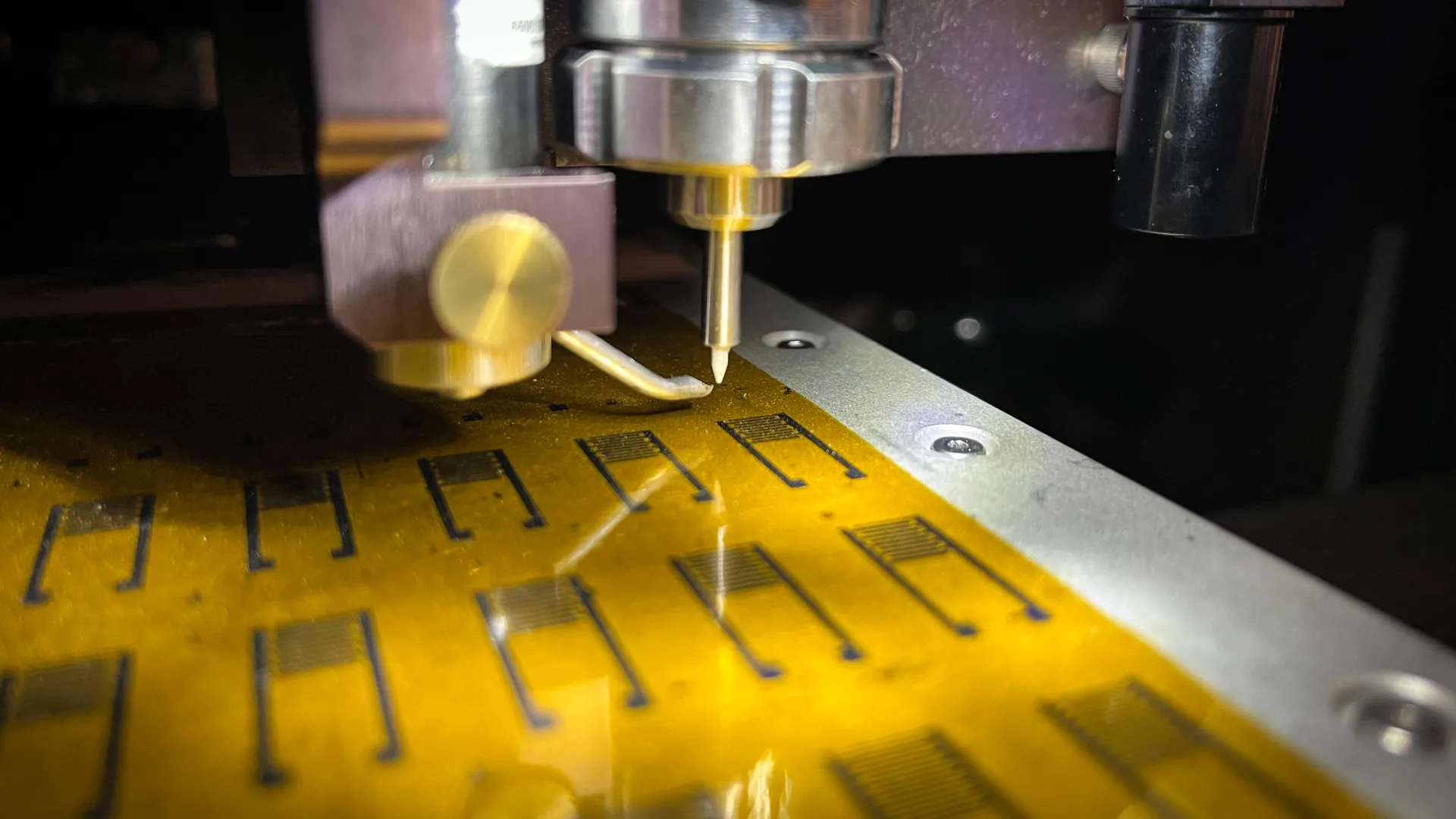
In a breakthrough that blurs the line between synthetic electronics and biological tissue, researchers at Northwestern University have successfully developed printed artificial neurons capable of interacting directly with living brain cells. By leveraging advanced aerosol jet printing and innovative nanomaterials, the team has created flexible, energy-efficient devices that mimic the complex firing patterns of human neurons.
This development, published in the April 15 issue of Nature Nanotechnology, marks a pivotal moment in the quest to build brain-inspired computing systems and next-generation neuroprosthetics. As artificial intelligence (AI) models continue to balloon in size and energy demand, this technology offers a tantalizing roadmap toward hardware that is as efficient as the human brain.
The Core Innovation: Mimicking Nature’s Complexity
For decades, the standard for computing has been the rigid silicon transistor. While silicon has powered the digital revolution, it is fundamentally different from the brain. Silicon-based chips are composed of billions of identical, static switches. In contrast, the brain is a heterogeneous, three-dimensional, and dynamic network where connections are constantly shifting to facilitate learning.
To bridge this gap, the Northwestern team—led by Mark C. Hersam, the Walter P. Murphy Professor of Materials Science and Engineering—turned to printable, soft materials. Instead of relying on traditional clean-room fabrication, they utilized electronic "inks" composed of molybdenum disulfide (MoS₂) and graphene.
The Power of "Controlled Flaws"
The secret to the device’s behavior lies in the intentional manipulation of polymers within the ink. In previous attempts by other research groups, polymers were often treated as contaminants and removed to improve electrical conductivity. Hersam’s team did the opposite.
By only partially decomposing the polymer during the printing process, they created a system that responds to electrical current by forming conductive filaments. When current flows through these filaments, it is constricted into a narrow region, triggering a sudden, sharp electrical response. This phenomenon allows the artificial neuron to replicate complex biological behaviors—including single spikes, continuous firing, and rhythmic bursting—that were previously impossible to achieve with such simple, low-cost components.
A Chronology of the Breakthrough
The path to this discovery was characterized by a shift in how engineers conceptualize "defect management" in materials science.
- Early Conceptualization: The research began with the premise that existing artificial neurons were either too slow (organic materials) or too fast (metal oxides) to effectively communicate with mammalian brain tissue.
- The Printing Pivot: The team adopted aerosol jet printing, an additive manufacturing technique that allows for high-precision, low-waste deposition of nanomaterials.
- Material Optimization: By refining the MoS₂-graphene ink, the researchers found a balance that allowed for temporal responsiveness aligned with the millisecond-scale firing of biological neurons.
- Validation Phase: The team collaborated with Indira M. Raman, a professor of neurobiology at Northwestern, to test the devices. By applying the artificial signals to slices of a mouse cerebellum, they confirmed that the artificial spikes were biologically "readable."
- Publication: The finalized study, titled "Multi-order complexity spiking neurons enabled by printed MoS₂ memristive nanosheet networks," was prepared for its April 2024 release in Nature Nanotechnology.
Supporting Data and Technical Precision
The success of this experiment hinges on the ability of the artificial neuron to exist within the "Goldilocks zone" of neural timing.
Biological neurons communicate via action potentials—brief pulses of electrical activity. If an artificial device is too slow, the biological cell ignores it; if it is too fast, the cell may be damaged or fail to integrate the signal. Northwestern’s artificial neurons demonstrated a temporal range that matches the precise millisecond requirements of the mouse cerebellum.
Furthermore, the structural efficiency of the device is profound. Because each individual artificial neuron can produce a variety of signal patterns, the need for complex, power-hungry networks is drastically reduced. A single printed neuron can perform tasks that would previously have required a larger array of conventional electronic components.
Official Perspectives: The Quest for Energy Efficiency
Mark C. Hersam, who serves in multiple leadership roles across the McCormick School of Engineering and the Feinberg School of Medicine, emphasizes that this technology is as much about environmental sustainability as it is about neuroscience.
"The world we live in today is dominated by artificial intelligence," Hersam stated during a press briefing. "The way you make AI smarter is by training it on more and more data. This data-intensive training leads to a massive power-consumption problem. We have to come up with more efficient hardware."
The "Gigawatt" Crisis
Hersam warns that the current trajectory of AI development is unsustainable. Data centers currently require such immense amounts of electricity that some companies are considering dedicated nuclear power plants to sustain operations. This also creates a water-security issue, as these massive facilities require constant cooling through water-intensive processes.
"The brain is five orders of magnitude more energy-efficient than a digital computer," Hersam noted. By mimicking the brain’s heterogeneous, dynamic, and three-dimensional structure, the researchers believe they can reduce the power overhead of future computing systems, potentially curbing the reliance on massive data centers.
Implications for the Future of Technology
Revolutionizing Neuroprosthetics
The immediate medical implications are significant. Currently, brain-machine interfaces (BMIs) often rely on rigid electrodes that can cause tissue scarring or signal degradation over time. Because the Northwestern artificial neurons are printed on flexible polymers, they offer a more biocompatible solution. Future applications could include advanced neuroprosthetics that restore mobility to paralyzed limbs, sharpen auditory perception for the deaf, or provide sensory feedback for amputees through direct neural integration.
The Next Generation of AI Hardware
Beyond medicine, the study heralds a shift in hardware architecture. If AI can be built on "neuromorphic" hardware—chips that function like biological neural networks rather than sequential calculators—we could see:
- Edge Computing: Highly sophisticated AI that runs on local devices (like smartphones or medical implants) without needing a constant, power-hungry connection to the cloud.
- Autonomous Systems: Robots and drones capable of learning and adapting in real-time, using a fraction of the battery life required by current models.
- Sustainable AI: A reduction in the carbon footprint of large language models and other data-intensive technologies.
Cost and Accessibility
The use of aerosol jet printing is a transformative aspect of this research. Unlike photolithography, which requires expensive clean-room environments and toxic chemicals, aerosol jet printing is a low-cost, additive process. It deposits material only where it is needed, minimizing waste and allowing for rapid, scalable production. This could democratize the development of advanced brain-interfacing hardware, moving it out of elite laboratories and into the realm of viable commercial technology.
Conclusion
The Northwestern University team has not merely imitated the neuron; they have created a synthetic counterpart that operates in the same temporal and physical language as the brain. By rethinking the materials and the fabrication processes—and by embracing the very polymers that others once discarded—Hersam and his colleagues have opened a door to a new era of technology.
Whether this leads to a cure for neurological conditions or the dawn of truly energy-efficient, brain-inspired computing, one thing is certain: the gap between human intelligence and machine capability has never been narrower. As the scientific community digests these findings, the focus will now shift to scaling these printed networks to handle increasingly complex neural tasks, proving that sometimes, the most effective way to advance the future is to look toward the biological blueprints of our own past.
 Sagoh
Sagoh  Siti Muinah