
 By Laily UPN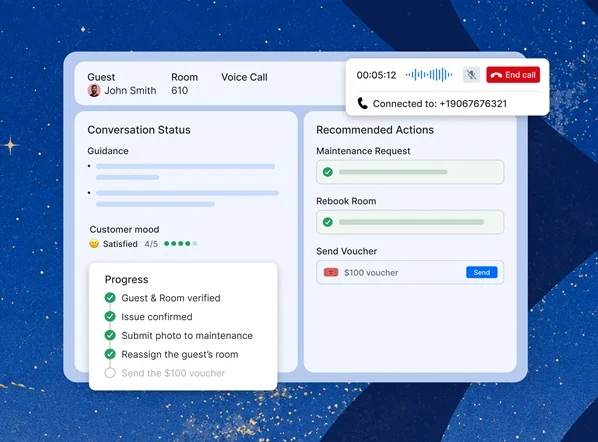
In the rapidly evolving landscape of customer experience (CX) technology, the divide between digital chat support and traditional voice calls has long been a source of operational friction. While digital channels have seen a surge in sophisticated, agentic AI integration, voice support has largely remained tethered to rigid, legacy scripts and manual, labor-intensive workflows.
Quiq, a leader in the agentic AI space, is poised to disrupt this paradigm with the launch of "Voice Assist." This new capability extends the company’s proven AI infrastructure from digital channels—such as SMS, email, and chat—into the live voice environment. By offering real-time, adaptive guidance that doesn’t just suggest solutions but executes them, Quiq is transforming the role of the human agent from a manual data-entry clerk into a high-level facilitator of customer success.
The Core Innovation: Moving Beyond Passive Suggestions
Most contemporary "agent assist" tools on the market operate on a relatively shallow level. They typically function as passive observers, relying on predefined, linear decision trees that frequently break the moment a customer deviates from a script or shifts the conversation’s focus. These legacy systems stop at the "whisper"—providing a pop-up reminder or a coaching cue that the agent must then manually interpret and execute elsewhere in their CRM or ticketing system.
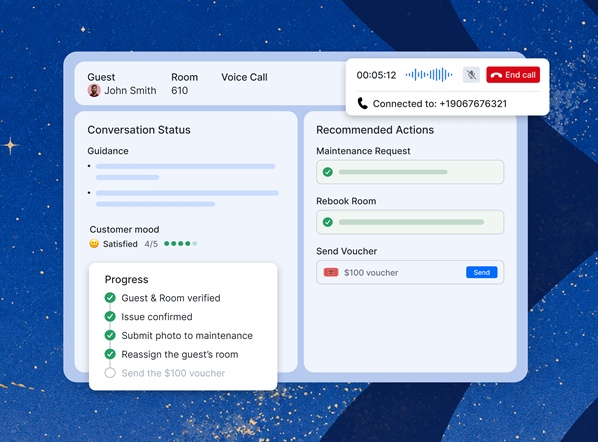
Quiq’s Voice Assist is engineered to be fundamentally different. It is built on an agentic architecture, meaning the AI is designed to observe, reason, and act. When a customer speaks, the system adapts in real-time, maintaining context even if the conversation takes an unexpected turn.
Closing the Loop: The Action Advantage
The most significant departure from existing category standards lies in the "action" component of Voice Assist. Competitors in the space often tout "action-oriented" features, but these are frequently limited to triggering backend workflows, such as updating a ticket status or logging a call summary.
Voice Assist goes further. It possesses the capability to perform tasks that directly impact the customer experience while the agent remains on the line. For example, if a customer calls regarding a missing shipment, the AI can proactively send a tracking link, order details, or a service voucher directly to the customer’s device via the existing conversation thread. This capability eliminates the need for the human agent to toggle between windows, search for information, or manually copy-paste data, effectively closing the loop between AI-driven advice and tangible customer action.
Chronology: From Digital Dominance to Voice Integration
To understand the impact of Voice Assist, it is necessary to look at the trajectory of Quiq’s platform development.
The Foundation of Digital Excellence
Before entering the voice space, Quiq spent years perfecting its agentic AI for asynchronous and real-time digital messaging. By focusing on chat, SMS, and email, the company established a robust framework of "Process Guides," knowledge sources, and "Verified Intelligence" guardrails. This governance layer ensures that every action taken by the AI is scrutinized against safety and accuracy protocols before execution.
The Strategic Pivot to Voice
Recognizing that customer service departments were suffering from a fragmented experience—where agents had "smart" tools for chat but "dumb" tools for phone calls—Quiq began the development of Voice Assist. The goal was not to build a separate, standalone tool, but to extend the existing, proven digital infrastructure into the voice realm.
By utilizing the same backend architecture for both channels, Quiq ensures that businesses do not have to maintain two disparate sets of guardrails or knowledge bases. Whether a customer contacts a brand via an AI-powered chatbot or speaks to an agent on a phone call, the intelligence powering the interaction remains consistent, governed, and scalable.
Supporting Data: Why Adaptive AI Matters
The business case for Quiq’s approach is supported by concrete metrics derived from their existing digital deployments. Companies that have implemented Quiq’s AI-driven next-best-action suggestions and real-time task completion have reported significant operational improvements.
- Efficiency Gains: Users of Quiq’s digital platform have observed a 20% decrease in human agent conversation time. This reduction is primarily attributed to the AI handling administrative tasks, such as lookup, verification, and data retrieval, allowing the agent to focus entirely on empathy and complex problem-solving.
- Employee Satisfaction: The impact on human morale is equally notable. Quiq reports an associate satisfaction rate of 4.82 out of 5. When AI handles the repetitive, low-value tasks that often lead to agent burnout, human staff report higher job satisfaction and lower turnover rates—a critical metric in the high-churn world of customer support centers.
These figures provide a compelling baseline for what organizations can expect as they transition these capabilities from chat to voice.
Official Responses: The Philosophy of Agentic Empowerment
Mike Myer, CEO and Founder of Quiq, emphasizes that the industry has been focused on the wrong problem for too long. In a recent statement regarding the launch, Myer noted:
"Suggesting the right answer to the human agent is easy. Any vendor can do that. What we built is an AI that can also act on it, like sending a real message to the customer during the call on the same thread, while the agent stays on the phone. That’s the gap we closed for our customers."
For Myer, the distinction is clear: passive assistance is a commodity; agentic, action-oriented support is a strategic differentiator. By ensuring that the AI acts within the same governed, verified environment as the agent, Quiq minimizes the risks typically associated with LLMs and generative AI in enterprise settings. The AI does not "go rogue"; it functions within the specific boundaries set by the organization’s existing knowledge sources and Process Guides.
Implications: The Future of the Contact Center
The introduction of Voice Assist carries profound implications for the future of CX.
The End of the "Point Solution" Era
For organizations evaluating new voice technologies, the arrival of Voice Assist forces a shift in procurement strategy. Historically, companies have purchased point solutions—tools that only handle voice analytics or basic call routing. Quiq’s unified platform approach suggests that the future belongs to integrated, multi-channel ecosystems. By using the same platform for voice and digital, companies reduce their "tech debt," simplify their IT footprint, and ensure that their AI models are learning from every interaction, regardless of the channel.
Elevating the Human Agent
Contrary to the narrative that AI will replace the human agent, Voice Assist positions the human as the supervisor of a high-performance, automated assistant. The human remains the emotional anchor of the call, while the AI manages the technical complexity. This "human-in-the-loop" model ensures that while the speed of the interaction increases, the quality of human-to-human connection is preserved, and potentially enhanced, by the reduction in administrative friction.
Governance as a Competitive Advantage
As organizations move toward more autonomous AI agents, the issue of "governance" has become paramount. Many companies have been hesitant to deploy agentic AI for fear of hallucinations or unauthorized actions. By applying the same "Verified Intelligence" guardrails that were battle-tested in digital channels to the voice environment, Quiq provides a layer of security that is essential for highly regulated industries such as finance, healthcare, and telecommunications.
Conclusion: A New Standard for Voice Interaction
Voice Assist is more than just a new feature; it represents the maturation of agentic AI in the enterprise. By refusing to settle for simple "whisper" suggestions and instead building a system capable of real-time, governed execution, Quiq has set a new standard for what businesses should expect from their CX platforms.
As global brands like Roku, Staples, Brinks Home, Terminix, and Panasonic continue to integrate these capabilities, the barrier between "digital experience" and "voice experience" is effectively dissolving. For the modern enterprise, the path forward is clear: move toward a unified, agentic platform that understands, adapts, and acts—on every channel, every time.
For organizations ready to explore this technology, Quiq has opened access to demonstrations through their website, signaling a readiness to scale this capability across a broad spectrum of industries. As the industry watches, the success of Voice Assist will likely serve as a barometer for how quickly the broader market adopts agentic AI in the high-stakes world of live telephony.
 Iffa Jayyana
  Raul Delapena Setiawan