
 By Suro Senen
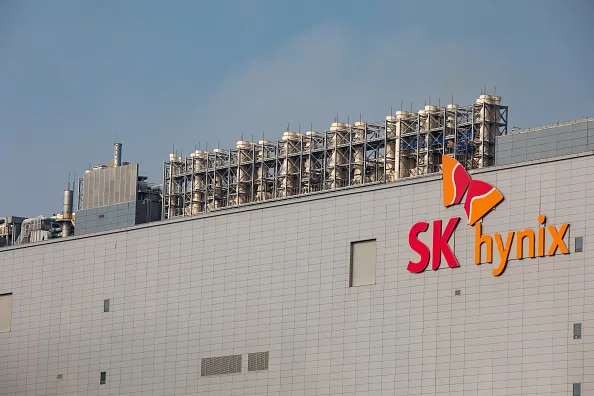
The global semiconductor landscape has transformed into a high-stakes chessboard, where technical specifications and market share are increasingly secondary to the dictates of national security and international trade policy. At the heart of this complex maneuver sits SK Hynix, the South Korean semiconductor titan, and its U.S.-based flash memory unit, Solidigm.
Recent reports indicate that Solidigm is navigating a delicate diplomatic and operational balancing act: seeking U.S. government approval to export advanced chipmaking equipment to its Dalian, China facility as a tacit condition for its proposed multi-billion dollar investment in American soil. This situation underscores the immense pressure placed on global manufacturers to align their long-term growth strategies with the diverging mandates of Washington and Beijing.
The Core Conflict: Balancing Growth and Compliance
The tension stems from the dual requirements of modern chip manufacturing: the need for massive, efficient production centers in Asia, and the strategic mandate from the United States to "onshore" critical technology infrastructure.
Solidigm, the NAND flash memory subsidiary of SK Hynix, has been actively scouting locations for a new U.S.-based production facility, with reports pointing toward upstate New York as a prime candidate. However, the company is reportedly leveraging this potential investment as part of a larger negotiation with U.S. regulators. To maintain the competitiveness of its existing operations—specifically at its Dalian, China factory—the company requires a steady stream of sophisticated, U.S.-origin semiconductor manufacturing tools.
For SK Hynix, the Dalian plant represents a significant capital investment. The ability to upgrade and maintain this facility with the latest tools is not merely a matter of efficiency; it is an existential requirement to keep pace with the hyper-competitive NAND flash market. NAND memory is the backbone of modern storage, essential for everything from consumer laptops and smartphones to the massive, high-speed storage arrays required by AI-driven data centers.
A Chronology of Escalation: The Export Control Timeline
The current friction did not emerge in a vacuum; it is the result of years of escalating trade policies and regulatory tightening.
- October 2022: The U.S. Department of Commerce introduced sweeping export controls targeting the Chinese semiconductor industry. The move was framed as a national security measure to prevent the Chinese military from accessing advanced computing chips and the equipment necessary to manufacture them.
- 2023: Recognizing the complexity of global supply chains, the U.S. began tightening these rules, closing loopholes that allowed some entities to continue importing advanced gear.
- September 2025: In a significant shift, the Trump administration revoked the special export exemptions that had previously allowed companies like SK Hynix, Samsung, and Intel to move certain equipment into their Chinese facilities. This forced a period of intense diplomatic maneuvering between Seoul and Washington.
- Late 2025 – Present: Following intense negotiations, the U.S. government established a system of annual licensing. Both Samsung and SK Hynix have since been granted these licenses, which provide a temporary, regulated pathway to supply their Chinese operations with necessary equipment, provided those shipments remain compliant with U.S. security protocols.
Market Dynamics: The Rising Cost of Memory
The backdrop to this geopolitical struggle is a supply-constrained market characterized by volatile pricing. The meteoric rise of generative AI has created an insatiable demand for high-speed memory and high-capacity storage.
According to data from TrendForce, the global NAND flash market is currently under intense pressure. As data centers scramble to expand their storage capacity to accommodate large language models (LLMs) and real-time analytics, the supply of high-end storage components has failed to keep pace. Analysts anticipate that NAND prices could climb by 15% to 20% in the fourth quarter of this year alone.
This price volatility complicates the position of companies like SK Hynix. They are caught between the need to maximize production to capture market share in a lucrative environment and the reality that their primary production hubs are subject to the whims of international trade policy. If the Dalian facility cannot be upgraded, production efficiency drops, costs rise, and the company risks losing its edge against competitors who might be navigating the regulatory environment more effectively.
Official Responses and Corporate Strategy
In response to the growing speculation regarding its intentions in Dalian, SK Hynix has sought to clarify its position. A spokesperson for the company stated that it is not seeking to expand the overall production capacity at its Dalian "Mod B" facility—a plant that only reached completion in 2023.
The company further emphasized that all equipment installations and logistics are handled in strict adherence to international law. "The equipment installation is being carried out in consultation with and under authorization from the U.S. government," the spokesperson noted. This statement is clearly aimed at both the U.S. Department of Commerce, to ensure ongoing license renewal, and the investment community, to mitigate fears of a potential supply chain disruption.
For Washington, the strategy remains consistent: the "carrot" is the push for domestic manufacturing. In July, Commerce Secretary Howard Lutnick signaled the administration’s aggressive stance, confirming that the U.S. is in active, ongoing talks with both Samsung and SK Hynix to bring more advanced memory production to American shores. The U.S. government views these investments as essential for building a resilient, domestically controlled supply chain that is not susceptible to the geopolitical risks associated with East Asian production.
Implications: The Road to the IPO
The timing of these negotiations is critical for Solidigm’s future. Reports suggest that the company is preparing for a high-profile Initial Public Offering (IPO) in the United States, targeted for 2027. Market analysts estimate that the IPO could raise upwards of $10 billion, with a potential valuation reaching as high as $100 billion.
The success of this offering depends heavily on investor confidence in Solidigm’s operational stability. If the company can successfully demonstrate a clear, long-term pathway for its manufacturing—balancing a domestic U.S. presence with a legally compliant, ongoing operation in China—it will present a compelling narrative to investors.
Strategic Challenges Ahead
- Regulatory Uncertainty: Any change in U.S. policy toward China, particularly in the run-up to or following future election cycles, could render current licenses void or more restrictive, impacting the Dalian facility’s output.
- Cost of Onshoring: Building state-of-the-art semiconductor facilities in the U.S. is significantly more expensive than in Asia due to higher labor costs, stricter environmental regulations, and infrastructure requirements. The company must prove that these costs can be offset by government incentives (such as the CHIPS Act) and market demand.
- Technological Sovereignty: As the U.S. pushes for "advanced" chip independence, companies like SK Hynix face the risk of being forced to choose sides. If the U.S. eventually bans all advanced tool exports to China, the company will face the monumental task of transitioning its manufacturing base entirely out of the country.
Conclusion: A New Era of "Chip Diplomacy"
The story of Solidigm and SK Hynix is a microcosm of the modern semiconductor industry. It is no longer enough to be a leader in R&D or yield management; success now requires a mastery of international relations.
As the world moves toward an increasingly digitized and AI-dependent economy, the physical hardware that powers these advancements has become a strategic asset. The negotiations between SK Hynix and the U.S. government represent a new, permanent state of "chip diplomacy," where the borders between commerce and national security have effectively dissolved.
For now, the status quo holds: the U.S. allows limited equipment exports to keep the global supply chain from collapsing, while firms like SK Hynix provide the capital and expertise to build the next generation of American manufacturing capacity. Whether this delicate balance can be sustained through the end of the decade, as the push for technological supremacy intensifies, remains one of the most critical questions in the global tech economy.
 Siti Muinah
 rifanmuazin
