
 By Iffa Jayyana
In a sweeping operation that marks a significant escalation in the European Union’s efforts to combat state-sponsored cyber aggression, Dutch financial crime investigators have arrested two individuals central to the operation of a high-risk internet hosting network. The suspects—a 57-year-old Amsterdam resident and a 39-year-old from The Hague—stand accused of violating international sanctions by providing critical IT infrastructure to entities facilitating Russian cyberattacks, disinformation campaigns, and state-backed hybrid warfare operations.
The arrests, executed on May 18 by the Tax Intelligence and Investigation Service (FIOD), represent a targeted strike against the "bulletproof" hosting sector that has long served as the backbone for pro-Russian hacking collectives. The operation involved coordinated raids across multiple sites, including commercial premises in Enschede and Almere, as well as high-capacity data centers in Dronten and Schiphol-Rijk. Authorities seized over 800 servers, an array of mobile devices, and sensitive electronic documentation, effectively severing a key digital lifeline for malicious actors targeting the European Union.
The Architect of the Infrastructure
At the heart of the investigation is the relationship between the Dutch-based MIRhosting and a sprawling network known as "Stark Industries Solutions." Stark, which emerged with suspicious speed just weeks before the 2022 invasion of Ukraine, quickly established itself as a primary staging ground for Distributed Denial-of-Service (DDoS) attacks and sophisticated proxy services used by Kremlin-aligned intelligence agencies.
The 39-year-old detainee, identified as Andrey Nesterenko, is a Russian native and the founder of MIRhosting. Nesterenko’s background is as complex as the network he managed; a former piano prodigy, he transitioned into the world of IT infrastructure in 2004, establishing Innovation IT Solutions Corp. Historical records link his early operations to the hosting of stopgeorgia[.]ru, a site used to orchestrate cyberattacks against Georgia during the 2008 conflict—an event widely cited by historians as the first instance of a kinetic war accompanied by synchronized, large-scale cyber warfare.
The second individual, 57-year-old Youssef Zinad, maintained a significantly lower public profile, characterized by an abrupt withdrawal from digital communication following investigative inquiries in 2025. Investigations suggest that Zinad acted as a critical bridge between MIRhosting and the shell entities used to mask the operations of Stark Industries, specifically through a company called WorkTitans BV.
A Chronology of Sanctions Evasion
The dismantling of this network was not a sudden event, but the culmination of a multi-year intelligence effort. The timeline of this shadow operation illustrates the cat-and-mouse game played by sanction-evading infrastructure providers:
- February 2022: Stark Industries Solutions is launched, positioning itself as a "bulletproof" provider immediately preceding the invasion of Ukraine.
- May 2024: Investigative reports identify Stark as a primary node for Russian cyber mischief, revealing its reliance on Moldovan-based PQHosting, operated by brothers Ivan and Yuri Neculiti.
- May 2025: The European Union formally sanctions PQHosting and the Neculiti brothers. Sensing the encroaching regulatory pressure, network assets are hurriedly migrated from PQHosting to a new entity, "the[.]hosting," under the control of WorkTitans BV—a firm managed by Nesterenko and Zinad.
- September 2025: Further scrutiny reveals that despite the EU sanctions on the Neculiti brothers, Stark Industries remained operational by funneling its traffic through MIRhosting, effectively bypassing the initial blockade.
- November 2025: During the week of Denmark’s municipal elections, data confirms that WorkTitans and MIRhosting were the most frequently utilized networks in pro-Russian cyberattacks targeting Danish government digital infrastructure.
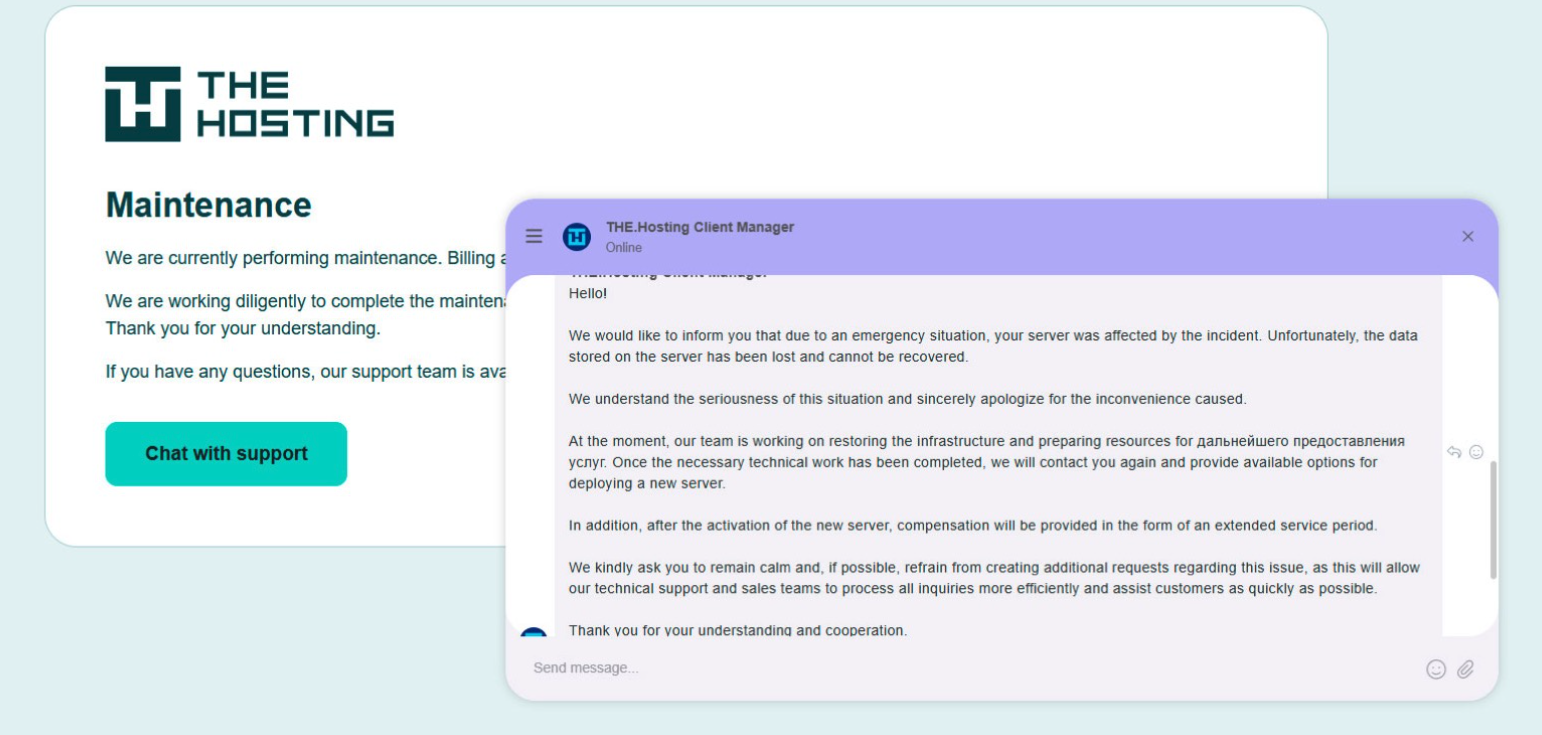
- May 18, 2026: FIOD conducts raids in the Netherlands, arresting Nesterenko and Zinad and seizing over 800 servers, resulting in a total outage for the hosted infrastructure.
Supporting Data: The Anatomy of the Attack
The evidence gathered by de Volkskrant and international cybersecurity researchers suggests that this was not merely a case of negligent hosting, but a deliberate provision of resources to malicious actors. The logs from the November 2025 Danish election period show a clear, measurable spike in traffic originating from WorkTitans and MIRhosting infrastructure directly hitting government portals.
The seizure of 800 servers has provided law enforcement with a treasure trove of forensic data. Initial reports from customers of "the[.]hosting" indicated that their data had been wiped or was inaccessible immediately following the raid, suggesting that the Dutch authorities prioritized the total neutralization of the infrastructure to prevent further exploitation by Russian intelligence assets.
Official Responses and Denials
In the wake of the arrests, the narrative from the accused remains one of innocence and victimization. Andrey Nesterenko, speaking through counsel and electronic communication, has steadfastly denied that his infrastructure was knowingly used for illicit purposes.
"The transition to ‘the[.]hosting’ was not intended to evade sanctions," Nesterenko claimed. "The hardware and customer portfolio had already been transferred to WorkTitans before the sanctions appeared. Closing or damaging a legitimate Dutch infrastructure company will not stop cybercrime, but it will harm many people who have done nothing wrong."

MIRhosting also issued a formal statement on LinkedIn, claiming that internal investigations into the Danish election interference yielded "no indications" that their services were used in the attacks. The company asserted that they observed no traffic anomalies during that period and maintained that they had received no prior abuse reports or official requests for information regarding the alleged malicious activity.
Regarding the role of Youssef Zinad, Nesterenko attempted to distance himself from his associate, describing their relationship as a "normal business-to-business arrangement." However, evidence contradicts this, including internal company emails where Zinad used a @mirhosting.com address and was identified as part of the legal team. Furthermore, official Dutch business listings linked Zinad directly to MIRhosting’s operational offices, undermining the claim that he was merely a third-party consultant.
Implications for Global Cybersecurity
The arrest of Nesterenko and Zinad signals a shift in how Western nations are responding to the "gray zone" of cyber warfare. By treating the hosting companies not as passive service providers, but as accomplices in sanctions evasion and hybrid warfare, the Dutch authorities have established a precedent that the "hosting defense"—the claim that a provider cannot be held responsible for the actions of their clients—is no longer a valid shield when infrastructure is knowingly used for state-backed aggression.
The case serves as a warning to other providers operating within the EU who provide "bulletproof" services to sanctioned regimes. The ability to track the migration of digital assets from one shell company to another has become a core competency of European financial intelligence units. As the EU continues to tighten its sanctions regime, the cost of doing business with Russian intelligence is rising, moving from mere administrative fines to criminal prosecution and the physical seizure of assets.
For the international community, the incident highlights the fragility of digital infrastructure in the face of political interference. While the removal of 800 servers may cause a temporary lull in pro-Russian cyber activities, the ease with which such networks are established and moved across jurisdictions suggests that the battle against state-sponsored digital disruption is far from over. As authorities continue to process the evidence seized in the Dutch raids, further revelations regarding the depth of coordination between private hosting providers and state intelligence agencies are expected to emerge, potentially leading to further arrests and sanctions across the continent.
 Sagoh
Sagoh  Evan Lee Salim
  Ammar Sabilarrohman