
 By Lina Irawan
PHILADELPHIA / WASHINGTON — In a dramatic escalation of one of the most high-profile federal cybercrime investigations in recent memory, Federal Bureau of Investigation (FBI) agents have arrested a prominent Canadian cybersecurity executive in Pennsylvania. The high-stakes arrest is directly tied to an ongoing probe into ShinyHunters, an aggressive cyber extortion syndicate that recently breached federal systems and compromised sensitive, classified data belonging to thousands of FBI personnel.
The suspect, identified in federal court records as 54-year-old Edward Dubrovsky—an executive associated with the Canadian cybersecurity firm CyberSteward and formerly with Cypfer—was taken into custody on October 8, 2026. The arrest occurred while Dubrovsky was attending a major cyber insurance conference in Philadelphia.
The developing case has sent shockwaves through the global incident response and cyber insurance sectors, highlighting the murky, high-risk intersection between professional ransomware negotiators and the criminal syndicates they routinely interface with.
Main Facts
The apprehension of Edward Dubrovsky marks a major turning point in a federal investigation that has increasingly focused on the professional ecosystem surrounding cyber extortion.
According to multiple sources close to the investigation, Dubrovsky was arrested by FBI agents in Pennsylvania on suspicion of assisting the ShinyHunters hacking group. Federal court documents filed in the Eastern District of Pennsylvania—and subsequently transferred to the Eastern District of Texas, which has become the centralized command hub for the probe—charge Dubrovsky with conspiracy to commit cyber extortion and interference with commerce by threats. Specifically, the complaint alleges "conspiracy to threaten to impair the confidentiality of information with the intent to extort money."
The arrest stems from a widening dragnet that follows a string of international law enforcement actions against key figures linked to ShinyHunters. The syndicate has generated massive illicit revenues this year alone, with the FBI estimating that the group has successfully extorted more than $70 million from corporate and institutional victims through sophisticated phishing campaigns, corporate credential theft, and subsequent data-leak threats.
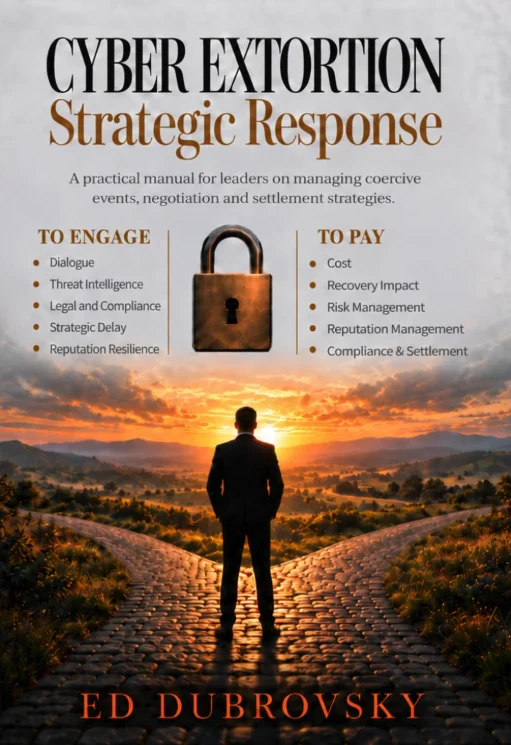
Dubrovsky, a well-known figure in the incident response community and author of the 202-page text Cyber Extortion Strategic Response, is currently being held at a federal detention facility in Philadelphia awaiting further judicial proceedings. Court records indicate that he has not yet retained legal counsel or been appointed a public defender.

Chronology of the Investigation
The rapid unraveling of the ShinyHunters network—and its sprawling web of alleged facilitators—has unfolded across multiple continents over the past several weeks:
- September 2026: Dutch law enforcement authorities execute a high-profile raid, arresting Pepijn van der Stap, a reformed cybercriminal and suspected associate of the hacking collective. Federal investigators immediately begin forensic analysis on digital devices seized during the raid.
- Late September to Early October 2026: Following Van der Stap’s arrest, a volatile internal shift occurs within ShinyHunters. A prominent operative operating under the handle "Rey" assumes operational control of the group. Rey immediately initiates a high-profile campaign taunting the FBI, leaking sensitive data stolen from the bureau’s online recruitment portal—including unit identifications, operational specializations, and confidential medical and psychiatric records of thousands of agents.
- October 5–7, 2026: The annual Cyber Risk Summit is convened at the Loews Philadelphia Hotel. Among the event’s premier sponsors is Cypfer, alongside other Canadian security firms. Edward Dubrovsky, representing CyberSteward, travels to Pennsylvania to participate in conference panels concerning global ransomware negotiations and extortion advisory.
- October 7, 2026: Investigative reports reveal that "Rey"—subsequently identified by international media as a teenager named Saif Al-din Khader—has been detained by authorities. Khader is reportedly cooperating with the FBI following an aborted attempt by the group to extort a navigation and digital aviation unit recently divested by Boeing.
- October 8, 2026: FBI agents execute the arrest of Edward Dubrovsky in Pennsylvania on cyber extortion and conspiracy charges. Initial court documents are filed locally before being ordered transferred to Texas.
- October 9, 2026: The case docket is formally moved to the Eastern District of Texas. Concurrently, public statements and media leaks begin tying the arrest to the overarching ShinyHunters investigation.
Supporting Data and Industry Context
The arrest of a prominent incident response executive has forced the cybersecurity industry to confront uncomfortable questions regarding the operational boundaries of ransomware negotiation firms.
According to background details surfaced through corporate registries and professional networks, Dubrovsky’s career has long intersected with the high-stakes world of corporate crisis management. While his LinkedIn profile and public speaking engagements positioned him as a leading authority on "compliant-driven coercive advisory," corporate spokespersons have scrambled to clarify his employment history. Following initial media reports, a spokesperson for Cypfer clarified that Dubrovsky was never a founder or co-founder of the firm—as his online profile had suggested—but rather served as a managing director prior to his resignation in December 2025. At the time of his arrest, he was associated with CyberSteward, another Canadian security entity sponsoring industry events.
In his published work, Dubrovsky frequently emphasized the strategic nuances of engaging with threat actors. In Cyber Extortion Strategic Response, he argued that communication with cybercriminals is distinct from negotiating a payment, and that opening channels can be leveraged to test claims, gather intelligence, buy time, and preserve strategic options.
However, federal prosecutors appear to believe that Dubrovsky crossed the legal threshold separating professional advisory services from criminal conspiracy and active facilitation of extortion schemes. Sources indicate that federal investigators are closely scrutinizing financial trails, communication logs, and operational interactions between negotiation firms and the ransomware syndicates they are hired to neutralize. Investigators are reportedly evaluating whether charges may soon be brought against principals at other third-party firms.
Official Responses and Bureau Silence
Official public communication regarding the arrest has been tightly managed, reflecting the extreme sensitivity of an investigation that directly implicates the Bureau’s own internal security.
- FBI Leadership: FBI Director Kash Patel acknowledged the ongoing crackdown via social media and official briefings, though initial statements omitted the identity of the Canadian suspect. The agency’s public affairs office has officially declined to comment on specific investigative details, citing the ongoing nature of the judicial proceedings.
- Cypfer and CyberSteward: Cypfer issued a prompt corporate update distancing themselves from Dubrovsky’s current professional ventures and correcting the record regarding his former executive title. Executives at CyberSteward have not yet issued a comprehensive public statement regarding the arrest of their team member, and inquiries directed to the firm remain unanswered as legal teams evaluate the fallout.
- Judicial System: Federal court filings in the Eastern District of Pennsylvania and the Eastern District of Texas remain heavily restricted. Key portions of the underlying criminal complaint and supporting affidavits have been sealed by judicial order to protect ongoing intelligence-gathering operations and prevent the destruction of digital evidence across international jurisdictions.
Implications for Global Cybersecurity and Ransomware Negotiation
The detention of a high-profile incident response executive amid a federal probe into the very hackers who compromised the FBI carries profound implications for the global cybersecurity landscape:

1. The Criminalization of Ransomware Negotiations
For over a decade, third-party negotiation firms have operated in a regulatory gray zone, acting as intermediaries between victimized enterprises and ruthless criminal gangs. These firms often facilitate multimillion-dollar cryptocurrency payments under strict confidentiality. The arrest of a practitioner of Dubrovsky’s stature signals that federal law enforcement is willing to scrutinize the activities of negotiators themselves, potentially chilling the incident response industry and forcing firms to adopt aggressive compliance protocols or risk prosecution for aiding and abetting extortion.
2. Fallout from the FBI Data Breach
The breach of the FBI’s recruitment database by ShinyHunters—and the subsequent taunts by the teenage operative known as "Rey"—dealt a severe reputational blow to federal law enforcement. The rapid sweep of international actors, including the Dutch raid on Pepijn van der Stap, the detention of Saif Al-din Khader, and now the domestic arrest of a Canadian security executive, demonstrates an unyielding institutional imperative within the Department of Justice to neutralize the threat actors who dared target the Bureau directly.
3. Centralization of Cyber Enforcement in Texas
The strategic consolidation of the ShinyHunters prosecution within the Eastern District of Texas highlights the specialized judicial framework being utilized to handle complex, transnational cybercrime cases. Texas federal courts have increasingly become a focal point for high-tech financial crimes, offering prosecutors streamlined mechanisms for handling classified digital evidence and coordinating multi-agency international warrants.
4. Outlook for Future Prosecutions
As federal agents pore over the digital devices seized from recent international raids, industry analysts anticipate further disruptions. Legal experts suggest that the walls separating legitimate cybersecurity advisory firms from underground cybercrime cartels are being aggressively mapped by investigators. If additional charges are filed against executives at other negotiation firms, the entire paradigm of how corporations respond to ransomware attacks may undergo a permanent, seismic transformation.
This is a developing story. Updates, court filings, and official statements will be added as new information becomes available.
 rifanmuazin
 Neng Nana
 Reynand Wu
