
 By Muslim
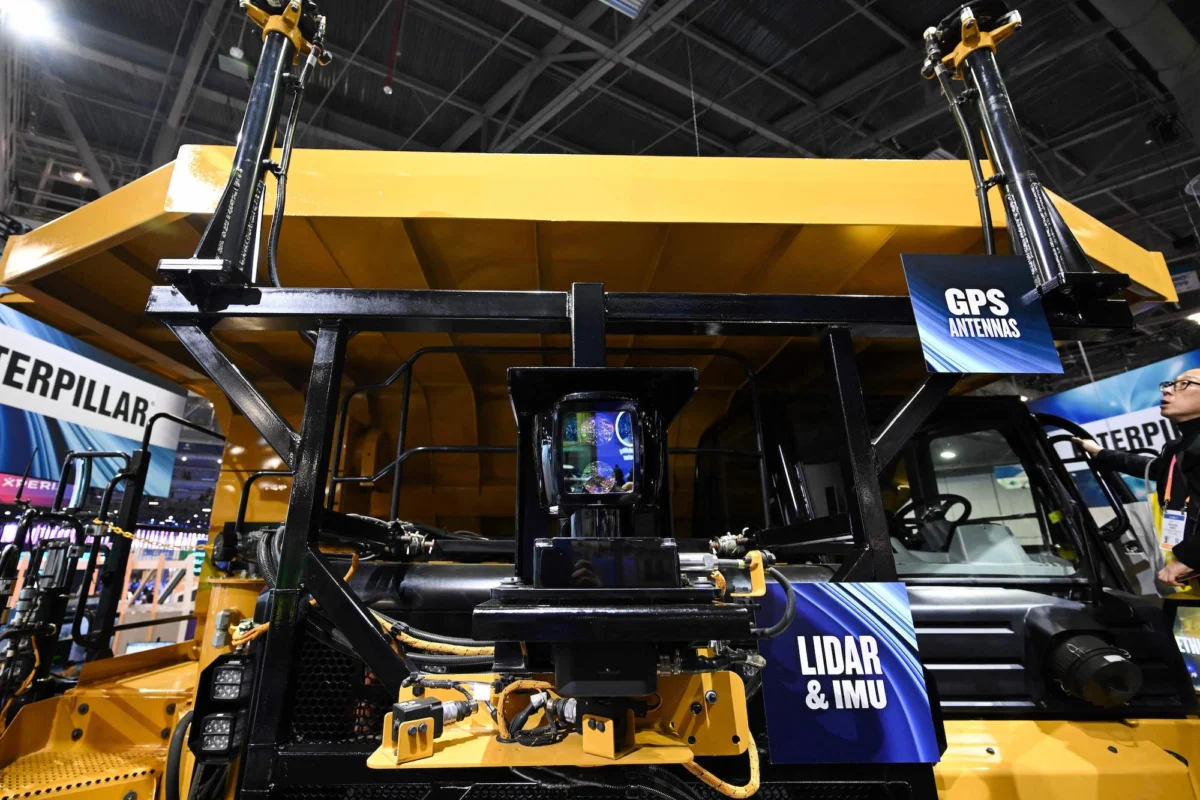
In the modern corporate landscape, the “AI problem” is often reduced to software integration—fitting large language models into existing workflows or automating administrative tasks. However, for industrial behemoth Caterpillar, the challenge of artificial intelligence is fundamentally physical. For decades, the company has operated at the intersection of heavy iron and extreme environments. Now, as the world pivots toward an autonomous future, Caterpillar is leveraging its deep-rooted legacy to bridge the gap between high-tech software and the gritty reality of global construction and mining sites.
The Evolution of Industrial Autonomy
Caterpillar’s foray into the autonomous space was not a sudden reaction to the generative AI boom but a calculated evolution born of necessity. The company’s initial push focused on the mining sector, an industry characterized by extreme labor shortages, high operational risks, and unforgiving environments where human safety is a constant concern.
By automating haul trucks, drills, underground loaders, and dozers, Caterpillar successfully removed personnel from the most hazardous zones. What began as a series of standalone autonomous vehicles has matured into a sophisticated ecosystem. Today, Caterpillar offers a comprehensive "autonomous toolkit" that includes remote command centers, real-time fleet management software, and advanced remote terrain intelligence.
This transition from manual operation to autonomous oversight has fundamentally changed the nature of the job site. "Now we’re in this super exciting time where we can take all of that learning from mining and bring it into much more dynamic environments, jobsites, quarries, and construction sites," explained Jaime Mineart, Caterpillar’s Chief Technology Officer, during a fireside chat at the Ai4 conference in Las Vegas.
Integrating AI into the Fabric of Operations
While the headline-grabbing aspect of Caterpillar’s strategy remains its autonomous machinery, the company is quietly weaving AI into the daily lives of its technicians and office-based employees.
A primary example of this is the "Cat AI Assistant." Designed to function as a field-side companion, the tool allows technicians to interact with machines using voice commands. Standing beside a multi-ton excavator, a technician can query the assistant to pull up specific repair procedures, troubleshoot complex mechanical failures, and identify the exact parts required before a single bolt is turned. By reducing the time spent searching through manuals or waiting for remote support, the AI assistant is driving a significant increase in operational efficiency for customers, operators, and field service teams.
This capability is fueled by Caterpillar’s massive data moat. With approximately 1.6 million connected assets operating globally, the company sits on a goldmine of more than 16 petabytes of structured data. This proprietary information acts as the bedrock for the company’s AI models, ensuring that the insights provided are not generic, but tailored to the specific mechanical history and performance characteristics of Caterpillar equipment.
Beyond field maintenance, the company is utilizing AI to power advanced site-scanning software. These tools generate "digital twins"—virtual replicas of physical job sites—allowing project managers to analyze operations in real time, identify bottlenecks, and optimize workflows before physical execution. Furthermore, Caterpillar is applying AI to its own internal software development lifecycle. "We use AI agents to modernize legacy code, generate and test new software, and identify defects earlier," Mineart noted, highlighting that the digital transformation is happening as much in the server room as it is on the construction site.
The Human-Machine Synthesis: A Chronology of Progress
The journey to an autonomous job site is a multi-step process that requires shifting the human element alongside the mechanical.
- The Mining Phase (The Foundation): Initial deployment focused on isolated, repetitive tasks in controlled mining environments. This period allowed Caterpillar to perfect the sensor fusion and navigation technology required for heavy machinery to operate without human intervention.
- The Connectivity Era: The expansion of the "connected machine" fleet allowed Caterpillar to begin harvesting vast amounts of performance data. This provided the "intelligence" necessary to transition from basic automation to predictive AI.
- The Integration Phase (Current): The focus has shifted toward blending these technologies into everyday workflows. The introduction of the Cat AI Assistant marks a transition where AI serves as a partner to human labor, rather than just a replacement for it.
- The Workforce Evolution: The next phase involves the massive reskilling of the Caterpillar workforce. As machines take on more complex tasks, the role of the operator is moving from the cab to the control room, requiring a new set of digital and analytical skills.
The $100 Million Commitment to Human Capital
Perhaps the most significant admission from Caterpillar’s leadership is that the primary hurdle to AI adoption is not the technology itself, but the organizational culture. "The hard part about autonomy and about physical AI is incorporating that technology into the customer jobsite and into the workflows," Mineart stated.
Caterpillar is not attempting to replace human expertise; rather, it is attempting to digitize it. The company relies on veteran operators—individuals with decades of institutional knowledge—to train its AI systems. By capturing how a master operator handles a challenging terrain or a mechanical anomaly, Caterpillar can bake that expertise into its autonomous software.
To manage this transition, Caterpillar has pledged to invest $100 million over the next five years specifically for workforce training. This initiative is designed to ensure that its 118,000 employees are equipped to handle the demands of a robotics-driven industry. The shift is substantial: an operator who once managed a single truck now finds themselves overseeing a fleet from a remote console. This shift necessitates deep fluency in both mechanical engineering and digital systems management.
Economic Implications: Riding the Data Center Boom
The investment in AI is paying dividends beyond mere efficiency; it is positioning Caterpillar to capture a massive share of the infrastructure boom currently sweeping the global economy. As tech giants and governments race to build out the physical infrastructure for the cloud and generative AI, demand for power generation has skyrocketed.
Caterpillar’s financial performance reflects this reality. In the second quarter, the company reported record-breaking quarterly revenue of $20.5 billion. A significant driver of this growth was the power-generation division, which saw sales surge by 72%, reaching $3.10 billion. Caterpillar CEO Joe Creed has been bullish about this trend, observing that "no one is slowing down" regarding the demand for reliable power to support data centers and the compute-heavy needs of AI.
This creates a virtuous cycle for the industrial giant: Caterpillar provides the equipment necessary to build the data centers that house the AI, while simultaneously using that same AI to improve the efficiency of its own manufacturing and field operations.
Implications for the Future of Industry
Caterpillar’s strategy offers a blueprint for how traditional "heavy" industries can successfully pivot to the digital age. By focusing on proprietary data, prioritizing the human-machine collaboration, and investing heavily in workforce reskilling, the company is effectively insulating itself from the "disruption" that often plagues legacy firms.
However, the road ahead is not without challenges. As job sites become increasingly digitized, the risks associated with cybersecurity and data privacy in industrial settings will grow. Furthermore, the transition of the labor force is a high-stakes gamble; if the $100 million investment does not yield a workforce capable of adapting to the rapid pace of robotics, the technology may outstrip the company’s ability to manage it.
Ultimately, Caterpillar’s success demonstrates that AI is not a singular product to be bought or a line of code to be written—it is a transformation of the physical world. For an industry that has literally moved mountains for over a century, the integration of AI is the latest, and perhaps most complex, terrain to navigate. As the company continues to deploy its autonomous toolkit and refine its AI assistants, the distinction between a "construction company" and a "technology company" will continue to blur, setting a new standard for what it means to be an industrial leader in the 21st century.
 rifanmuazin
 Suro Senen
