
 By Siti Muinah

In a move that underscores the rapid evolution of corporate financial operations, Maximor, a trailblazer in the autonomous finance sector, has officially announced its transition to a new corporate identity: Hyphenate. The rebranding is not merely a cosmetic change; it serves as a public declaration of the company’s evolution from a specialized utility into a comprehensive, end-to-end autonomous platform designed to unify the increasingly fragmented office of the Chief Financial Officer (CFO).
Coming on the heels of a remarkable 86x revenue growth over the past 12 months, the name "Hyphenate" aims to capture the company’s core philosophy: that the future of finance lies in the connections between workflows—the "hyphens" in order-to-cash, procure-to-pay, and record-to-report—that have historically served as bottlenecks for human teams.
The Core Problem: A Decade of Fragmentation
For the past ten years, the enterprise software market has aggressively "unbundled" the office of the CFO. Driven by a desire for specialization, organizations adopted a sprawling array of point solutions: one platform for the financial close, another for billing, a third for treasury, and several others for specialized accounting workflows.
While these tools individually succeeded in digitizing specific corners of the finance department, they collectively created a "Frankenstein" architecture. Finance teams found themselves acting as the "connective tissue" between these disparate systems, manually exporting data from one tool to import it into another, managing version control across spreadsheets, and reconciling information that should have been synchronized by design.
"Finance didn’t get automated; it got subdivided," says the company’s leadership. By fracturing the finance stack, software vendors forced human workers to become high-paid data clerks, spending their time moving context between systems rather than analyzing the business. Hyphenate is built on the premise that the next frontier is not more point solutions, but the synthesis of those existing tools into a single, autonomous intelligence layer.
Chronology: From Specialized Utility to Autonomous Platform
The trajectory of Hyphenate—formerly Maximor—reflects a strategic pivot toward total platform integration.
- The Early Phase (Maximor): Initially, the company entered the market by solving specific, high-friction problems. Customers were attracted to targeted modules that automated singular, complex workflows.
- The Growth Phase (The 12-Month Surge): As the platform matured, early adopters began to realize that the value proposition increased exponentially when the software touched more than one part of the finance function. This realization fueled an 86x growth in revenue, as companies sought to consolidate their tech stacks.
- The Rebrand (The Hyphenate Era): With the company now spanning five critical areas—order-to-cash, treasury, GL accounting and close, procure-to-pay, and reporting and insights—the "Maximor" name no longer encapsulated the scope of its mission. The shift to "Hyphenate" reflects the company’s capacity to serve as the unified operating system for the entire office of the CFO.
Supporting Data: The Power of Consolidation
The success of the Hyphenate model is reflected in clear, measurable user behavior. The average customer now deploys six distinct modules within the platform, a testament to the "land and expand" strategy that has become a hallmark of the firm’s growth.
Perhaps more telling is the adoption velocity: 40% of customers expand their usage of the platform within their first year. This indicates that once finance teams experience the benefits of a unified, autonomous system, the incentive to migrate legacy workflows into that system becomes overwhelming.
The platform’s architectural approach—sitting as a layer on top of existing ERPs (Enterprise Resource Planning) and core systems like bank interfaces and payroll software—is a key driver of this adoption. By avoiding the dreaded "rip-and-replace" cycle, Hyphenate allows organizations to implement autonomous finance without the multi-year, high-risk migration projects that have historically plagued finance transformations.
Official Responses and Industry Vision
Ramnandan Krishnamurthy, Co-Founder and CEO of Hyphenate, views the rebrand as an alignment between the company’s identity and its expanding scope of responsibility.
"Finance leaders don’t want a different tool for every workflow and another layer of people managing the gaps between them," Krishnamurthy explained during the announcement. "Maximor came to stand for one part of what we do. Customers start with one problem and keep expanding, because the more of finance we understand, the more of the work we can take responsibility for. A multi-hyphenate refuses to pick one lane. So do we. We needed a name for the company we’ve become."
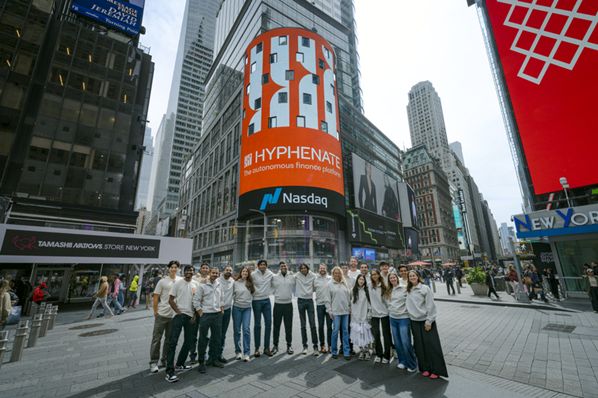
The practical impact of this vision is already being felt in the field. Yameen Sarwar, Finance Transformation Lead at Mini Melts USA, describes the integration of Hyphenate as a transformative shift in operational accuracy.
"Hyphenate has embedded AI across Mini Melts USA’s operations," Sarwar noted. "Its agents layered onto our SAP environment and now run orders, sales triage, invoicing, and refunds end to end. The work isn’t just faster; it’s more accurate: they catch errors at entry and surface unbilled invoices. We’re now expanding Hyphenate into treasury and lease management."
The New Category: Autonomous Finance
Hyphenate distinguishes itself from traditional automation by defining a new category: Autonomous Finance.
In traditional automation, the software is a passive participant; it follows a set of rigid rules but still requires a human to resolve exceptions, verify data, and bridge the gap between software modules. If a bank reconciliation fails or a payment is mismatched, the human is the "circuit breaker" who must step in to fix the logic.
Hyphenate reverses this dynamic. Its AI agents are designed to "own" the work. By observing a company’s financial processes—including the tribal knowledge, historical precedents, and complex judgment calls typically hidden in spreadsheets and emails—the platform learns how the business functions. It then executes the work in an audit-ready format, flagging exceptions only when a genuine, non-routine judgment call is required.
This creates a self-reinforcing loop. Because the agents operate across the entire function, they carry context from one area to another. Procurement data can automatically inform accruals, and bank activity can trigger reconciliation processes, creating a continuous flow of financial truth rather than a monthly scramble for the "close."
Implications for the Future of the CFO
The implications of this shift are profound for the economics and the culture of the finance department.
1. The Death of the "Month-End" Scramble
The most immediate impact of autonomous finance is the move toward continuous accounting. By collapsing the lag between financial events and their recording, the books can stay reconciled throughout the month. This allows the CFO to access real-time financial health, moving away from the "rear-view mirror" approach that has defined accounting for decades.
2. Scaling Without Headcount
For many companies, growth has historically required a proportional increase in finance headcount to handle the manual workload of accounting and reporting. Hyphenate’s model changes this equation. By offloading repetitive, context-heavy tasks to agents, finance teams can scale their output and operational capacity without a linear increase in staff, allowing them to redirect human talent toward strategic decision-making.
3. Upstream Strategic Influence
The long-term goal for Hyphenate is to move beyond operational accounting and into the realm of high-level capital allocation. Every corporate decision—from pricing strategy and margin management to investment and hiring—is ultimately a financial decision. By providing a clean, real-time, and autonomous financial foundation, the CFO is empowered to transition from a gatekeeper of historical data to a strategic partner in business growth.
As the company’s new tagline—“Finance that runs itself, so you can sprint ahead”—suggests, the objective is to liberate the finance function from the administrative burden of its own existence. By automating the "hyphens" that connect the finance office, Hyphenate is positioning itself to be the operating system for the next generation of the enterprise.
 Basiran
 Sagoh
 Nana Wu
