
 By Nana Muazin
In the modern digital economy, customer support is no longer just a "cost center"—it is a critical retention engine. Whether a customer is chasing an order status or expressing frustration over a faulty product, the speed and context of the resolution define brand loyalty. For growing e-commerce teams, the choice of help desk software is one of the most consequential infrastructure decisions they will make.
Two giants dominate this landscape: HubSpot Service Hub and Zendesk. While both have established reputations for reliability, they approach the problem of "customer service" from fundamentally different philosophies. HubSpot treats service as an extension of the CRM—a unified data experience—while Zendesk treats service as a high-volume, performance-driven operation.
The Evolution of Support: A Chronology of Platforms
The trajectory of both platforms reveals why they behave the way they do today.
Zendesk was founded in 2007 with a singular mission: to make customer support simple, accessible, and fast. It was born during the rise of SaaS, specifically designed to replace clunky, legacy email-based ticketing systems. Over the last 17 years, Zendesk has evolved into a "contact center" powerhouse, obsessively focusing on the metrics that matter to support managers: First Response Time (FRT), Average Handle Time (AHT), and ticket resolution volume. It is, by all accounts, the "grown-up" ticketing system.
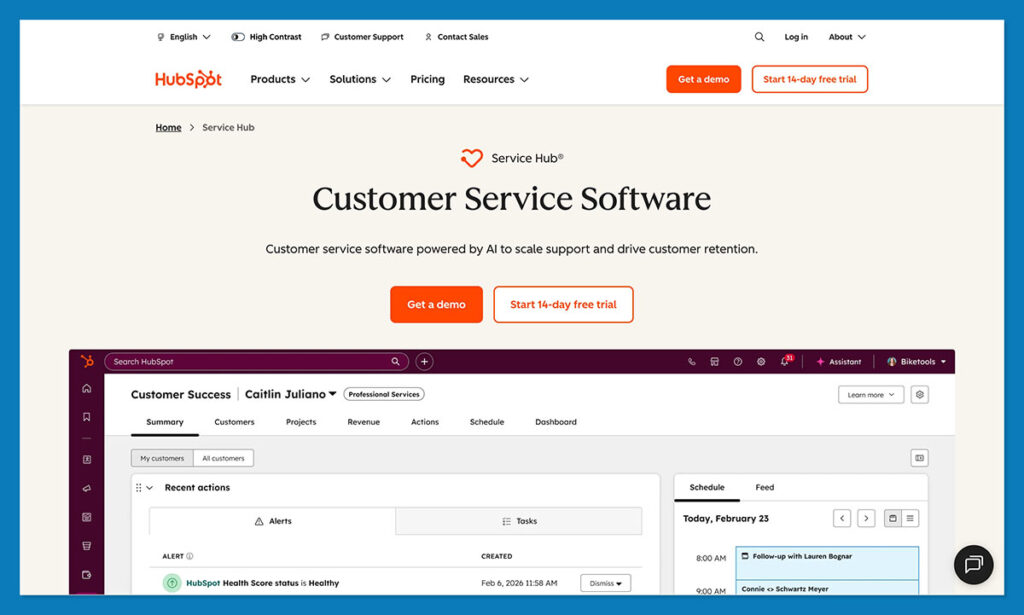
HubSpot, conversely, began its life as an "inbound marketing" firm. Its philosophy was always about the "flywheel"—aligning marketing, sales, and service to ensure the customer journey is frictionless. When HubSpot introduced Service Hub, it didn’t build a standalone ticketing tool; it built a system that plugged directly into its existing CRM. By leveraging the same customer data used by the marketing team to send emails and the sales team to close deals, HubSpot turned service into a data-driven discipline rather than just a queue-management task.
The Core Philosophy: CRM-Centric vs. Queue-Centric
To understand which platform fits your organization, you must look at your primary operational bottleneck.
The HubSpot Approach: Context is King
HubSpot’s architecture is built on a single, shared customer record. When an agent opens a support ticket in Service Hub, they aren’t looking at an isolated request. They see the customer’s entire history: what they purchased, which marketing emails they clicked, what the sales representative discussed with them last week, and their loyalty program status. For e-commerce brands where "personalization" is the currency, this context is transformative. It allows agents to act as advisors, not just ticket processors.
The Zendesk Approach: Efficiency is the Metric
Zendesk is optimized for the "contact center" mentality. It excels in environments where the volume is relentless. Its interface is a masterpiece of efficiency, allowing agents to navigate thousands of tickets with shortcuts, macros, and highly sophisticated routing logic. If your primary goal is to minimize cost-per-ticket and ensure that 50,000 inquiries a month are handled with military precision, Zendesk’s "Queue-First" architecture is arguably the most robust in the industry.
Supporting Data and Performance Metrics
When analyzing the performance of these tools, we look at how they impact the bottom line.
Case studies, such as the one involving Liquidity Services, demonstrate the power of consolidation. By shifting to HubSpot’s unified ecosystem, the firm managed to reduce support costs by 50%. This is typically achieved not by "doing less," but by eliminating the "swivel-chair" effect—the time lost when agents have to jump between a CRM, a ticketing system, and an order management platform.
Conversely, Zendesk users often report higher "Agent Productivity" scores in high-volume settings. According to industry benchmarks for contact centers, Zendesk’s ability to handle multi-channel inputs—SMS, WhatsApp, phone, and social—is often cited as the most "frictionless" for agents who do nothing but resolve tickets for eight hours a day.
Deep Feature Comparison
AI and Automation: Breeze AI vs. Zendesk Service AI
The "AI arms race" has redefined these platforms.
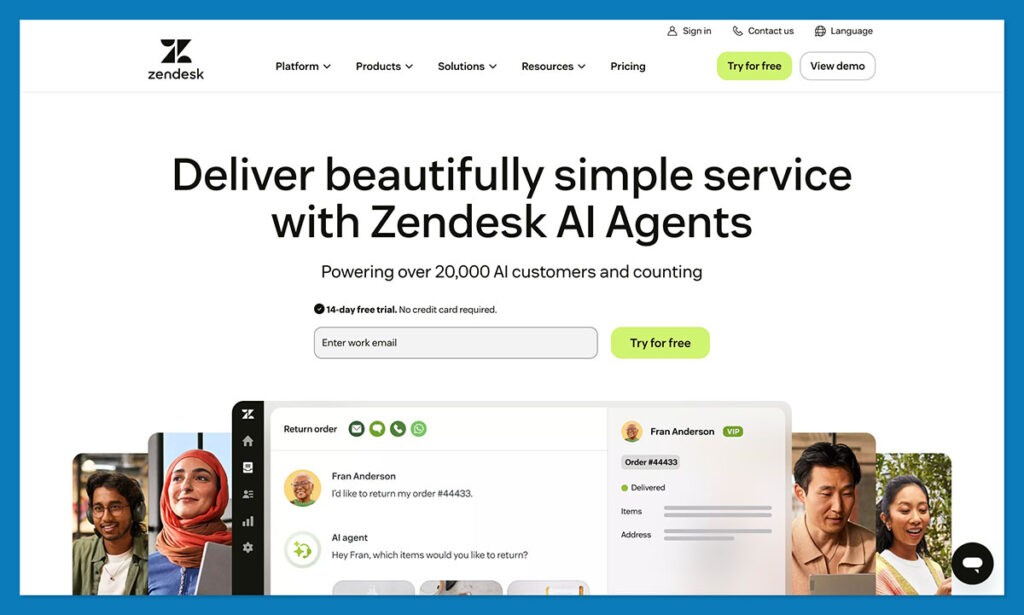
- HubSpot’s Breeze AI is deeply integrated into the CRM. It can generate replies that sound like your brand because it has access to your company’s entire historical data set. Its "Customer Agent" is designed to resolve queries autonomously, effectively acting as an extension of the support team rather than a simple chatbot.
- Zendesk’s AI is tuned for the workflow. It excels at "auto-triage"—the ability to instantly categorize, prioritize, and suggest responses based on the complexity of the ticket. It is particularly strong at workforce management (WFM) and QA scoring, using AI to audit agent performance and identify training gaps in real-time.
The Voice/Telephony Experience
Zendesk is the clear winner for teams that require a sophisticated phone system. It offers advanced IVR (Interactive Voice Response), call monitoring, and queue-management tools that feel like a dedicated enterprise phone system. HubSpot offers integrated calling, which is excellent for CRM-based sales/support, but it lacks the "pro-grade" telephony depth found in the Zendesk Suite.
CRM Integration and Data Silos
This is the "make or break" factor. HubSpot’s CRM is the engine of the entire platform. Every interaction is logged to the customer’s timeline. In Zendesk, the CRM component (Zendesk Sell) is essentially a separate product. While it can be linked, it lacks the native, seamless cohesion of the HubSpot experience. If your support team needs to see if a customer is "at-risk" of churning based on their subscription status or recent website activity, HubSpot provides that visibility out-of-the-box.
Official Positioning: What do the companies say?
HubSpot positions itself as the "all-in-one" solution for scaling companies. Their marketing emphasizes the "unification of the customer experience," arguing that as businesses grow, data silos are the primary cause of inefficiency. By keeping Marketing, Sales, and Service on one platform, HubSpot claims to reduce the "total cost of ownership" by removing the need for third-party integrations and middleware like Zapier.
Zendesk positions itself as the "Gold Standard" for customer service. Their messaging is centered on "The Zendesk Difference"—flexibility, scalability, and integration. They acknowledge they are a "best-of-breed" support platform and lean into the fact that they have the largest marketplace of apps, allowing companies to "build their own tech stack" rather than being locked into a single ecosystem.

Implications for E-commerce Growth
The choice between these two platforms has long-term implications for your business:
- If you are a high-growth D2C brand: You likely need the deep CRM context that HubSpot provides. Your support team needs to be able to upsell, resolve issues with empathy, and track the lifetime value (LTV) of the customer.
- If you are an enterprise-level operation: If you operate a 24/7 contact center across multiple time zones, managing hundreds of agents and thousands of phone calls, Zendesk’s mature ticketing and workforce management tools will likely serve you better.
- The "Integration Tax": Consider the cost of maintaining your stack. Zendesk may have a lower starting price for the "Suite," but once you add the necessary integrations to pull data from your Shopify or BigCommerce store, your marketing platform, and your sales CRM, the management overhead increases. HubSpot’s "all-in-one" approach is more expensive upfront, but it carries a lower "maintenance tax."
Final Verdict: Which should you choose?
The decision boils down to your definition of a "successful support interaction."
-
Choose HubSpot Service Hub if: You want your support team to be an extension of your marketing and sales efforts. If you believe that a ticket is just one data point in a long, meaningful customer relationship, HubSpot’s unified CRM is the superior choice. It is the best tool for teams that want to see the "whole customer" and use that insight to drive retention and revenue.
-
Choose Zendesk if: Your business is defined by the volume of support requests. If your primary goal is operational efficiency, agent performance, and handling a high frequency of phone and multi-channel queries, Zendesk is the industry heavyweight. It is built for the high-pressure environment of a modern contact center where speed and queue management are paramount.
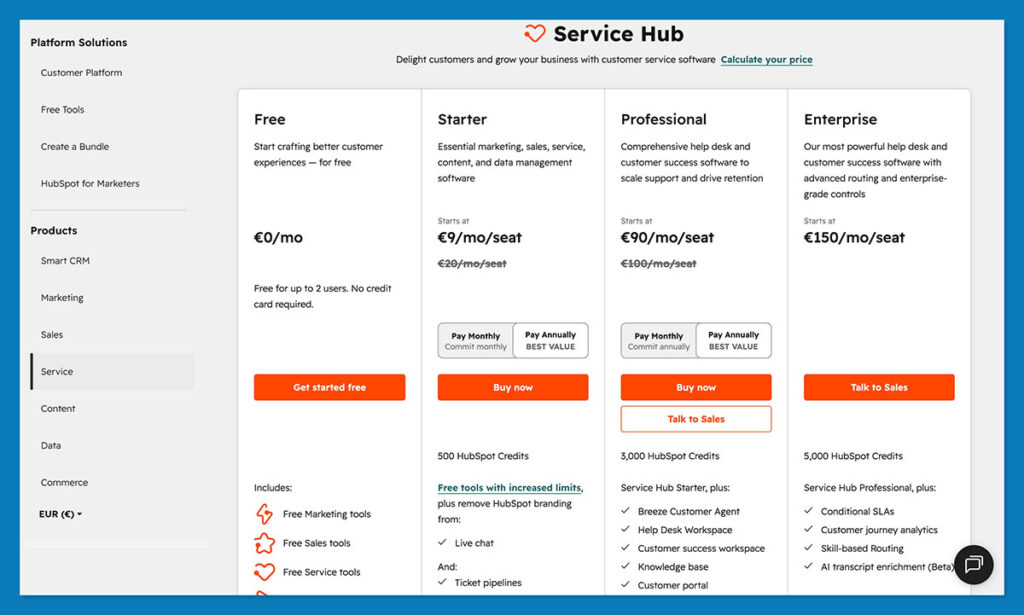
For most modern, mid-sized e-commerce businesses, the "context-first" approach of HubSpot usually leads to higher customer satisfaction scores over the long term. However, if your growth trajectory involves scaling a large, centralized support department, the "efficiency-first" architecture of Zendesk remains unrivaled.
Pro Tip: Before committing to either, take advantage of the free trials. Import a sample of your customer data—not just tickets, but customer purchase history—into both. See how quickly an agent can find a customer’s last order, identify their status, and provide a resolution. The platform that makes that process feel "natural" is the one you should build your future upon.
 Dwi Wanna
  Lina Irawan
  Basiran