
 By Layla Zulfa
In the rapidly evolving landscape of digital business, founders and operations managers often fall into the trap of comparing tools that are fundamentally different in scope. Shopify and Basecamp are two of the most recognizable names in their respective categories, yet they solve entirely different sets of problems.
After a comprehensive analysis—equivalent to a full engineering sprint—we have mapped their feature sets, pricing models, and strategic fit within a modern ecommerce stack. The short answer for any business leader in 2026 is simple: Shopify runs your store; Basecamp runs your team. If you are building a sustainable online business, you likely don’t need to choose one over the other—you need both working in tandem.
The Strategic Dichotomy: Commerce vs. Coordination
To understand why these platforms are often compared—and why such comparisons are ultimately flawed—we must look at their core mandates.
Shopify: The Commerce Engine
Shopify is a hosted ecommerce platform designed to be the "source of truth" for transactional data. It is built to facilitate the movement of products from a virtual shelf to a customer’s doorstep. Its mandate is revenue generation, inventory integrity, and customer acquisition through digital storefronts.
Basecamp: The Operational Layer
Basecamp is an asynchronous project management and communication tool. Its mandate is the mitigation of "tool sprawl"—the tendency for teams to drown in fragmented email threads, scattered documents, and disjointed task lists. It provides a centralized "calm" workspace where internal operations are executed.

Chronology of Adoption: When to Deploy Each Tool
A common error among early-stage entrepreneurs is attempting to use a communication tool for commerce, or worse, using an ecommerce platform to manage internal team workflows. Understanding the "Stack Maturity" is key.
- Phase 1: The Solo Founder (The Shopify-First Era). In the beginning, you need a store. You cannot sell without a checkout, payment processor, or product catalog. Shopify is the priority. Basecamp is unnecessary; you are the only one in the room, and your "project management" consists of your own to-do list.
- Phase 2: The Scaling Team (The Integration Era). As you hire your first customer service agent or marketing coordinator, communication overhead begins to spike. You are managing inventory, but now you are also managing people. This is the moment to deploy Basecamp.
- Phase 3: The Mature Enterprise (The Synchronized Era). At this level, Shopify acts as the commerce record, while Basecamp acts as the project record. Middleware (like Zapier) connects them, allowing a high-value order in Shopify to trigger a fulfillment task in Basecamp.
Pricing Models: Predictability vs. Scalability
Pricing is where these two platforms diverge most aggressively, reflecting their different business models.
Shopify: The Revenue-Linked Model
Shopify’s pricing is designed to scale with your success. It follows a tiered SaaS structure (Basic, Shopify, Advanced) supplemented by payment processing fees.
- The Hidden Cost: While the monthly subscription is predictable, the total cost of ownership (TCO) is influenced by your reliance on the Shopify App Store. As your business grows, you will likely add subscription modules, loyalty programs, and advanced shipping apps, which creates a variable monthly overhead.
- The "Pro" Advantage: For established brands, Shopify’s transaction fees are competitive, and the ROI on the platform’s native features (like Shopify POS) often justifies the cost.
Basecamp: The Flat-Fee Revolution
Basecamp defies the industry standard of "per-seat" pricing. Most project management tools (like Asana or ClickUp) penalize growth by charging you more for every new hire. Basecamp’s flat-fee model is built for scale.
- The Advantage: A 50-person agency pays the same as a 5-person startup. This eliminates the "budget friction" that often prevents companies from adding collaborators or freelancers to the platform.
- The Verdict: Shopify is a variable expense that tracks with your revenue; Basecamp is a fixed operational cost that actually becomes cheaper on a per-user basis as you grow.
Feature Deep-Dive: Where Each Platform Shines
Shopify: Unrivaled Commerce Depth
Shopify is purpose-built for the entire customer journey.

- Omnichannel Reach: From TikTok Shop integrations to brick-and-mortar POS systems, Shopify centralizes sales.
- The "Magic" of AI: With built-in AI tools (Shopify Magic), merchants can generate high-converting product descriptions and marketing copy in seconds.
- Extensibility: With over 8,000 apps, if a feature doesn’t exist natively, it almost certainly exists in the ecosystem.
Basecamp: The Power of "Calm" Communication
Basecamp succeeds by what it removes from the equation.
- Project Spaces: Every project is a contained environment featuring a message board, to-do list, schedule, and doc storage. This keeps information contextually relevant.
- Campfire & Check-ins: By moving internal chatter into "Campfire" (group chat) and automating status updates through "Check-ins," Basecamp reduces the need for disruptive meetings.
- Simplicity as a Feature: By intentionally omitting complex Gantt charts or story points, Basecamp forces teams to focus on the work itself rather than the management of the work.
Supporting Data: The "Stack" Reality
In the 2026 ecommerce landscape, the "versus" framing is an artifact of the past. Data shows that the most resilient companies utilize a modular stack.
| Evaluation Area | Shopify (Commerce) | Basecamp (Operations) |
|---|---|---|
| Primary Goal | Revenue Generation | Task Coordination |
| Core User | Store Managers / Founders | Project Leads / Agencies |
| Scaling Cost | Scales with Volume | Fixed / Predictable |
| Best Practice | High-Volume Automation | High-Context Communication |
The Integration Workflow
The true power of these tools is found in their connectivity. Consider this workflow:
- Event: A customer places an order flagged as "High Priority" in Shopify.
- Middleware (Zapier/Make): Detects the tag.
- Action: A task is automatically created in a specific Basecamp project for the fulfillment lead, including the customer’s order notes and shipping deadline.
This removes the need for manual copy-pasting and ensures that the "commerce" side of the business (Shopify) talks to the "human" side (Basecamp).
Official Perspectives & Philosophy
Shopify’s philosophy, as evidenced by their developer documentation and public statements, centers on empowerment through scale. They want to provide the infrastructure that allows a merchant to go from a garage operation to a multi-national entity without ever switching platforms.
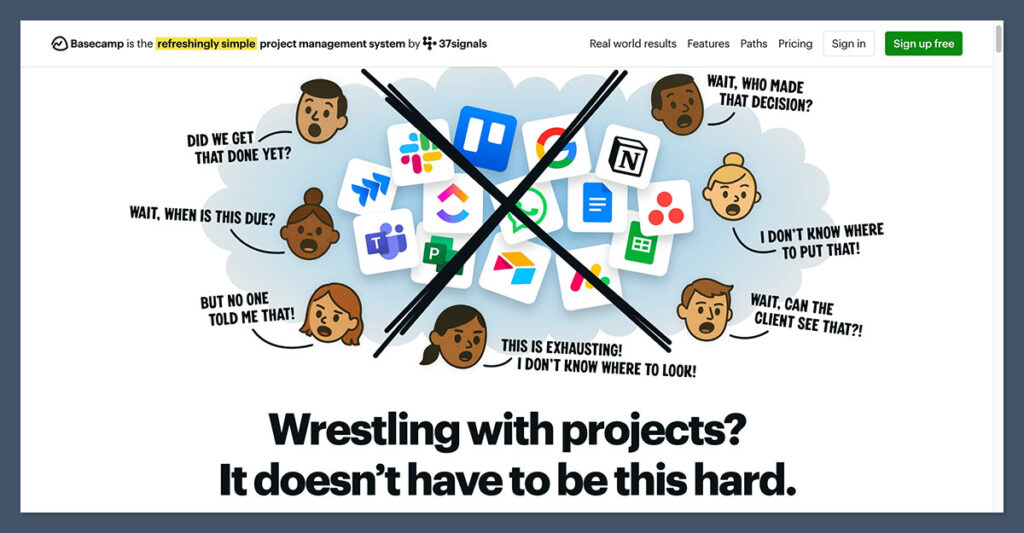
Basecamp’s philosophy is rooted in "calm company" principles. Founders Jason Fried and David Heinemeier Hansson have long advocated for smaller, more efficient teams that avoid the burnout associated with constant connectivity. By limiting features to only what is necessary, they provide a sanctuary for deep work.
Implications for Your Business
If you are currently struggling to choose between these two, you are likely misidentifying your business bottleneck.
- If you aren’t selling enough: Your problem is marketing, product-market fit, or storefront friction. Shopify is the tool that needs your attention. Invest in a better theme, optimize your checkout, and utilize their marketing APIs.
- If you are selling well but failing to execute: Your problem is communication, missed deadlines, or internal chaos. Basecamp is the solution. Stop trying to manage your team via email threads or by leaving "notes" inside Shopify orders. You need a dedicated space for project execution.
The Final Verdict: Building the Modern Stack
The "versus" debate is a false dichotomy. Shopify and Basecamp are not competitors; they are complementary pillars of a professional business.
- Start with Shopify: Build your commerce infrastructure first. Without a store, you have no business.
- Add Basecamp as You Scale: As soon as you add your first employee or agency partner, the cost of miscommunication will exceed the cost of a Basecamp subscription.
- Integrate Early: Use middleware to bridge the two. Let your store data trigger your project tasks.
In 2026, the businesses that win are not the ones with the most tools, but the ones with the best connected tools. By positioning Shopify as your commerce engine and Basecamp as your team’s operating system, you create a robust, scalable, and highly efficient digital business. Do not force one tool to do the other’s job—let each platform excel at what it was built to do.
 Dwi Wanna
  Lina Irawan
  Basiran