
 By Asep Darmawan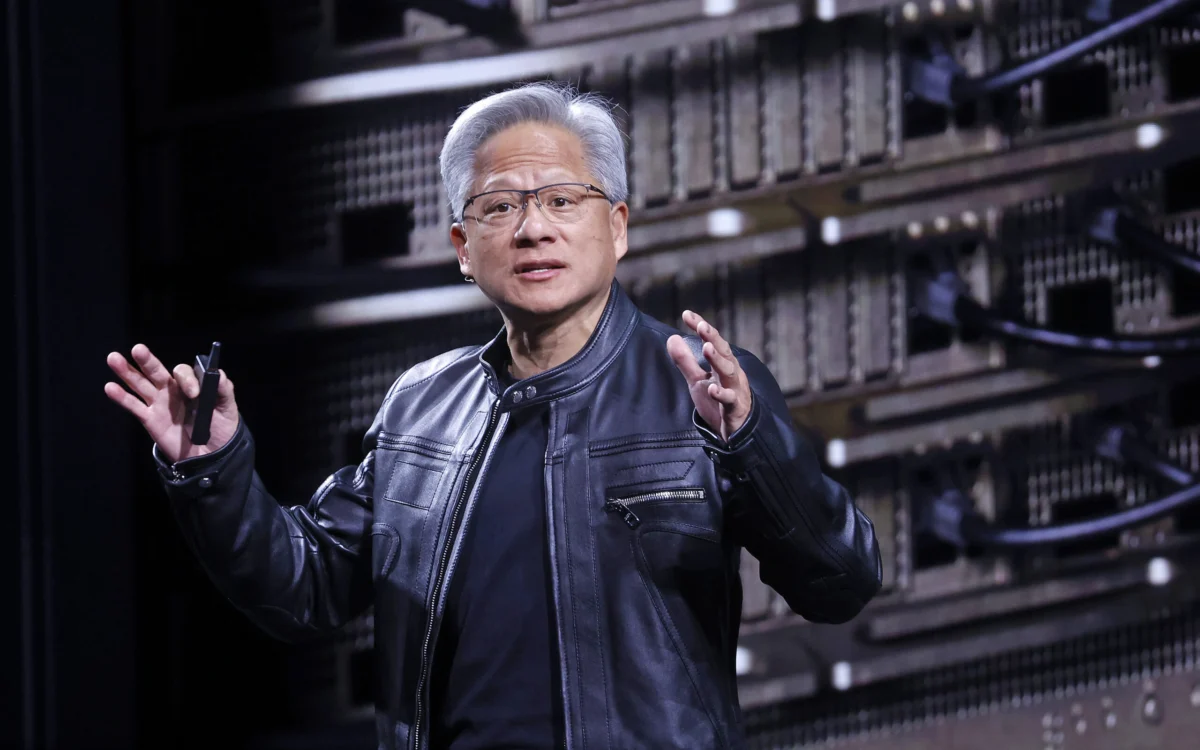
Nvidia CEO Jensen Huang has long been characterized as the tech industry’s premier "hype man." With an infectious, unwavering optimism regarding his company’s trajectory, he possesses a rare ability to translate futuristic technical visions into tangible market dominance. Yet, unlike many executives who trade in hyperbole, Huang has consistently delivered the goods, quarter after quarter, transforming Nvidia from a graphics card manufacturer into the central engine of the global artificial intelligence revolution.
In his latest strategic pivot, Huang has unveiled a bold proclamation: Nvidia has unlocked a "brand new $200 billion Total Addressable Market (TAM)." This isn’t merely another software play; it is a hardware-centric expansion into the CPU market, long dominated by incumbents like Intel and AMD. At the heart of this ambition is "Vera," a CPU specifically engineered for the era of agentic AI.
The Chronology of a Shift: From GPU King to Compute Architect
To understand the magnitude of the Vera announcement, one must look at the timeline of Nvidia’s expansion. For decades, Nvidia’s identity was tethered to the GPU (Graphics Processing Unit). It was the gold standard for gaming, then for crypto mining, and eventually for the massive parallel processing required to train Large Language Models (LLMs).
- The GPU Supremacy (2010–2023): Nvidia spent over a decade building the software ecosystem (CUDA) that made its GPUs indispensable for AI researchers. By the time the generative AI boom hit with the release of ChatGPT, Nvidia was the only player with the infrastructure to support the demand.
- The Diversification Push (March 2026): Recognizing that the future of AI would require more than just raw GPU power, Nvidia introduced the Vera CPU. Unlike previous attempts at CPU integration, Vera was built from the ground up to address the unique bottlenecks of "agentic" workflows.
- The Earnings Call Confirmation (May 2026): During the most recent earnings call, Nvidia posted a staggering $81.6 billion in revenue, with forward guidance suggesting $91 billion. It was here that Huang officially positioned Vera as a "major new growth driver," signaling that Nvidia was no longer just the "GPU company."
Supporting Data: Why Vera Changes the Compute Calculus
Wall Street has historically harbored deep-seated anxieties regarding Nvidia’s vulnerability. Analysts often question when the GPU dominance will wane and which architecture will displace it. These fears have been fueled by cloud giants like Amazon Web Services (AWS) and Meta, who are aggressively pursuing homegrown, specialized silicon.
However, the data provided by Nvidia suggests a shift in the hardware paradigm. Huang argues that the traditional CPU—the "brain" of the standard server—is ill-equipped for the demands of autonomous agents.
The Agentic AI Bottleneck
Current cloud architectures are designed for "throughput"—running multiple instances of applications as fast as possible using traditional multi-core designs. Agentic AI, however, requires a different set of priorities:
- Token Velocity: Agents must process data and "reason" in real-time. Vera is purpose-built to handle token processing speeds that far exceed general-purpose CPUs.
- Tool Usage: Huang envisions a future where billions of AI agents function like human users, utilizing "tools" (software interfaces) just as humans use PCs. These agents require dedicated, high-performance compute cycles that aren’t optimized by standard server chips.
The financial validation is already beginning to materialize. Despite being a relatively new product, Nvidia reported that it has already secured $20 billion in standalone Vera CPU sales. This early traction suggests that hyperscalers—the massive data center operators—are viewing Vera not as a competitor to their existing inventory, but as a necessary component to scale their agentic AI platforms.
The Competitive Landscape: The Hyperscaler Response
The push into the CPU market places Nvidia on a collision course with its most powerful partners. Amazon CEO Andy Jassy has been vocal about his belief that AWS can produce AI chips—both GPUs and CPUs—that rival, or even surpass, Nvidia’s offerings.
Last month, the industry was shaken when AWS announced a multi-million-unit deal with Meta for custom-built Amazon AI CPUs. This underscores the "Great Decoupling": tech giants are desperate to reduce their reliance on Nvidia’s premium-priced hardware.
However, Huang remains unfazed. His argument is that the market for AI compute is not a zero-sum game; it is an expanding pie. By bundling the Vera CPU with the next-generation Rubin GPU, Nvidia is offering a "unified compute fabric." For a system maker, the ease of integration—buying a pre-optimized stack from a single vendor—often outweighs the potential cost savings of building custom hardware from scratch.
Official Perspectives: Jensen Huang on the Future of Agents
On the company’s recent earnings call, Huang provided a window into his long-term thesis regarding the proliferation of artificial intelligence.
"The world has a billion human users," Huang noted. "My sense is that the world is going to have billions of agents. And those billions of agents will all use tools. Those tools are going to be like PCs, just like us humans using PCs today. We are going to need a lot more CPUs."
Huang’s philosophy is rooted in the transition from "generative" AI (which creates content) to "agentic" AI (which executes tasks). If a standard server chip is the engine of a traditional database, Huang believes Vera is the engine of the "autonomous workforce." By framing Vera as a prerequisite for this new economic layer, he has effectively elevated the CPU from a commodity component to a strategic necessity.
Implications: A New Era of Compute
The emergence of the Vera CPU and the expansion into a $200 billion TAM carries profound implications for the tech industry:
1. The Redefinition of the "Server"
The distinction between GPU-heavy training clusters and CPU-heavy inference/agentic clusters is blurring. If Nvidia succeeds in making Vera the industry standard, it will effectively capture the "brain" of the data center, not just the "muscle."
2. Heightened Pressure on Incumbents
Intel and AMD, already struggling to maintain their relevance in the AI-centric data center, now face an even more formidable Nvidia. If Nvidia can prove that Vera provides superior token-processing efficiency, the incentive for data centers to switch to Nvidia-branded CPUs becomes overwhelming.
3. The "Agentic" Economic Boom
If Huang’s prediction of "billions of agents" holds true, we are looking at a fundamental shift in capital expenditure for global enterprises. Companies will move from buying "servers" to buying "agentic compute capacity." Nvidia is positioning itself as the primary landlord of this new digital real estate.
4. Sustaining the Hype Cycle
Perhaps the most significant implication is for Nvidia’s own valuation. By constantly opening new, multi-billion-dollar markets, Huang manages to keep the company’s growth narrative ahead of the market’s maturation. Investors are no longer valuing Nvidia based on its current GPU sales; they are valuing it based on its potential to command the entire compute stack of the future.
Conclusion: Trusting the Visionary
Skepticism toward corporate hype is a healthy trait in the technology sector. However, the track record of Jensen Huang is difficult to ignore. When Nvidia signaled its move into the data center years ago, critics laughed. When it doubled down on proprietary AI software, analysts were skeptical. In both instances, Huang’s "hype" became the market reality.
With Vera, Nvidia is betting that the next wave of AI will not be defined by who can train the best model, but by who can build the most efficient environment for autonomous agents to live, think, and work. Whether the $200 billion TAM materializes as predicted remains to be seen, but one thing is clear: the architecture of the future is being written in Santa Clara, and it looks a lot more like a Vera CPU than the industry ever anticipated.
 Sagoh
Sagoh  Iffa Jayyana
  Lina Hope