
 By Ammar Sabilarrohman
By Terrence O’Brien
With reporting from tech industry analysts and exclusive community disclosures.
Main Facts
Google is preparing to expand its wearable portfolio with a brand-new device provisionally dubbed the Fitbit Edge. Recent high-resolution images published exclusively by Android Headlines—following earlier, grainy sightings on Reddit—have provided a comprehensive look at what appears to be the direct successor to Fitbit’s popular, yet aging, midrange Charge line.
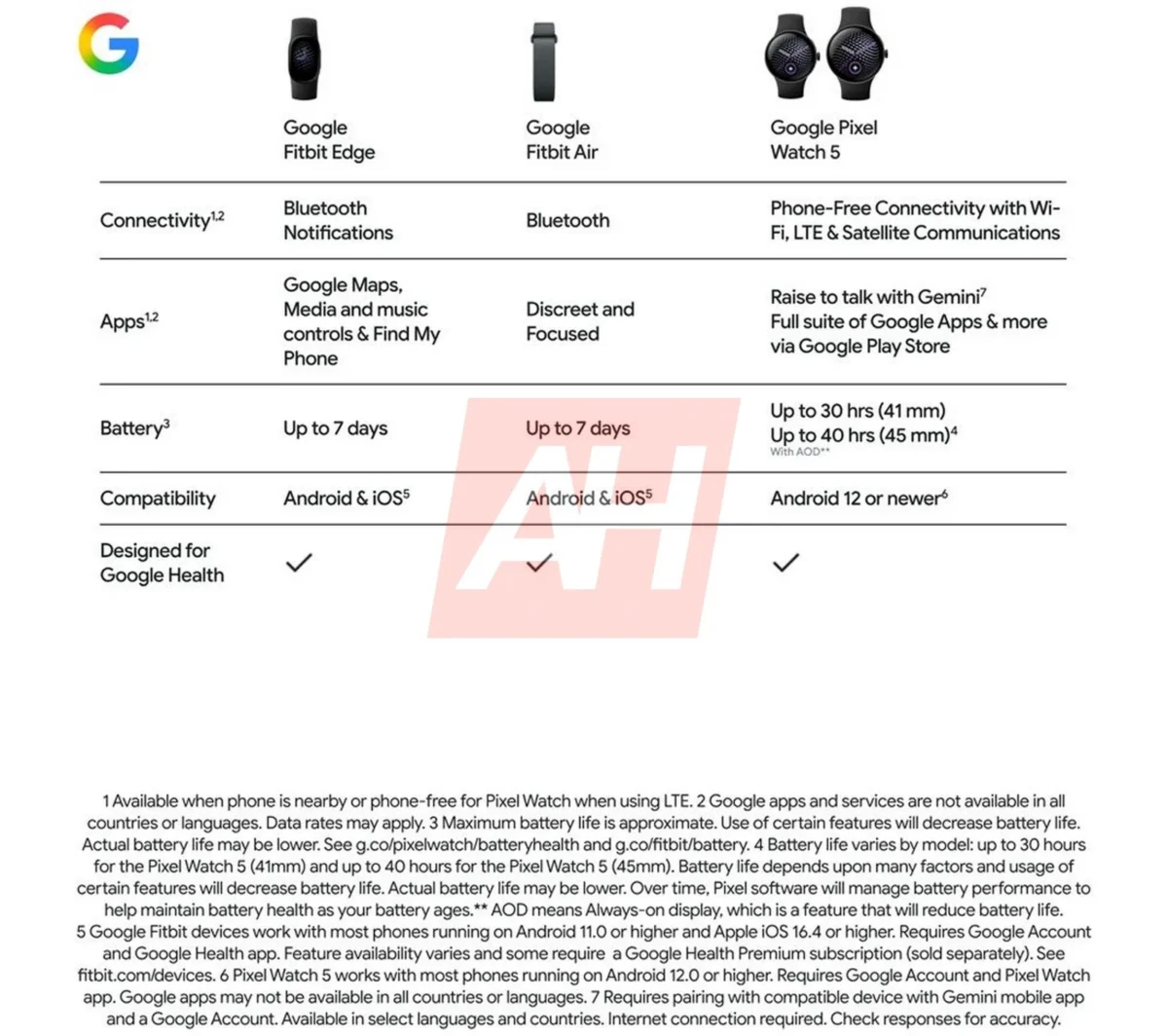
Positioned strategically within Google’s expanding ecosystem, the Fitbit Edge bridges the design and functional gap between the minimalist, AI-focused Fitbit Air and the fully featured Google Pixel Watch. The newly leaked imagery showcases a compact, fitness-focused screen capable of rendering essential widgets and notifications. However, unlike a traditional smartwatch that prioritizes a sweeping, expansive display, the Edge maintains the narrow, streamlined form factor traditionally associated with dedicated fitness trackers.
Underneath its sleek exterior, the device is rumored to pack robust hardware upgrades. Industry insiders and leaked spec sheets indicate that the Fitbit Edge will feature:
- Extended Battery Life: A projected seven-day battery life, vastly outperforming standard smartwatches.
- Advanced Tracking Hardware: Built-in standalone GPS and an integrated altimeter for accurate elevation and route tracking.
- Ecosystem Integration: Limited app support for essential Google services, including Google Maps for navigation and YouTube Music for on-the-go media control.
While Google has maintained strict confidentiality regarding an official release date or pricing structure, market analysts expect the Fitbit Edge to land comfortably in the $150 to $200 price bracket, slotting neatly between the $99.99 Fitbit Air and the $399.99 Google Pixel Watch.
Chronology of the Leak
To understand how the Fitbit Edge went from an internal whisper to one of the wearable industry’s worst-kept secrets, it is essential to trace the timeline of leaks and disclosures leading up to its anticipated announcement.

Early Whispers: The Reddit Sightings
The first inkling of Google’s new hardware surfaced in niche online communities, most notably within a Reddit thread on the Google Pixel forums. Users began analyzing blurry, unverified photographs of an unknown wrist-worn device. At the time, the community speculated whether Google was testing a radically redesigned Pixel Watch or an entirely new class of fitness band. The low-quality images sparked widespread debate across tech forums, though Google declined to comment on the speculation.
The Android Headlines Exclusive
The narrative shifted dramatically when Android Headlines published a series of clean, high-resolution renders and promotional-style images. This leak ripped away the ambiguity of the earlier Reddit posts, offering clear, multi-angle views of the device’s hardware design, casing materials, and user interface. The images confirmed that the device would carry the Fitbit branding—solidifying Google’s ongoing commitment to the Fitbit moniker even as it integrates deeper into the Pixel hardware family.
The Historical Context: The Charge Line Vacuum
To contextualize the arrival of the Edge, one must look back at the Fitbit Charge series. The Fitbit Charge 6, the last major update in the midrange fitness tracker lineup, debuted in late 2023. For over two years, consumers and fitness enthusiasts operated in a vacuum, wondering if Google planned to abandon the dedicated fitness band market in favor of pushing consumers toward the higher-margin Pixel Watch. The emergence of the Edge answers that question, signaling that Google still sees immense value in long-battery-life fitness trackers.
Supporting Data and Hardware Analysis
A comparative look at Google’s current wearable lineup highlights how the Fitbit Edge fits into the manufacturer’s broader hardware strategy.
| Device Model | Category | Estimated/Actual Price | Key Features & Sensors | Battery Life |
|---|---|---|---|---|
| Fitbit Air | Minimalist Fitness Tracker | $99.99 | Basic health metrics, AI health coach, lightweight design | ~4–5 Days |
| Fitbit Edge (Rumored) | Midrange Fitness Tracker | $150 – $200 (Expected) | Built-in GPS, altimeter, limited app support (Maps, YouTube Music) | Up to 7 Days |
| Fitbit Charge 6 | Midrange Fitness Tracker | $159.95 (Current retail) | ECG, EDA sensor, built-in GPS, Google Wallet/Maps | Up to 7 Days |
| Google Pixel Watch 5 | Premium Smartwatch | Starting at $399.99 | Full WearOS integration, expansive OLED display, LTE options | ~24–36 Hours |
Display and Ergonomics
The leaked images reveal a display that is wider than the traditional Fitbit Charge profile, yet significantly more compact than the circular watch face of the Pixel Watch. This hybrid approach caters directly to users who want a discrete band that doesn’t dominate the wrist, but still want enough screen real estate to read incoming text messages, view workout statistics, and check mapping directions at a glance.
Sensors and Connectivity
The inclusion of built-in GPS is a critical selling point for the Fitbit Edge. Cheaper trackers often rely on "connected GPS," forcing users to carry their smartphones during runs or outdoor cycling sessions to map their routes. By incorporating standalone GPS and an altimeter, the Edge positions itself as a serious training tool for runners, hikers, and cyclists who prefer to leave their phones behind. Furthermore, the inclusion of lightweight app support for YouTube Music and Google Maps suggests that Google is slowly bringing core utility features down from its high-end WearOS smartwatches into its more affordable, fitness-first hardware ecosystem.

Official Responses and Industry Reactions
As is standard corporate policy for major technology conglomerates, Google has declined to officially confirm or deny the existence of the Fitbit Edge. Requests for comment sent to Google’s hardware communications team were met with automated responses or standard boilerplate statements regarding the company’s commitment to continuous innovation in health and wellness technology.
Despite the lack of official confirmation, industry analysts have been quick to weigh in on what the device means for the broader wearable technology market.
"Google is playing a very smart segmentation game here," notes consumer tech analyst Marcus Vance. "By maintaining three distinct tiers—the ultra-affordable Air, the fitness-first Edge, and the full-blown Pixel Watch—they ensure there is virtually no consumer who falls through the cracks. They capture the budget-conscious consumer, the dedicated runner who values multi-day battery life above all else, and the tech enthusiast who wants a smartphone extension on their wrist."
Competitors in the fitness tracker space, such as Garmin and Amazfit, are reportedly watching Google’s next moves closely. While Garmin dominates the high-end sports watch market, the sub-$200 segment remains a massive battleground for everyday consumers looking to track their steps, sleep, and heart rates without breaking the bank.
Implications for Consumers and the Wearable Market
The impending arrival of the Fitbit Edge carries several significant implications for both current Fitbit loyalists and the wider tech landscape.
1. The Preservation of the Fitness Band Form Factor
For years, tech pundits predicted the complete extinction of dedicated fitness bands, arguing that smartwatches would inevitably become cheap enough and battery-efficient enough to replace them entirely. The Fitbit Edge proves this theory wrong. There remains a massive, loyal demographic of consumers who actively dislike charging their wristwear every single day, prefer a lower-profile device while sleeping, and care little about taking phone calls or running complex third-party applications from their wrists.

2. Streamlining the Fitbit and Pixel Ecosystems
Since Google acquired Fitbit, consumers have frequently expressed confusion over the overlapping brand strategies. Will Fitbit be phased out entirely? Will all future devices run WearOS? The Fitbit Edge indicates a pragmatic middle ground: utilizing the trusted Fitbit brand equity for long-battery-life fitness products, while reserving the Pixel brand name for premium, full-feature smartwatches.
3. Pricing and Value Proposition
If the Fitbit Edge hits the market at the anticipated $150 to $200 price point, it will effectively replace the aging Charge 6 as the go-to recommendation for Android and iOS users seeking a balanced fitness tracker. With a projected seven-day battery life, built-in GPS, and seamless Google integration, it threatens to outclass many competing budget smartwatches that sacrifice battery longevity for power-hungry displays.
As we await an official announcement from Google—likely slated for an upcoming hardware showcase or Google I/O event—the leaks surrounding the Fitbit Edge confirm that the company is doubling down on its health-tracking roots. For consumers currently nursing an older Fitbit Charge 2, 3, 4, or 6, a compelling, modern upgrade is finally on the horizon.
 Nana Muazin
 Raul Delapena Setiawan
 Pevita Pearce
