
 By Layla Zulfa
By: Tech & Gaming Desk
Published: October 2026
Main Facts
The accessory landscape for Nintendo’s successor console is shifting gears. While many third-party manufacturers rushed out hasty, early-generation protective gear during the immediate aftermath of the Nintendo Switch 2 launch—resulting in fluctuating quality control and structural oversights—accessory maker Mechanism has taken its time. After a series of calculated developmental delays, the company has officially debuted its flagship protective shell: the $49 Mechanism Basecase.
Designed specifically as a comprehensive snap-on shell for the Switch 2, the Basecase integrates seamlessly into Mechanism’s proprietary lineup of modular mounts. Users who are already familiar with the company’s ecosystem can effortlessly attach their Switch 2 to walls, gaming pillows, and monitor arms using existing hardware like the $19 Basegrip.
However, the Basecase is much more than just a mounting bracket. It functions as a rugged multi-purpose accessory that enhances ergonomic comfort for the Joy-Con controllers, introduces robust drop-prevention engineering, and offers an unprecedented level of user-driven modularity via swappable, 3D-printable rear plates and grips.

Key attributes of the Mechanism Basecase include:
- Precision Engineering: Full utilization of the Switch 2’s native kickstand alongside unobstructed access to all physical ports, buttons, and system fan vents.
- Secure Bottom-Clamping Design: Clamps firmly around the console’s bottom USB-C port, preventing structural flexing and ensuring the device remains securely housed.
- Modular Joy-Con Grips: Interchangeable rear grips available in multiple sizes to maximize handheld comfort, complete with integrated game cartridge storage slots.
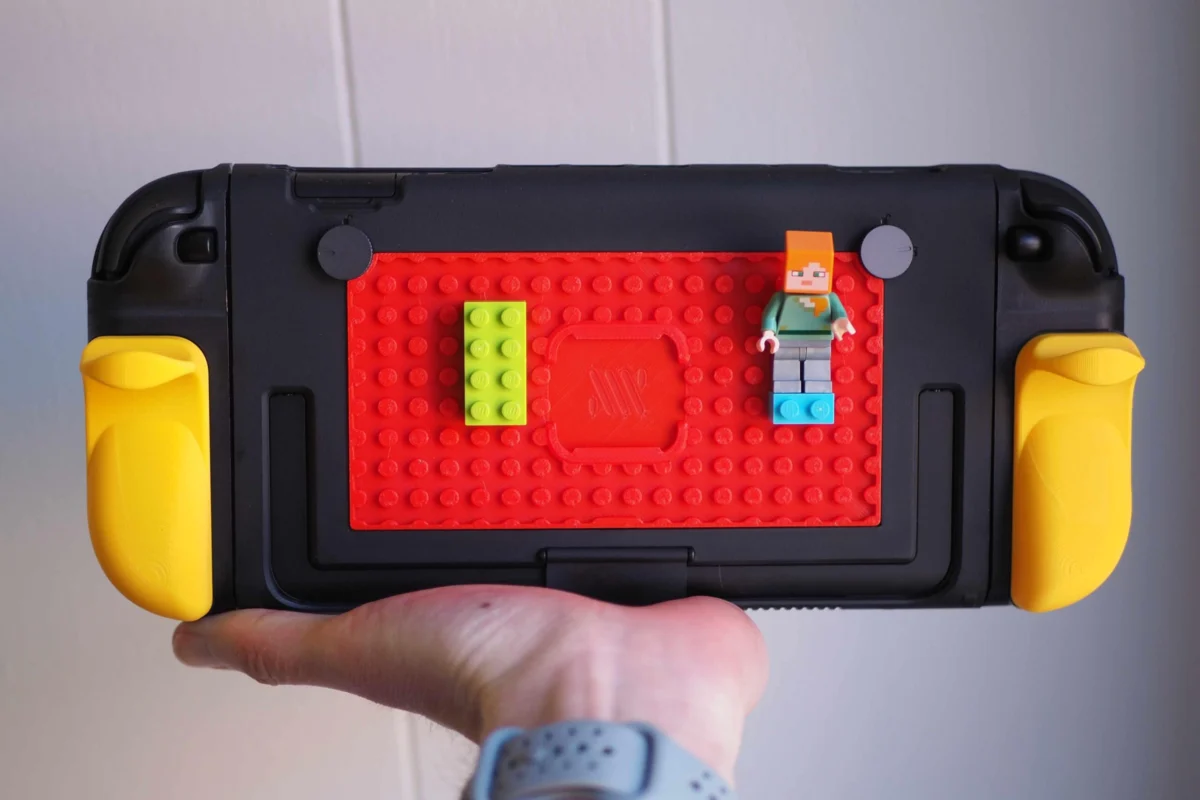
- Open-Source Customization: Swappable rear plates that allow users to utilize 3D-printed configurations—ranging from functional card-holders to LEGO-compatible brick surfaces.
- Innovative Docking Solutions: Includes a specialized male-to-female USB-C cable adapter to bypass dock clearance restrictions.
Chronology
To understand how the Basecase fits into the current state of console customization, it is necessary to examine the product timeline and the evolution of the Switch 2 accessory market.
Phase 1: The Rush of the Early Launch Era
When Nintendo launched the Switch 2, the market was instantly flooded with protective shells, cases, and grips from major competitors such as Dbrand and Genki. Because brands raced to be first to market, early-generation accessories suffered from notable engineering flaws. Cases frequently lacked structural rigidity, flexed under pressure, and struggled with alignment issues. Most critically, early Joy-Con grip designs lacked proper safety mechanisms, leading to hazardous scenarios where users picking up the console by the controllers alone watched their hardware tumble to the floor.
Phase 2: Mechanism’s Methodical Delay Strategy
Recognizing these early market failures, Mechanism deliberately pumped the brakes on its Switch 2 roadmap. Instead of releasing an immediate, rushed shell, the company spent months observing consumer pain points. They analyzed structural vulnerabilities, grip separation failures, and dock-compatibility hurdles.

Phase 3: The Ecosystem Foundation
Prior to the Basecase release, Mechanism established its mounting ecosystem with products like the Basegrip. This allowed early adopters to secure their consoles to various surfaces, building a loyal user base that anticipated a matching protective case.
Phase 4: The Official Debut of the Basecase
Following its extended development cycle, Mechanism officially launched the Basecase at $49. The product immediately addressed the structural safety lessons learned from competitors—such as implementing internal rubber retention lips—while pushing customization further into the open-source 3D-printing community via platforms like Makerworld and Printables.
Supporting Data and Technical Specifications
Pricing and Hardware Breakdown
- Basecase Shell: $49 (Available directly via Mechanism’s official store and authorized retail partners).
- Basegrip Mount: $19 (Required for utilizing the broader ecosystem of wall, pillow, and arm mounts).
- Compatibility: Exclusively designed for the physical dimensions and thermal output requirements of the Nintendo Switch 2.
Engineering & Safety Metrics
- Grip Security: The Joy-Con protective attachments incorporate a precision-molded rubber lip that hooks over the top of the controller’s inner colored section. This distributes weight evenly and prevents the console from slipping out of the housing when lifted exclusively by the grips.
- Thermal Management: Comprehensive cutouts ensure that the Switch 2’s active cooling fan vents remain entirely unobstructed, mitigating any risk of thermal throttling during intensive, prolonged gaming sessions.
- Customization Files: Mechanism supports the maker community by uploading official CAD files and custom variants to Makerworld and Printables, enabling enthusiasts to print specialized attachments—such as ergonomic finger-rest shelves and modular card storage plates—at home.
Official Responses and Industry Context
Industry analysts and product reviewers have noted that the Basecase is a direct response to the shortcomings of earlier generation accessories. By looking at how competitors stumbled, Mechanism was able to refine its engineering approach.
When comparing the Basecase to Dbrand’s popular Killswitch system, reviewers have highlighted a stark contrast in philosophy—particularly regarding dock compatibility. Because the added thickness of protective shells prevents the Switch 2 from sliding into its official Nintendo dock naturally, manufacturers have been forced to innovate.

Dbrand utilized a dedicated cradle system, whereas Mechanism has opted for a direct cable bypass. Mechanism includes a specialized female-to-male USB-C extension cable designed to snake through the dock’s video-out port. While early installation requires a bit of manual dexterity and patience, it successfully bypasses the need for a bulky mechanical cradle. Furthermore, gamers who already utilize third-party travel docks from brands like Jsaux or Genki can bypass the adapter entirely, connecting their protected console straight to the hub.
In statements accompanying the hardware rollout, Mechanism emphasized its commitment to open-source hardware sharing. By refusing to lock users into proprietary, company-only plastic additions, Mechanism has empowered the 3D-printing community to design custom utility plates. Whether a user wants a minimalist aesthetic, a tactile Lego-brick mounting surface, or expanded physical game cartridge storage on the back of their console, the architecture of the Basecase makes it possible.
Implications
The launch of the Mechanism Basecase carries significant implications for the future of handheld gaming accessories, open-source hardware integration, and consumer expectations.
1. Raising the Bar for Quality Control
The initial rush of Switch 2 accessories proved that consumers are no longer willing to tolerate flexy plastic, loose latches, or dangerous structural designs that put expensive hardware at risk. By taking its time and studying competitor flaws, Mechanism has set a new benchmark for protective shells. Future accessory manufacturers will likely face heavier scrutiny regarding drop-testing and structural integrity at launch.

2. The Rise of Open-Source Customization
By actively leaning into platforms like Makerworld and Printables, Mechanism is bridging the gap between commercial manufacturing and the DIY maker community. Instead of forcing users to buy expensive, proprietary add-ons for every niche use case, Mechanism provides the core platform and invites the community to innovate. This approach could redefine how smaller accessory makers build brand loyalty and community engagement.
3. Ecosystem Lock-In vs. Universal Freedom
While the Basecase is optimized for Mechanism’s proprietary mounting ecosystem—encouraging users to invest in everything from wall mounts to gaming pillows—its open design philosophy prevents it from feeling restrictive. Users are free to use the case purely for handheld protection and comfort without ever buying a wall mount, yet the pathway to expanding their setup remains frictionless.
Conclusion
For gamers deeply invested in handheld play, the $49 Mechanism Basecase offers a compelling blend of premium protection, ergonomic relief, and community-driven versatility. Whether you are upgrading from a poorly fitting early-launch case or diving into Mechanism’s mounting ecosystem for the very first time, the Basecase proves that patience in hardware development pays off.
 Nana Muazin
 Raul Delapena Setiawan
 Pevita Pearce
