
 By Muslim
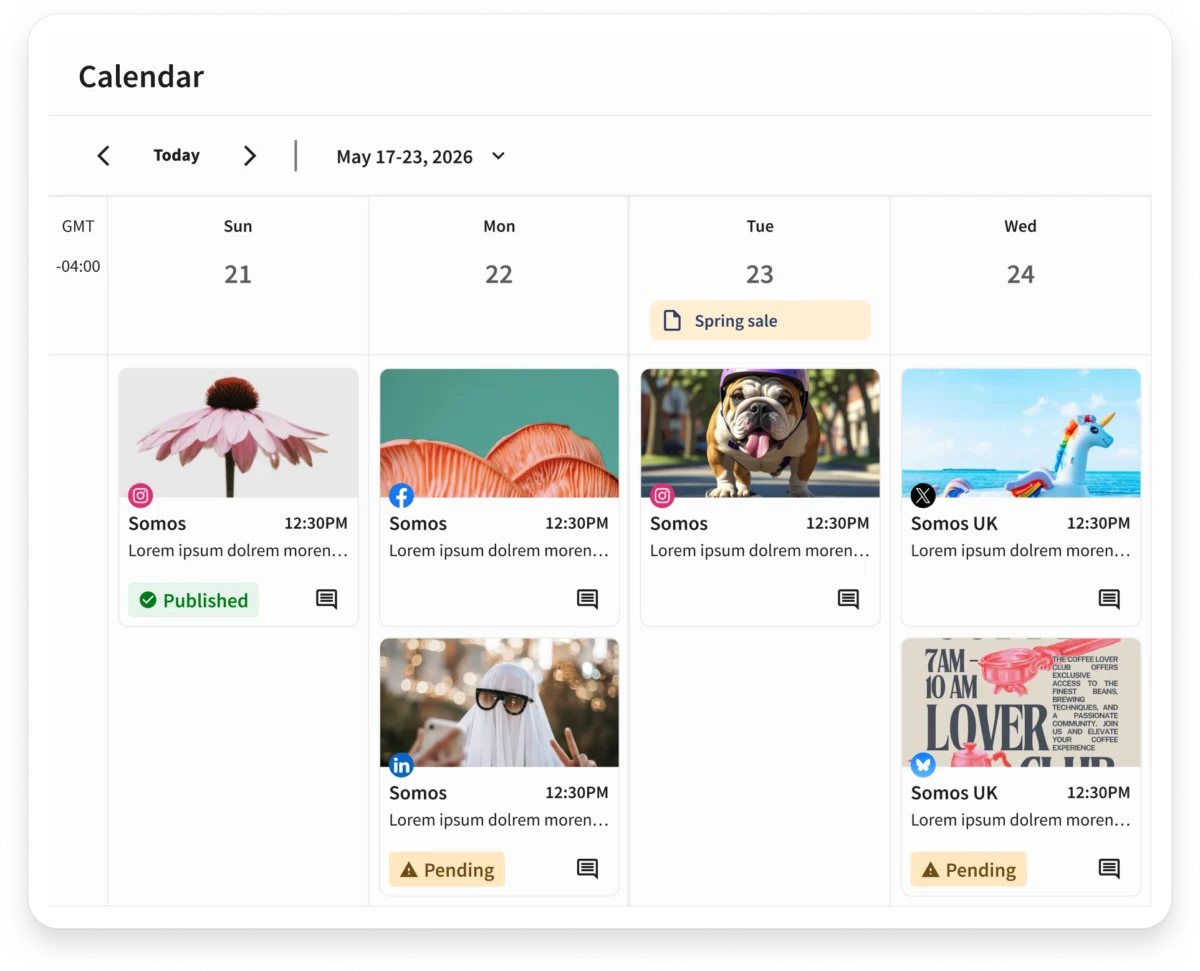
NEW YORK — As the global content marketing industry races toward a projected valuation of $107 billion in 2026, modern marketing teams find themselves at a historic crossroads. Juggling multi-channel strategies across blogs, email campaigns, podcasts, and a sprawling web of social platforms has ceased to be a simple administrative task; it is now a high-stakes operational puzzle. With 58% of marketers reporting acute career exhaustion in recent industry surveys—and flatlined departmental budgets forcing leaders to do more with less—the humble content calendar has evolved from a basic organizational spreadsheet into a mission-critical enterprise operating system.
To navigate this landscape, organizations are increasingly turning away from fragmented, manual trackers in favor of robust, AI-enhanced software platforms designed to harmonize strategy, production, and cross-channel execution.

Main Facts: What Content Calendar Tools Deliver in 2026
At their core, content calendar tools—frequently termed content calendar software—are centralized digital platforms designed to plan, schedule, manage, and distribute content across a vast array of media channels. Unlike basic text documents or isolated spreadsheets, modern calendar solutions integrate directly with publishing pipelines, digital asset managers, and customer relationship management (CRM) software.
The market now spans a wide continuum of solutions:

- Solo Creators and Small Teams: Lightweight planners optimized for visual drag-and-drop scheduling and rapid ideation.
- Mid-to-Large Marketing Organizations: Project management hybrids and cross-functional databases that support multi-tiered workflows, task dependencies, and granular view toggles (such as calendar, list, and kanban configurations).
- Enterprise-Grade Ecosystems: Comprehensive platforms equipped with strict governance frameworks, multi-brand and multi-region permissions, automated compliance checks, and advanced social listening integrations.
Industry experts emphasize that transitioning to dedicated software yields exponential clarity. Freelance Creative Director and Brand Strategist Carolina Horna, who boasts over a decade of experience in the social media trenches, notes that transitioning away from static files fundamentally alters team execution.
“Using a dedicated tool as opposed to a Google Doc or spreadsheet adds a level of organization and clarity that is hard to achieve without it,” Horna explains. “With a content calendar tool, I’m able to see my strategy come to life, maintain my content pillar distribution, and collaborate easily with my team.”
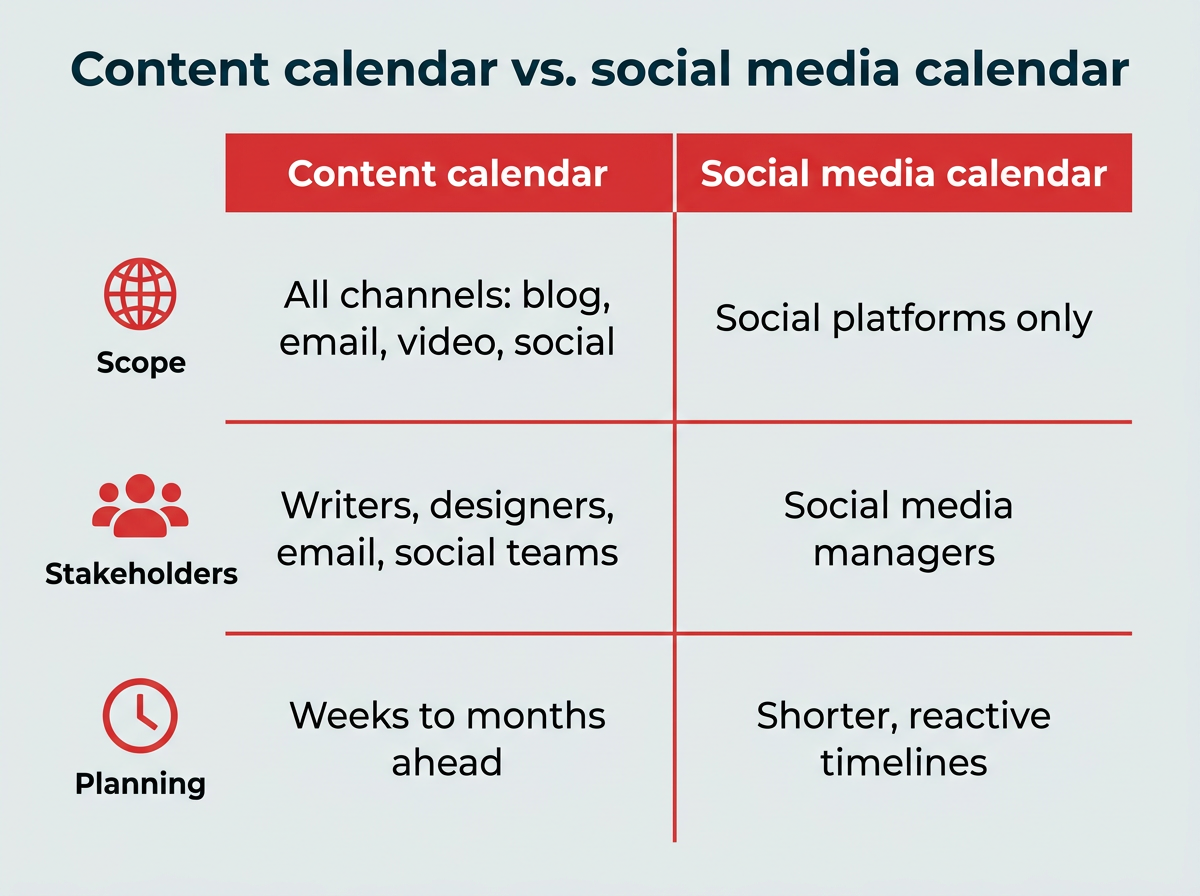
Chronology and Industry Evolution: From Spreadsheets to AI Orchestration
The evolution of content planning tools reflects the rapid acceleration of digital media over the past fifteen years.
- The Early Era (Early 2010s): Content planning relied almost exclusively on static desktop documents, basic email chains, and localized Excel spreadsheets. Collaboration was synchronous and prone to version-control errors.
- The Cloud Revolution (Mid-2010s): Collaborative cloud platforms like Google Sheets, Trello boards, and early social point-solutions emerged. Teams could view changes in real-time, though multi-channel coordination remained largely disjointed.
- The Integration Boom (2020–2024): As digital channels multiplied, point solutions began consolidating. Project management tools incorporated timeline views, while dedicated social platforms expanded their scopes to handle broader marketing assets.
- The Intelligent Ecosystem Era (2025–2026): Today’s landscape is defined by automation and artificial intelligence. Generative AI layers—such as Hootsuite’s Wisdom or specialized workflow bots—now assist marketing professionals with predictive analytics, real-time best-time-to-post calculations, automated caption drafting, and intelligent resource routing.
Supporting Data: The Metrics Driving Software Adoption
The shift toward centralized content tools is heavily reinforced by pressing workplace economics and efficiency data:
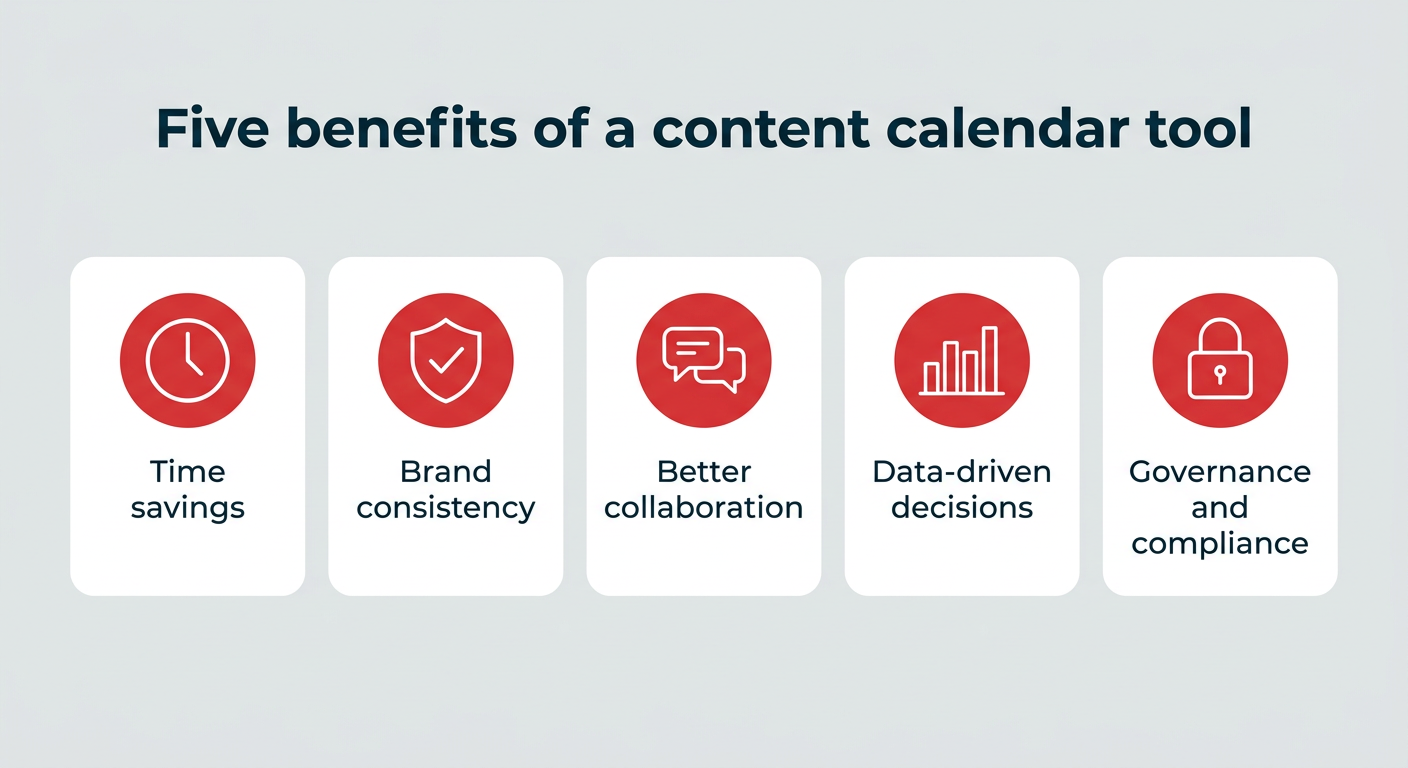
- Market Valuation: The content marketing industry is projected to reach $107 billion in 2026, demanding enterprise-level accountability and systematic scale.
- Burnout Epidemic: According to Marketing Week’s Career & Salary Survey, 58% of marketers reported feeling overwhelmed, driven largely by the operational friction of juggling multiple uncoordinated platforms and stakeholders.
- Budget Realities: Gartner’s CMO Spend Survey revealed that marketing budgets have flatlined at approximately 7% of overall company revenue, putting intense pressure on teams to maximize output without increasing headcount.
- The GenAI Dividend: Navigating this resource constraint, 49% of marketing leaders cite improved time efficiency as the primary benefit of GenAI integrations, making AI-powered scheduling and planning features an essential ROI driver rather than a luxury.
Official Responses and Expert Insights
Industry leaders stress that the choice of a calendar tool must align precisely with organizational structure. For enterprise brands managing disparate regional teams, fragmented communication introduces compliance risks and approval bottlenecks.
Christina Minshull, Head of Marketing at Stocksy, highlights the transformative impact of adopting an integrated operating system like Hootsuite. Following a comprehensive platform migration, Stocksy recorded some of its strongest operational months on record.
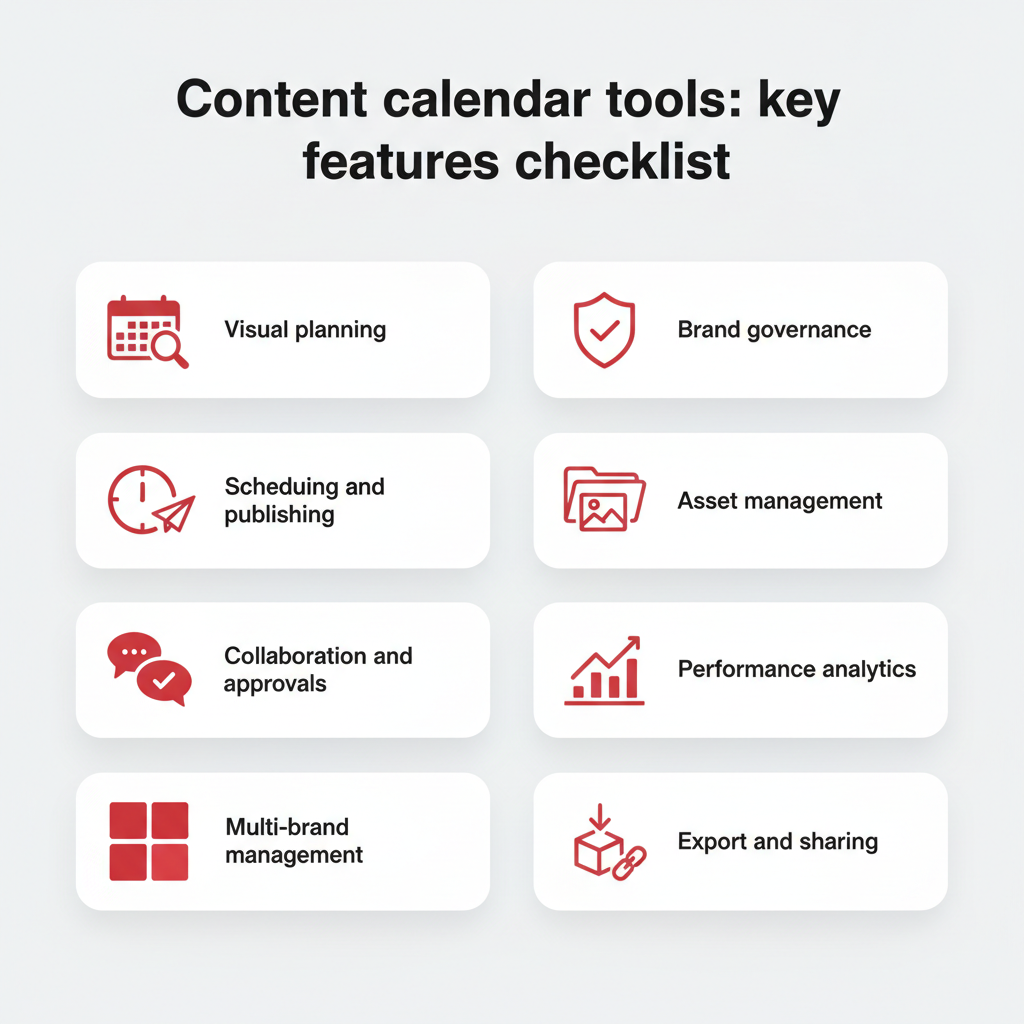
“We’re using all the features of the platform,” Minshull explains. “We’re publishing and scheduling, we use it for approval systems and crisis management, we use the content library to help with efficiency, tagging to make meaningful decisions, and use the listening platform to see what our audience is talking about and see where content gaps exist.”
Similarly, strategic practitioners emphasize the importance of view flexibility. Carolina Horna points out that tailored workspace visibility prevents team fatigue: “Within the content calendar tool I use, you’re able to toggle between different views… This helps me manage my team’s time effectively since I can create a view that suits their involvement in my project. They never need to see or sift through content that doesn’t apply to them.”
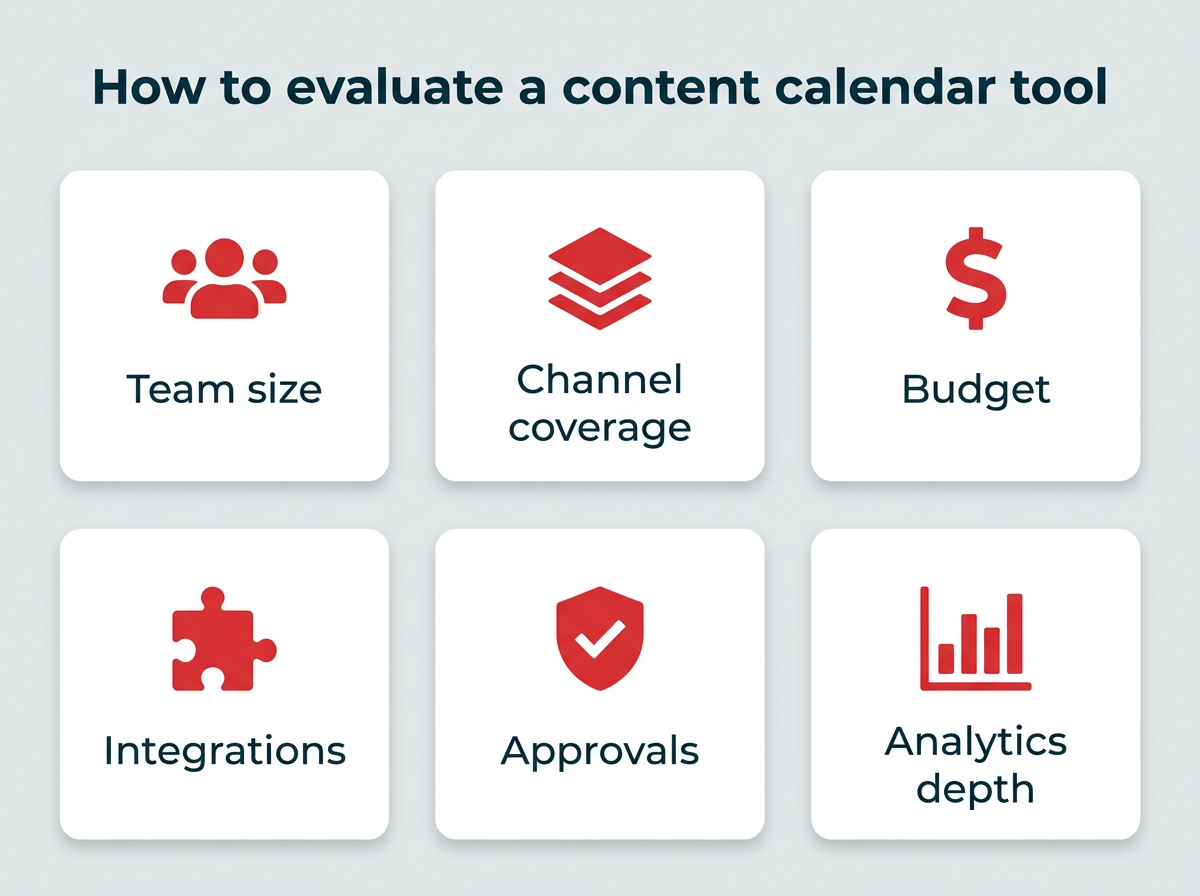
Implications: How to Choose and Implement Your 2026 Stack
With over a dozen major software competitors dominating the 2026 market—ranging from enterprise suites like Hootsuite and Sprinklr to flexible databases like Airtable and Notion, and visual creators like Later and Canva—selecting the correct platform requires a structured evaluation framework.
Essential Evaluation Criteria
- Team Size and Structure: Solo creators require minimal friction and low costs, whereas enterprise organizations demand multi-tier role permissions and audit trails.
- Channel Coverage: Determine whether your team requires pure social media publishing or true multi-channel orchestration spanning blogs, email newsletters, and podcasts.
- Budget and ROI: Balance licensing fees against projected time savings and administrative reduction.
- Integration Depth: Ensure seamless connectivity with existing enterprise tech stacks, including CRMs, digital asset management systems, and analytics suites.
- Approval Workflows: Evaluate how external clients or internal compliance officers review, comment on, and sign off on assets before publication.
The Six-Step Setup Roadmap
Implementing a sustainable content calendar system requires a disciplined, phased approach:
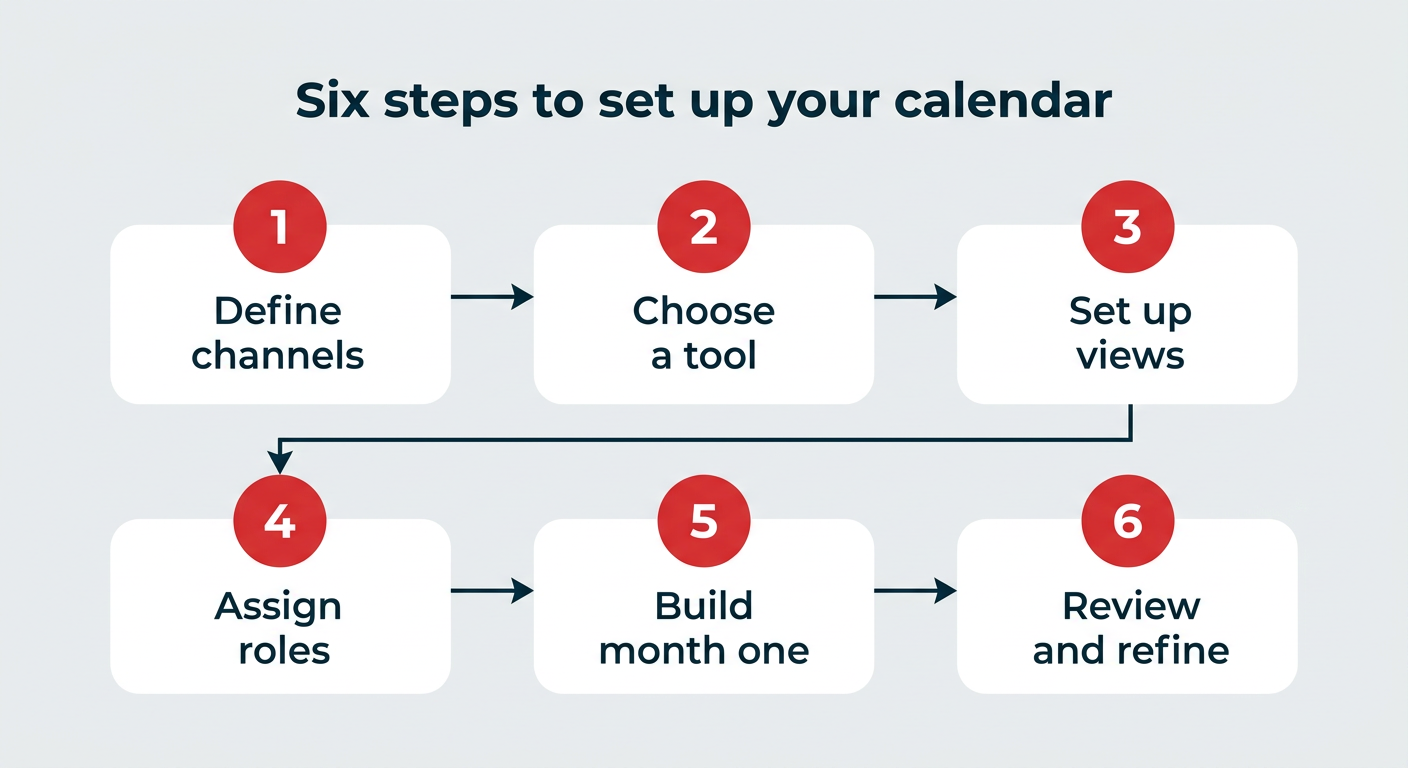
- Step 1: Define Channels and Formats: Catalog every publishing outlet and asset type (e.g., LinkedIn carousels, monthly newsletters) to establish core tagging fields.
- Step 2: Select the Right Tool: Match platform capabilities directly to team scale to avoid over-paying for unused enterprise features or outgrowing basic free tiers.
- Step 3: Configure Views: Build customized dashboards tailored to specific departmental needs—such as a monthly calendar view for leadership, a kanban board for producers, and a filtered list view for individual contributors.
- Step 4: Assign Roles and Permissions: Onboard writers, designers, and editors, assigning strict publishing permissions and mapping out clear review chains.
- Step 5: Build the First Month: Input recurring campaigns and fixed dates, leaving strategic breathing room for reactive, trend-driven content.
- Step 6: Review and Refine: Evaluate workflow friction after 30 days and adjust metadata, tags, and status labels to ensure long-term team adoption.
As the digital marketing ecosystem grows increasingly complex in 2026, the organizations that thrive will not be those that simply produce more content, but those that harness intelligent, centralized calendar tools to transform chaotic workflows into repeatable, scalable, and measurable systems.
 Neng Nana
 Ammar Sabilarrohman
 Jia Lissa
