
 By Asep Darmawan
By Stephen Johnson
Senior Staff Writer, Pop Culture & Technology
October 6, 2026
Main Facts: The October Prime Day Deal
As retail giants roll out aggressive mid-autumn sales events to capture consumer spending ahead of the winter holidays, October Prime Day has officially kicked off with a flurry of deep discounts. While third-party manufacturers across the tech landscape routinely slash prices during major shopping festivals, historical data proves that the most substantial markdowns are almost exclusively reserved for Amazon’s proprietary hardware ecosystem.
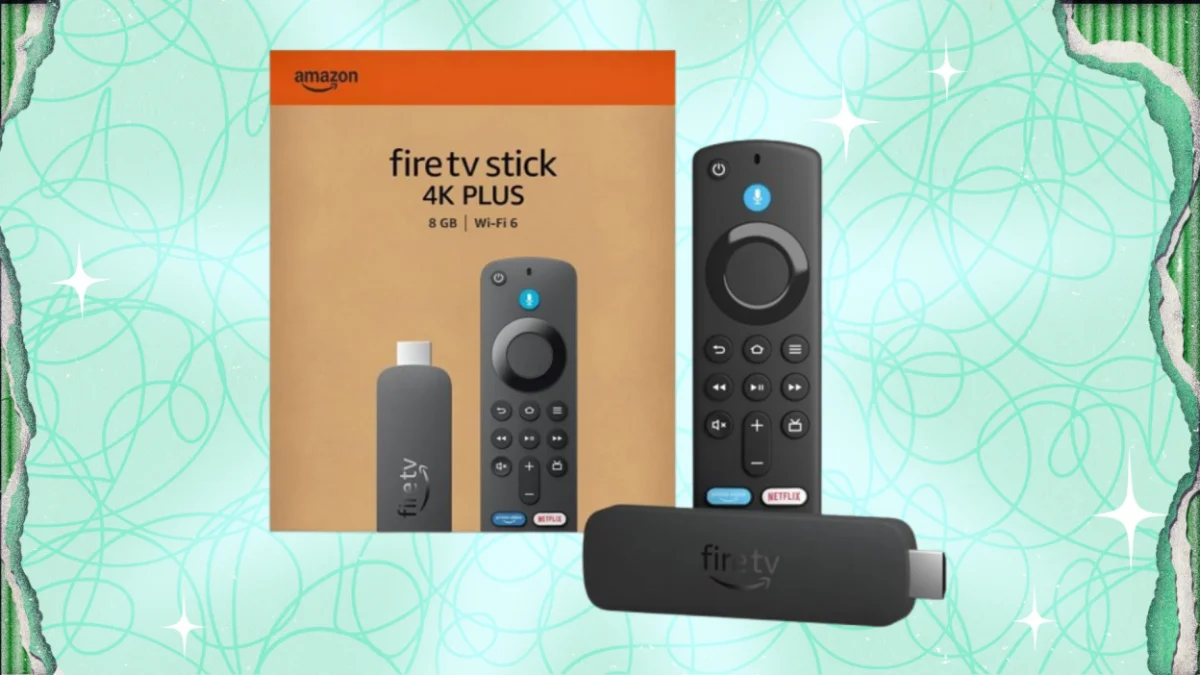
Leading the charge this season is a staggering 45% price cut on one of the company’s most popular streaming devices: the Amazon Fire TV Stick 4K. Normally retailing at a standard baseline price, the device has been temporarily discounted to just $37.99.
Designed to bring crystal-clear resolution, seamless wireless connectivity, and robust smart-home integration directly to standard and high-definition setups alike, the Fire TV Stick 4K is positioned as a low-cost, high-value upgrade for cord-cutters and home-theater enthusiasts alike.
Despite its compact, flash-drive-sized form factor, the device packs an immense technological punch. It is fully optimized for 4K Ultra HD streaming, incorporating Wi-Fi 6 compatibility to ensure stutter-free playback even on congested home networks. Audiovisual performance is further elevated through native support for Dolby Vision, HDR10+, and immersive Dolby Atmos audio decoding. Installation remains as frictionless as ever: users simply plug the unit directly into an available HDMI port on their television, connect it to a power source, and instantly gain access to a sweeping ecosystem of digital entertainment.
Chronology: The Evolution of Streaming and the Fire TV Line
To understand the significance of the $37.99 price point, it is necessary to examine how streaming sticks transformed from niche accessories into the dominant force in home entertainment.
The Early Days of Dedicated Streaming Hardware (2010–2014)
In the early part of the previous decade, accessing digital video content on a living room television typically required bulky home theater PCs, expensive gaming consoles, or specialized smart TV interfaces that were notoriously sluggish and poorly supported. The introduction of compact HDMI dongles—pioneered by early competitors and rapidly scaled by tech conglomerates—changed the paradigm completely.
When Amazon first entered the dedicated hardware streaming arena with the original Fire TV box in 2014, followed shortly by the smaller Fire TV Stick, the objective was straightforward: create a frictionless on-ramp to Amazon Prime Video while capturing valuable consumer data within the living room ecosystem.
The Shift to 4K and Cloud Gaming (2018–2024)
As global internet infrastructure matured and 4K displays transitioned from luxury items to standard consumer fare, Amazon iteratively updated its hardware architecture. The integration of faster multi-core processors, advanced HDR standards, and voice-activated remotes turned the Fire TV Stick from a simple video player into a comprehensive digital hub.
By the mid-2020s, streaming devices were no longer expected to just stream movies. The proliferation of cloud-based gaming services effectively eliminated the requirement for expensive, dedicated physical gaming consoles for casual players. Amazon positioned its hardware at the intersection of video streaming and cloud gaming, making devices like the Fire TV Stick 4K viable platforms for AAA gaming titles.

October Prime Day and Modern Flash Sales (2026)
Originally, Amazon concentrated its heaviest promotional weight into its traditional summer Prime Day event. However, changing consumer buying habits and the strategic expansion of the autumn retail window led to the solidification of October Prime Day as a critical retail fixture. In 2026, events like these serve as a crucial barometer for consumer confidence, with hardware discounting serving as the primary vehicle to drive users deeper into digital subscription models.
Supporting Data: What You Get for $38
At a price point under $40, the economics of modern consumer electronics are striking. Breaking down the technical specifications, software capabilities, and ecosystem advantages reveals the true scope of what the Amazon Fire TV Stick 4K delivers for $37.99:
- Price Reduction: 45% off the standard manufacturer’s suggested retail price (MSRP).
- Display Resolution: Native 4K Ultra HD output, scaling legacy 1080p and 720p content via advanced AI upscaling algorithms.
- Wireless Standards: Wi-Fi 6 (802.11ax) support, enabling significantly faster data throughput, lower latency, and reduced interference in multi-device households.
- Audio & Visual Enhancements: Full compatibility with Dolby Vision, HDR10, HDR10+, and spatial Dolby Atmos surround sound.
- Gaming Capabilities: Direct cloud-gaming integration via Amazon Luna and Xbox Game Pass, allowing users to stream heavy-hitting titles—such as Call of Duty: Black Ops 7 and Hogwarts Legacy—without owning a physical console.
- Voice Control & Smart Home: Built-in Alexa voice remote capabilities, granting users the ability to query media trivia, receive customized show recommendations, control connected smart home appliances, and manage routines directly from the couch.
Official Responses and Industry Context
While Amazon has not issued a dedicated press briefing exclusively for this single-item price drop, retail analysts and company spokespersons have consistently emphasized the strategic importance of hardware loss-leaders during promotional windows.
Industry analysts point out that selling streaming hardware at or near cost price is a deliberate, long-term maneuver. By lowering the barrier to entry for the Fire TV ecosystem, Amazon secures prime digital real estate in millions of households. Every Fire TV Stick serves as a persistent portal to Amazon Prime subscriptions, digital rentals, targeted advertising, and partner streaming services—each of which generates recurring revenue streams far exceeding the initial hardware margin.
Competitors in the streaming space, including Roku, Google with its Google TV platform, and Apple with Apple TV, face continuous pressure to match or undercut these aggressive flash sales. However, Amazon’s integrated retail infrastructure gives the company a unique ability to subsidize hardware costs during tentpole events like October Prime Day.
Implications: What This Means for Consumers and the Market
The drop of the Fire TV Stick 4K to $37.99 carries several notable implications for everyday consumers, the broader consumer electronics market, and the future of home entertainment.
1. The Death of Proprietary Console Necessity
The inclusion of high-performance cloud gaming platforms like Xbox Game Pass and Amazon Luna on a $38 streaming stick signals a permanent shift in how consumers access interactive media. Households that previously balked at purchasing $500 dedicated gaming consoles can now access blockbuster titles like Call of Duty: Black Ops 7 and Hogwarts Legacy simply by pairing a Bluetooth controller to their television stick. While hardcore competitive gamers will still demand high-end local hardware, casual and family gaming is rapidly migrating to cloud-native TV apps.
2. Accelerating Smart Home Centralization
By transforming the remote control into an active voice-activated command center for smart home automation, Amazon continues to blur the lines between media consumption and home management. Consumers are increasingly managing smart thermostats, security cameras, smart lighting, and automated locks through their television interfaces, positioning the living room screen as the ultimate dashboard for domestic life.
3. Heightened Price Sensitivity and Promotional Fatigue
For the consumer, deep discount events like October Prime Day underscore the importance of strategic purchasing discipline. With tech giants conditioning buyers to expect massive markdowns multiple times a year, paying full MSRP for streaming hardware, tablets, and smart home accessories has become financially inefficient. However, buyers must remain vigilant regarding fluctuating stock availability, changing pricing tiers, and the fine print governing recurring subscription add-ons.
As October Prime Day continues to unfold, deals like the Fire TV Stick 4K at $37.99 demonstrate that high-performance home entertainment has never been more accessible—or more heavily contested by tech’s biggest players.
 Raul Delapena Setiawan
 Layla Zulfa
 rifanmuazin
