
 By rifanmuazin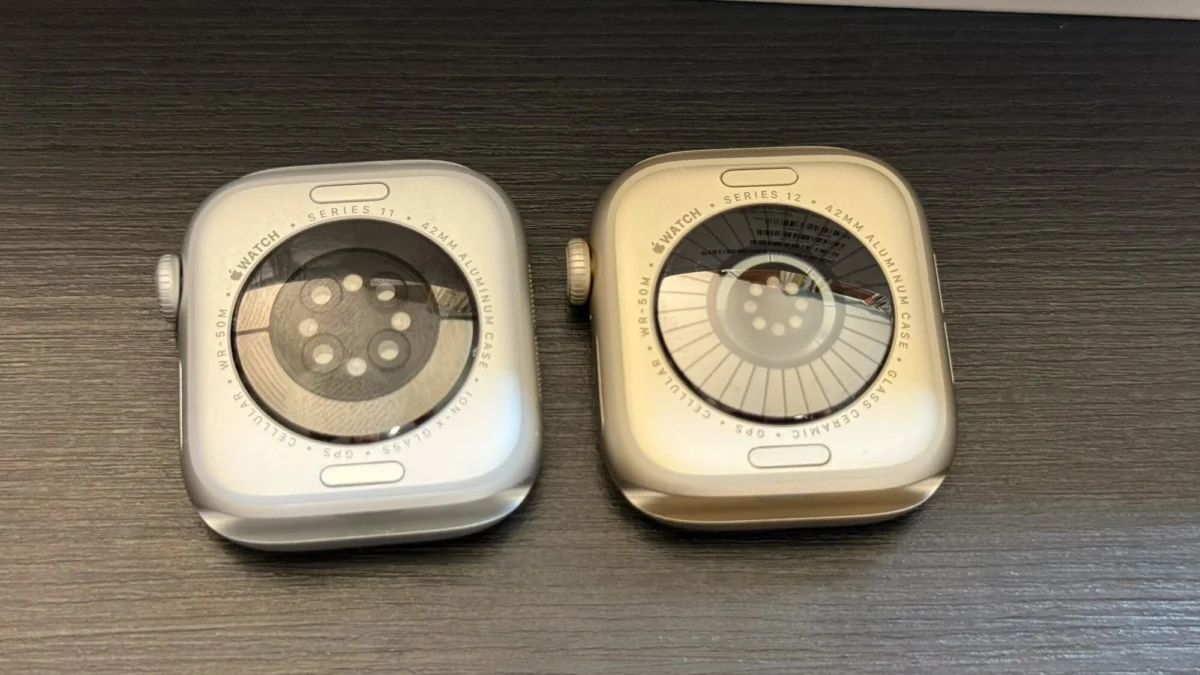
By Beth Skwarecki
Senior Health Editor
September 18, 2026
The Apple Watch Series 12 has officially arrived on wrists around the globe, and for the past 24 hours, I have been putting Apple’s latest flagship wearable through a rigorous battery of real-world trials. As someone who has spent over a decade analyzing health tech and fitness trackers—and holding certifications as both a personal trainer and weightlifting coach—I approach every new flagship release with a healthy dose of skepticism.
Apple has made bold claims this year, particularly regarding the device’s reimagined heart rate sensor and its long-overdue native step-counting capabilities. So far, the results are a mixed bag. While certain long-sought additions, like accessible step tracking and the introduction of "recovery HRV" metrics, are deeply satisfying to see, other features leave room for debate.

Main Facts
- The Device: The Apple Watch Series 12 introduces a completely redesigned physical heart rate sensor on the rear crystal housing, setting it apart visually and functionally from its predecessor, the Series 11.
- Native Step Counting: For the first time, step counting is an easily viewable, prominent metric natively integrated via watchOS, accessible via the Smart Stack and new complications. However, this feature is exclusive to the Series 12 due to specialized hardware baked into its new processor, leaving older models behind.
- Heart Rate Claims: Apple markets the Series 12 as having the most accurate heart rate tracking ever built into a wearable device. Preliminary comparative testing against a medical-grade chest strap and rival fitness watches casts early doubt on whether this hyperbole translates to a radical real-world performance leap.
- Pending Software Features: Key anticipated updates—such as "Live Rewind" (a 15-second ambient audio transcription feature), longer-form conversation recaps, and sleep-dependent "Readiness" scores—are not yet live and require future software deployment or baseline calibration.
Chronology: The First 24 Hours with the Series 12
When unboxing a new generation of smartwatches, the initial setup phase often dictates the tone of the user experience. Unboxing the Series 12 revealed an immediate physical difference: flipping the watch over highlights a redesigned sensor layout compared to the Series 11, hinting at the hardware engineering changes hidden beneath the chassis.
Hour 0 to 4: Setup and Interface Integration
The initial pairing process was seamless, as expected within the Apple ecosystem. Immediately, I went searching for the feature users have begged for since the original Apple Watch debuted: a clear, prominent step counter. By utilizing a double-pinch gesture to bring up the Smart Stack—without ever actually touching the display screen—I could view my cumulative step count right at the top of the interface. I subsequently added a step count complication to my primary watch face under the Activity category. (Users who prefer the traditional concentric fitness rings can still display them, but the choice to substitute or add raw step counts and wheelchair pushes is finally a reality.)
Hour 4 to 12: Preliminary Fitness Testing
Moving past the initial setup, I took the watch out for structured testing. This included indoor treadmill runs and outdoor distance sessions. During these workouts, the Series 12 was pitted directly against a chest strap heart rate monitor—widely considered the gold standard for cardiovascular data acquisition—alongside competing sports watches like the Garmin Forerunner 570.
Hour 12 to 24: Sleep Tracking and Passive Metrics
As evening fell, the watch transitioned into passive health monitoring mode. Because features like the upcoming "Readiness" score require roughly a week of consistent sleep data to build an accurate personal baseline, I couldn’t generate a final composite score on night one. However, the system did begin logging "recovery HRV" (Heart Rate Variability), allowing for a cross-device comparison against my Oura ring.

Supporting Data and Comparative Analysis
To truly understand how the Apple Watch Series 12 performs under pressure, we must look closer at the raw metrics collected during my initial rounds of testing.
Step Counting: A Win Marred by Hardware Gatekeeping
The step counter works exceptionally well. Updates are lightning-fast, and casual spot-checks—such as pacing a deliberate nine steps from my office desk to the exit door—registered as precisely nine steps on the display.
However, the real controversy here isn’t the performance of the step counter itself, but its exclusivity. Apple’s step-counting algorithm relies on a specialized pedometer model hardwired directly into the new processor of the Series 12. Because older architectures lack this specific hardware capability, the feature is entirely omitted from the Series 11 and earlier iterations. For long-time Apple Watch owners, this decision is jarring; basic step counting has been a staple of virtually every other fitness wearable on the market for over a decade, regardless of price point.
Heart Rate Accuracy: Does the Data Back the Hype?
Apple’s bold assertion that the Series 12 boasts the most accurate heart rate sensor in any wearable on the market prompted immediate scrutiny. To test this, I evaluated the device against a chest strap reference monitor.

- Indoor Treadmill Runs: When comparing the Series 11 (positioned at the top in test graphs) and the Series 12 (at the bottom) against the chest strap, both Apple Watches performed adequately. However, visual analysis of the data plots suggests that the Series 12 does not offer a revolutionary leap over its predecessor. More critically, the Apple Watch Series 12 continues to sample heart rate data only once every five seconds during active workouts. In contrast, dedicated sports trackers like the Garmin Forerunner 570 and chest straps sample heart rate every single second (60 data points per minute versus Apple’s 12).
- Outdoor Runs: During outdoor testing—evaluated alongside a Garmin Forerunner 570 (blue) and a chest strap (gray)—the sparse data sampling frequency of the Apple Watch became apparent. In several instances, the Apple Watch missed the acute peaks of minor heart rate spikes. While the Garmin also experienced minor tracking deviations in complex terrain, Apple’s five-second sampling window inherently limits its ability to capture transient cardiovascular shifts dynamically.
HRV and Recovery Metrics
Apple has shifted its biometric focus away from raw cardiac health-only HRV readings toward a dedicated "recovery HRV" metric tied closely to nocturnal recovery. During my first night of sleep tracking, Apple recorded my HRV at 45 ms, while my Oura ring registered 50 ms.
Because absolute HRV values naturally fluctuate between different form factors and measurement algorithms (depending on the precise window during sleep when the device chooses to poll), single-day absolute numbers matter less than longitudinal trends. If the Apple Watch correctly identifies relative highs and lows compared to my established baseline over the next week, the feature will prove its utility.
Official Responses and Ecosystem Context
While Apple has heavily promoted the Series 12 as a massive leap forward in sensor technology and predictive fitness intelligence, company representatives have acknowledged a phased rollout for several of the device’s most advanced software-driven capabilities.
Industry analysts note that while the hardware redesign on the rear casing demonstrates Apple’s commitment to refining optical photoplethysmography (PPG), consumer expectations are shifting toward software features that bridge the gap between Apple Health and third-party recovery ecosystems like Whoop and Oura.

Implications for Consumers and the Wearable Market
The launch of the Apple Watch Series 12 carries several broad implications for consumers and the broader fitness tech landscape:
- The Pressure on Competitors: By finally capitulating to consumer demand and integrating native, prominent step counting into the primary watch interface, Apple has removed one of the most common user complaints against watchOS.
- The Obsolescence Debate: By restricting foundational features like advanced step-counting algorithms to the newest processor, Apple risks alienating users of fairly recent hardware (such as the Series 11), drawing sharp contrasts with competitors who frequently backport software features to older generations.
- The Data Density Gap: Serious athletes and data-driven fitness enthusiasts may find Apple’s continued reliance on five-second heart rate sampling during workouts to be a dealbreaker. While casual users will find the data more than sufficient, endurance athletes requiring second-by-second granularity will likely continue to look toward dedicated sports watches from brands like Garmin, Coros, or Polar.
As I continue my testing over the coming weeks—pushing the Series 12 through cycling, high-intensity interval training, and open-air conditions—I will report back on whether the long-term data validates Apple’s lofty marketing claims. For now, the Apple Watch Series 12 is a brilliantly polished smartwatch with a few stubborn hardware limitations that keep it from being a universal slam dunk for serious athletes.
 Ammar Sabilarrohman
  Asro
Asro  Nana Wu