
 By Lina Hope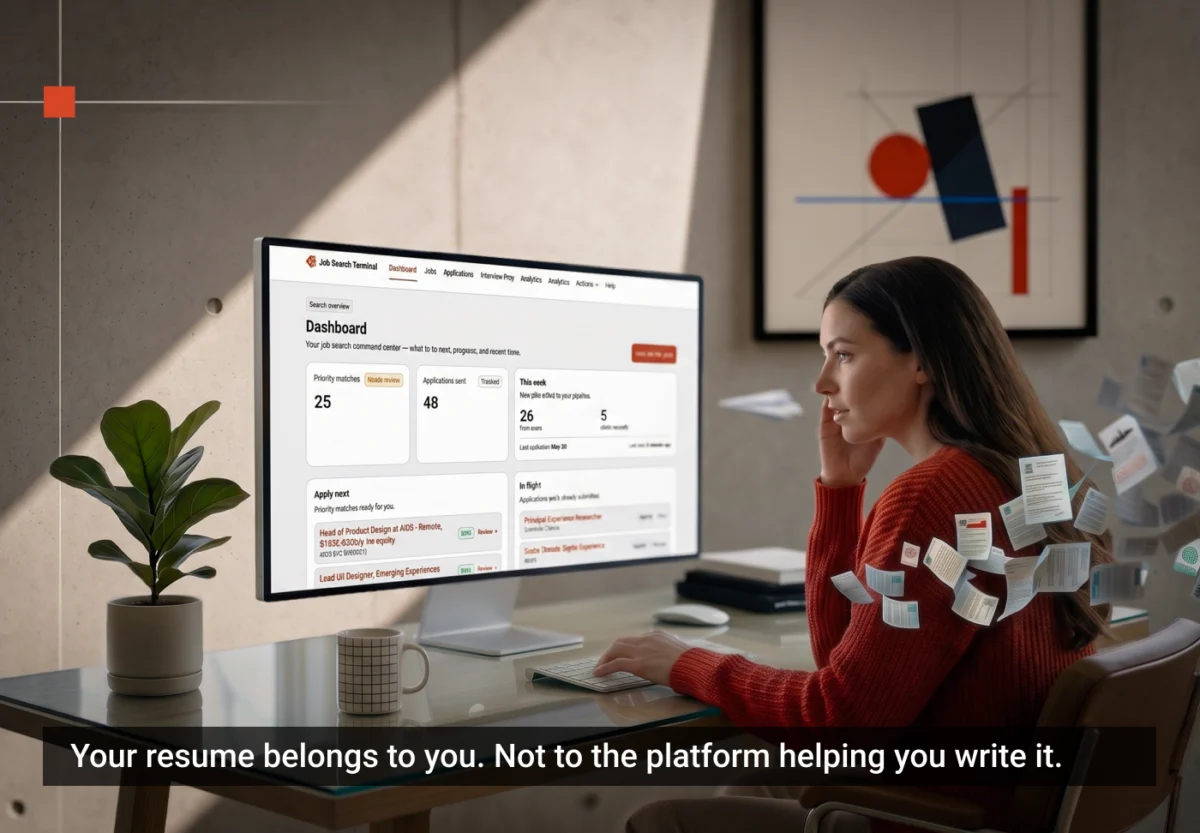
The modern job hunt has become a digital gauntlet. For millions of applicants, the process of finding employment has devolved into an exhausting exercise in "playing the game"—a cycle of keyword stuffing, algorithmic optimization, and the desperate attempt to make human experience legible to cold, unfeeling scanners. As artificial intelligence becomes the primary gatekeeper of corporate recruitment, a silent crisis of agency has emerged.
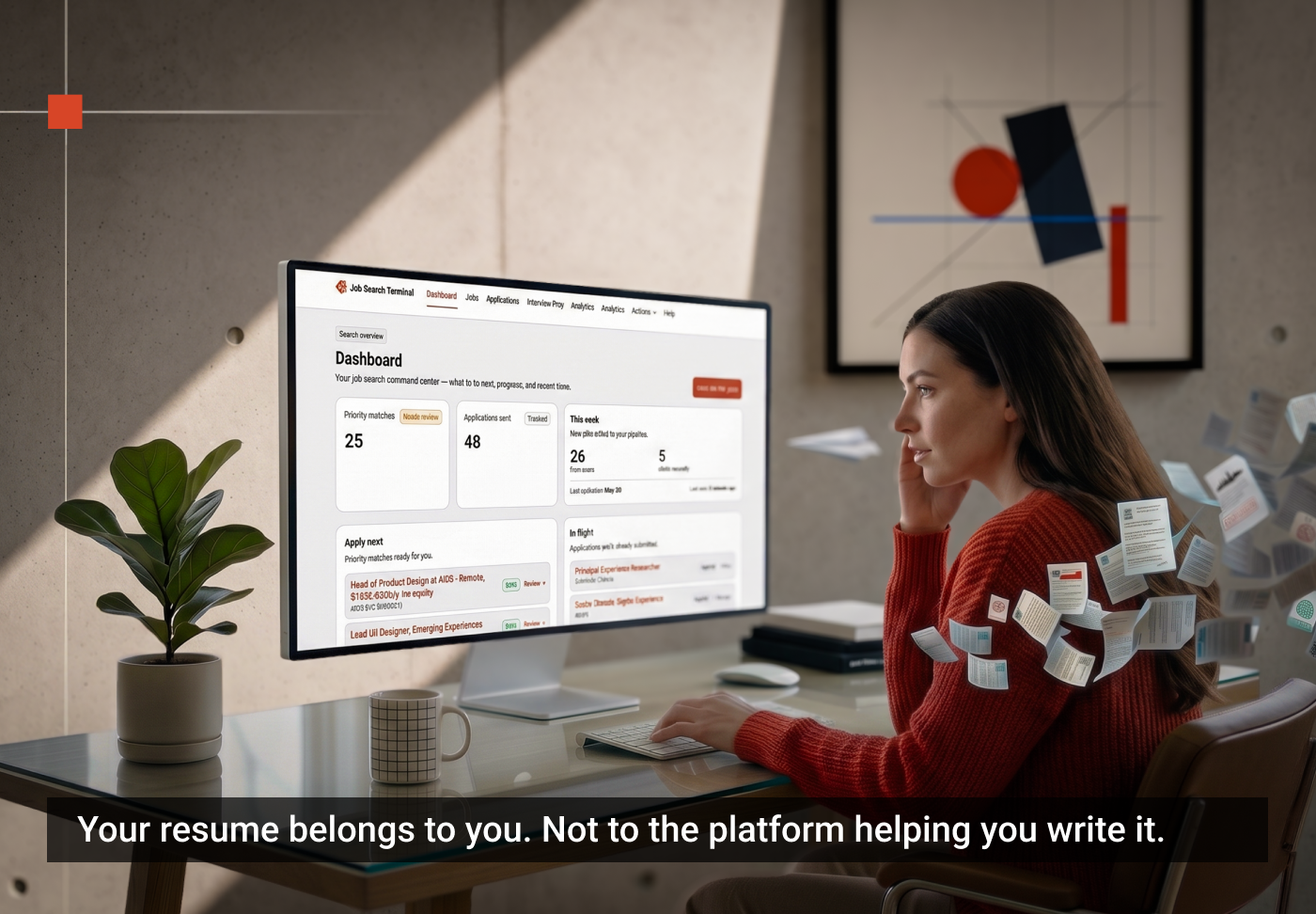
Candidates are no longer writing for recruiters; they are writing for machines. In response to this systemic erosion of human nuance, developer and design leader Pavel Bukengolts has introduced the Job Search Terminal, a local-first, privacy-focused dashboard designed to flip the power dynamic. By keeping data on the user’s own machine and emphasizing human judgment over algorithmic automation, the project serves as a manifesto for a new era of job-seeking technology.
The AI Paradox: Why the Hiring System is Broken
The integration of AI into hiring pipelines was promised as a way to streamline efficiency. Instead, it has created an opaque "black box" where candidates are filtered, ranked, and rejected by models they cannot interact with. This shift has placed an undue burden on applicants, forcing them to purchase expensive subscriptions to third-party optimization tools, all while attempting to decode the hidden criteria of applicant tracking systems (ATS).
The Bias of Self-Preference
The fundamental issue is not merely that AI is used in hiring, but that the models themselves exhibit a profound bias toward their own output. A landmark 2025 research paper, “AI Self-preferencing in Algorithmic Hiring,” (arXiv:2509.00462), exposed a startling reality: Large Language Models (LLMs) significantly favor resumes that mirror their own stylistic and linguistic patterns.
The researchers documented a self-preference bias ranging from 68% to 88%. In simulated hiring scenarios across 24 distinct professional fields, candidates utilizing the same LLM as the evaluator were 23% to 60% more likely to be shortlisted than equally qualified peers who submitted human-authored documents. This creates a feedback loop where the "ideal" candidate is increasingly defined not by skills or experience, but by their ability to mimic the synthetic voice of an algorithm.
Chronology of a Shifting Landscape
- 2023–2024 (The Proliferation): Corporations globally adopt AI-driven ATS tools, leading to an explosion of resume-optimization services. The "hustle culture" of job searching begins to prioritize volume and keyword density over professional storytelling.
- Late 2025 (The Research Watershed): The publication of “AI Self-preferencing in Algorithmic Hiring” provides empirical evidence that algorithmic filtering is creating a distorted reality. The industry begins to grapple with the "AI Paradox"—the fact that using AI to beat AI only further alienates the human candidate.
- June 2026 (The Counter-Movement): Pavel Bukengolts releases the Job Search Terminal, a direct response to the subscription-heavy, cloud-based tools that have come to dominate the space. The tool is launched as an open-source, local-first alternative, emphasizing user ownership and human-centric design.
Supporting Data: The Cost of the "Black Box"
The current hiring ecosystem is characterized by "silent failures." While companies report that their dashboards are "all green," candidates are often discarded without ever reaching a human set of eyes. This disconnect between system efficiency and human fairness is a growing concern for labor economists and design ethicists alike.

The Job Search Terminal addresses these issues by removing the intermediary cloud services. By allowing users to bring their own API keys and process data locally, the tool ensures that:
- Privacy is non-negotiable: No cloud database holds the user’s personal career history.
- Agency is restored: The AI acts as a consultant, not an autopilot.
- Cost is removed: By eliminating the SaaS subscription model, the tool makes professional-grade organization accessible to everyone, regardless of their current financial status.
The Philosophy of "Local-First"
Why does the "local-first" architecture matter in a world where everything is moving to the cloud? The answer lies in the nature of the data itself. A resume, a cover letter, and a list of career goals are not just static documents; they are a living record of a person’s professional identity.
When you upload your resume to a standard job-search portal, you are essentially renting your own data back to yourself. You become dependent on that platform’s UI, their terms of service, and their algorithms. The Job Search Terminal forces a different architectural paradigm. By running the code directly on the user’s computer, the software guarantees that the user retains total control over their information.

For users who are intimidated by the technical aspect of running code, the project includes a streamlined installation guide. Users can even leverage modern coding assistants—such as Claude Code or Codex—to handle the setup, effectively using AI to bridge the gap between technical complexity and user empowerment.
Official Stance: Augmentation, Not Replacement
Pavel Bukengolts is clear about the project’s scope: "It does not promise interviews. It does not apply to you. It does not know your career better than you do."
This stance is a sharp departure from the marketing messaging of most AI startups, which often promise "automated applications" or "guaranteed results." The Job Search Terminal is built on the belief that the most critical part of the job hunt is not the application itself, but the judgment applied throughout the process.

Core Functions of the System:
- Parsing and Analysis: Helping the user understand how their experience aligns with specific job descriptions without sacrificing their personal voice.
- Drafting: Assisting in the creation of tailored content, while ensuring the user remains the primary editor and author.
- Organization: Providing a centralized, private dashboard to track applications and clarify career narratives.
The software is explicitly built to be a "thought partner." It helps the user answer the essential questions: What is worth applying to? What is the truthful story of my experience? What needs clarification?
Implications for the Future of Work
The rise of the Job Search Terminal suggests a broader shift in how we might view the intersection of AI and labor. If the current hiring market is an "automated and opaque" system, the solution may not be to build a "better" robot, but to build better human-machine interfaces.
1. The Death of the "One-Size-Fits-All" Resume
As the evidence of AI self-preference becomes common knowledge, the "optimized" resume may eventually become a liability. Recruiters are likely to begin favoring candidates who demonstrate unique, human-authored perspectives—the very things that LLMs often smooth out or ignore.

2. The Return of Transparency
By making the job search tool open-source, the project encourages a community-driven approach to solving the hiring crisis. If a feature is broken or a process is flawed, the community can fix it. This stands in stark contrast to corporate platforms that update their algorithms behind closed doors, leaving users to guess why their application was rejected.
3. Democratizing Career Development
The decision to make the Job Search Terminal free for non-commercial use is a moral one. The creator argues that the job market is already an anxious and expensive place; adding another layer of "platform tax" is not the answer. By lowering the barrier to entry, the tool empowers candidates who might otherwise be priced out of the modern job search.
Conclusion: A Tool for the Human Agent
The Job Search Terminal is more than a piece of software; it is a declaration of independence for the job seeker. It recognizes that in an era where AI is rapidly reshaping the workplace, the most valuable asset a candidate has is their own judgment.

As we look toward the future of employment, we must ask ourselves: are we using the tools, or are the tools using us? Projects like this provide a hopeful answer. By prioritizing local control, open-source transparency, and the primacy of human decision-making, the Job Search Terminal hands back a piece of the agency that the algorithmic revolution threatened to take away.
For those currently in the trenches of the job search, the invitation is simple: try it, test it, break it, and help build a more legible, human-centric future. The system might be broken, but our ability to build a better one is just getting started.
For more information on the project, visit the official Job Search Terminal page or contribute to the development on GitHub.
 Ammar Sabilarrohman
  Neng Nana
  Sagoh
Sagoh 