
 By Asep Darmawan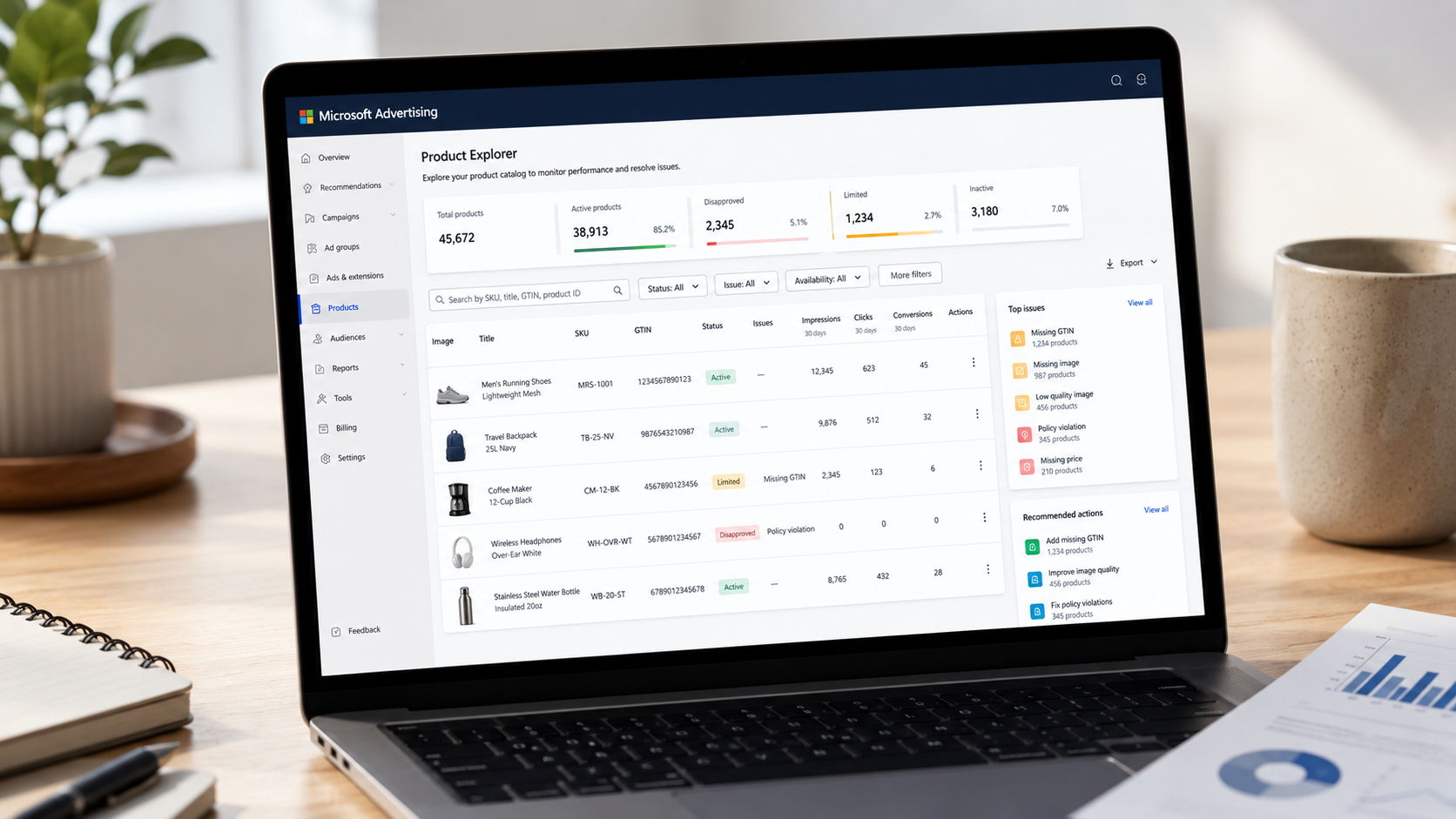
In the increasingly automated landscape of digital retail advertising, maintaining a healthy, fully optimized product feed has transitioned from a technical best practice to an absolute operational necessity. Recognizing the persistent challenges advertisers face when managing complex, high-volume product catalogs, Microsoft Ads has officially introduced Product Explorer.
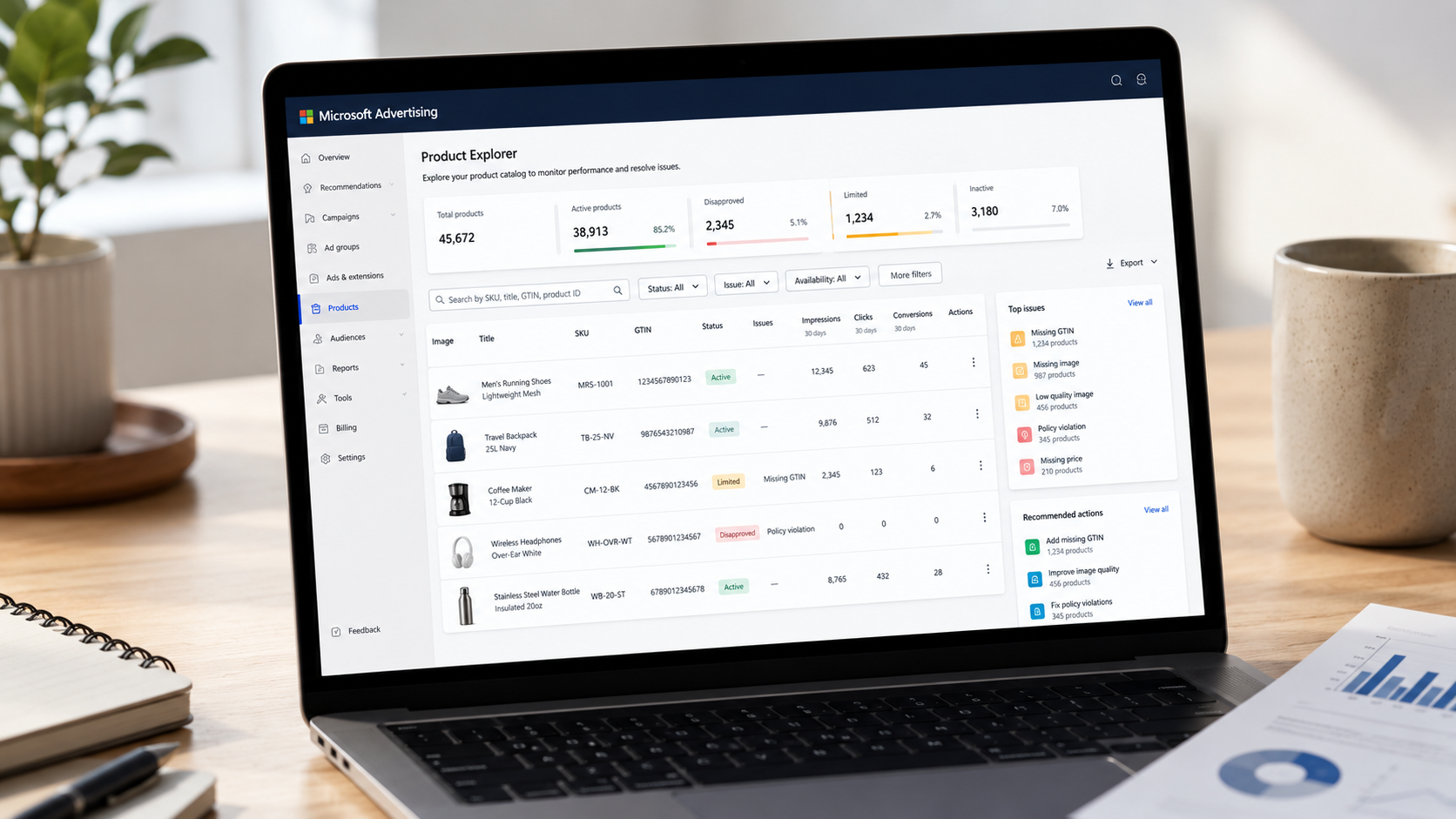
Announced by Microsoft Product Liaison Navah Hopkins, this new centralized reporting tool is designed to give advertisers an integrated, transparent, and actionable view of their product catalog’s health and performance directly within the Microsoft Advertising platform.
Historically, retail media managers have had to navigate siloed dashboards, cross-referencing performance metrics in one tab with feed diagnostics in another. Product Explorer aims to dismantle these silos by merging diagnostic data with performance reporting. The tool empowers advertisers to quickly identify which items are active, eligible to serve, or suffering from critical data omissions that suppress visibility.
1. Main Facts: Inside the Product Explorer Interface
Product Explorer is engineered to simplify catalog management for e-commerce businesses of all sizes, from boutique direct-to-consumer (DTC) brands to multi-national retail giants managing millions of Stock Keeping Units (SKUs).
Granular Search and Filtering Capabilities
At its core, Product Explorer acts as a searchable directory of an advertiser’s entire product inventory. Instead of exporting massive XML or CSV files to diagnose individual item errors, advertisers can query the system using specific product attributes. Key searchable attributes include:
- SKU (Stock Keeping Unit): To quickly locate specific inventory items.
- Product To identify products using consumer-facing naming conventions.
- GTIN (Global Trade Item Number): To ensure compliance with international retail standards.
- Product ID: For direct backend matching and technical troubleshooting.
Unified Performance and Diagnostics
The tool’s defining feature is its ability to layer performance metrics over technical feed health data. Within a single interface, users can view a rolling 30-day window of product-level performance data, including impressions, clicks, conversions, and spend.
Simultaneously, the interface highlights:
- Eligibility Status: Clear indicators showing whether a product is "Active," "Out of Stock," "Disapproved," or "Ready to Serve."
- Metadata Gaps: Alerts highlighting missing optional or required attributes (e.g., missing material, color, or age group fields) that could limit an item’s search relevancy.
- Policy Violations: Immediate flags for items blocked due to editorial or safety policies.
Actionable Recommendations and Data Portability
Rather than simply listing errors, Product Explorer surfaces recommended actions tailored to each feed issue. For instance, if an item is ineligible due to a missing GTIN, the tool points directly to the discrepancy and outlines the steps needed for resolution.
Additionally, the tool supports robust data portability, allowing advertisers to filter for specific errors (e.g., "all products missing description fields") and export these filtered lists into CSV format. These lists can then be handed off to development or database teams for bulk optimization.
2. Chronology: The Evolution of Product Feed Management
To understand the significance of Product Explorer, it is essential to trace how product feed management has evolved alongside search engine marketing (SEM) over the past two decades.
+-----------------------------------------------------------------------------+
|                                CHRONOLOGY                                   |
|                                                                             |
|  [Early 2000s]                                                              |
|  Manual Feed Uploads                                                        |
|  • Advertisers upload static txt/csv files via FTP.                         |
|  • High latency; slow updates for price and inventory changes.              |
|                                                                             |
|  [2010s]                                                                    |
|  API Integrations & Third-Party Middleware                                  |
|  • Shift to dynamic XML feeds and automated API syncs.                      |
|  • Emergence of feed management platforms (Feedonomics, ChannelAdvisor).    |
|                                                                             |
|  [Late 2010s - Early 2020s]                                                 |
|  The Automation Boom                                                        |
|  • Search engines transition to algorithmic matching (Smart Shopping).      |
|  • Feed data quality directly dictates automated campaign success.          |
|                                                                             |
|  [Present Day]                                                              |
|  Integrated Diagnostics Era                                                 |
|  • Microsoft launches Product Explorer to unify diagnostics and performance.|
|  • Elimination of platform silos between campaign managers and developers.  |
+-----------------------------------------------------------------------------+
The Early Days of Static Feeds (Early 2000s)
In the infancy of product-based search advertising, feeds were static, manual, and highly prone to error. Advertisers uploaded text or CSV files via FTP servers on a weekly or monthly basis. If a product went out of stock, ads would continue to serve until the next manual upload, leading to wasted ad spend and poor user experiences.
The Rise of APIs and Middleware (2010s)
As e-commerce matured, platforms introduced automated API integrations and scheduled fetch processes. While this resolved basic inventory latency issues, it introduced a new layer of technical complexity. Advertisers began relying heavily on third-party feed management software (such as Feedonomics or ChannelAdvisor) to manipulate raw catalog data before sending it to search engines.
During this era, diagnostic tools remained separated from advertising platforms. A merchant would run campaigns in their advertising UI, notice a drop in impressions, and then have to log into a separate Merchant Center dashboard to discover that hundreds of products had been disapproved.
The Automation Boom and the Feed-First Era (Late 2010s – Present)
With the launch of highly automated campaign types—such as Google’s Performance Max and Microsoft’s Smart Shopping—the product feed officially became the primary driver of campaign targeting. Modern algorithms rely entirely on product metadata (titles, descriptions, categories) to determine when and where to show an ad.
This shift made feed hygiene the single most critical lever for PPC managers. Recognizing that advertisers were spending too much time jumping between different platforms to troubleshoot these automated systems, Microsoft prioritized the development of an integrated, internal solution, culminating in the release of Product Explorer.
3. Supporting Data: The High Cost of Feed Discrepancies
The launch of Product Explorer addresses a widespread and costly pain point for e-commerce advertisers. Industry data consistently underscores how poor feed health directly degrades campaign efficiency and return on ad spend (ROAS).
The Prevalence of Feed Errors
According to industry benchmarks from feed optimization platforms, up to 35% of products in an average retail feed contain optimization gaps or errors that limit their visibility. Common issues include:
- Missing GTINs: Accounts for roughly 15% of disapprovals or limited-eligibility statuses.
- Suboptimal Titles: Over 40% of product titles lack critical search terms (such as brand, size, or color), resulting in a projected 20-30% loss in potential search impressions.
- Mismatched Pricing: Discrepancies between the price listed in the feed and the price on the landing page account for a significant portion of sudden account suspensions.
The Value of the Microsoft Audience Network
While Google remains the market leader in search volume, Microsoft Advertising represents a highly valuable, affluent, and often overlooked demographic.
| Metric / Demographic | Microsoft Search Network Value |
|---|---|
| PC Market Share | Over 20% globally (and higher in enterprise environments) |
| Exclusive Audiences | 44 million desktop users who do not use Google |
| Purchasing Power | Users are 22% more likely to buy online compared to the average internet user |
| B2B / Enterprise Reach | Dominant presence in corporate settings via default Windows integrations |
For retailers, a technical glitch in their Microsoft feed doesn’t just mean a minor drop in traffic; it means completely losing touch with a high-intent, high-income audience segment that is actively shopping online. Product Explorer ensures that advertisers can safeguard their presence on this lucrative network.
4. Official Responses and Strategic Positioning
The rollout of Product Explorer has been met with enthusiasm by search marketing professionals, who have long advocated for more transparent diagnostic tools.

Navah Hopkins on Product Explorer’s Utility
In her announcement, Microsoft Product Liaison Navah Hopkins emphasized the practical, time-saving nature of the update:
"Managing large product feeds can make it difficult to identify which items are eligible to serve, generating impressions or missing critical data. Product Explorer aims to simplify that process."
Hopkins confirmed that the tool is designed to bypass the traditional latency associated with feed processing updates. By providing a 30-day performance overlay, it allows advertisers to correlate sudden drops in product-level traffic directly with metadata issues or status changes.
Rollout and Platform Integration
Microsoft has confirmed that Product Explorer is already live across advertising accounts globally. Unlike previous rollouts that required beta applications or whitelisting, users can access the tool directly from their main navigation menu under the reporting and tools sections. This immediate, universal availability underscores Microsoft’s commitment to supporting retail advertisers ahead of major seasonal shopping events.
5. Strategic Implications for Advertisers and Agencies
The introduction of Product Explorer carries significant implications for digital marketing agencies, in-house retail teams, and the broader competitive dynamics of search engine marketing.
   ┌─────────────────────────────────────────────────────────────────┐
   │                    STRATEGIC IMPACT MATRIX                      │
   └─────────────────────────────────────────────────────────────────┘
                                    │
         ┌──────────────────────────┴──────────────────────────┐
         ▼                                                     ▼
┌─────────────────────────────────┐                 ┌─────────────────────────────────┐
│       AGENCY EFFICIENCY         │                 │     MERCHANT EMPOWERMENT        │
├─────────────────────────────────┤                 ├─────────────────────────────────┤
│ • Automated diagnostic audits.  │                 │ • Democratized troubleshooting. │
│ • Reduced billable hours spent  │                 │ • Lower barrier to entry for    │
│   on manual CSV troubleshooting.│                 │   smaller DTC brands.           │
│ • Clear client reporting lists. │                 │ • Reduced dependency on costly  │
│                                 │                 │   third-party feed middleware.  │
└─────────────────────────────────┘                 └─────────────────────────────────┘
Agency Efficiency and Client Communication
For digital marketing agencies managing complex client portfolios, Product Explorer is a major operational win.
- Streamlined Audits: When onboarding a new retail client, account managers can immediately audit the catalog’s health within Product Explorer, identifying low-hanging fruit (such as unmapped product categories or missing identifiers) in minutes rather than hours.
- Clear Action Items: Because the tool allows for filtered exports, agencies can easily generate "to-do" lists for their clients’ web development teams. This reduces friction and accelerates the time-to-resolution for critical catalog errors.
Democratizing Feed Management for Small Businesses
For smaller DTC brands that lack the budget for premium, third-party feed optimization software, Product Explorer acts as a free, highly capable alternative. It democratizes access to sophisticated diagnostic tools, allowing small business owners to run enterprise-level troubleshooting directly inside the Microsoft Ads interface.
Pressuring the Competition
With this launch, Microsoft Ads places direct competitive pressure on Google. While Google Merchant Center offers robust diagnostics, its interface remains separate from the main Google Ads platform, requiring advertisers to manage two distinct ecosystems. By integrating these insights directly into the core advertising UI, Microsoft provides a more streamlined, user-centric workflow. This could prompt Google to further integrate its Merchant Center insights directly into the Google Ads workspace.
Looking Ahead: The Future of Feed-Driven Advertising
As retail media continues to expand across search networks, social platforms, and open-web marketplaces, feed quality has emerged as the ultimate differentiator. Algorithms can only perform as well as the data they are fed; poor metadata leads to poor targeting, lower conversion rates, and wasted budget.
With Product Explorer, Microsoft Ads is not just offering a new reporting tab; it is shifting the paradigm of feed management toward proactive, performance-linked optimization. By enabling advertisers to quickly diagnose errors, understand their immediate performance impact, and take corrective action, Microsoft is helping brands extract maximum value from their digital storefronts in an increasingly automated world.
 Jia Lissa
  Nana Muazin
  Layla Zulfa