
 By Iffa Jayyana
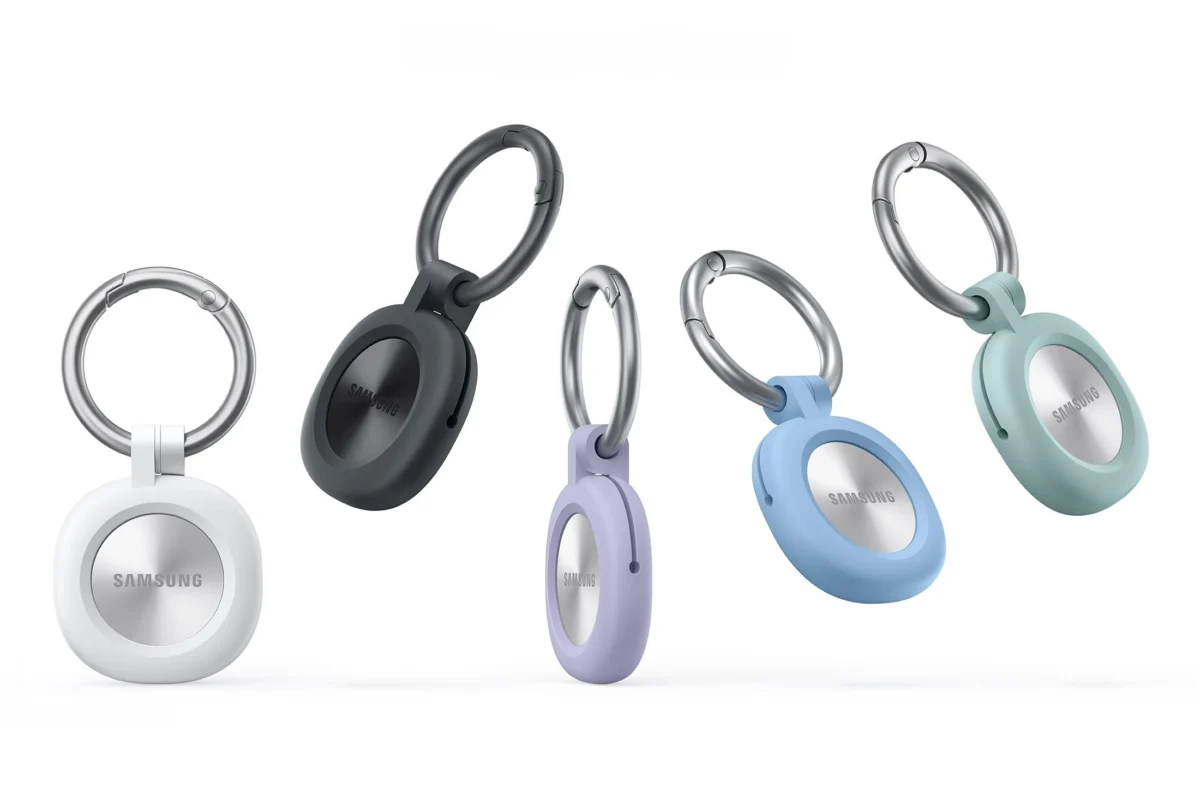
Samsung Electronics has officially announced its third-generation Bluetooth item tracker, the Galaxy SmartTag 3. Bringing a slate of meaningful hardware and software upgrades to the market, the new device aims to secure Samsung’s footing in the fiercely competitive personal tracking ecosystem. The latest iteration manages to combine a significantly more compact and lightweight chassis with extended battery endurance, modernized connectivity standards, and—crucially—cross-operating-system support designed to break down long-standing ecosystem barriers.
This comprehensive overview explores the evolution of Samsung’s hardware strategy, analyzing the core specifications, design philosophy, ecosystem implications, and pricing details surrounding the global rollout of the Galaxy SmartTag 3.
Main Facts
The Samsung Galaxy SmartTag 3 introduces a heavily redesigned hardware architecture and advanced tracking features that set it apart from its predecessors.
Design and Physical Dimensions
Following months of industry speculation and leaks, the SmartTag 3 adopts a distinctive rounded-square, or "squircle," geometric profile reminiscent of the original 2021 Galaxy SmartTag. However, the engineering team made a notable structural modification: the physical cutout for a key ring has been completely removed. Consequently, users wishing to attach the tracker directly to traditional key rings, luggage loops, or carabiners must purchase one of Samsung’s proprietary protective cases. To ensure durability in harsh environments, the device retains an IP67 rating, offering robust protection against dust ingress and accidental water immersion.
Internal Efficiency and Power Management
Despite scaling down its physical footprint—measuring 35 percent smaller and 33 percent lighter than the preceding SmartTag 2—the SmartTag 3 achieves a 10 percent boost in overall power efficiency. Relying on a standard, user-replaceable CR2032 coin-cell battery, the tracker delivers up to 550 days of continuous operation under normal conditions. When switched to power-saving mode, that figure stretches to an impressive 790 days, minimizing maintenance and battery replacement cycles for end-users.
Connectivity and Tracking Ecosystem
Under the hood, the device leverages Samsung’s proprietary Galaxy Find Network to map and report locations globally. When a user approaches within a 200-foot radius of the tracker, supported smartphones utilize a combination of ultra-wideband (UWB) technology and Bluetooth 6.0 Channel Sounding. This dual-layer approach provides pinpoint directional accuracy, far outperforming standard Bluetooth signal strength indicators.
Cross-OS Support and Software Enhancements
Perhaps the most consumer-friendly pivot for this generation is the introduction of cross-OS capability. While historical iterations were strictly limited to Samsung Galaxy smartphones, the SmartTag 3 broadens its horizons to support iOS devices. Samsung is positioning this feature as a collaborative tool, allowing users to effortlessly share tracking data with family members, friends, or trusted service providers (such as dog walkers) regardless of whether they use Android or Apple hardware.
Additionally, the accompanying software suite introduces advanced notification parameters. Users can configure customized alerts that trigger automatically when a SmartTag 3 crosses a predefined virtual perimeter (entering or exiting a set area). Movement detection capabilities have also been refined to register minor positional shifts, while an expanded location history timeline lets owners review the exact path a tag has traveled over time.
Chronology
The journey from the inception of the Galaxy SmartTag ecosystem to the launch of the third-generation device highlights Samsung’s rapid iterative hardware development.
- January 2021: Samsung launches the original Galaxy SmartTag alongside the Galaxy S21 series, establishing its initial footprint in the Bluetooth item tracker market to compete directly with Tile and early rumors of Apple’s AirTag.
- October 2023: Samsung releases the second-generation Galaxy SmartTag 2, which introduces a redesigned elongated pill-shape, an integrated metal-lined key ring loop, a massive battery life extension, and deep integration with the evolving Android Find My Device framework.
- Mid-2025: Industry leaks surface detailing early prototypes of a forthcoming "SmartTag 3," revealing a return to a squircle aesthetic and the controversial removal of the dedicated lanyard hole.
- September 30, 2025: Samsung officially confirms launch details, including initial pricing models and regional availability timelines for the United States.
- October 7, 2025: The Galaxy SmartTag 3 officially hits store shelves in South Korea, launching initially in two classic colorways: classic black and clean white.
- Early November 2025: The official commercial rollout expands to the United States and other international markets, pricing individual units at $29.99 and four-packs at $99.99.
Supporting Data
To contextualize where the Galaxy SmartTag 3 stands in the current marketplace, a comparative analysis of its specifications, pricing, and physical metrics reveals how it stacks up against key competitors like Apple and Google.
| Feature / Specification | Samsung Galaxy SmartTag 3 | Samsung Galaxy SmartTag 2 | Apple AirTag (2nd Gen) | Google Pixel Tag |
|---|---|---|---|---|
| Form Factor | Squircle (No built-in ring) | Pill/Loop shape | Circular disk | Oval disk |
| Size Reduction | 35% smaller than SmartTag 2 | Baseline | Standard | Standard |
| Weight Reduction | 33% lighter than SmartTag 2 | Baseline | Standard | Standard |
| Battery Life (Normal) | Up to 550 days | Up to 500 days | Approx. 365 days | Approx. 365 days |
| Battery Life (Eco) | Up to 790 days | Up to 700 days | N/A | N/A |
| Battery Type | User-replaceable CR2032 | User-replaceable CR2032 | User-replaceable CR2032 | User-replaceable CR2032 |
| Durability Rating | IP67 | IP67 | IP67 | IP67 |
| Tracking Network | Galaxy Find Network | Galaxy Find Network & Google Find Hub | Apple Find My | Google Find My Device |
| Short-Range Tech | UWB + Bluetooth 6.0 Channel Sounding | UWB + BLE | UWB + BLE | UWB + Bluetooth Channel Sounding |
| Cross-OS Support | Yes (iOS and Samsung) | Limited (Samsung ecosystem-focused) | Apple ecosystem-focused | Android ecosystem-focused |
| Single Unit Price | $29.99 | $29.99 | $29.99 | $29.99 |
| Four-Pack Price | $99.99 | $99.99 | $99.99 | $99.99 |
Financial and Market Positioning
By maintaining the $29.99 single-unit MSRP and the $99.99 four-pack bundle pricing structure, Samsung has aligned itself squarely with industry pricing standards set by Apple and Google. This deliberate pricing parity ensures that hardware cost will not serve as a deterrent for consumers weighing brand ecosystems against one another. However, the reliance on third-party protective accessories to achieve physical attachment introduces an additional, minor out-of-pocket cost for end-users.
Official Responses and Industry Context
Reaction from the tech community and official statements from Samsung executives shed light on the strategic thinking behind the SmartTag 3.
Samsung’s Strategic Intent with Cross-OS Support
When questioned about the decision to implement cross-OS functionality for iOS users, Samsung representatives clarified that the objective is not necessarily to poach dedicated Apple AirTag loyalists away from their native ecosystem. Instead, the company is targeting collaborative sharing use cases.
In modern households and communities, device fragmentation is a common friction point. A family may feature a mixed household of Android and iOS users, or a pet owner might hire a dog walker who carries an iPhone while the owner uses a Galaxy device. By enabling cross-OS tracking capabilities, Samsung eliminates the communication silos that previously rendered items untrackable across platform divides.
(Note: As of publication, Samsung has not yet officially confirmed whether non-Samsung Android devices—outside of the proprietary Galaxy ecosystem—will receive native, seamless compatibility with the SmartTag 3, though inquiries have been submitted to corporate communications.)
Network Independence
An intriguing architectural choice for the SmartTag 3 is its continued reliance on Samsung’s proprietary Galaxy Find Network, rather than fully migrating over to Google’s newly unified Find Hub network infrastructure (which Google expanded following the launch of the SmartTag 2 and competing trackers like the Moto Tag). By maintaining its independent network, Samsung retains full quality control over encryption protocols, notification infrastructure, and regional ping density, ensuring a dedicated experience for its expansive global customer base.
Implications
The commercial release of the Samsung Galaxy SmartTag 3 carries wide-ranging implications for the personal locator hardware industry, software interoperability standards, and daily consumer habits.
1. The Death of Ecosystem Isolation?
For years, technology companies have leveraged proprietary accessories as "walled gardens" to lock consumers into a single hardware ecosystem. By opening the SmartTag 3 to iOS users for specific sharing functions, Samsung is acknowledging a pragmatic truth: families and communities are rarely monolithic when it comes to smartphone preferences. This shift could pressure competing manufacturers to rethink their restrictive pairing policies, potentially paving the way for a more interoperable accessory market where safety and tracking utilities supersede brand tribalism.
2. Hardware Engineering Trade-Offs
The removal of the physical key ring hole in favor of a clean, minimalist squircle design has polarized early reviewers and consumer advocacy forums. While the 35 percent reduction in volume and 33 percent reduction in weight make the device far easier to slip into narrow pockets, wallets, or tight spaces, it forces users to purchase additional silicone or leather sleeves. This design choice mirrors Apple’s historical approach with the AirTag, which also requires external holders or straps for physical attachment. Whether consumers will embrace this cleaner aesthetic at the cost of immediate usability remains to be seen.
3. Heightened Privacy and Security Measures
As Bluetooth item trackers become more compact, energy-efficient, and precise, concerns regarding unwanted tracking and personal privacy continue to escalate. The inclusion of advanced movement detection alerts, granular location histories, and perimeter-based virtual fences on the SmartTag 3 reflects Samsung’s proactive approach to mitigating stalkerware risks. By providing more transparent notification pathways when a tag lingers near an unintended recipient, Samsung aims to stay ahead of regulatory scrutiny and bolster consumer trust.
4. Market Competition and Ecosystem Loyalty
With Google deploying its Pixel Tag and Apple maintaining dominance with the AirTag, the consumer electronics market for item finders is more cutthroat than ever. Samsung’s decision to freeze prices at $29.99 while delivering substantial improvements in power efficiency (yielding nearly two years of standby battery life in power-saving mode) demonstrates a strong commitment to value retention.
Ultimately, the Galaxy SmartTag 3 establishes a new benchmark for what consumers should expect from a modern item tracker: lightweight durability, incredible battery longevity, precise UWB and Bluetooth 6.0 spatial awareness, and flexible sharing tools that cross the traditional boundaries of mobile operating systems. As the product rolls out globally from its South Korean debut through its November U.S. launch, it will undoubtedly serve as a litmus test for how much consumers value cross-platform collaboration in their everyday connected accessories.
 Nana Muazin
 Raul Delapena Setiawan
 Pevita Pearce
