
 By Azzam Bilal Chamdy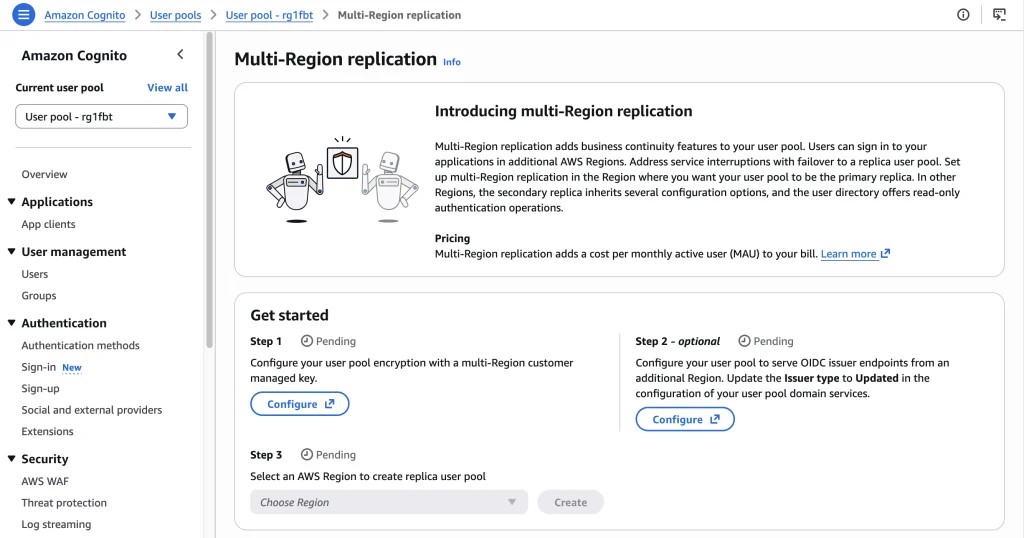
In an era where digital continuity is the backbone of global commerce, the ability to withstand regional service disruptions has transitioned from a "nice-to-have" feature to a critical architectural requirement. As organizations increasingly rely on complex ecosystems—comprising agentic AI, microservices, and automated service accounts—the demand for robust, machine-to-machine, and user authentication has never been higher.
Amazon Web Services (AWS) has responded to this industry-wide mandate by announcing two significant upgrades to Amazon Cognito: native multi-Region replication and enhanced support for customer managed keys (CMKs). These updates represent a paradigm shift in how developers can architect high-availability authentication systems, removing the heavy lifting previously required to maintain consistency across geographical boundaries.
Main Facts: A New Standard for Authentication Resilience
The core of the announcement centers on multi-Region replication, a feature designed to synchronize user profiles, credentials, and pool configurations from a primary AWS Region to a designated secondary Region automatically.
Historically, developers seeking high availability for their authentication services were forced to construct elaborate, custom-built synchronization pipelines. These manual interventions—often involving the export and import of user data—not only introduced significant operational overhead but also created tangible security risks, including the potential for data exposure and persistent synchronization errors. Furthermore, such manual methods frequently resulted in poor user experiences, forcing end-users to undergo mandatory password resets or re-authentication cycles during failover events.

With this new update, Amazon Cognito eliminates these friction points. The secondary Region functions as a read-only standby, continuously updated by the primary. Crucially, the system is designed for seamless transition: if a primary Region experiences an issue, traffic can be rerouted to the secondary Region, where existing sessions remain valid. Because both regions recognize tokens issued by the other, end-users and backend services experience zero disruption.
Complementing this is the integration of customer managed keys (CMKs) via AWS Key Management Service (AWS KMS). By allowing customers to bring their own keys to encrypt user data at rest, AWS is granting organizations—particularly those in highly regulated sectors like finance and healthcare—the granular control necessary to meet stringent compliance and data-sovereignty mandates.

Chronology: The Evolution of Cognito Architecture
The journey to this announcement has been marked by a long-standing dialogue between AWS developer advocates and the engineering teams tasked with building global-scale applications.
- Pre-2025: The Custom-Build Era: For years, architects relied on manual scripts and event-driven patterns (often using DynamoDB streams or Lambda-based triggers) to replicate Cognito user data. This was fragile, difficult to audit, and resource-intensive.
- Late 2025/Early 2026: Development and Testing: AWS began rolling out the infrastructure for multi-Region replication. Early feedback from enterprise users emphasized the need for a "turn-key" solution that didn’t require reconfiguring OAuth flows or updating client-side code every time a failover occurred.
- The Announcement (Q2 2026): AWS officially unveiled the native replication feature. The release was strategically timed to coincide with the broader industry movement toward "agentic" architectures, where machine-to-machine authentication is just as critical as human user authentication.
- Current State: The feature is now generally available across a wide array of global Regions, with integrated console support that allows developers to toggle replication in as few as three steps.
Supporting Data and Operational Logistics
How the Replication Flow Functions
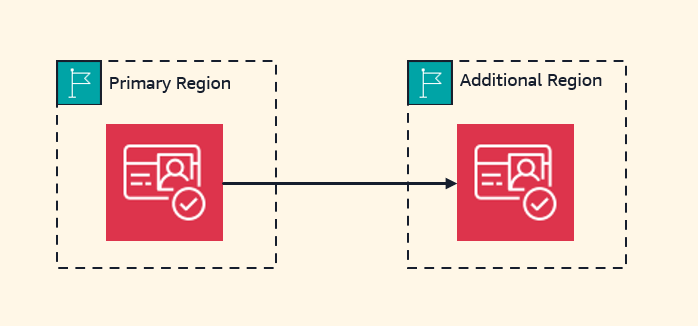
The replication architecture is unidirectional, moving data from the primary to the secondary Region. This ensures that the primary remains the "source of truth" while the secondary serves as a reliable, read-only failover point. The replication encompasses:
- User Profiles: All metadata associated with a user identity.
- Credentials: Hash-protected login information.
- Pool Configurations: Policies, settings, and OIDC/SAML integrations.
Configuration Workflow
The setup process has been streamlined into three distinct phases within the AWS Management Console:
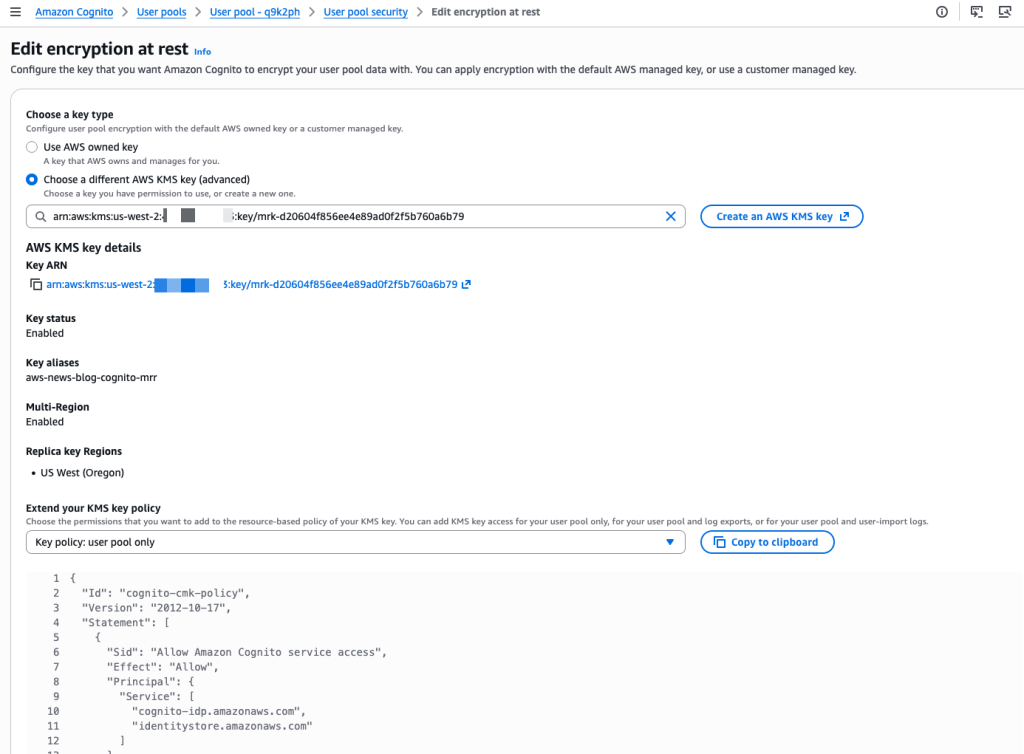
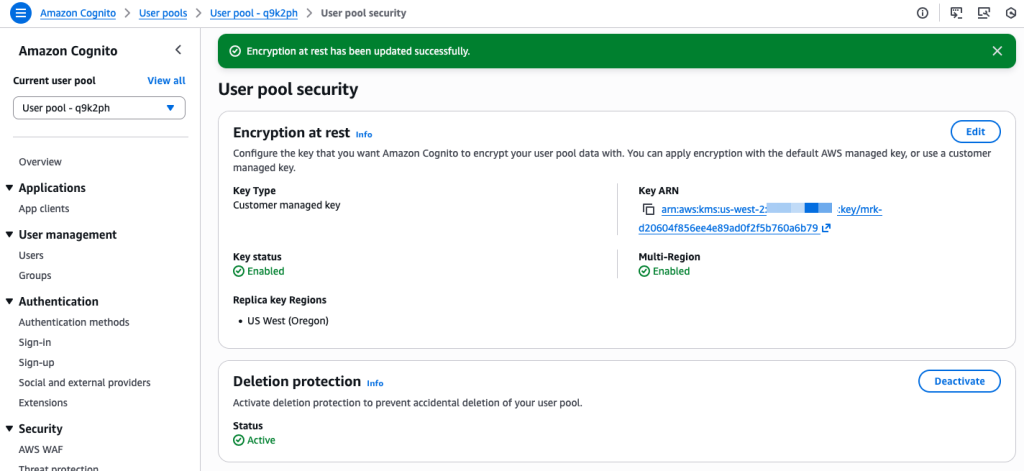
- Encryption Setup: Configuring a multi-Region KMS key. This is a prerequisite, as the key must be available in both the primary and secondary regions to facilitate data decryption/encryption during replication.
- OIDC Endpoint Management: Developers must update their application clients to recognize the new regional issuer endpoints. This is a vital step; failure to update these URLs in mobile apps or backend services will lead to authentication failures during a failover event.
- Activation: Once the replication process completes—the duration of which is contingent on the size of the user pool—the secondary region must be manually "Activated" by the administrator to begin accepting traffic.
The Role of Ancillary Resources
It is critical to note that while Cognito handles the user data, it does not automatically replicate external dependencies. Developers are still responsible for deploying and maintaining:
- Lambda Triggers: Custom authentication logic must be mirrored in the target Region.
- Security Layers: AWS WAF configurations and log-streaming settings must be manually synced to ensure consistent security posture.
Implications for Regulated Industries
The introduction of support for customer managed keys (CMKs) has profound implications for industries governed by HIPAA, PCI-DSS, or GDPR. Previously, while AWS managed the encryption of Cognito data, some organizations felt restricted by the "black box" nature of managed keys.
By allowing customers to own the key lifecycle, AWS is effectively enabling a "break-glass" capability. If an organization needs to revoke access to user data immediately for security reasons, they can do so by modifying the KMS key policy, providing a layer of security that was previously difficult to achieve with standard Cognito configurations. This, combined with the new multi-Region capabilities, allows regulated businesses to maintain high availability without compromising their encryption strategy.

Pricing and Global Availability
AWS has structured the pricing to reflect the added value of these resilient systems. The multi-Region replication feature is available as an add-on for Essentials and Plus tier customers.
- User Authentication Costs: A per-monthly-active-user (MAU) fee applies per replica region. Essentials tier users pay $0.0045/MAU, while Plus tier users pay $0.006/MAU.
- M2M Authentication: A 30% premium is applied to the standard volume-based pricing for tokens issued in the secondary region.
The feature is currently available in major global hubs, including US East/West, Canada, Europe, Asia Pacific, and South America, ensuring that multinational corporations can align their authentication infrastructure with their actual user demographics.

Official Perspective and Future Outlook
In his commentary on the release, developer advocate Sebastien Stormacq noted that the primary driver for this feature was the overwhelming demand for "business continuity." For modern developers, the complexity of managing replication logic was a barrier to entry for building truly resilient, global applications.
"By providing a native, managed path for replication," Stormacq stated, "we are allowing teams to shift their focus from building infrastructure to building features that add value to their users."

As we look toward the future, this update sets the stage for a more autonomous, self-healing cloud architecture. While manual failover triggers—using Route 53 health checks or custom monitoring—are still required, the foundational barrier to data consistency has been removed. For developers, the message is clear: high availability is no longer a luxury reserved for the largest enterprises; it is now a standard, configurable component of the AWS ecosystem.
With the integration of these features, AWS continues to harden the perimeter of the cloud, ensuring that as businesses grow and their architectures become more complex, their authentication systems remain the unwavering anchor of their digital operations.
 Neng Nana
  Suro Senen
  Lina Hope