
 By Basiran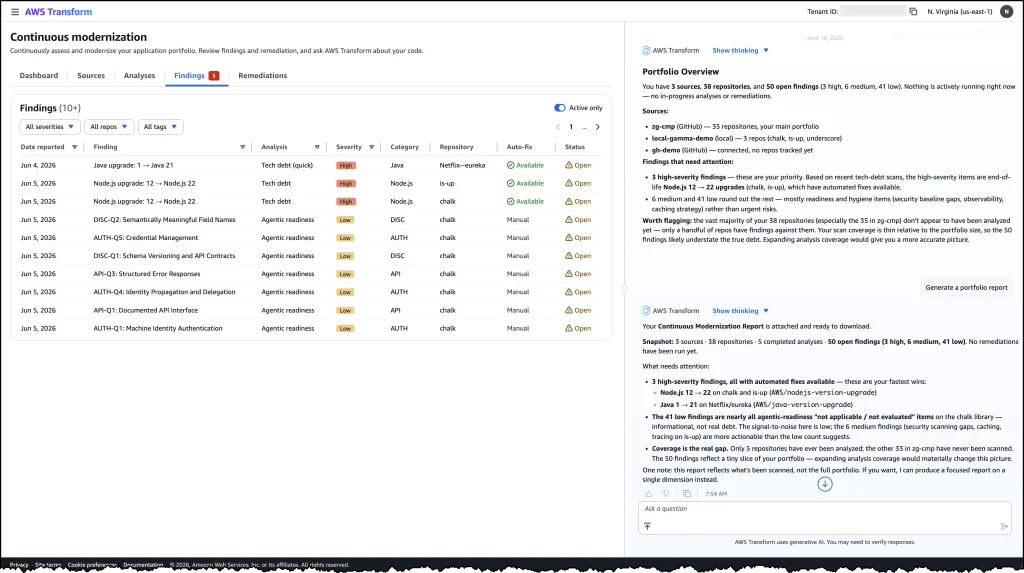
In a move designed to fundamentally shift how enterprise engineering organizations manage the lifecycle of their software, Amazon Web Services (AWS) has announced the preview release of AWS Transform – Continuous Modernization. This new capability, integrated into the existing AWS Transform suite, aims to solve the "tech debt trap"—the persistent, resource-draining reality where maintaining legacy code and keeping pace with infrastructure requirements consumes nearly a third of total IT budgets.
By leveraging autonomous scanning, prioritized remediation, and automated pull-request generation, AWS is moving beyond simple code analysis tools. It is offering a systemic, platform-level solution to the velocity-stifling problem of technical debt.
The Core Problem: Why Tech Debt Has Become an Existential Threat
For years, the engineering industry has relied on a patchwork of "point solutions" to keep codebases afloat. Development teams often deploy separate tools for vulnerability scanning, dependency tracking, and static code quality analysis. While effective in isolation, this approach creates a fragmented view of the enterprise’s health.
The Scaling Dilemma
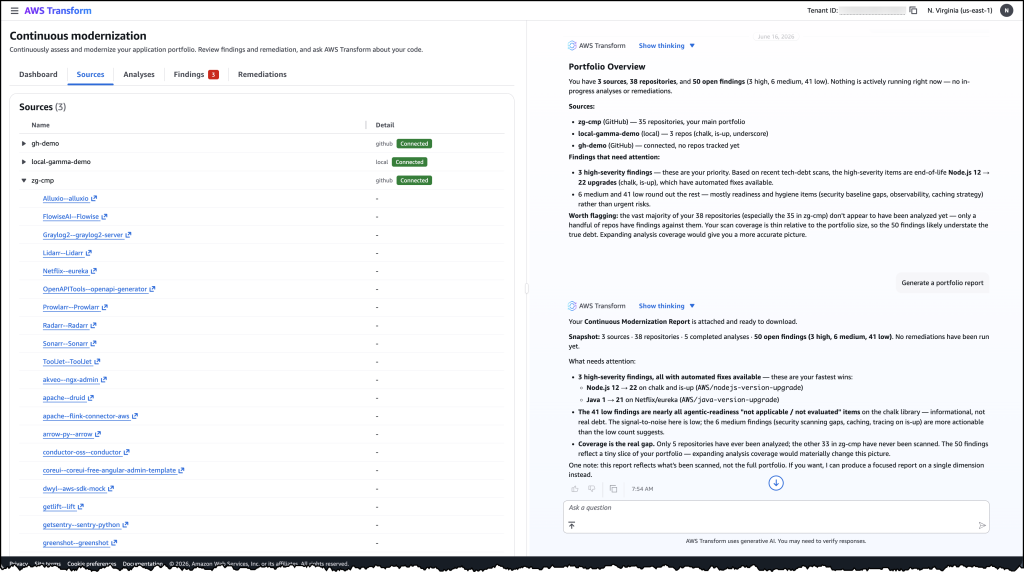
As organizations grow, so does the complexity of their software landscape. A company may operate across thousands of repositories, each with its own dependency tree, framework version, and security configuration. The manual nature of tracking these variables leads to a cycle of "self-reported status updates"—often inaccurate snapshots that mask regressions and hide deep-seated architectural rot.
The AI Acceleration Paradox
The recent explosion of AI-assisted development tools has only accelerated the problem. While coding agents have made developers significantly faster at writing new features, they have also dramatically increased the rate at which code is generated. Without a corresponding automation strategy for maintenance, tech debt is accumulating at an unprecedented pace, leaving human developers struggling to maintain the very systems they are rapidly expanding.
Chronology of the Development: From Migration to Automation
The trajectory of AWS Transform reflects the evolving needs of the modern cloud-native enterprise.
- Phase 1: The Migration Era. Initially, AWS Transform focused on the "undifferentiated heavy lifting" of moving legacy workloads from on-premises data centers to the cloud. This involved massive efforts to lift-and-shift, re-platform, and modernize monolithic Windows and mainframe applications.
- Phase 2: Routine Maintenance. As the cloud footprint grew, the focus shifted to the inevitable cycle of upgrades. Organizations spent thousands of man-hours manually updating Java versions, patching deprecated frameworks, and rotating AWS Lambda runtimes before they reached their end-of-life (EOL).
- Phase 3: The Continuous Modernization Leap. Recognizing that maintenance was becoming a permanent, rather than episodic, burden, AWS began building a toolset that could function autonomously. Today’s preview represents the culmination of this evolution: a system that does not just alert developers to problems, but actively helps them solve them by injecting fixes directly into the development workflow.
Technical Mechanics: How Continuous Modernization Works
The architecture of AWS Transform – Continuous Modernization is built on three pillars: automated visibility, intelligent prioritization, and autonomous remediation.
1. Continuous Analysis and Baselines
The system begins by scanning source code repositories against a "configurable baseline." These baselines are essentially the "gold standard" for an organization’s tech stack. Whether it is a mandatory Java runtime, a specific security library, or an internal coding standard, the platform maps every repository against these rules.
Unlike periodic manual audits that might happen once a quarter, this analysis is continuous. If a team drifts from the organizational baseline, the platform flags the deviation in real-time. This provides platform engineering teams with a "single source of truth," eliminating the need for tedious status check-ins.
2. Autonomous Remediation via Pull Requests
The most transformative aspect of this announcement is the shift from reporting to acting. Once a piece of technical debt is identified, the system doesn’t just send an email; it generates a pull request (PR).

If a repository is using a deprecated framework, the system initiates a transformation, writes the necessary code changes, and opens a PR for the owning team to review. This "remediation campaign" approach turns a months-long project into a structured, manageable workflow. The system even tracks the PR through to completion, verifying that the fix has been applied correctly without requiring manual intervention from the security or platform team.
3. Integration with AWS Security Agent
Security is not a silo. By integrating with the AWS Security Agent, the new capability ensures that vulnerabilities are surfaced alongside standard technical debt. This allows security teams to prioritize fixes based on both risk and the effort required, streamlining the remediation process into the same workflow used for routine dependency updates.
Supporting Data: The Cost of Manual Modernization
Industry data consistently points to the "30% Tax"—the observation that roughly 30% of an average IT budget is diverted from innovation toward the maintenance of existing software.
- Efficiency Gains: During internal testing, AWS observed that organizations moving from manual, ticketing-based remediation to the Continuous Modernization approach saw a reduction in "time-to-remediate" from weeks to hours.
- Scale Factors: The platform is designed to handle thousands of repositories simultaneously. For large-scale enterprises, this removes the "bottleneck effect" where one or two platform engineers become the single point of failure for all library updates across the entire organization.
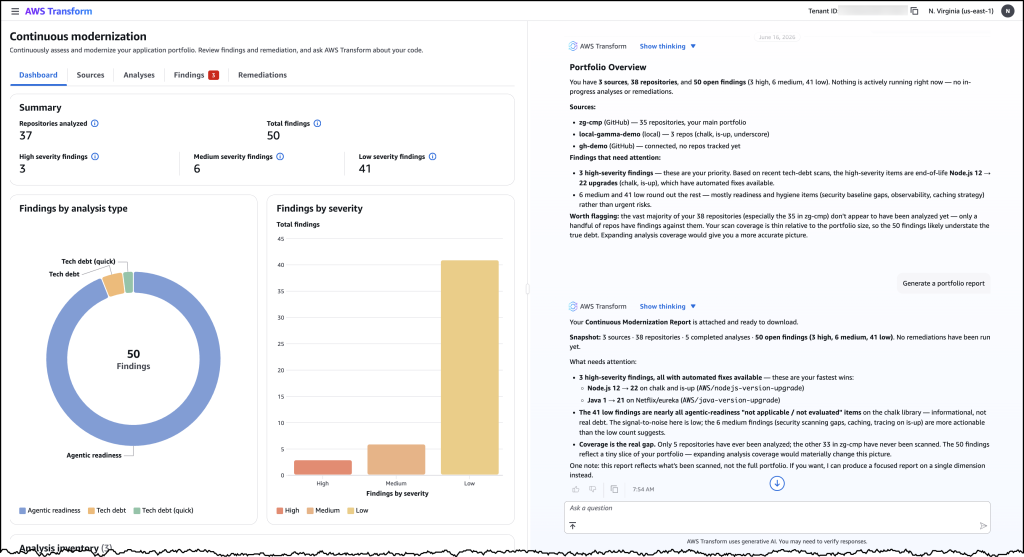
- Visibility Metrics: The dashboard provides a high-level portfolio overview, allowing leadership to track the percentage of repositories currently compliant with internal policies. This data-driven approach replaces anecdotal evidence with concrete metrics on architectural health.
Official Perspective and Implementation
AWS suggests that there are two distinct modes for utilizing this tool, catering to different business rhythms:
- Continuous Mode: Best for day-to-day hygiene. This involves the constant, background application of patches, minor version upgrades, and policy enforcement. It ensures that the organization never "drifts" too far from its desired state.
- Campaign Mode: Best for major, one-time shifts. When an organization decides to move from one framework to another or perform a major runtime upgrade across hundreds of applications, "Campaign Mode" allows for a focused, project-based push.
The tool is accessible via the AWS Transform web application, the AWS Transform Kiro Power, and integrates with existing coding agents via MCP (Model Context Protocol) and skills. This modularity ensures that developers can interact with the tool within their existing IDE or CI/CD pipelines, minimizing context switching.
Strategic Implications: The Future of Engineering Management
The introduction of AWS Transform – Continuous Modernization signals a shift in the role of the "Platform Engineer." As these tasks become automated, the role of the platform team is shifting from executing updates to defining policies.
From "Doing" to "Governing"
By codifying organizational standards into the platform, senior engineers can ensure consistency without having to manually police every repository. They become the architects of the organization’s technical culture, while the platform handles the tedious, high-volume work of implementation.
The Competitive Advantage
Companies that adopt these autonomous maintenance strategies will inherently move faster. While competitors spend their engineering hours refactoring legacy code, firms using Continuous Modernization will be able to reallocate those cycles toward product innovation, user experience, and new features.
A Warning for the Industry
However, this automation also demands a higher level of rigor in policy definition. If an organization codifies a faulty dependency policy, the system will propagate that fault across thousands of repositories at high speed. As such, the maturity of an organization’s "Policy-as-Code" strategy will become the new benchmark for success in the cloud-native era.
Conclusion
AWS Transform – Continuous Modernization is a recognition that the old ways of maintaining software are no longer viable in an age of distributed systems, microservices, and AI-driven development. By automating the identification and remediation of technical debt, AWS is providing the plumbing necessary for modern enterprises to remain agile.
As the preview progresses, the industry will be watching closely to see how effectively these autonomous systems handle complex edge cases and organization-specific custom logic. If successful, this could mark the end of the "tech debt maintenance cycle" and the beginning of a more stable, secure, and consistently modern era of software development.
The AWS Transform – Continuous Modernization preview is available starting today. For further details on integration requirements and supported frameworks, users are encouraged to visit the official AWS Transform documentation.
 Neng Nana
  Suro Senen
  Lina Hope